“An artist seen painting the Cherry Blossoms along the Tidal Basin,” Washington, D.C., by E. B. Thompson. The photo is undated, but was possibly taken in the 1920s. Via D. C. Public Library Commons on flickr.
The National Cherry Blossom Festival in Washington, D.C., will begin next week on Wednesday, March 20, and will continue through April 14. Click here for more information on events and local accomodations.
The National Park Service is predicting that peak bloom (70% of the flowers open) will occur March 26 – 30. The average date for peak bloom is April 4.
[ADDENDUM: The Capital Weather Gang blog at The Washington Post is departing from the NPS prediction. They believe that the peak bloom will come between April 3 and 7.]
Here’s another lovely hand-colored photograph of the Tidal Basin from about 1920.
The photographer is unknown; the image is via the Library of Congress Prints and Photographs Division.
The cherry trees along Washington’s Tidal Basin were a gift from the Japanese government 101 years ago, so they would have been about 10 to 15 years old at the time of these photos.
Loveliest of trees, the cherry now
Is hung with bloom along the bough,
And stands about the woodland ride
Wearing white for Eastertide.
Now, of my threescore years and ten,
Twenty will not come again,
And take from seventy springs a score,
It only leaves me fifty more.
And since to look at things in bloom
Fifty springs are little room,
About the woodlands I will go
To see the cherry hung with snow.
This Kigali pharmacy has taken the flower pots requirement to heart — with clipped weeping figs in the ground and then more pots behind them.
The city of Kigali has a requirement that all shops must have flower pots at their entrances. I learned this yesterday from our local newspaper, The New Times.
According to the article “Kigali City residents bemoan KCC* policies,”
[a business owner,] who deals in hardware business, . . . especially criticized the policy of flower pots at the front of every shop. All shops are supposed to have flower pots in front of them, a policy that was established in 2011.
“We are struggling with paying taxes which are high on top of that they are asking us to buy flower pots which cost between Rwf 15,000 to 20,000. Not all of us love flowers,” he said. “Every time I see these flower pots in front of my shop, I feel like it’s making my shop ugly because I would prefer something more artistic other than a flower pot but then I also can’t have two decorations at my door.” . . .
Last week, during an inspection, a few shops were locked up because of not having flower pots outside their shops.
I don’t know how many or what size pots are required. Rwf 15,000 is about US$24.
Back on January 19, I was also diverted by the article “Eleven arrested smuggling plastic bags:”
The police have arrested 10 Burundians and a Rwandan found smuggling 400 cartons of plastic paper bags and marijuana into the country.
The suspects were arrested in Kibungo town. They were travelling by bus heading to Kigali, from Kirehe district.
Police said the suspects had smuggled the goods through one of the most notorious entry points on the Burundi and Rwanda border in Gahara sector.
Rwanda banned disposable plastic bags in 2005. The ban was effected in three years later. However, Rwanda, which replaced the menacing bags with paper bags, is the only country of the five EAC member states with effective policy on plastic bags.
The initiative was a response to the plastic’s negative environmental impact, amid extensive physical presence of bags across the country.
Supt. Benoit Nsengiyumva, the Eastern Province Police spokesman, said the suspects would be charged as soon as investigations are complete.
“Rwanda is now entering its fourth year with a nationwide ban on all plastic bags. This is what we are guarding; as Police and we won’t rest,” he said.
Nsengiyumva said the suspects would also be charged with illegal entrance into the country and trafficking in marijuana, an illegal drug.
Note which crime is emphasized in the article.
Rwanda takes its restriction of plastic very seriously. Passengers arriving on international flights are warned to leave behind their duty-free store bags, and once, returning from Pretoria, I had to pull off all the security plastic wrap from my suitcase before I could exit the baggage area.
While I could go either way about storefront potted plants, I do like this plastic bag prohibition. I remember how the last place we lived in Africa — Niamey, Niger — was just inundated by this particularly obnoxious form of trash. The bags are such a plague on the continent that a common joke is to refer to them as the national bird, seen nesting in the trees and fields.
But they are extinct in Rwanda.
. . . And behold,
the plastic bag is magic;
there is no closing it. . . . .
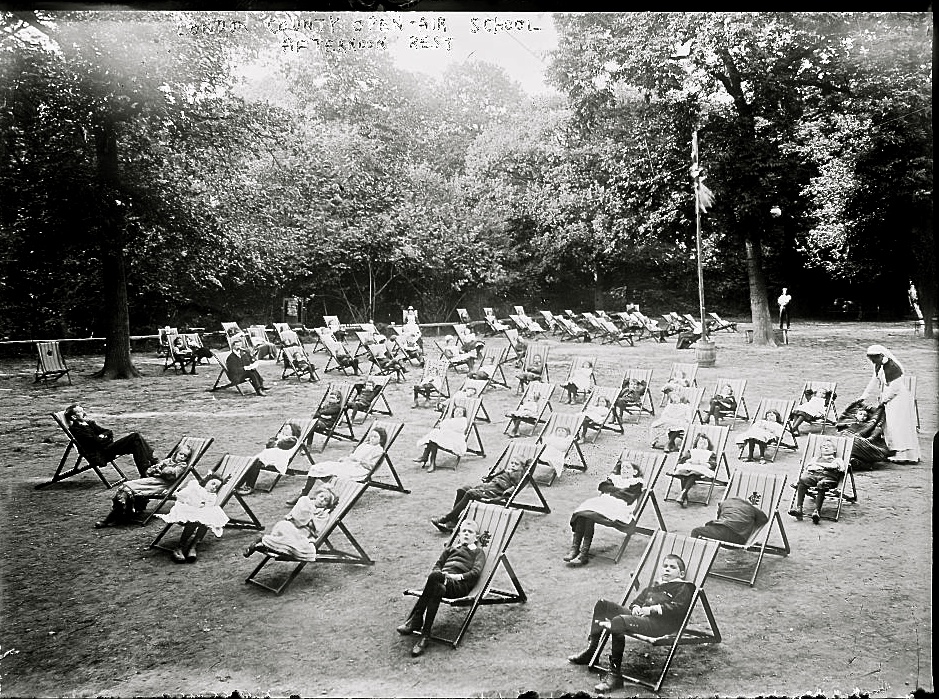
“Children in chairs on lawn during afternoon rest, London County Open-air School.”
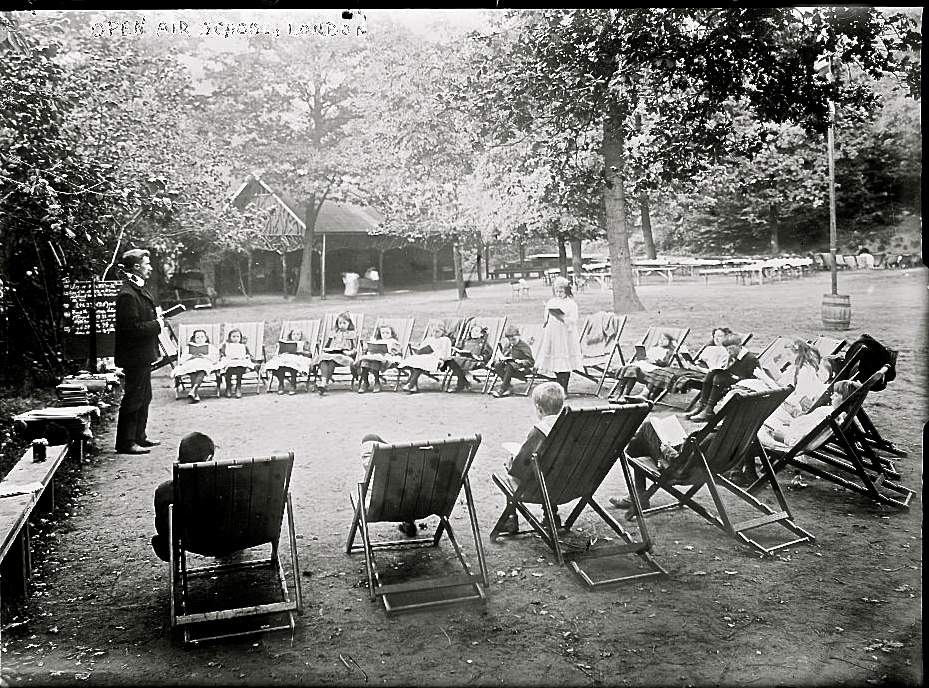
“Class on lawn, children in chairs, London Open-air School.”
Open-air schools in Europe and the U.S. were part of an effort in the first half of the 20th century to combat the rise of tuberculosis. The first — a waldeschule or forest school — was built near Berlin, Germany, in 1904.
An open-air school was created in England in 1907 by the London County Council. This may be the school pictured here. A second London school was organized in 1908. By 1937, there were 96 open-air schools in Great Britain.
Photos and captions by Bain News Service via the Library of Congress Prints and Photographs Division (no dates provided).
ADDENDUM: More on open-air schools here, on the blog Messy Nessy Chic.
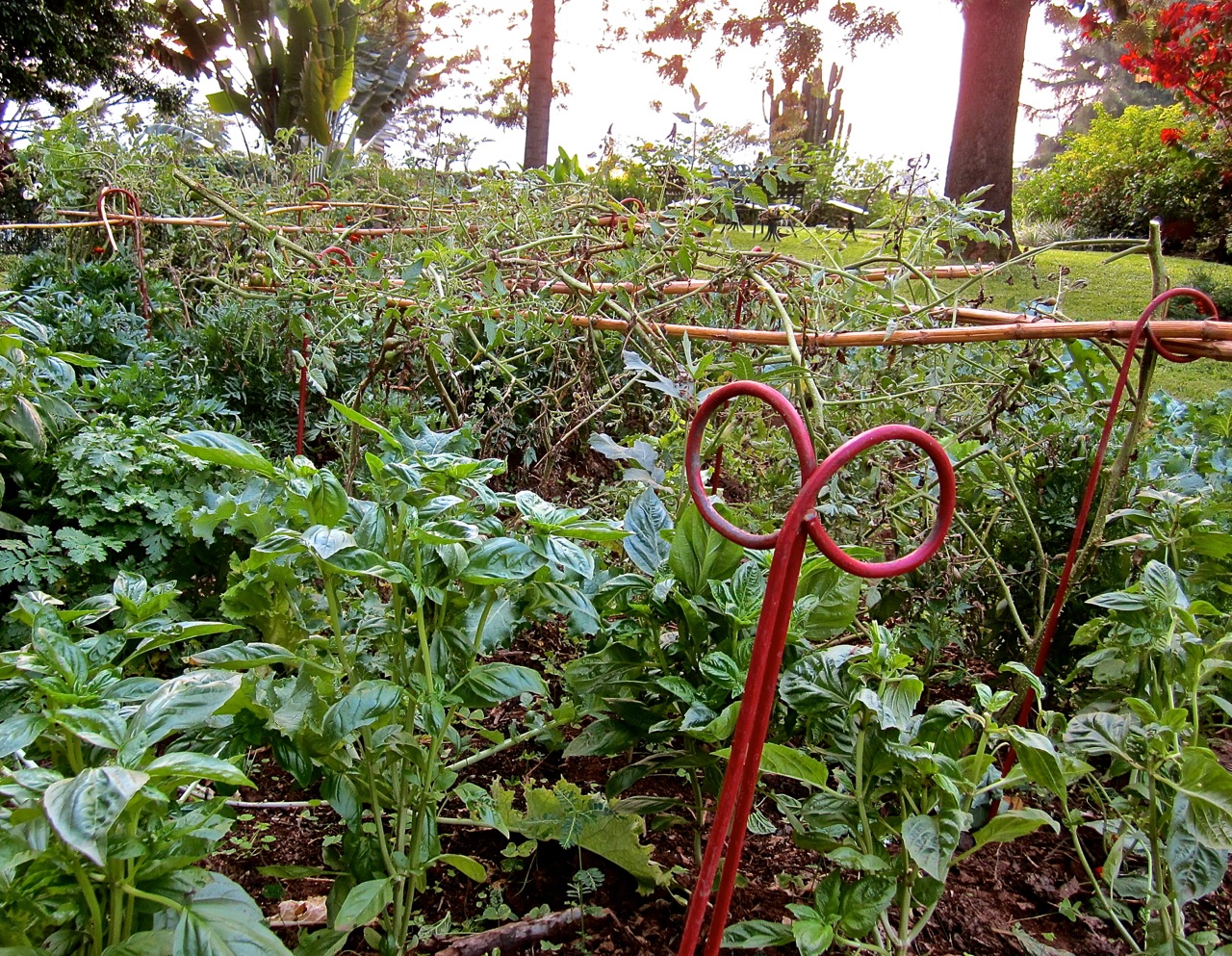
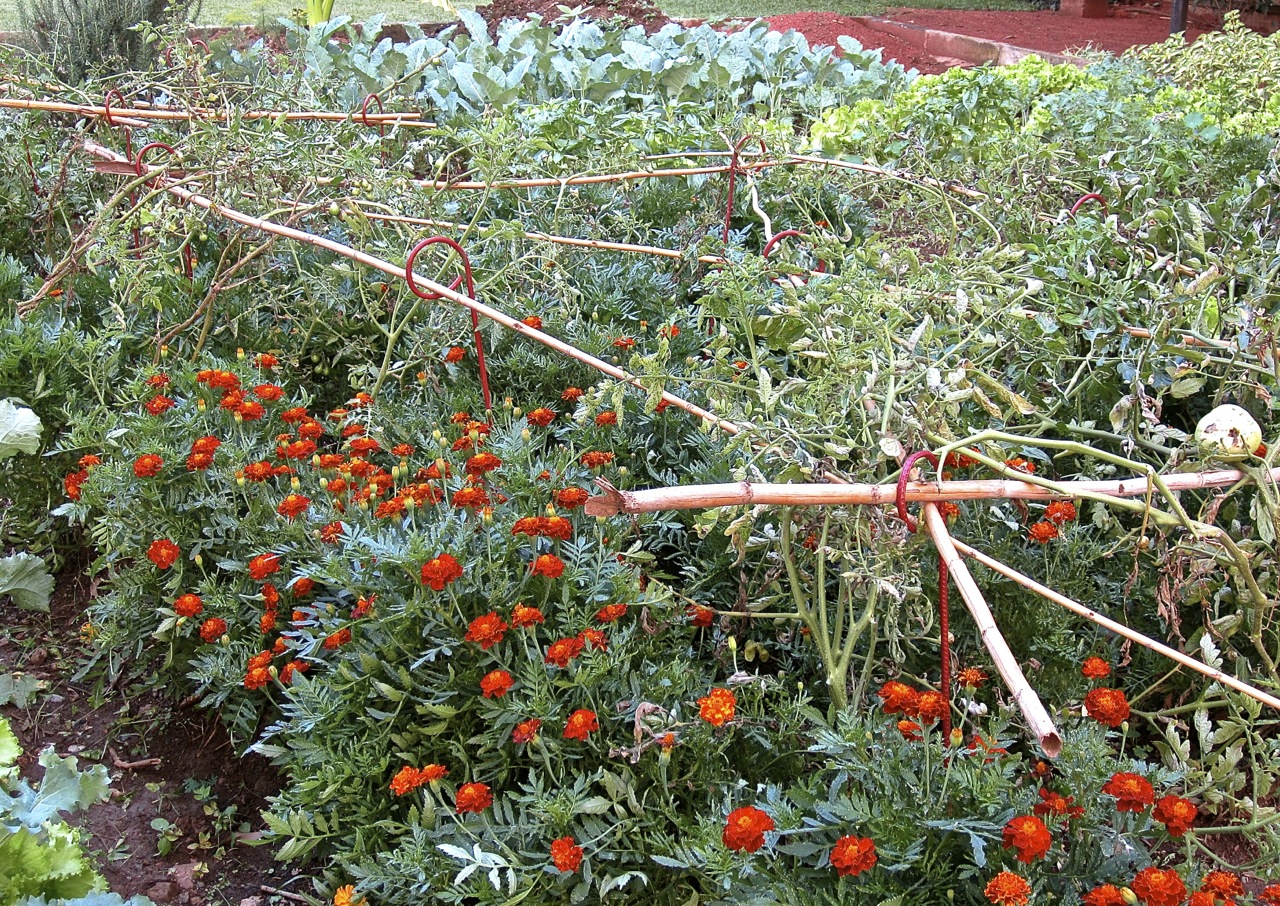
I just wanted to show off the plant supports that a local craftsperson recently made for the garden from my “design.” They’re cut and bent from lightweight rebar, and he gave me two sizes — about 30″ and 5′.
Two plant supports in foreground, back to back.
I can tie plants directly on to them, or I can slip bamboo poles through the loops to make a supporting grid. They’re much easier to push into the ground than bamboo or wooden poles, and they should last pretty much forever.
Plant supports and bamboo grid — with my sorry-looking tomatoes.
Painted reddish-brown (more brown than they look in the photos), they’re unobtrusive in the flower beds. But I think they would also be fun in really bright colors.
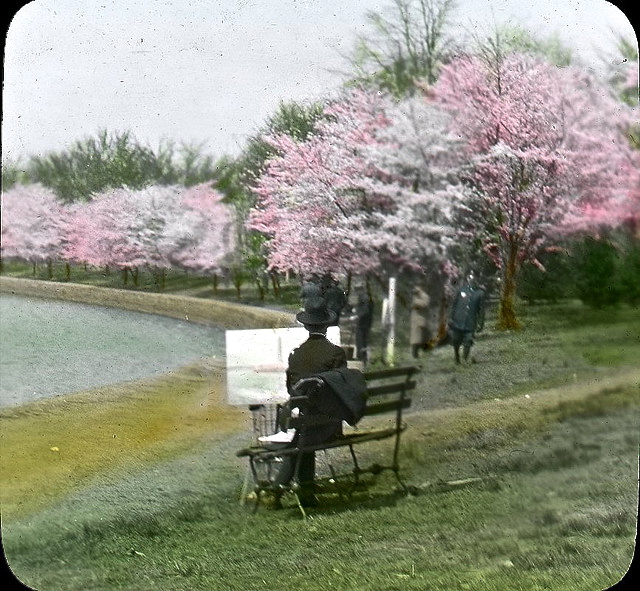 “An artist seen painting the Cherry Blossoms along the Tidal Basin,” Washington, D.C., by E. B. Thompson. The photo is undated, but was possibly taken in the 1920s. Via D. C. Public Library Commons on flickr.
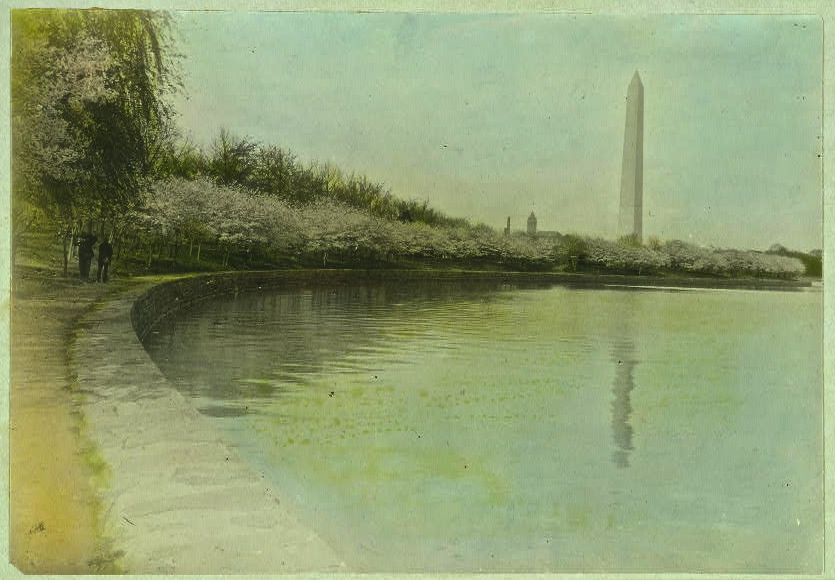 The photographer is unknown; the image is via the Library of Congress Prints and Photographs Division.