“Window of farmhouse living room. Mercer County, Illinois. Hired man lives in house on farm which was formerly residence of owner-operator,” November 1936. Photo and caption by Russell Lee, via Library of Congress Prints and Photographs Division.
Photographer Frances Benjamin Johnston used slides of various prints and illustrations in her popular Garden and House lectures — which she gave from 1915 to 1930.
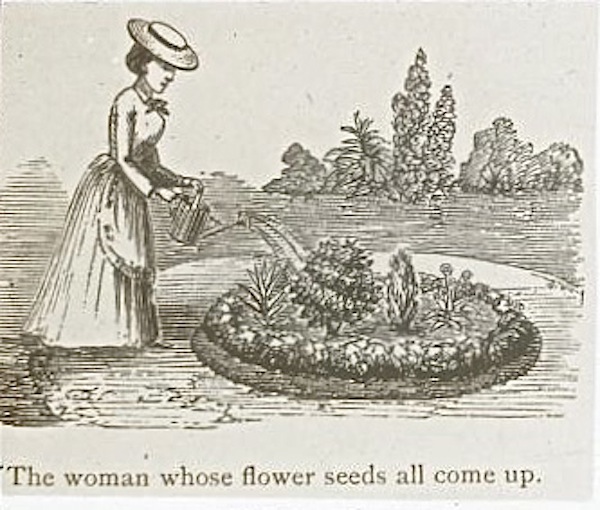
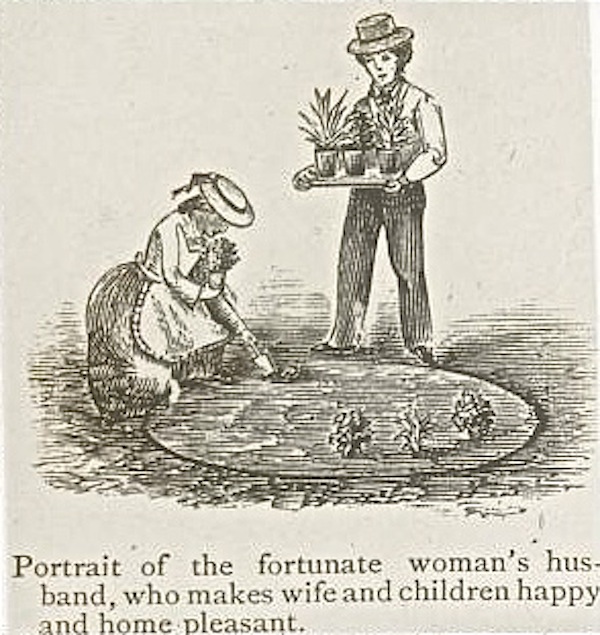
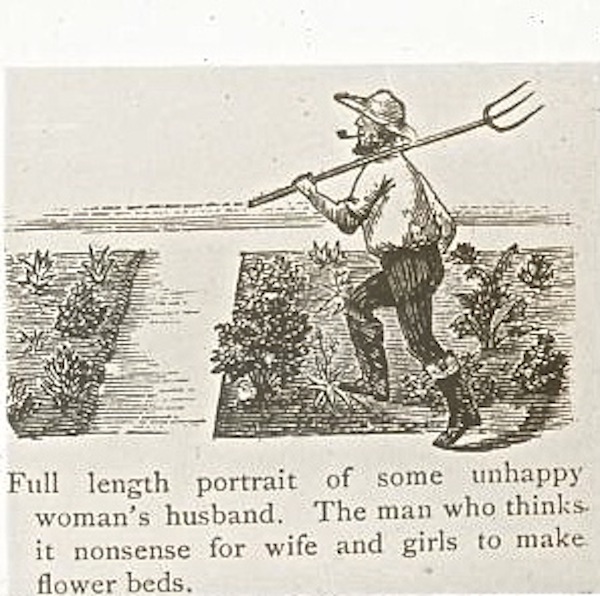
She took the ones below from the February 1875 issue of Fruit Recorder and Cottage Gardener. They are now part of the Frances Benjamin Johnston Collection at the Library of Congress Prints and Photographs Division.
The successful lady gardener dresses in modest clothes with sensible hat and apron and stays home to care for her flowers.
While the unsuccessful one dresses in low-cut bodice and frilly hat, threatens her flowers and chickens with an umbrella, and then goes out on the town.
A good husband carries and then holds the pots — he’s a keeper.
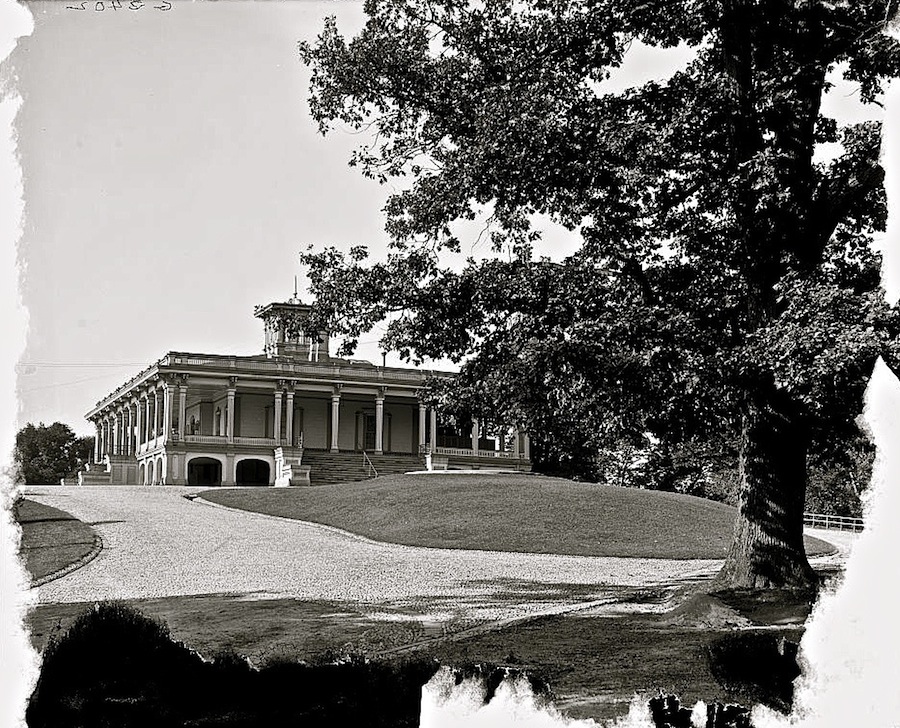
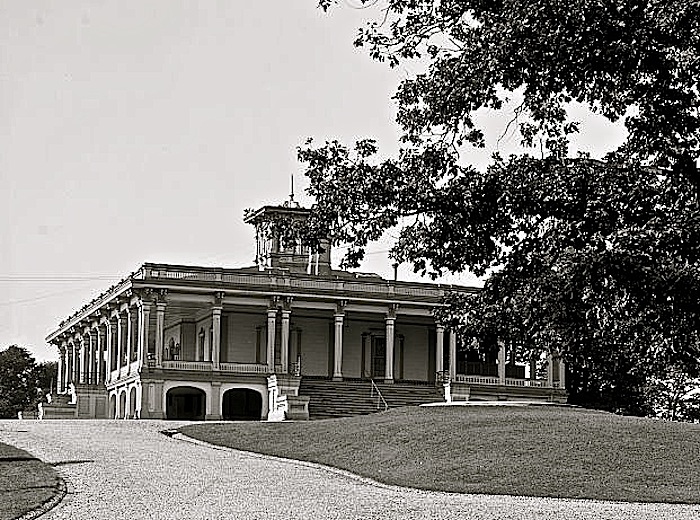
The Mansion House at Druid Hill Park, Baltimore, Md., between¹1900 and 1910, by Detroit Publishing Co., via Library of Congress Prints and Photographs Division.
It was built by landowner Nicholas Rogers as a summer house for his family, and it later became their primary residence. In 1860, his grandson sold the property to the city — which soon began turning it into a landscaped park.²
A closer look. There’s a round fountain on the grassy area in front of the steps.
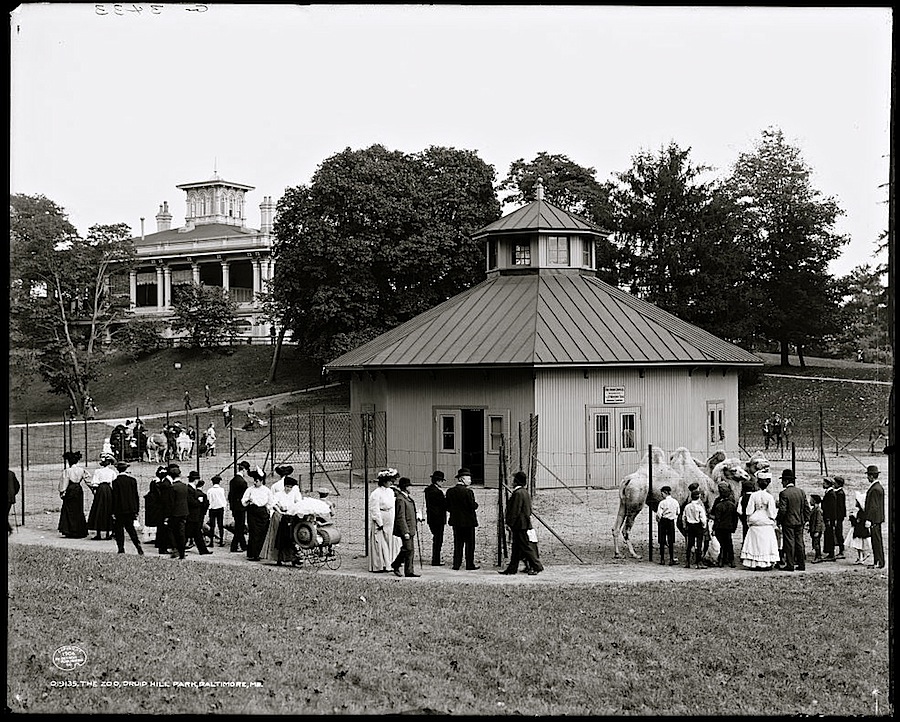
The new park’s (19-year-old) architect, George A. Frederick, added the open 20′-wide porch to all four sides of the mansion, and it was re-opened as a public pavilion, with refreshments sold in the basement. From the new tower, visitors could view the city. After 1876, a “zoological collection” could also be seen near the house.
In 1935, the porch was enclosed with large windows, and a Milk Bar and doughnut-making machine were installed. The Mansion House was advertised as “every man’s³ country club in the heart of Baltimore.”
In the 1940s, the building became a day school. Then, from the mid 1950s to 1978, exotic birds were displayed on the porch. In 1978, the house was renovated to hold the administration offices of The Maryland Zoo.
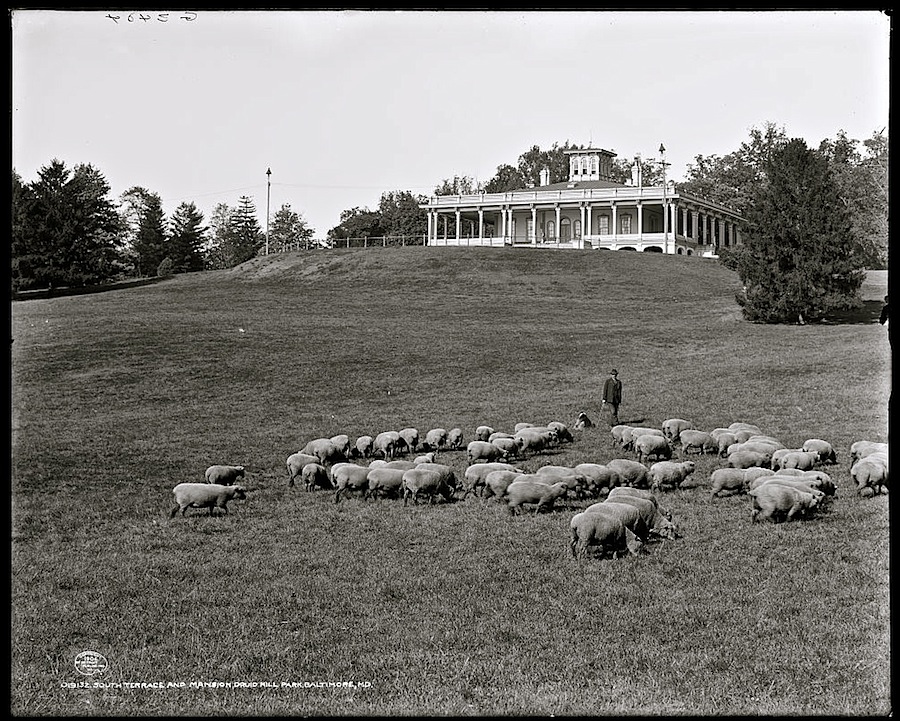
From about 1870 until his retirement in 1926, shepherd George Standish McCleary, cared for the park’s grass-cutting herd of Southdown sheep. He was assisted by three Scotch collies.
It so happens that I spent quite a bit of time in this house during the summer of 1979, when I was a student at Goucher College. I had an internship with the zoo’s Education Department.
Very newly renovated, the building was fresh, light, and airy, and almost empty. I can’t remember any other people in it: just the Education Director, his assistant, and me — perching, as is the usual situation for an intern, at the corner of the assistant’s desk.
I spent most of my time there working on the opening of a rather short-lived Insect Zoo ( possibly an idea ahead of its time). I learned to write exhibit labels, which had to be very brief and at the level of a 4th grade reader. This is actually quite difficult to do and was very good for me — I had to figure out what was really important or interesting about the animal or bug and then state it as simply as possible; no filler or showing off allowed.
A large part of the 745-acre park is forested, and one day the three of us went off to poke around the woods not too far from the house. I remember seeing old steps, discarded garden ornaments, and broken statuary — or maybe I only think I remember such a romantic thing.
The Maryland Zoo (formerly The Baltimore Zoo) is the third oldest zoo in the U.S.
Today, the building is still used for the zoo’s administrative office, and the porch can be rented for private events, such as weddings. The interior is very pretty in “buttery yellow,” with white trim, gold detailing, and rows of chandeliers.
ADDENDUM: A few months after this was posted, I received a email from a retired city employee confirming that the woods did contain a collection of old stone work, salvaged from houses that had been torn down.
I went by the Druid stone
That broods in the garden white and lone,
And I stopped and looked at the shifting shadows
That at some moments fall thereon
From the tree hard by with a rhythmic swing,
And they shaped in my imagining
To the shade that a well-known head and shoulders
Threw there when she was gardening. . . .
¹The two other photos are c. 1906, by Detroit Publishing Co., via Library of Congress.
²It quickly sold off the Rogers’s grove of 40,000 pear trees.
³At that time, every white man’s, I suspect. Although African-Americans used many parts of the park from its beginning, some areas were “whites only.” The swimming pool and tennis courts were not integrated until 1956.
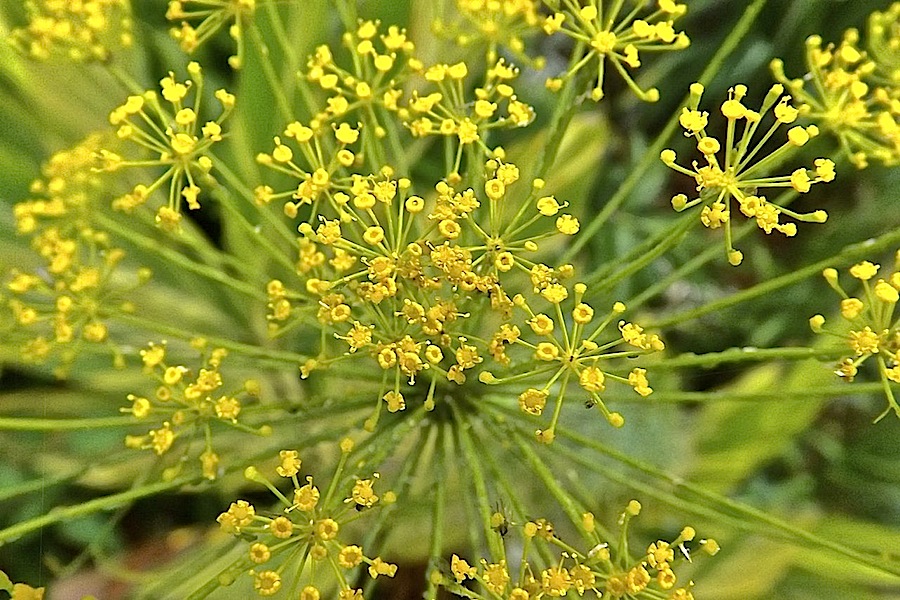
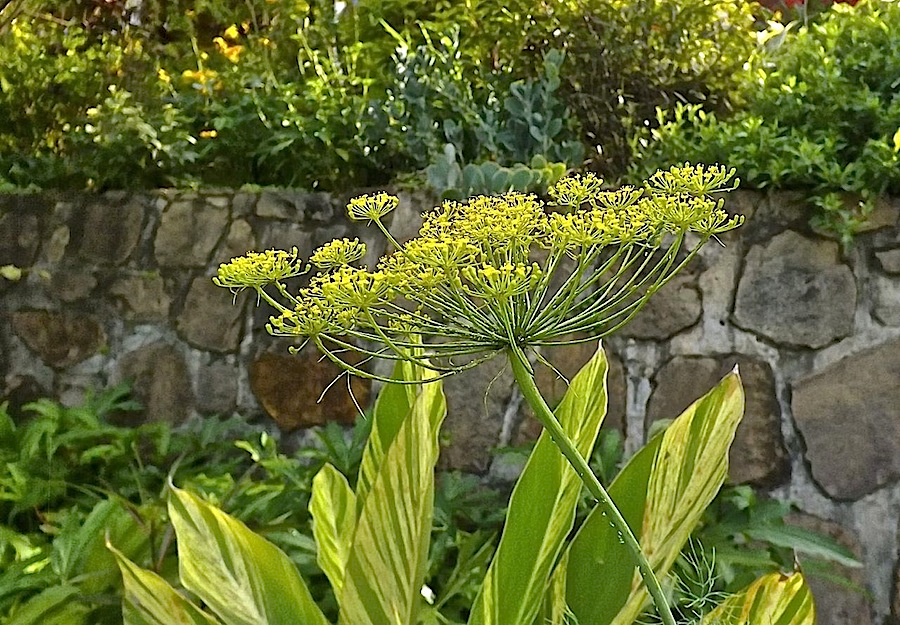
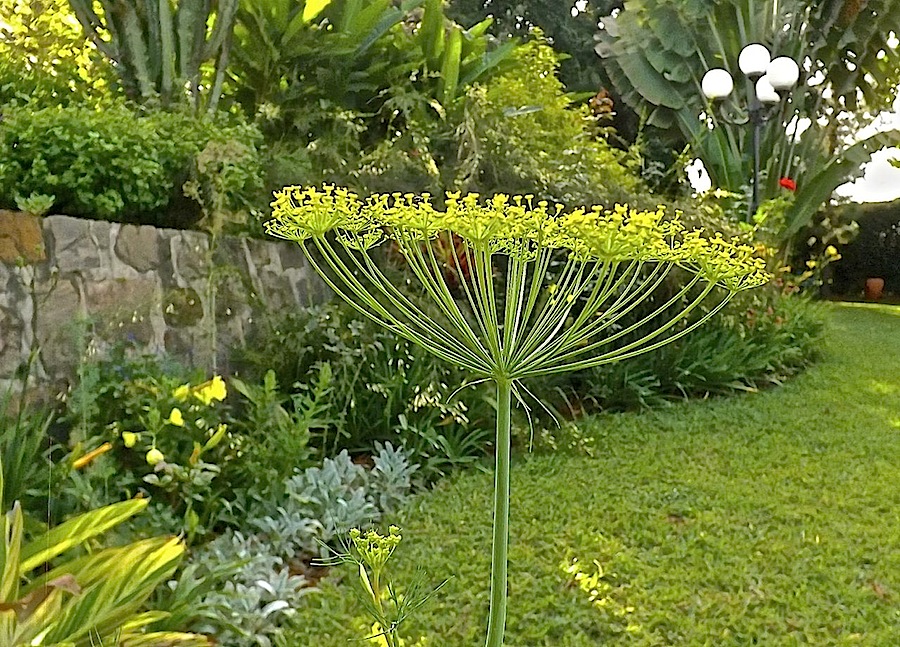
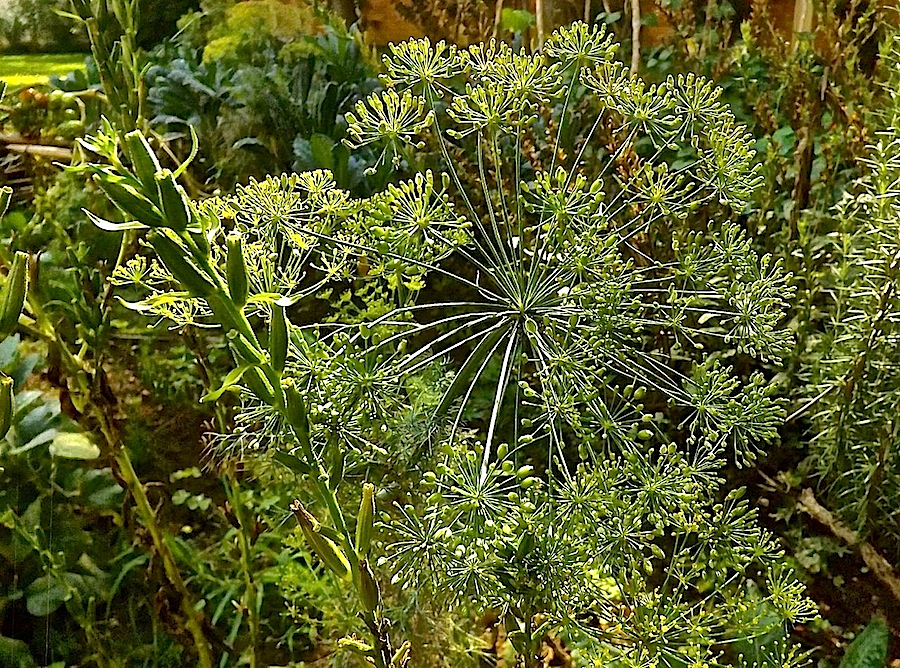
During the summer, I transplanted a lot of small dill plants from the vegetable garden to the yellow areas of the flower borders. Unfortunately, dill really doesn’t like to be moved, and it really doesn’t like it during the dry season. So all the little plants just remained little.
But lately, after six weeks of rain, they are growing and a few have begun to bloom.
I’ve always thought that dill is a nice ornamental plant.
Eventually, that variegated ginger — of which you can just see a bit above and below — will be huge and dominate this area (and there is another very small one hidden to the left of the dill bloom below).
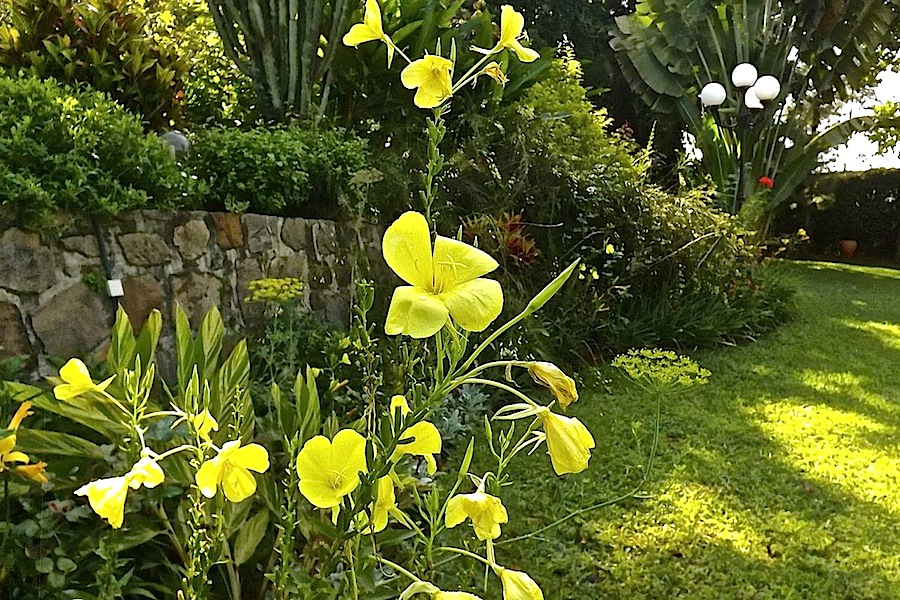
In the meantime, I’m hoping that the dill and Missouri primrose will self seed here as long as there is space. (I will help it along, and I’ve also been sprinkling about Verbena bonariensis seed.)
I was pleased to get the picture above. The yellow of the primroses is usually too intense for my camera to capture any details.
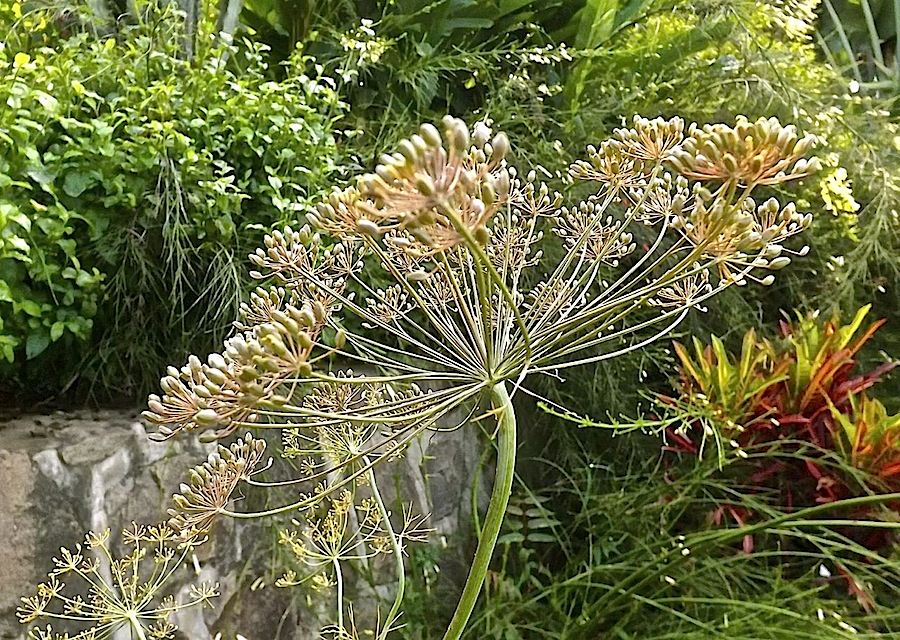
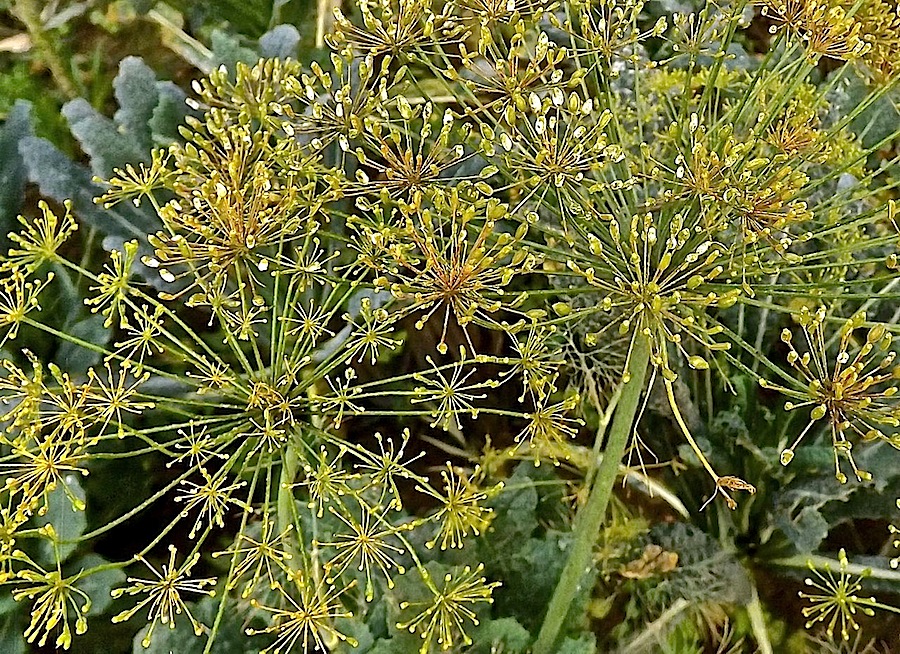
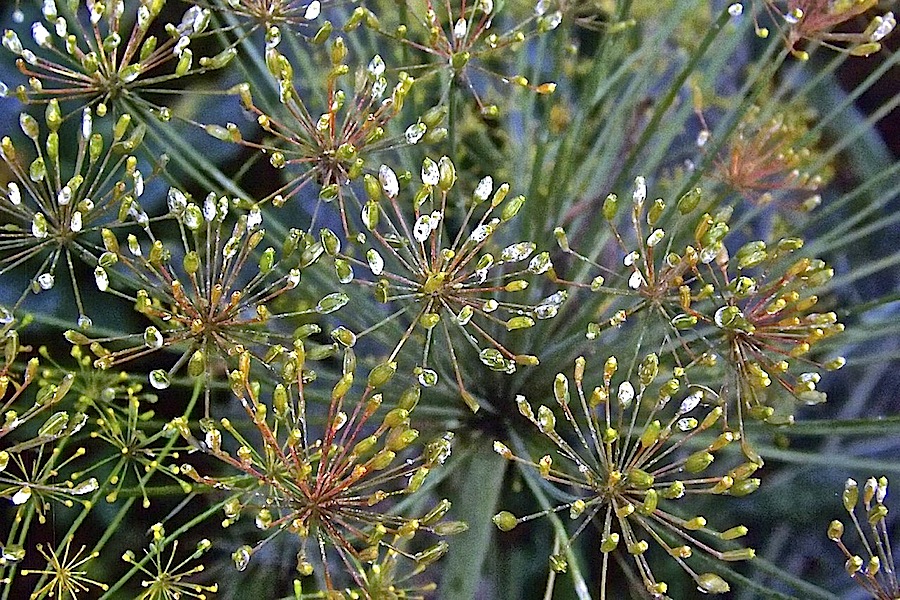
Above, the dill blooms/seadheads are beautiful even as they fade to tan.
In our vegetable garden, the dillworks continue. . . .
In the background are blue-green Russian kale. Some of the next batch that I grow will also go into the flower beds — like these at the Smithsonian’s Butterfly Habitat Garden.
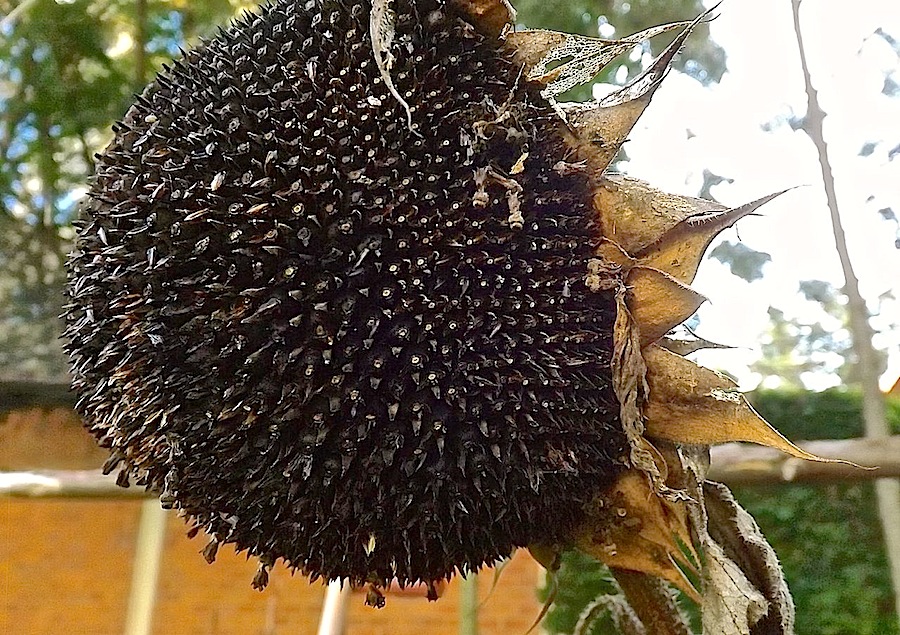
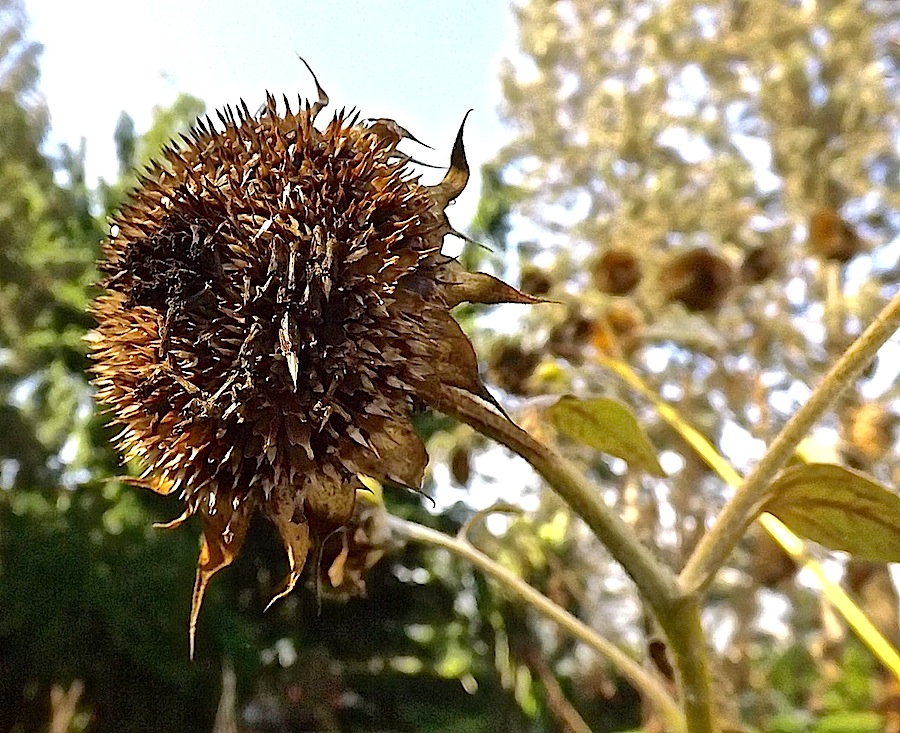
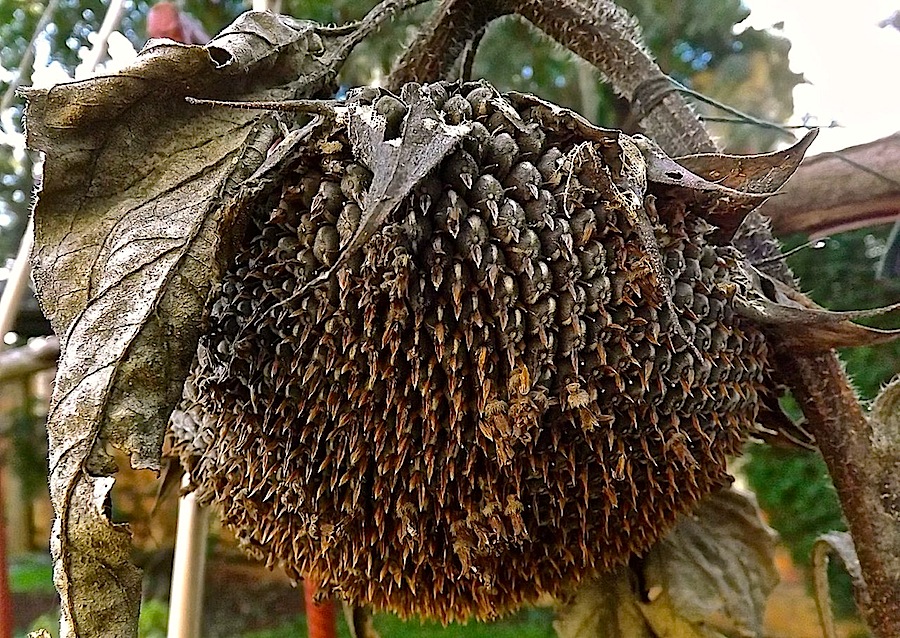
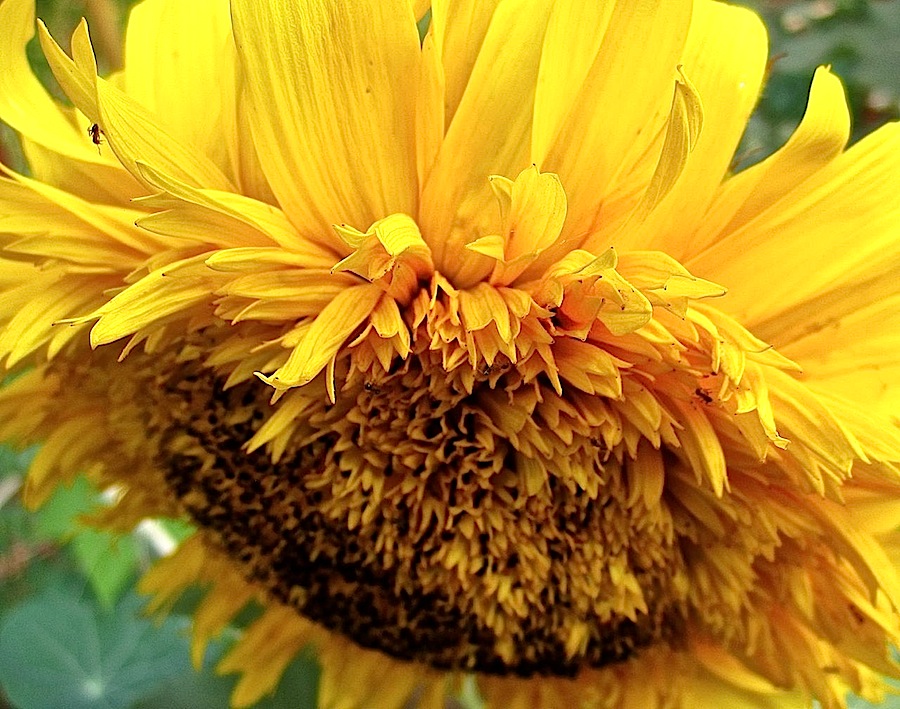
This Bloom Day, I also got interested in the after- blooms of our sunflowers.
Below is what one of them looked like at the end of summer.
Garden Bloggers’ Bloom Day is the 15th day of every month. To see what’s blooming in other garden bloggers’ gardens, please visit Carol at May Dreams Gardens.
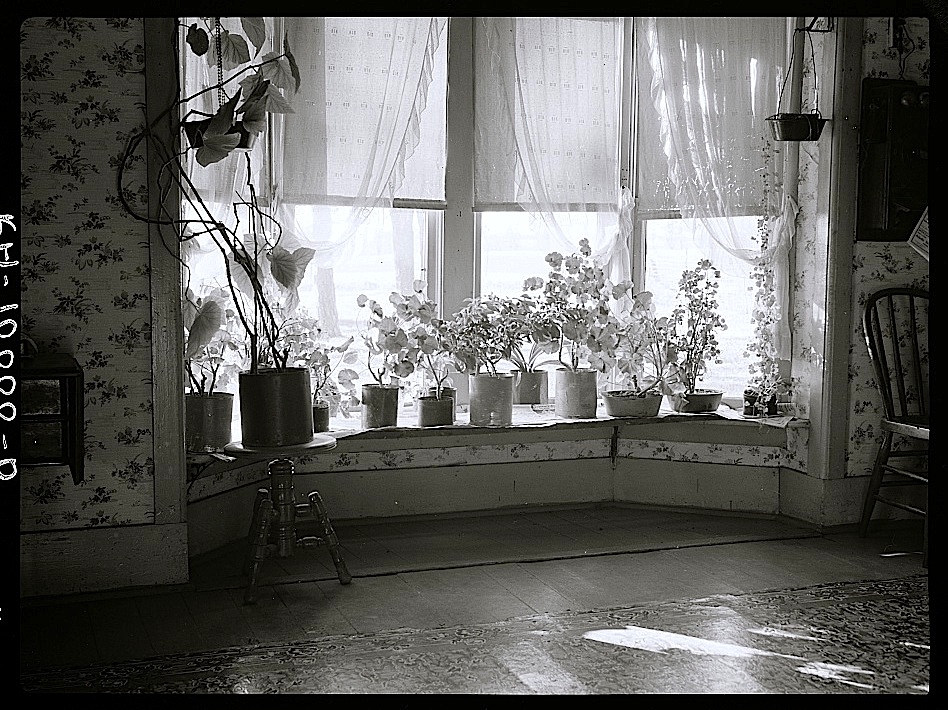 “Window of farmhouse living room. Mercer County, Illinois. Hired man lives in house on farm which was formerly residence of owner-operator,” November 1936. Photo and caption by Russell Lee, via Library of Congress Prints and Photographs Division.