This slideshow requires JavaScript.
W. C. Child Ranch, near Helena, Montana, ca. 1890,* from an Historic American Building Survey (HABS), via Library of Congress Prints and Photographs Division.
Mr. Child became rich from prospecting in Montana. He built this octagonal house on his 3,000-acre ranch in the late 1880s.
However, he used it not as a home, but as a party space. (The whole second floor was a ballroom.) He and his friends — sometimes over 100 — would take the Northern Pacific train from nearby Helena for banquets and dances lasting late into the night.
By 1893, Child was broke and had to assign the ranch to another man. He was found dead in the house a month later.
Child called the ranch “White Face Farm” for the Hereford cattle he raised there, and he built Montana’s largest barn to protect them during the winters. There are more details here.
The house and barn still exist as a special events center called Kleffner Ranch. *Both HABS pictures here were photocopies of original photographs; the originals are in the collection of the Historical Society of Montana.

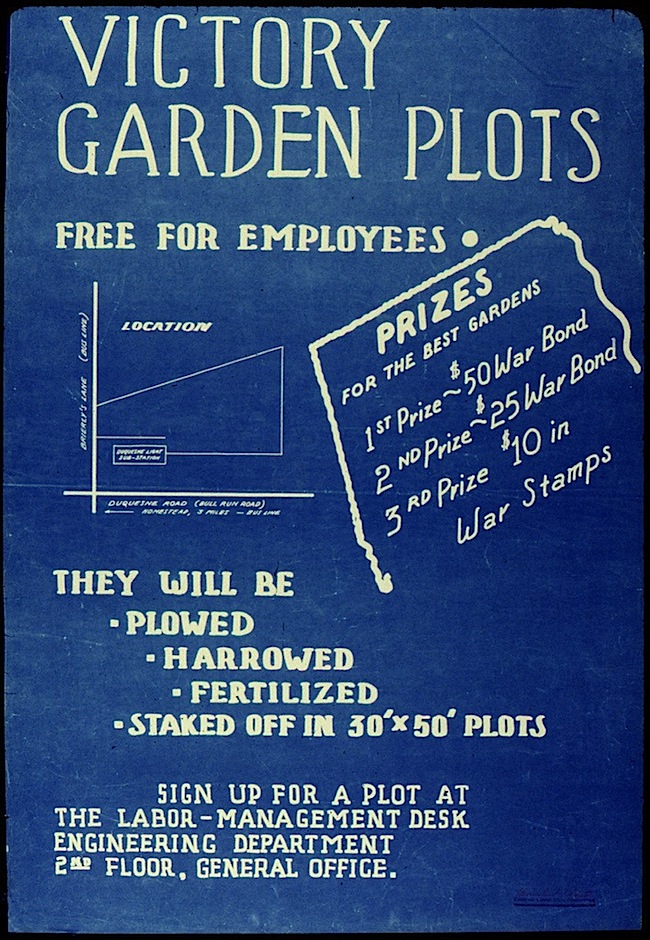 “Victory Garden Plots Free For Employees ca. 1942 – ca. 1943” poster, created by the Office of Emergency Management, War Production Board, via U.S. National Archives Commons on flicker.
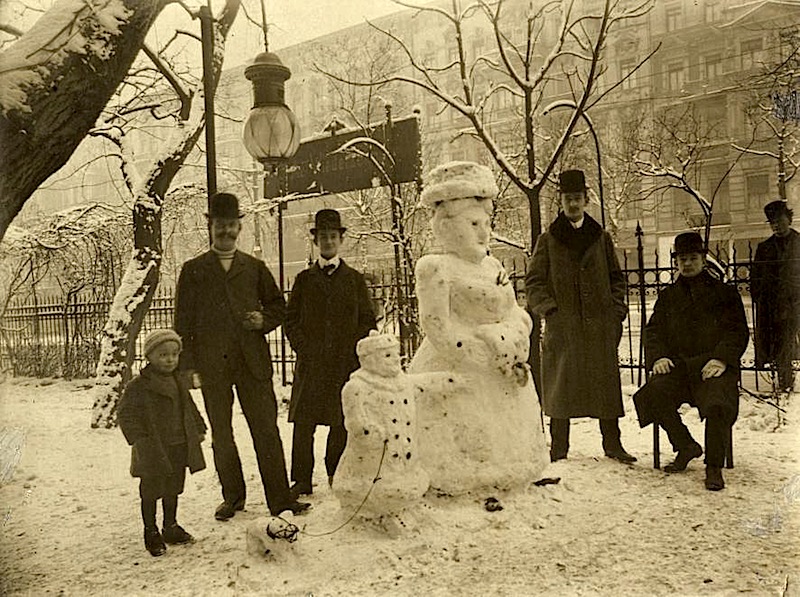

 enclos*ure