
 “Pumpkins in the Rogue River Valley, Oregon,” date and photographer unknown, via Oregon State University Special Collections & Archives on flickr. The image is from a collection of lantern slides of the “Visual Instruction Department.”
Category: life in gardens
Peace flower
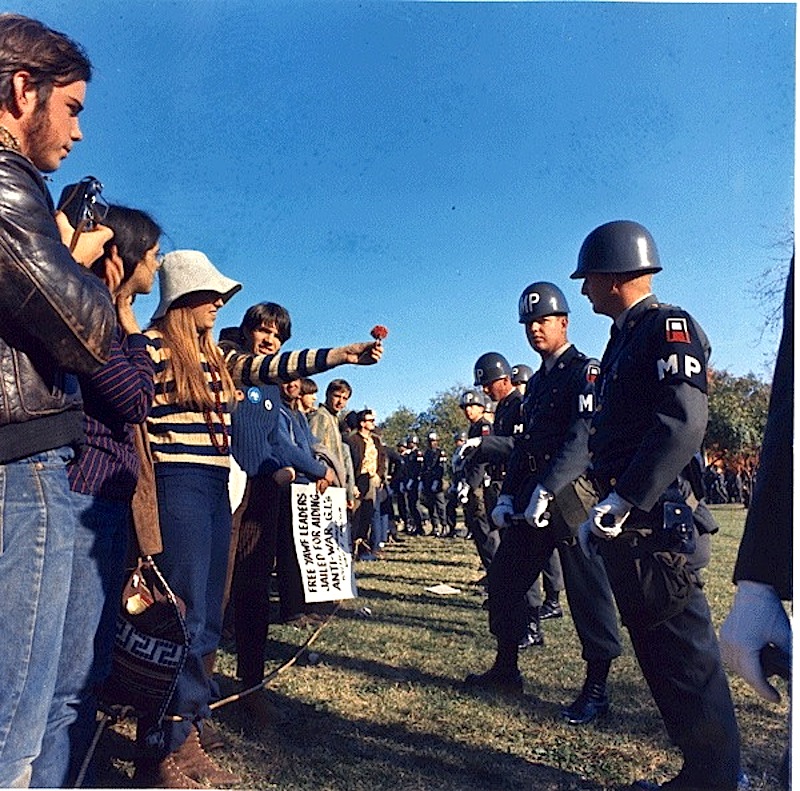 “Female demonstrator offering a flower to a military police officer,” West Potomac Park or Pentagon grounds, Arlington, Virginia, October 21, 1967, by S.Sgt. Albert R. Simpson, via U.S. National Archives Commons on flickr.
Flower Power originated in Berkeley, California, as a symbolic action of protest against the Vietnam War. In his November 1965 essay titled “How to Make a March/Spectacle,” [Allen] Ginsberg advocated that protesters should be provided with “masses of flowers” to hand out to policemen, press, politicians and spectators. . . .
In October 1967, [Abbie] Hoffman and Jerry Rubin helped organize the March on the Pentagon using Flower Power concepts to create a theatrical spectacle. The idea included a call for marchers to attempt to levitate the Pentagon. When the marchers faced off against more than 2,500 Army National Guard troops forming a human barricade in front of the Pentagon, demonstrators held flowers and some placed flowers in the soldier’s rifle barrels.
Photographs of flower-wielding protesters at the Pentagon March became seminal images of the 1960s anti-war protests.
— Wikipedia, “Flower Power“
Maple leaves
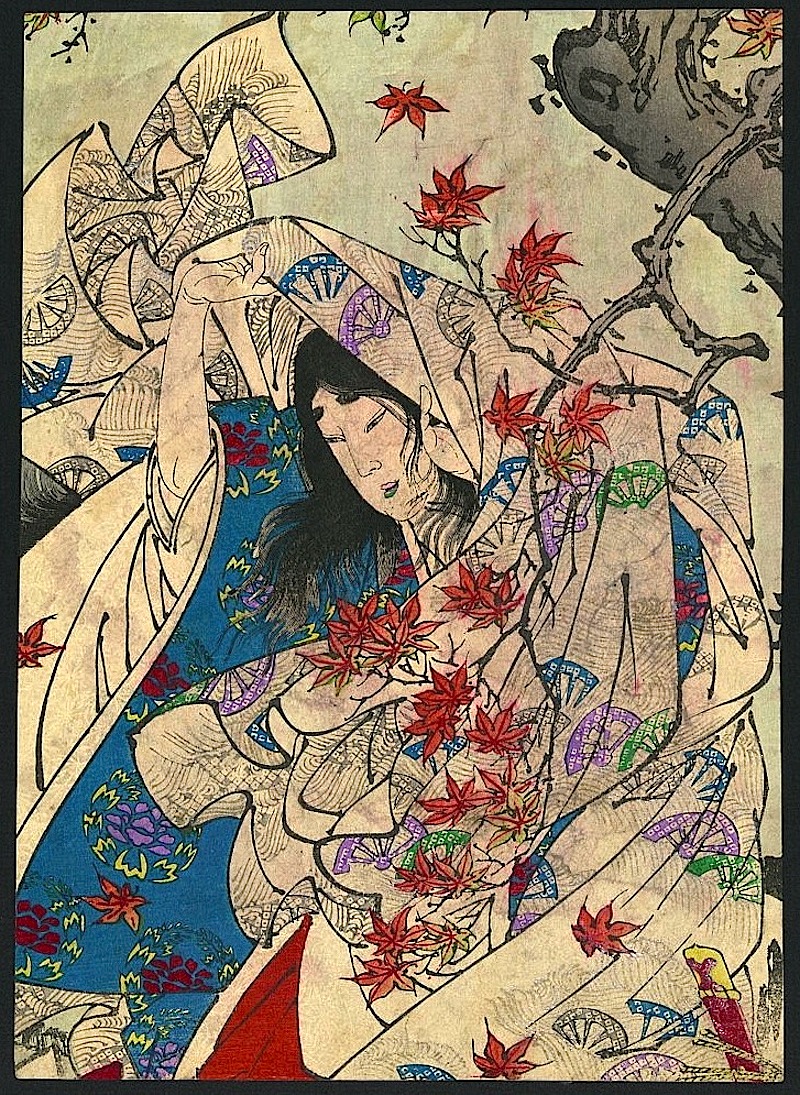 “Momijigari,” (maple leaf gathering), ca. 1880s, by Taiso Yoshitoshi, via Library of Congress Prints and Photographs Division.
Cincinnati, Ohio
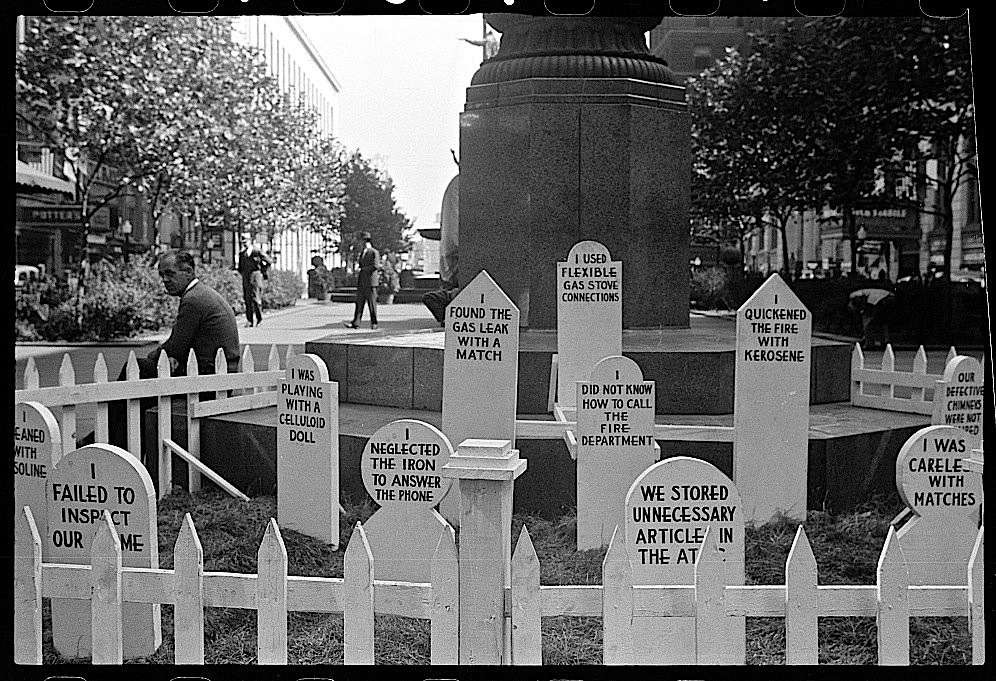 “Fire prevention week in Cincinnati, Ohio,” October 1938, by John Vachon for the U.S. Farm Security Administration, via Library of Congress Prints and Photographs Division.
The Sunday porch: storefront
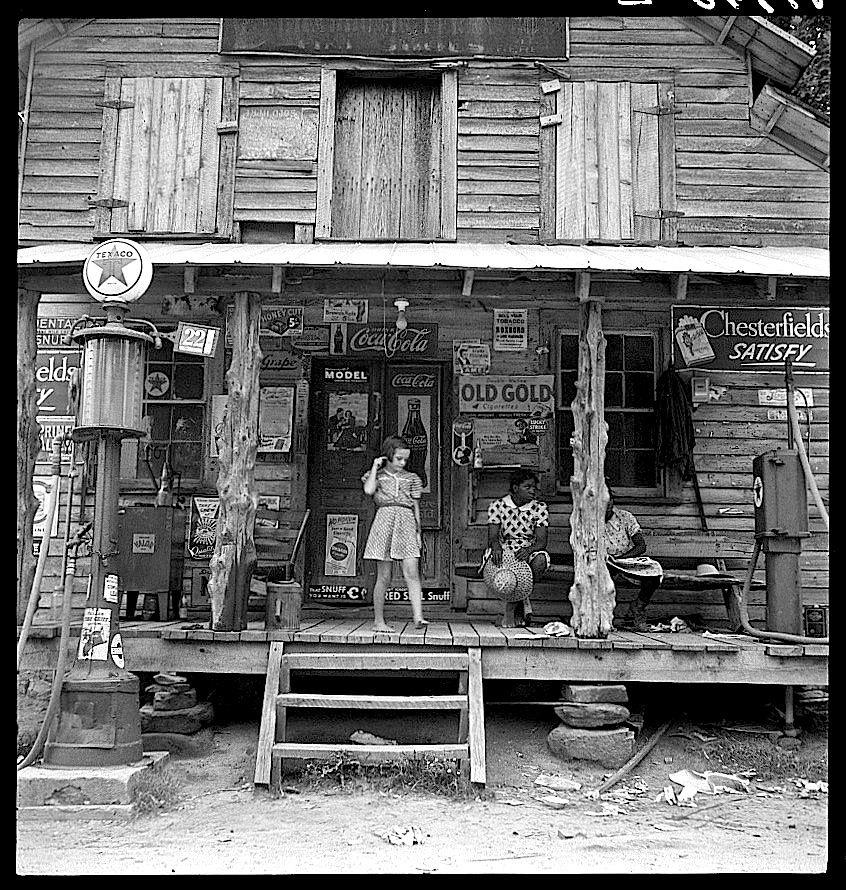 Country store with rough tree trunk columns, Person County, North Carolina, 1939, by Dorothea Lange for U.S. Farm Security Administration, via Library of Congress Prints and Photographs Division.
 enclos*ure