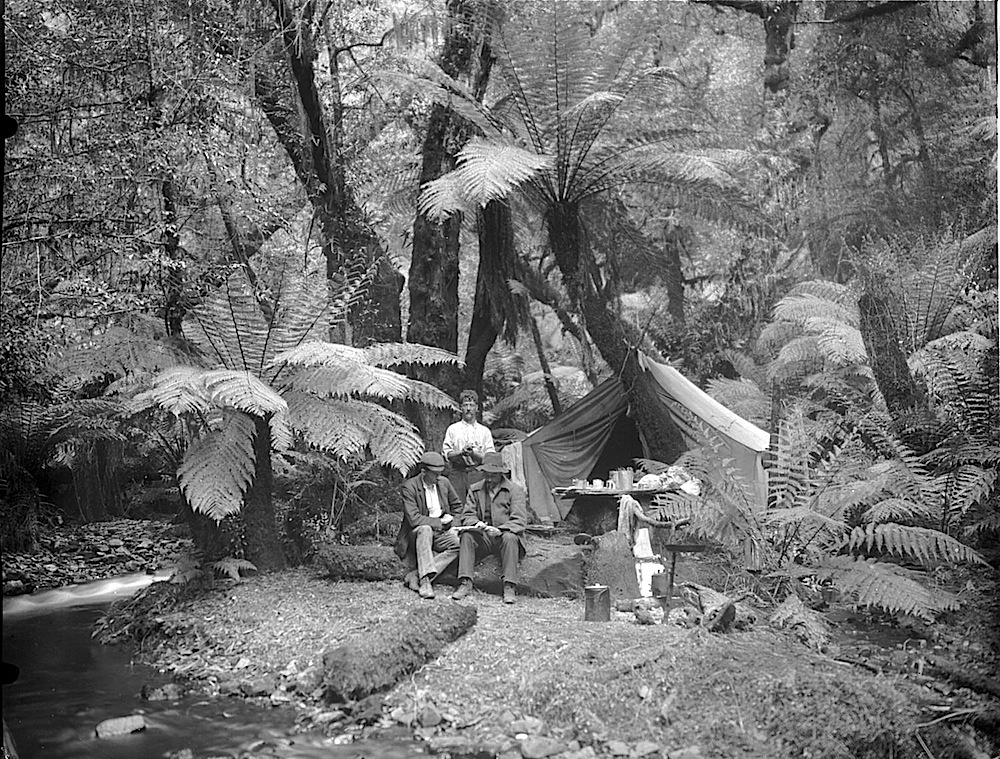
Upper Yarra, Victoria

A camp in an Eden-like spot in the forest of the Upper Yarra Valley, Victoria, 1906, by Archibald James Campbell, via Museums Victoria Collections (under CC license).
Campbell was an ornithologist and a naturalist, and he made early use of nature photography to record his fieldwork.

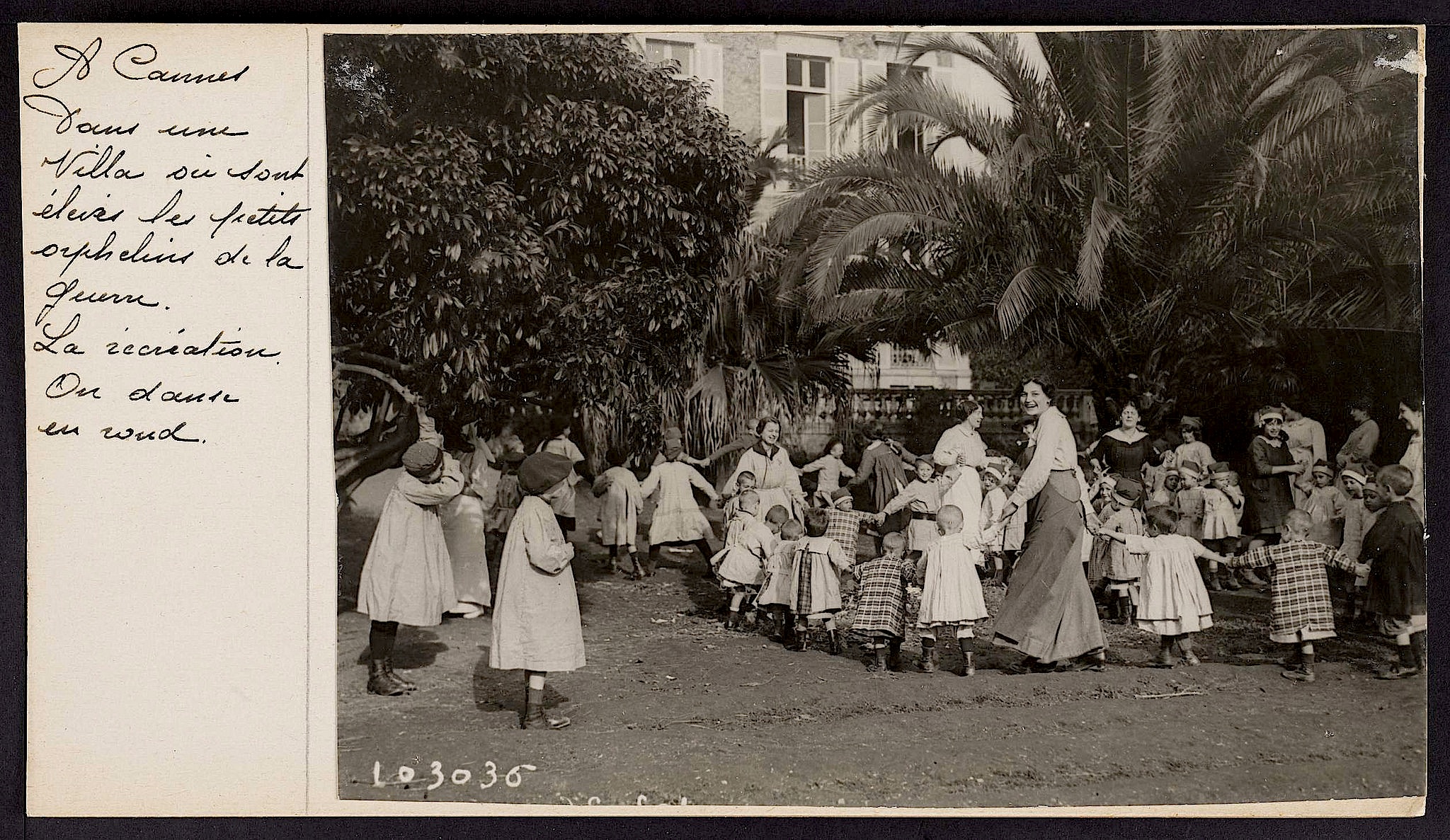
Cannes, France

“At Cannes. In a villa where the little orphans of the war are raised. Recreational dance,” ca. 1914 – ca. 1918, photographer unknown, via the Université de Caen Basse-Normandie Commons on flickr.

The photo is one of over 1,800 donated to the archives of Seine-Maritime in Rouen and the Université de Caen by the founder of Lafond Printing in Rouen. The sepia photographs have been digitized in their original condition: glued on bristol board with handwritten captions identifying places and scenes. Most of the pictures concern World War I.

You can click on the image to enlarge it.

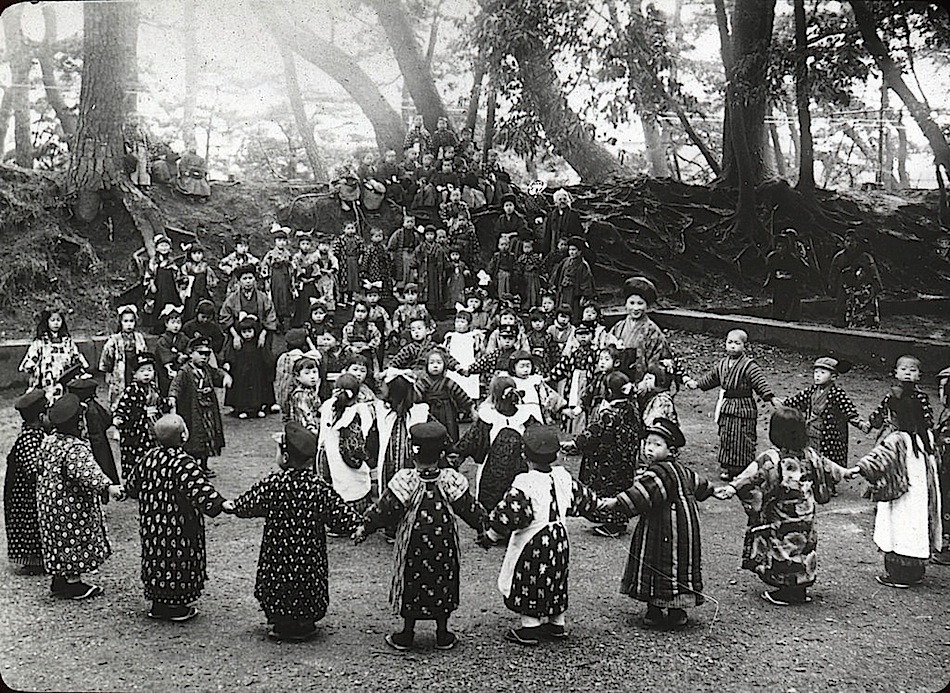
Tokyo, Japan

“Kindergarten Picnic, Tokyo,” Japan, ca. 1915, via OSU Special Collections & Archives Commons on flickr.

The image is from a collection of visual instruction lantern slides.

CdV, Cyprus

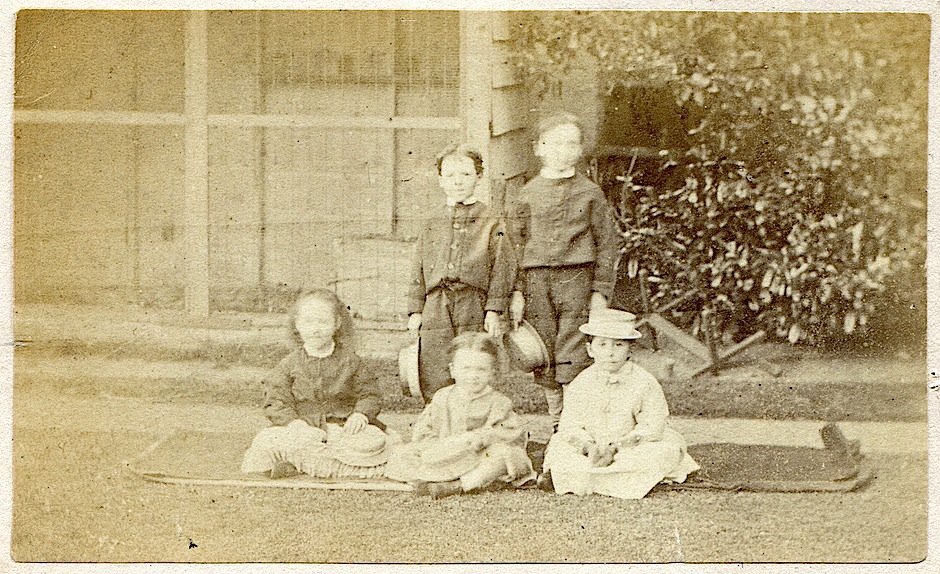
“The magic carpet,” ca. 1860s, via pellethepoet on flickr (under CC license).

The picture was a carte de visite (CdV or visiting card), a type of small photograph patented in Paris in 1854. Exchanging them among family and friends became extremely popular worldwide in the 1860s. Their use was displaced in the 1880s by the larger “cabinet cards”  (and later by the home snapshot). Pelle’s notes say this one was purchased from an eBay seller in Paralimni, Cyprus.

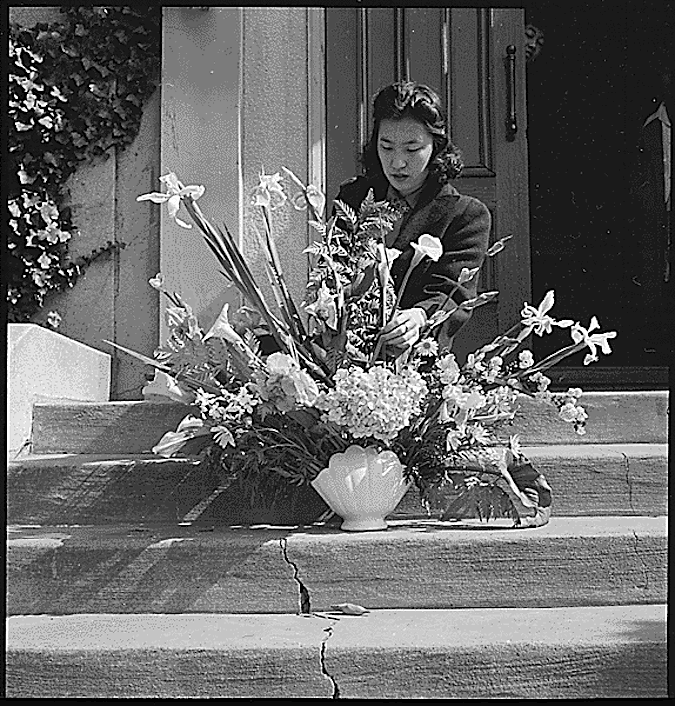
Oakland, California

Oakland, Calif., 26 April 1942, Natl Archives Commons on flickr
“Arranging flowers for alter on last day of service at Japanese Independent Congregational Church, prior to evacuation [internment],” Oakland, California, April 26, 1942, by Dorothea Lange for the U.S. War Relocation Authority, via National Archives Commons on flickr.

All along the Pacific coast — from 1942 to January 1945 — over 110,000 people of Japanese heritage were forced into internment camps.  Sixty-two percent were American citizens.

In 1988, in the Civil Liberties Act, the U.S. Government admitted that its actions had been based on “race prejudice, war hysteria, and a failure of political leadership.”