Salem, Massachusetts

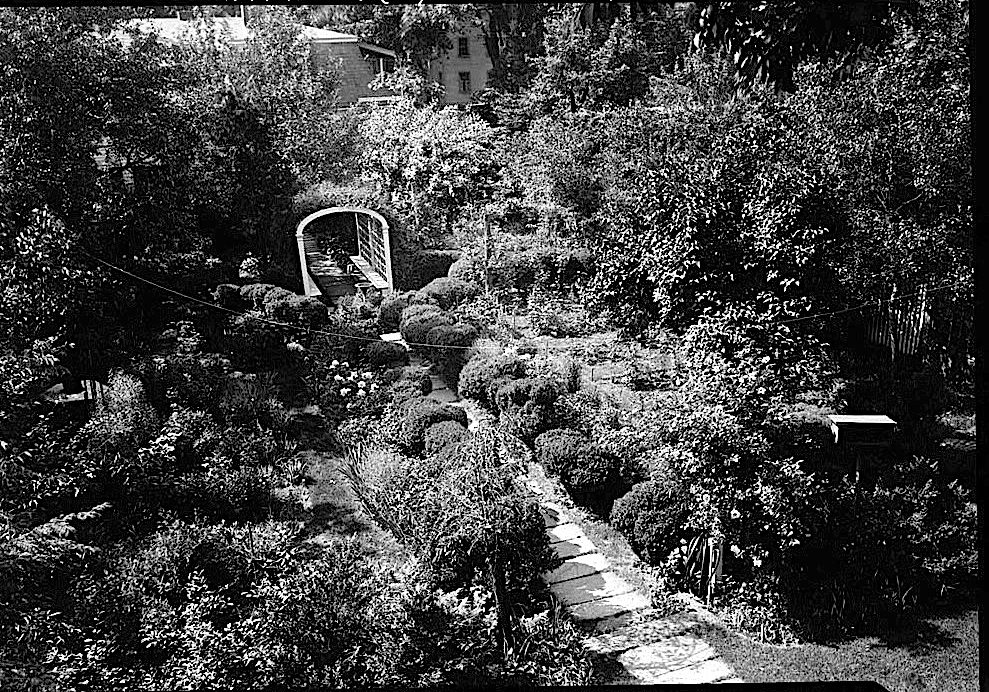
View of garden, looking south, Leverett Saltonstall Place, 41 Chestnut Street, Salem, Massachusetts, June 1940, by Frank O. Branzetti for an Historic American Buildings Survey (HABS), via Library of Congress Prints and Photographs Division (both photos).

In 1808 (or maybe 1810), Thomas Saunders built a double house for his two daughters, Caroline and Mary Elizabeth, and their husbands, brothers Nathaniel and Leverett Salstonstall.

The Leverett Salstonstalls lived in the no. 41 side, shown here.
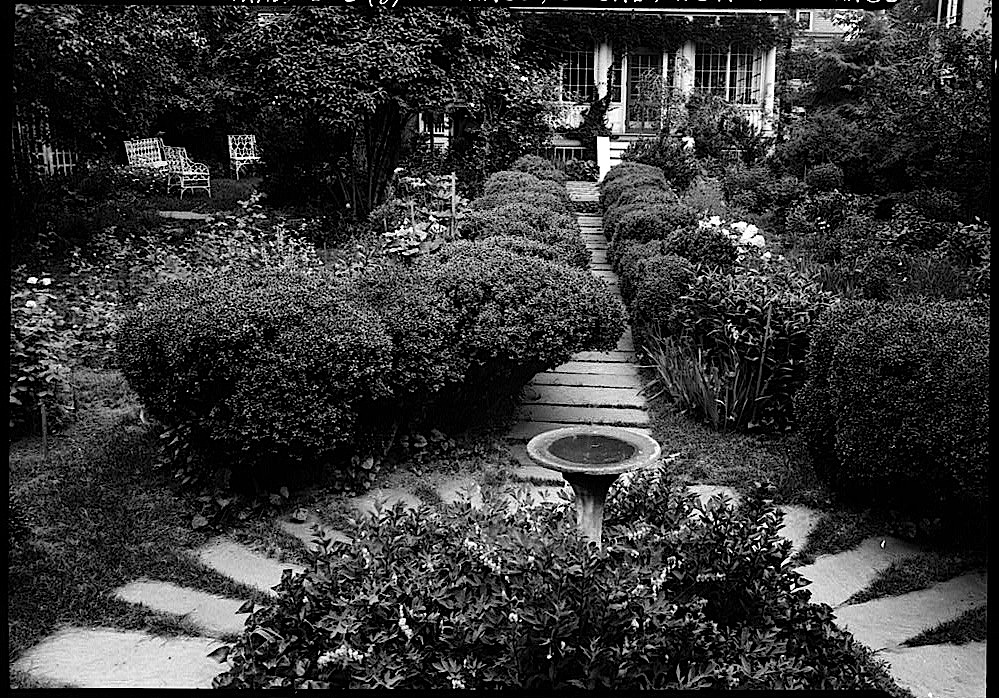
Looking north.

The garden was also laid out about 1810. Its arrangement was reportedly the same as when this drawing was made in 1937.
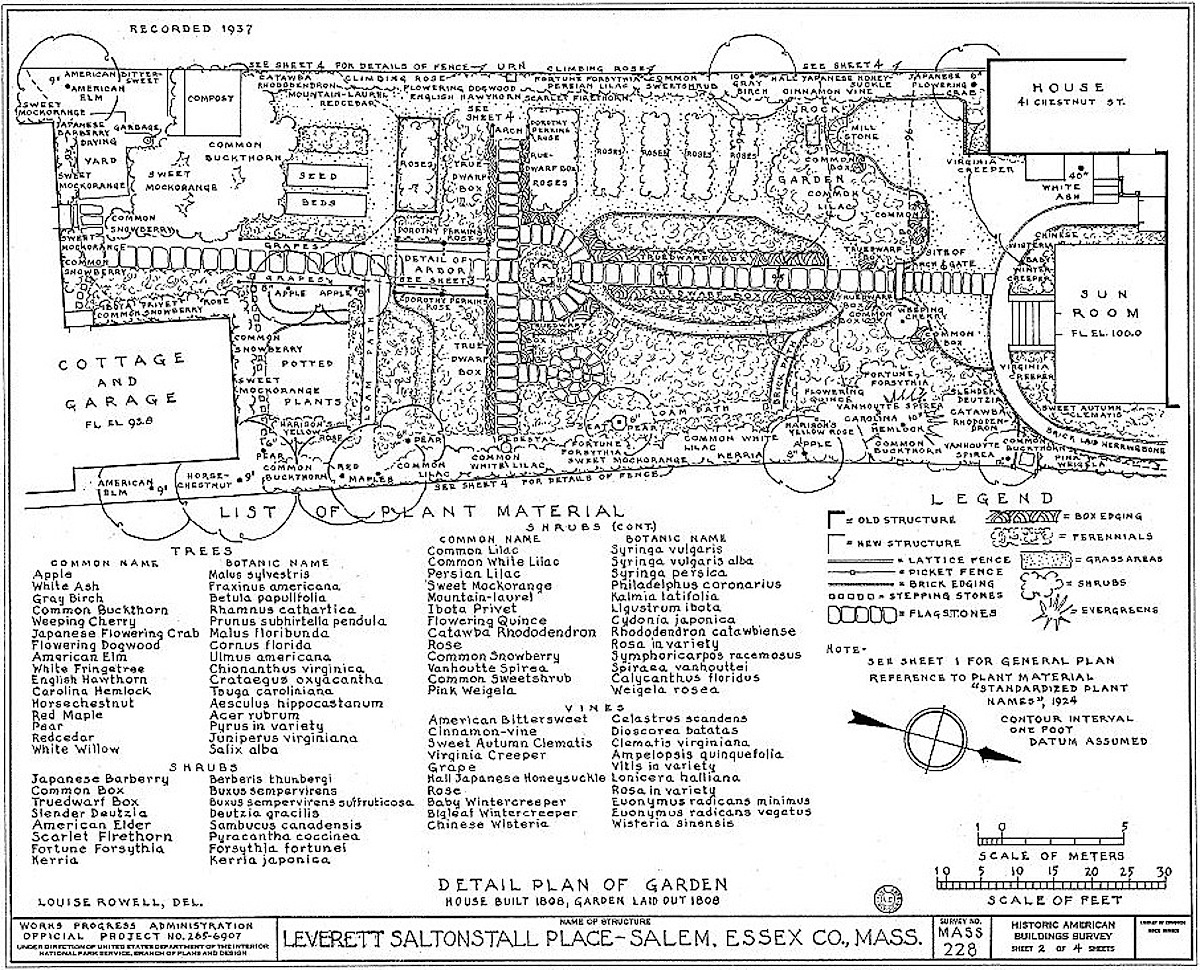
Drawing by Louise Rowell, 1937, for the same HABS. Click to enlarge.

Mary and Leverett’s granddaughter, Mary Saltonstall Parker, also lived in the house in the late 19th and early 20th centuries. She wrote several little books of sentimental verse that fed into the Colonial Revival movement of that period. During WWI, her needlework art was published in House Beautiful and other publications.

Spruce Grove, Alberta

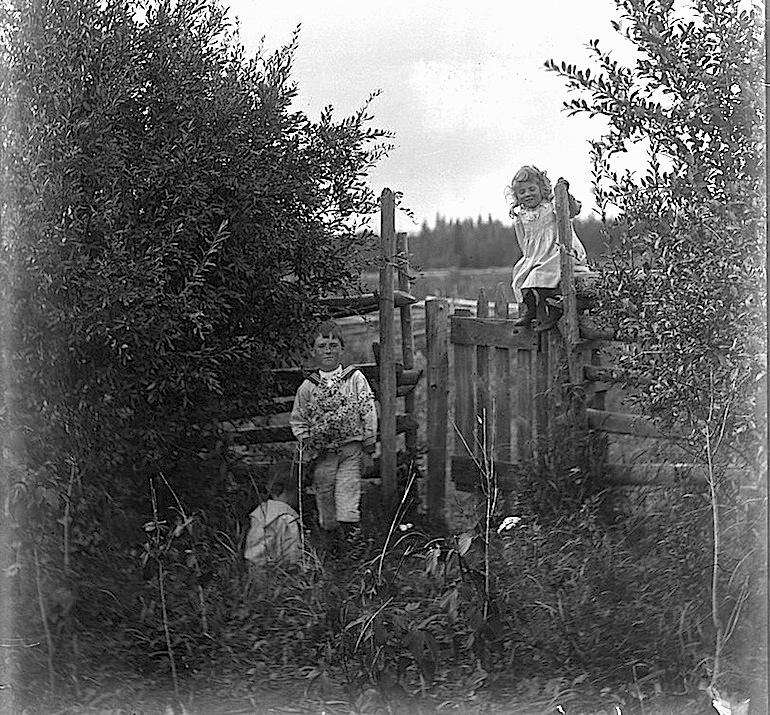
Alan, Mary, and Robert Brebner, Spruce Grove, Alberta, ca. 1900, by Robert McKay Brebner, via Provincial Archives of Alberta Commons on flickr (both photos).

Coming home, on the same day perhaps? (Cropped slightly by me.)

There is more about the Brebner family here.

The Sunday porch: Miami, Florida

House in Miami, Florida, July 11, 1955, via Florida Memory (State Library and Archives of Florida) Commons on flickr (cropped slightly by me).

Widely available by the 1950s, aluminum awnings were touted as longer-lasting and lower-maintenance than traditional [canvas] awnings. . . . [T]hey were especially popular with homeowners. Aluminum awnings were made with slats called “pans” arranged horizontally or vertically. For variety and to match the building to which they were applied, different colored slats could be arranged to create stripes or other decorative patterns.

— U.S. National Park Service “Preservation Brief

Corner table, Paris

La rue des Ursins à l'angle de la rue des Chantres, Paris (IVe arr.), France, juillet 1914, (Autochrome, 9 x 12 cm), Stéphane Passet, Département des Hauts-de-Seine, musée Albert-Kahn, Archives de la Planète, A 13 657
La rue des Ursins à l’angle de la rue des Chantres, Paris (IVe arr.), France, July 1914, by Stéphane Passet, via Archives of the Planet Collection – Albert Kahn Museum /Département des Hauts-de-Seine.

Was this photo taken at the current corner of rue des Ursins and rue des Chantres in Paris? You can see the location here. I can’t decide.

The autochrome above is one of about seventy-two thousand that were commissioned and then archived by Albert Kahn, a wealthy French banker, between 1909 and 1931. Kahn sent thirteen photographers and filmmakers to fifty countries “to fix, once and for all, aspects, practices, and modes of human activity whose fatal disappearance is no longer ‘a matter of time.’”* The resulting collection is called Archives de la Planète and now resides in its own museum at Kahn’s old suburban estate at Boulogne-Billancourt, just west of Paris. Since June 2016, the archive has also been available for viewing online here.


*words of Albert Kahn, 1912. Also, the above photo (A 13 657) is © Collection Archives de la Planète – Musée Albert-Kahn and used under its terms, here.

Aalst, the Netherlands

two-women-in-garden-nationaal-archief-netherlands
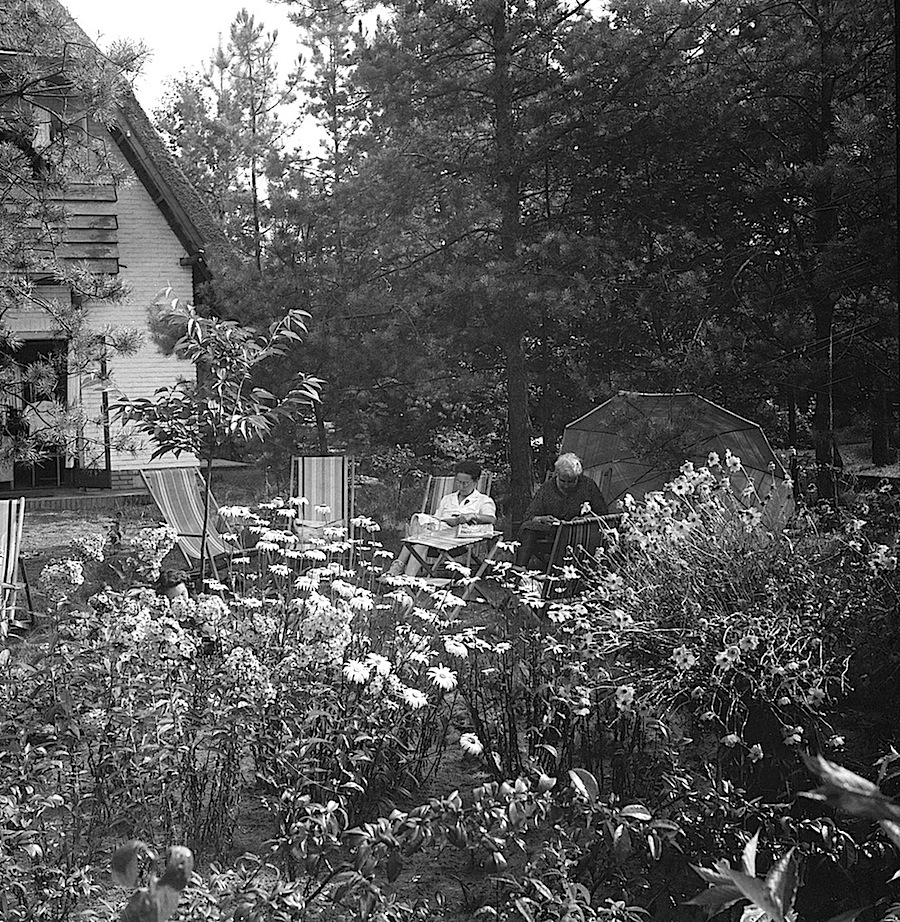
Three women in the garden; the one on the right is probably the mother of the photographer, Aalst, Gelderland, the Netherlands, undated, by Willem van de Pollvia Nationaal Archief (Netherlands).