If you would like to see and read more about living in Rwanda, check out the charming blog A Year+ in Kigali, Rwanda by Helaina. I particularly liked her posts here (about the language) and here (culture) and here (food).
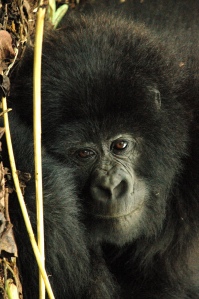
Her photo of this female mountain gorilla is one of the best that I have seen. (And, living here, I’ve seen quite a few.)
Also, here’s something I just found out: the smallest waterlily in the world, Nymphaea thermarum, was native to the hot springs of Mushyuza in southwest Rwanda. Unfortunately, it has not existed in the wild since 2008, when its habitat was disrupted by farming. However, in 2010, a scientist at Kew Royal Botanic Gardens was finally able to germinate its seeds (there were only 20 left). Its flowers, which are only about 1/4″ (less than 1 cm.) in diameter, are white/lavender with yellow stamens.
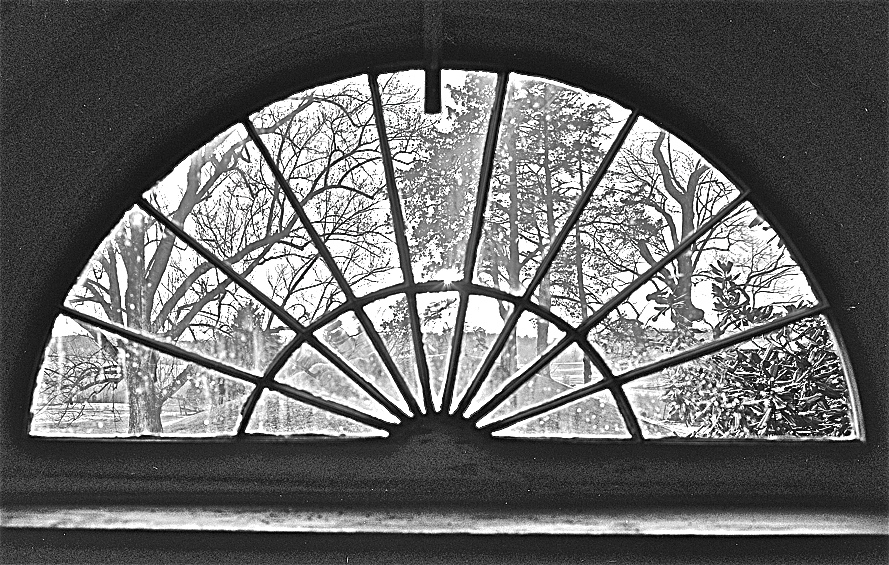
A west window of Thomas Jefferson’s Poplar Forest revealing a view of the curtilage. Photo by Jack E. Boucher, via Library of Congress Prints and Photographs Division.
Curtilage –a piece of ground (as a yard or courtyard) within the fence surrounding a house. Origin: Middle English, from Anglo-French curtillage, from curtil garden, curtilage, from curt court. First known use: 14th century. — Merriam-Webster Dictionary
A bit more: a cortil was ‘little yard’ in Old French: cort + il (diminutive suffix). A ‘cortile’ (in English, in architecture) is an internal courtyard of a palazzo.
As a legal term, curtilage means the land immediately surrounding a residence that “harbors the intimate activity associated with the sanctity of a man’s home and the privacies of life.” In U.S. law, it is important for dealing with cases involving burglary, self defense, and unreasonable searches and seizures under the Fourth Amendment.
I came across the word while reading the website of Poplar Forest, Thomas Jefferson’s second home and getaway (I remembered something about it after Apartment Therapy posted a slideshow of presidential retreats). Its curtilage originally included an octagonal house (possibly the first in America), orchards, ornamental and vegetable gardens, and slave quarters. It was surrounded by a ‘snake’ or ‘worm’ stacked-rail fence, as well as fields of tobacco and wheat.
Because little visual evidence of Jefferson’s plantings remain, the 61-acre area is being reconstructed through archeology and research of his papers. Letters do indicate that a sunken garden behind the house contained “lilacs, Althaeas, g[u]elder roses, Roses, and clianthus.”
At Poplar Forest, Jefferson was working from a concept of “an ornamental villa retreat within an isolated agricultural setting.” He was thinking of ancient Roman villas, as they were reinterpreted in the 16th century by Andrea Palladio.
The estate is located in Forest, Virginia, near Lynchburg.
I fell in love with this Mussaenda shrub soon after we arrived in Kigali, but I didn’t know its name until tonight after some internet research.
I think my Mussaenda (with orange flowers and white bracts) is M. frondosa, a native to Indo-China and Malaysia, although there is a species native to West Africa, M. erythrophylla or Ashanti blood or red flag. This may actually be the shrub in our garden that I’ve been thinking is a poinsettia. I’m going to have to do a little more research on that tomorrow. [Yes, it is M. erythrophylla.]
Mussaendas are hardy to (U.S.) zones 9-11. They can reach heights from 3′ to 10′, and different species and cultivars can have bracts and flowers in orange, white, red, yellow, or pink. They need a moderate amount of water and sun.
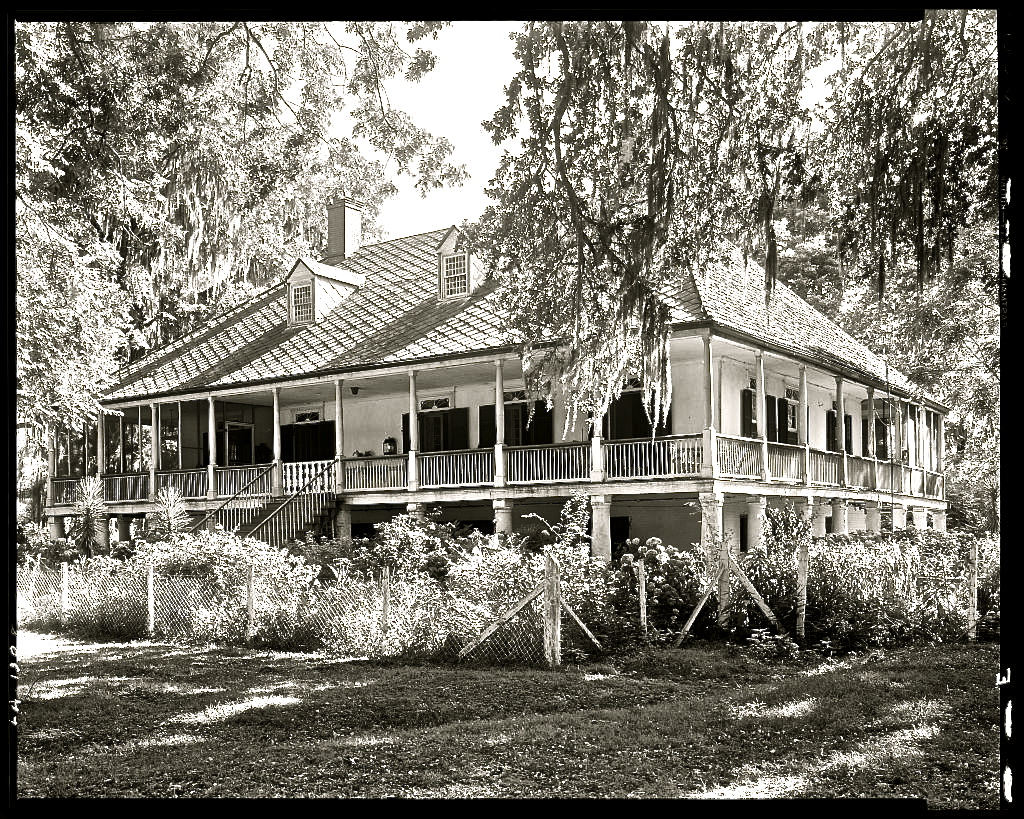
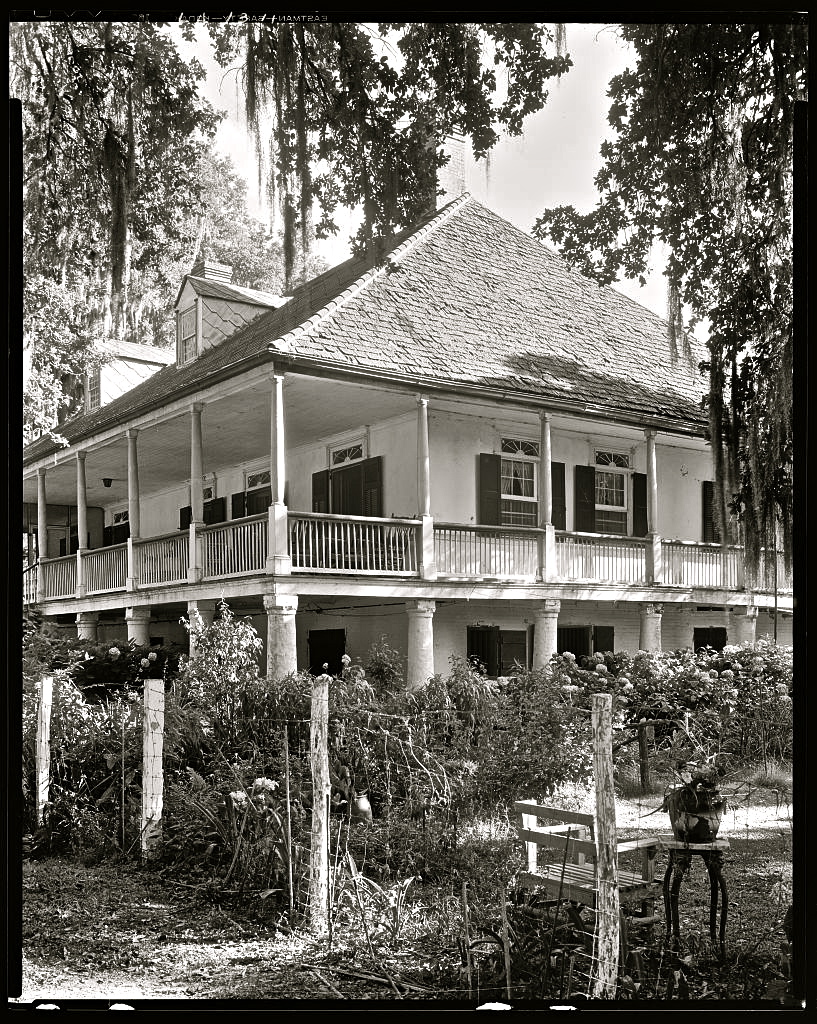
If it’s cold outside where you are (or rainy like here), imagine yourself on this wonderful Louisiana porch surrounded by a flower garden.
Palange Plantation, New Roads vic., Point Coupee Parish, Louisiana, 1938. From the Carnegie Survey of the South, Library of Congress Prints and Photographs Division.Another view. Both photos by Frances Benjamin Johnston.
And then click here to listen to this classic by Etta James. Everything’s great now, right?
Something to read
In the last couple of weeks, I’ve enjoyed a lot of posts on the blog Studio G, but especially those about Brazil, here and here. I really liked looking at her six sets of “before and after” pictures from a Brazilian home makeover show on Thursday. My favorite is here. I also enjoyed her post on a different kind of roller coaster in Germany here.
Grounded Design’s post, “Why We Plant,” here, was inspiring. “Designers don’t create beauty. To believe otherwise makes us guilty of forgery and blasphemy. But what we can do is create the conditions where people can have an experience of beauty.”
Phyllis Odessey at her eponymous blog wrote here about the Hudson Valley Seed Library and its seed packets with original artwork. Also, if you have an interest in school gardens, take a look at an older post here, about a rice garden in New York.
If you’ve been outside since Tuesday, pulling up your lawn (and here), as per Garden Rant’s anti-valentineto the lawn,herearesome funny things to do with the now superfluous sod, thanks to Black Walnut Dispatch. (BWD also has a very funny visual here about how landscape designers are perceived by different groups.)
The New York Times has an article on artist Cindy Sherman this morning. Interestingly, this 2010 article in Smithsonian magazine makes a brief connection between Sherman’s work and Frances Benjamin Johnston’s self portraits.
From Pinterest, I just discovered this odd, but rather lovely, blog. See what you think here.
What are the best blog and website posts that you’ve read this month?