Vintage landscape: The Kittatinny

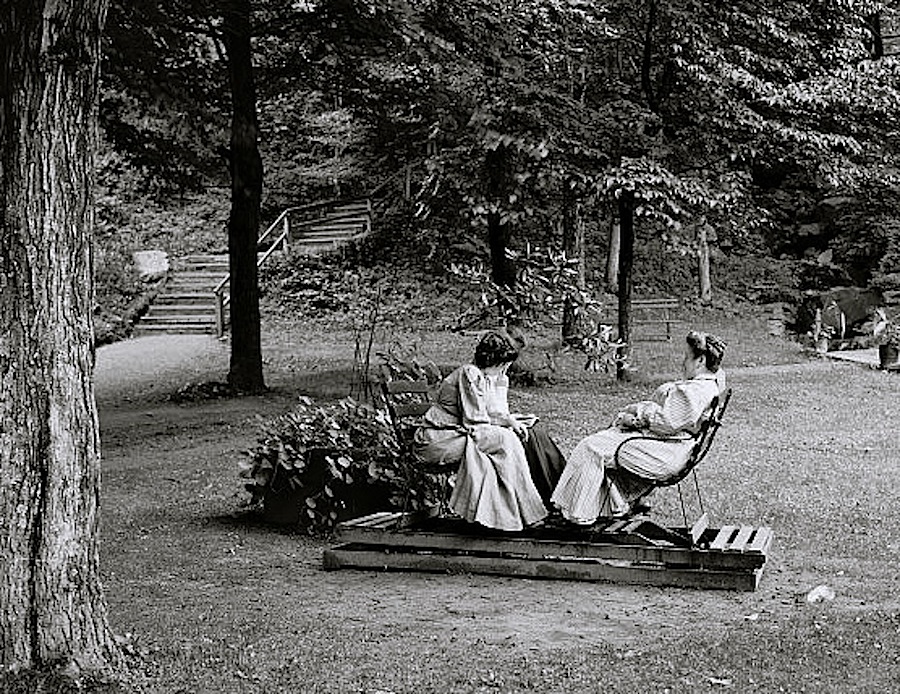
The Kittatinny, Delaware Water Gap, Pa., c. 1905, via Library of Congress/enclos*ure“In the grounds of The Kittatinny, Delaware Water Gap, Pa.,” c. 1905, by Detroit Publishing Co. via Library of Congress Prints and Photographs Division.

What a pleasant spot. What do you think they’re talking about?
detail: The Kittatinny, Delaware Water Gap, Pa., c. 1905, via Library of Congress/enclos*ure

The Kittatinny was the first of the resort hotels at Delaware Water Gap in the Poconos Mountains — opening in 1832. In its heyday in the early 20th century, it could accommodate hundreds of guests.

The Kittatinny, Delaware Water Gap, Pa., c. 1905, via Library of Congress/enclos*ure

The hotel burned down in 1931. Some of the foundation is still visible, as well as a stream that used to run through the basement kitchen, according to a National Park Service newsletter.

Vintage landscape: two trees

Vintage landscape: Bartram's old tree, c. 1908, Philadelphia, Pa./enclos*ure“Old tree in Bartram’s Park [sic], Philadelphia, Pa.,”  by Detroit Publishing Co. via Library of Congress Prints and Photographs Division.

I can’t find out why this apparently dead tree was fenced off so nicely in Bartram’s Garden in about 1908.  Does anyone know?

Bartram’s is the oldest surviving botanic garden in North America.  It was founded in 1728 and became a city park in 1891.

This photo made me think of the Tree of Ténéré, an acacia that was famous for being the only tree for 250 miles on the cavavan routes through the Sahara Desert in northeast Niger.  In 1973, a drunk truck driver managed to knock it down.

Arbre-du-tenere-1961
The tree in 1961. Photo by Michel Majeau, via Wikimedia Commons.

The dead tree was moved to the National Museum of Niger in Niamey later that year — where it was given its own pavilion.  I saw it there several years ago.

The trunks of the fallen tree in its pavilion in the museum in 1985. Photo by Holger Reineccius, via Wikimedia Commons.
The tree at the museum in 1985. Photo by Holger Reineccius, via Wikimedia Commons.

A metal sculpture of the tree was erected at its old location.   (There are more photos  here.)

One must see the Tree [of Ténéré] to believe its existence. What is its secret? How can it still be living in spite of the multitudes of camels which trample at its sides. How at each azalai does not a lost camel eat its leaves and thorns? Why don’t the numerous Touareg leading the salt caravans cut its branches to make fires to brew their tea? The only answer is that the tree is taboo and considered as such by the caravaniers. . . .  The Acacia has become a living lighthouse; it is the first or the last landmark for the azalai leaving Agadez for Bilma, or returning.

— Michel Lesourd, Commander of the Allied Military Mission of the Central Service of Saharan Affairs after he saw the tree in 1939

The Sunday porch: Petworth rowhouses

. . . . . Houses in rows
Patient as cows.

— Robert Pinsky, from “City Elegies — III. House Hour

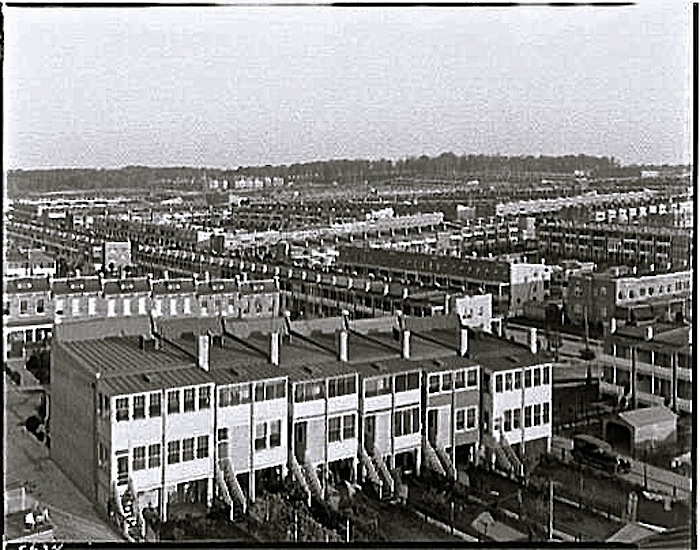
Petworth rowhousesRows of houses in the Petworth neighborhood, Washington, D.C., ca. 1920-1950, by Theodor Horydczak, via Library of Congress Prints and Photographs Division.

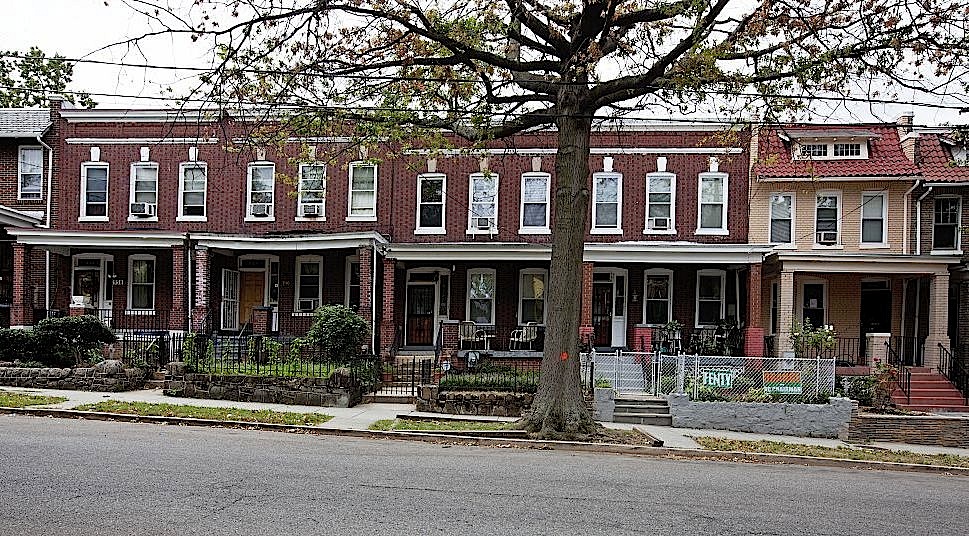
Petworth was farm and forest until the 1880s when the land was purchased for development.  In the 1920s and 30s, thousands of rowhouses were built, many of them in a style popularized by developer Harry Wardman (from 1907) — with its distinctive elevated front porch and tiny front yard.
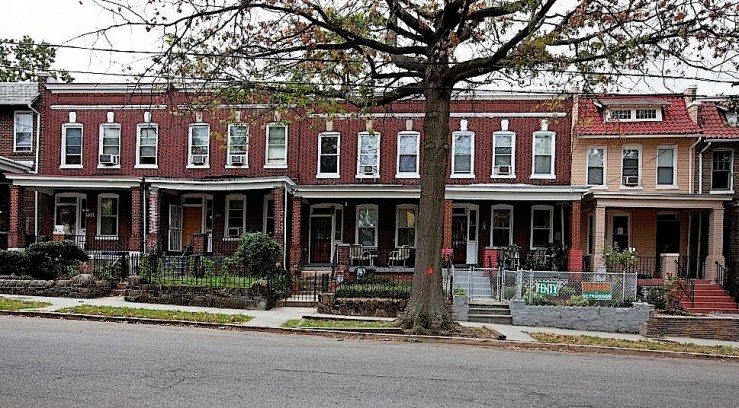
Wardman-style rowhousesAbove:  Petworth rowhouses on Shepherd St., 2010, by Carol Highsmith, via Library of Congress.

“The porches [were] a big part of growing up in Petworth.  On my block there had to be 15 or 20 kids, and you’d come home from school, get on the porch, and look down the block, and you could see this long row of porches, and you’d see everybody coming out of their house. The porches made you get to know your neighbors, they made it a neighborhood.”

— A Petworth resident in the 1940s, quoted in the Washington City Paper

Wardman built his front porch rowhouses in large parts of northwest Washington, and several other developers copied them all over D.C.

Petworth was named a “Best Old House Neighborhood of 2013” by the magazine This Old House.
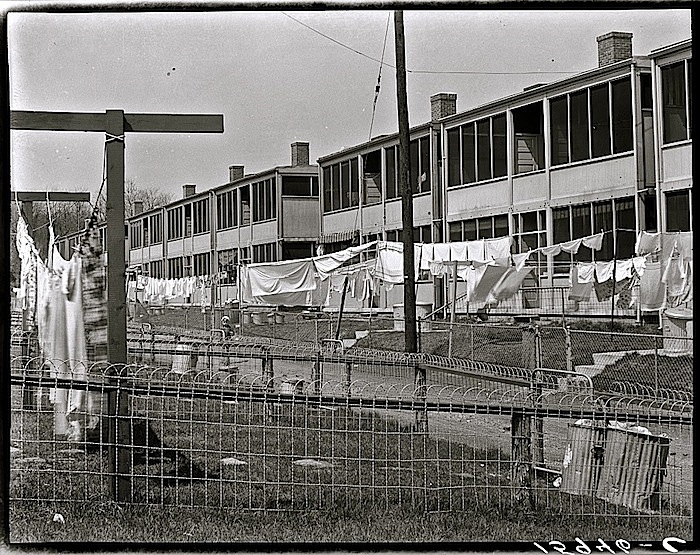
back yards and laundryAbove: backyards of rowhouses, neighborhood not noted, Washington, D.C., July 1939, by David Myers, via Library of Congress.

At the backs of Wardman-style rowhouses were screened sleeping porches (top) and kitchen porches (bottom).

Petworth resident Annette L. Olson decided to install a green roof on the top of her rowhouse front porch.  She wrote about the process for the “Where We Live” column of The Washington Post here.

Back here in Kigali. . .

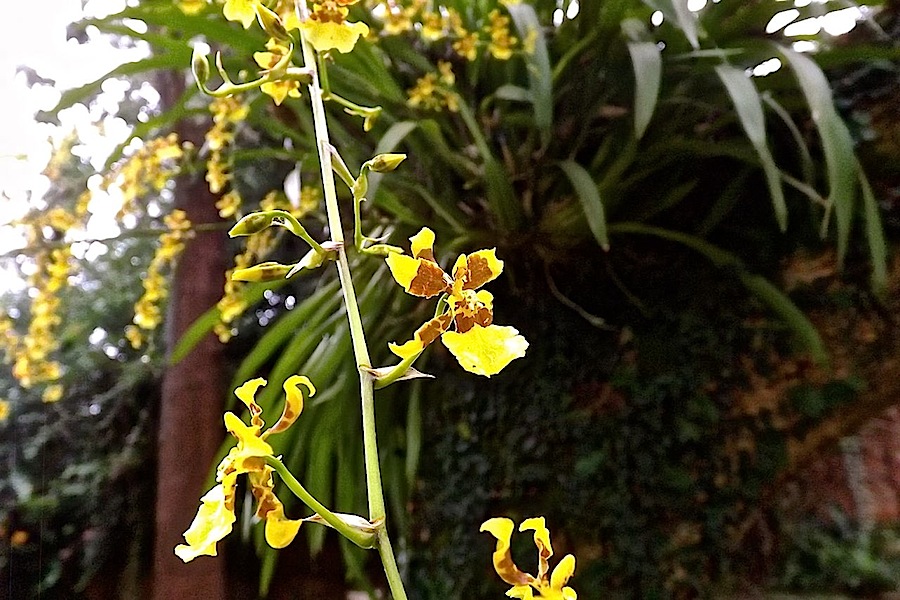
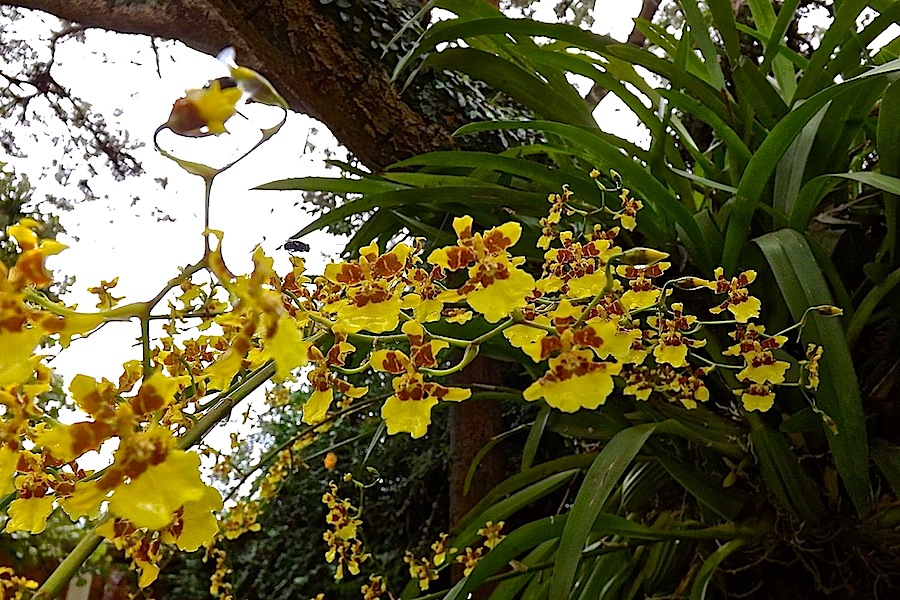
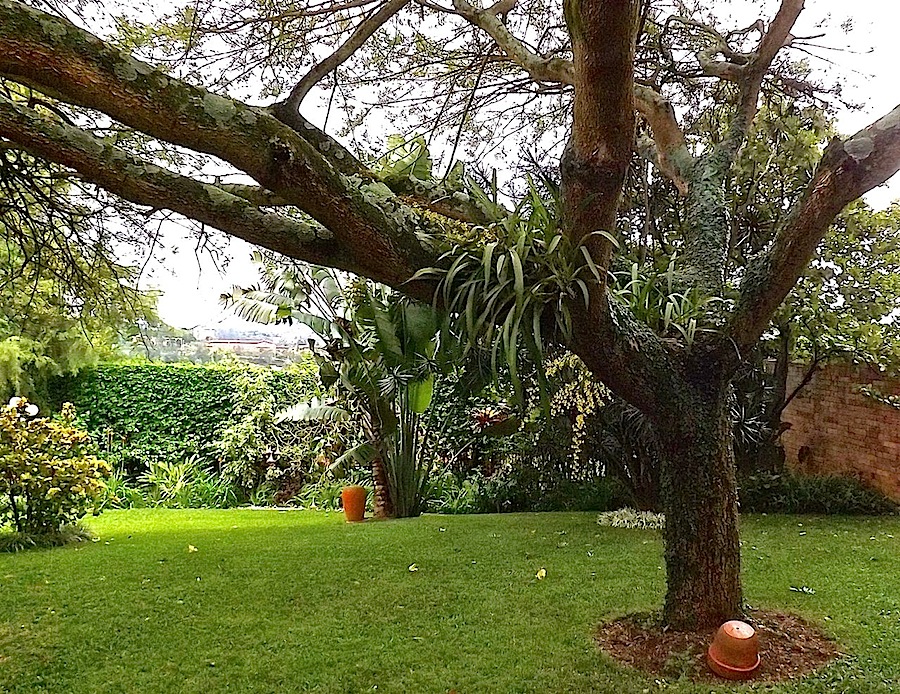
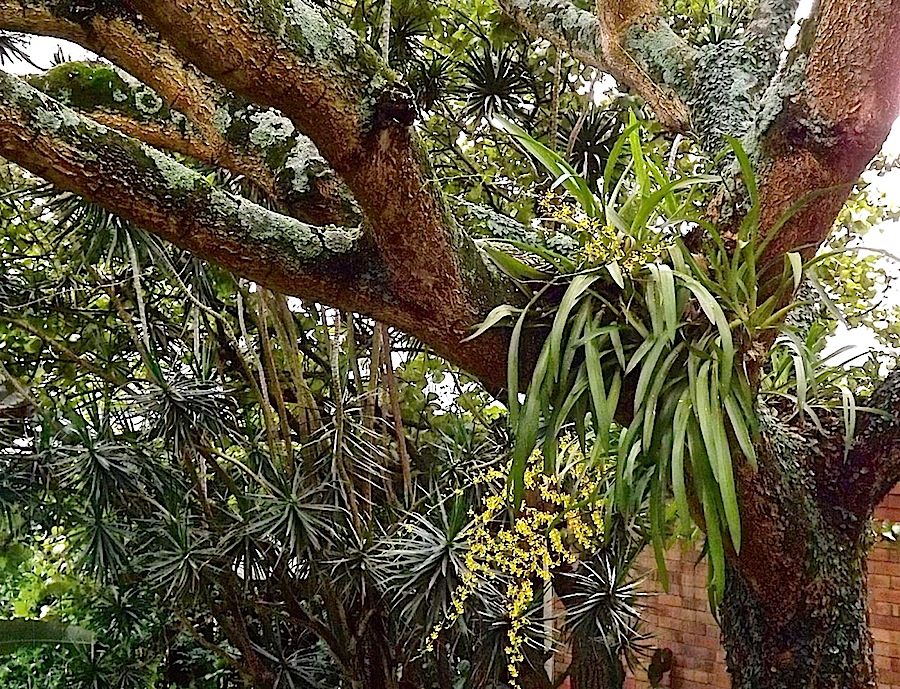
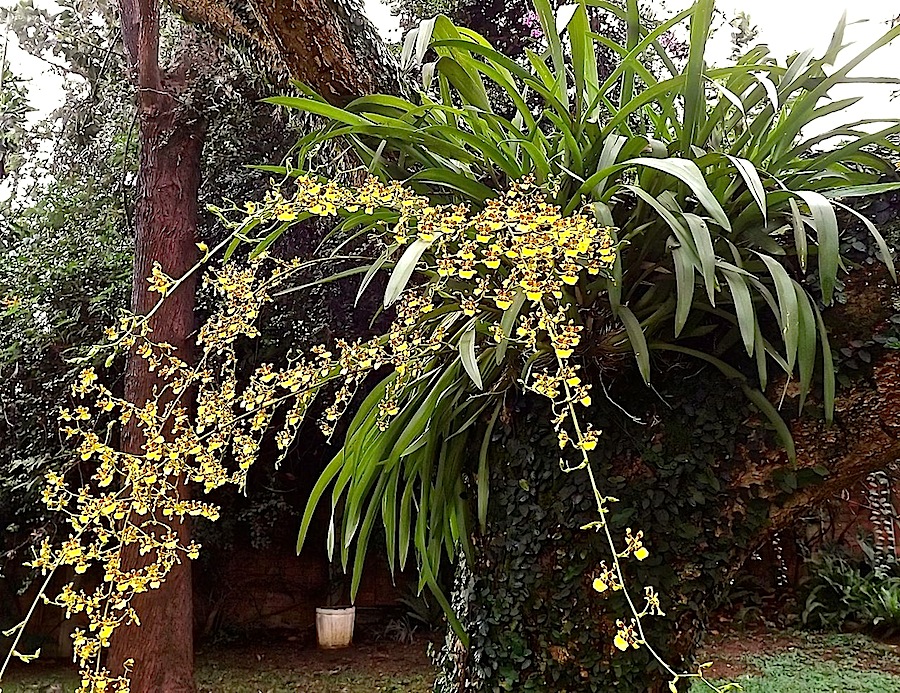
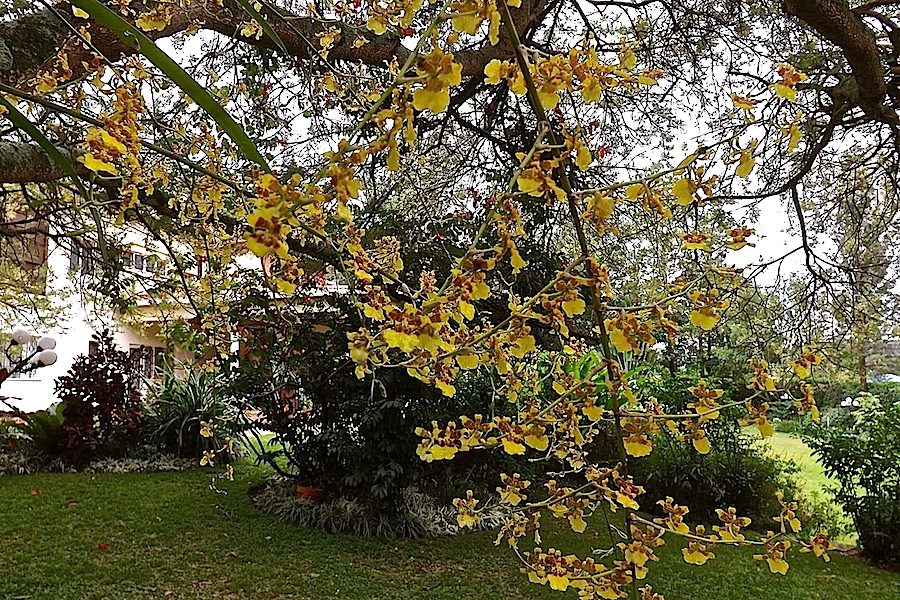
We have orchids in the acacia tree.
34 orchids

1c orchids

These two clumbs of orchids came out of the big old Norfolk pine that used to grow at the entrance to the terrace. (It was cut down a year and a half ago when it was clear it was dying.)

1 orchids

When we wired them onto the acacia, the gardener said the flowers were yellow, but I really didn’t think I’d ever see them bloom.

1a orchids

1b orchids

5 orchids

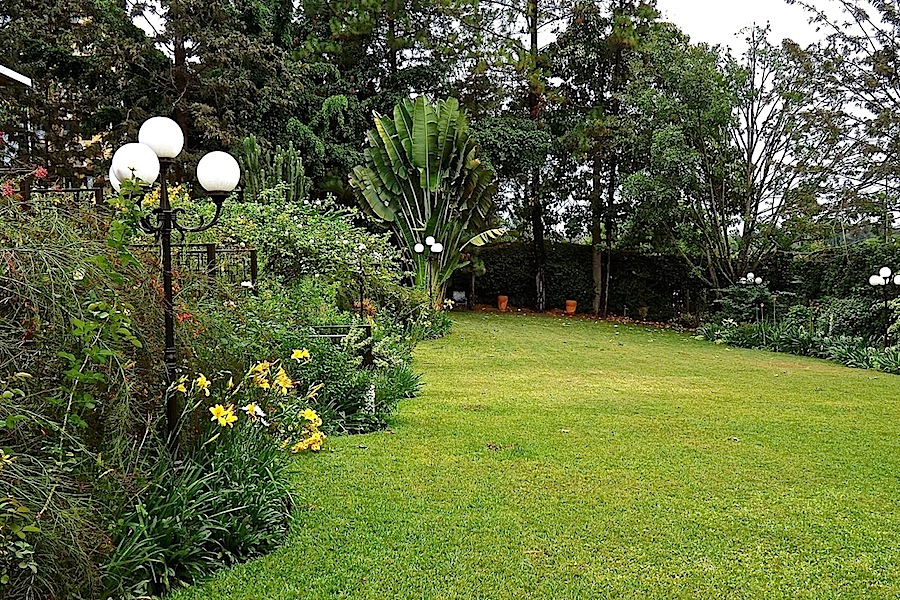
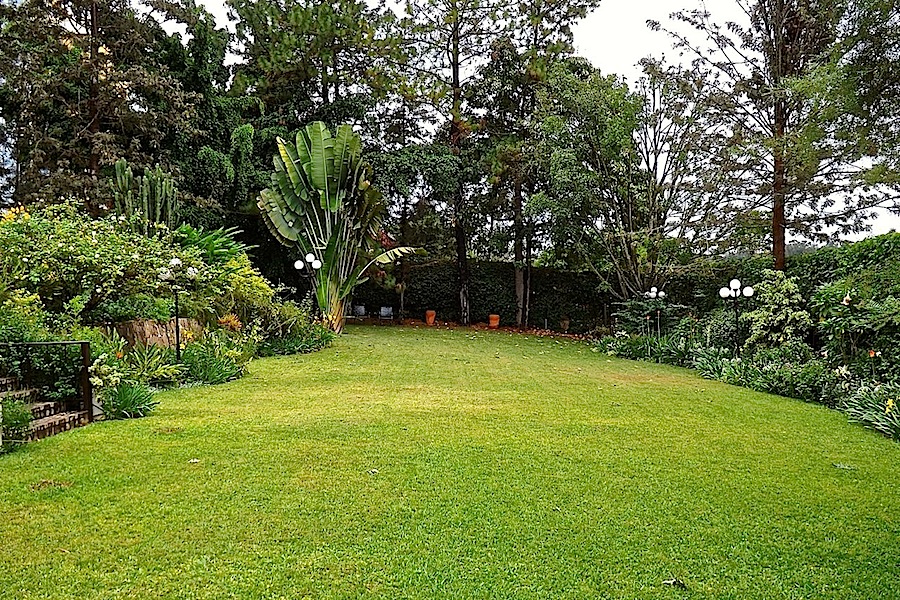
Another change: at the end of the long lawn (below), we have added two tall pots to set off a trio of pine trees.

10 pots

I will plant something tall to the right of the trees/pots grouping.

12 pots

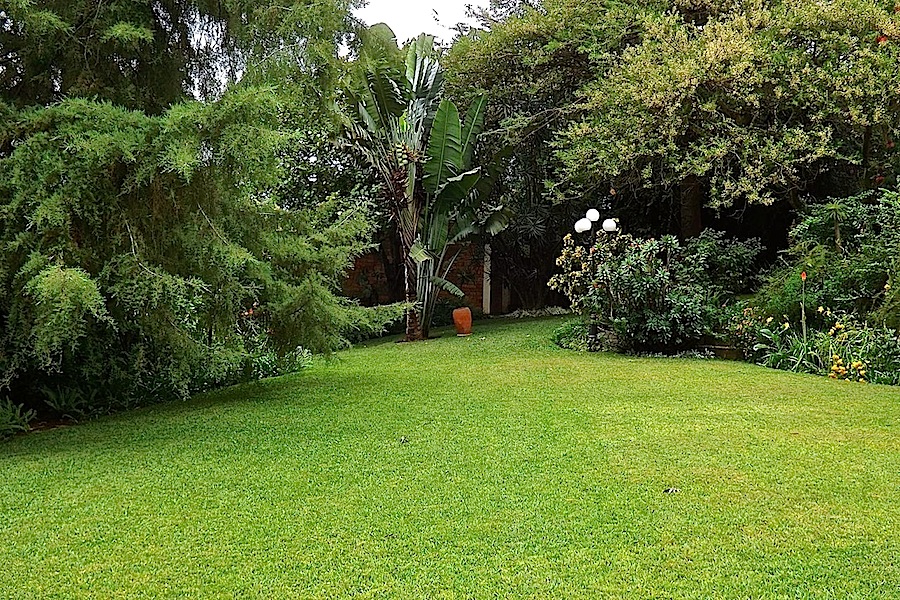
At the other end of the lawn, I placed this single tall pot. I will enlarge the planting area at the base of the traveller’s palm and add some stones to make a level base for the pot.

13 pots

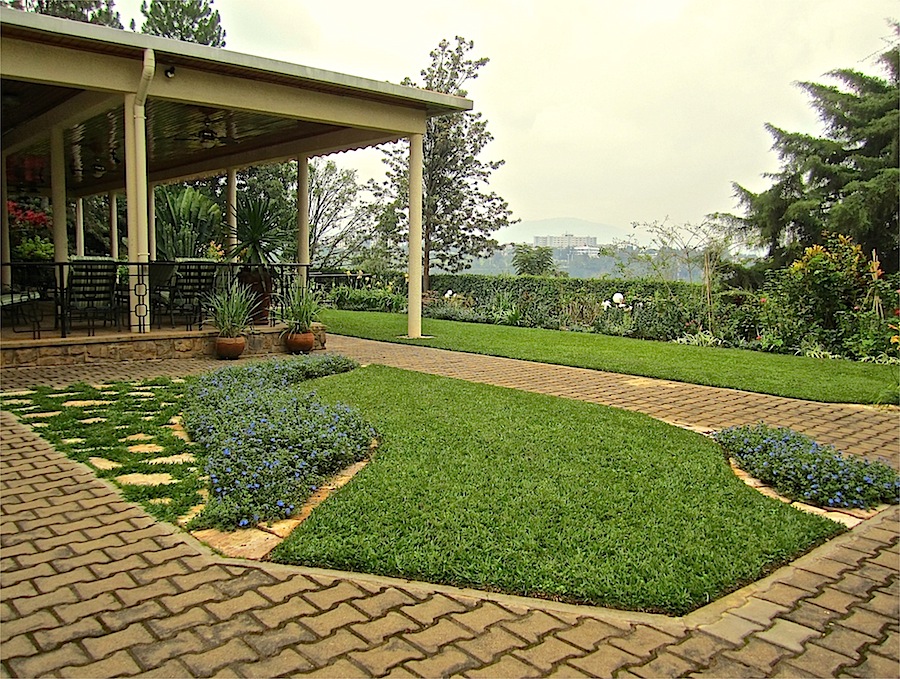
And finally, I faced the fact that my stepping stones and grass arrangement (below) on the right side of the entrance to the terrace just didn’t work. (The aforementioned Norfolk pine used to fill this area.)

Before

We (meaning the gardener mostly) took up all the grass and stones . . .

21 front

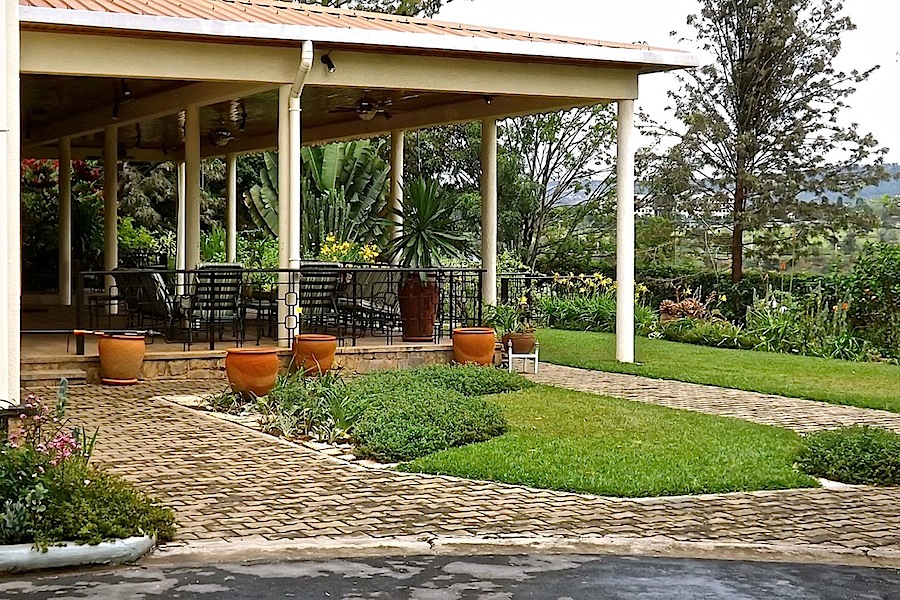
and we replanted (meaning me) with the same plants that are in the borders around the driveway:

front circle

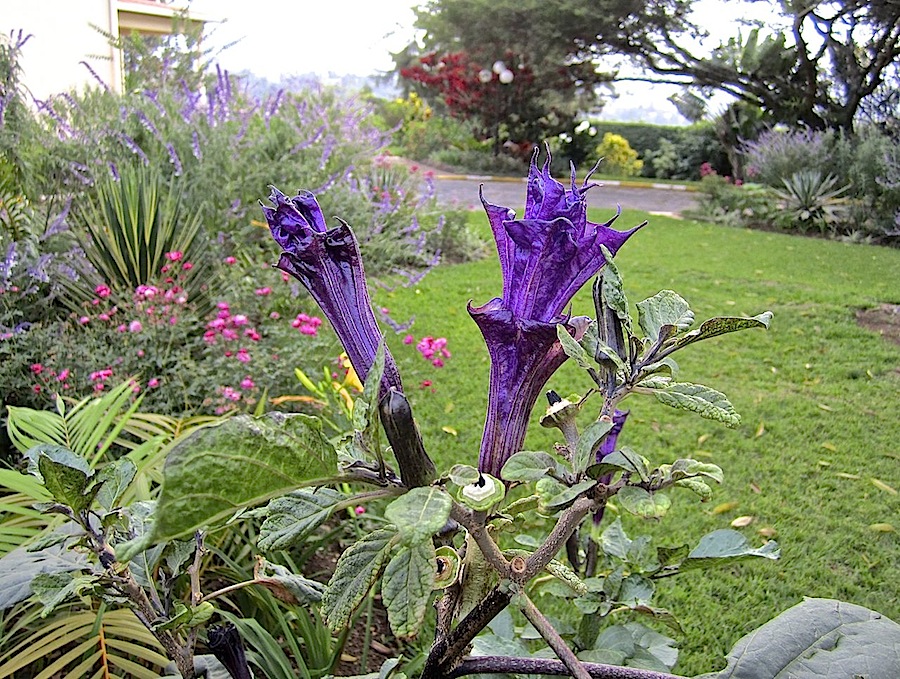
Mexican sage, small pink shrub roses (like ‘The Fairy’), datura, lambs’ ear, and yellow day lilies.

23 front

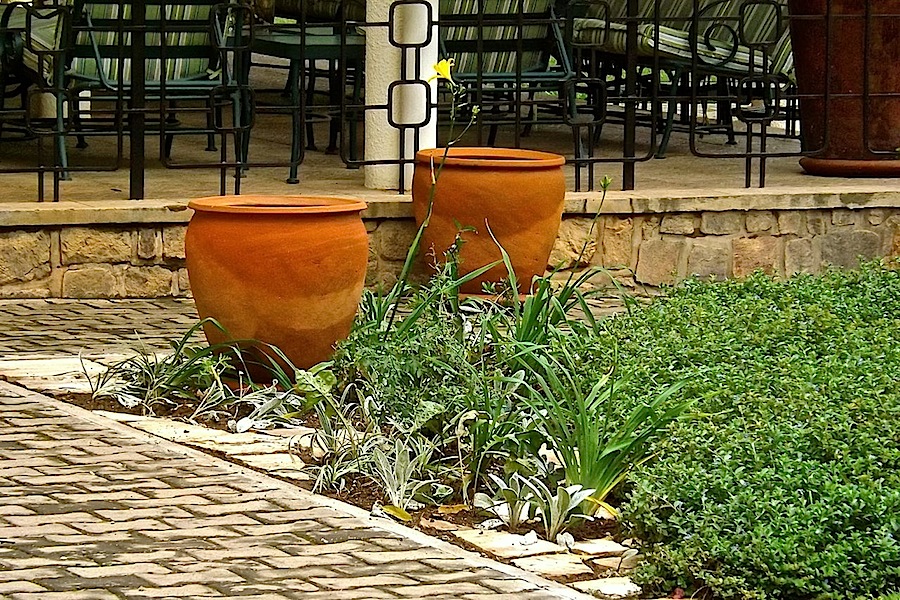
I’m still working on the placement of the pots. Please stay tuned.