Vintage landscape: repetition

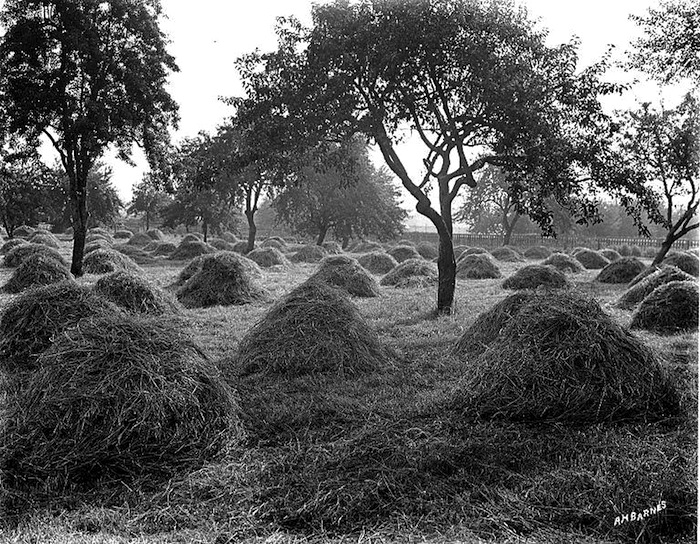
Haycocks in apple orchard, c. 1910, by Albert henry Barnes, via University of Washington Digital CollectionsHaycocks in apple orchard near Parkland, Washington, c. 1910, by Albert Henry Barnes, via University of Washington Commons on flickr.

I feel like this picture could inspire an interesting ornamental garden.

Here is a little further inspiration with another repeating shape.

The Sunday porch: Georgia

While he was a professor of sociology at Atlanta University, W. E. B. Du Bois compiled 363 photographs of African American life in Georgia into several albums — which he displayed at the 1900 Paris Exposition Universelle.

The pictures* here, taken in 1899 or 1900, were part of his collection. Click on any thumbnail in the gallery to scroll through larger photos.

Du Bois’s exhibited albums particularly featured middle-class African Americans and their homes and institutions, and dozens of fine individual portraits were included.

“The photographs of affluent young African American men and women challenged the scientific ‘evidence’ and popular racist caricatures of the day that ridiculed and sought to diminish African American social and economic success,” according to the Library of Congress’s online catalogue.

In 2003, the Library of Congress published a book of 150 of the images, entitled A Small Nation of People.  You can listen to a good NPR interview with its co-author, historian Deborah Willis, here.  In it, she mentions porches being photographed for the exhibit, as places “central to family gatherings.”


*All via Library of Congress Prints and Photographs Division.

Vintage landscape: garden of the mind

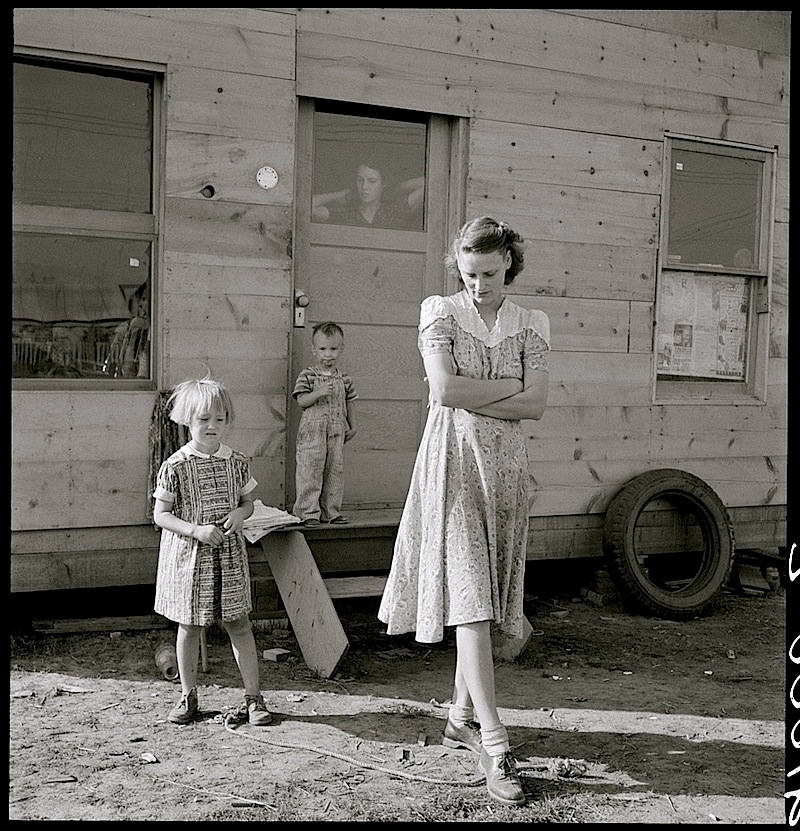
Young mother in squatter camp dreams of a garden, Sept. 1939, by Dorothea Lange, via Library of Congress“Young mother, twenty-five, says, ‘Next year we’ll be painted and have a lawn and flowers,’ rural shacktown, near Klamath Falls, Oregon,” September 1939.

Photo and caption by Dorothea Lange for the U.S. Farm Security Administration, via Library of Congress Prints and Photographs Division.

‘Established’ is a good word, much used in garden books,
‘The plant, when established’. . .
Oh, become established quickly, quickly, garden!
For I am fugitive, I am very fugitive —

Mary Ursula Bethell, from “Time

The butterfly garden in early fall

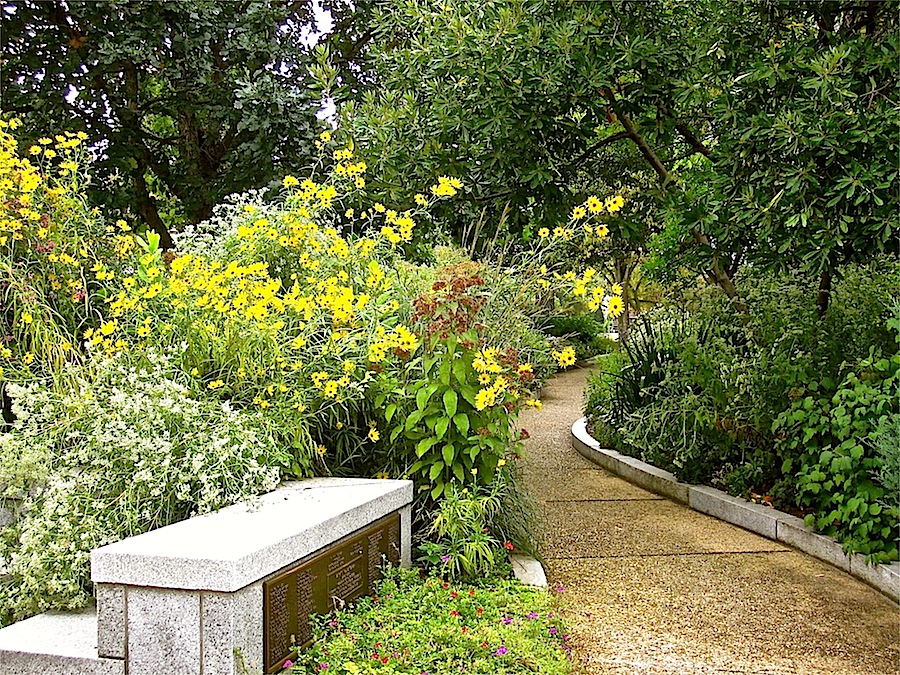
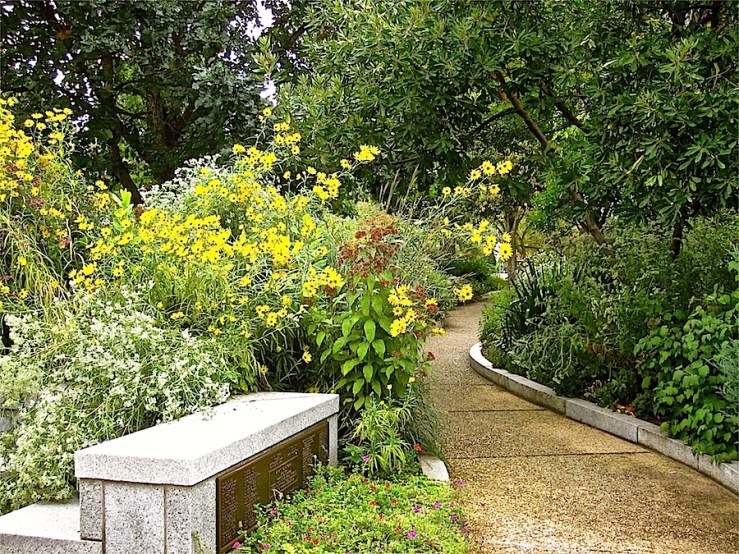
Perennial sunflowers 'Lemon Queen' on the left.

I’m sorry that these photos are a little out of season, but I enjoyed my late September visit to the Smithsonian Institution’s Butterfly Habitat Garden so much that I still wanted to share them.

The garden is a long corridor between the National Mall and Independence Avenue.  It’s bordered by very busy 9th Street, N.W., on one side and the parking lot of the National Museum of Natural History on the other.

Stepping inside, however, you feel enveloped in another world — particularly in early fall, when many of the plants are at their fullest and tallest.

Click on any thumbnail in the gallery above to enlarge the photos.

In my captions, I haven’t included many plant labels, because I didn’t take very good notes during my visit. I was depending on a list of plants at the S.I. gardens website, but, unfortunately, it seems to have been removed for the moment. However, there are some recommendations in this Smithsonian brochure, and there’s additional information here at the Smithsonian gardens blog.

To see the garden in early August in 2011, click here.

ADDENDUM:  The power of Pinterest — the mystery plant with the spiny seedpods is Asclepias fruticosa (syn. Gomphocarpus fruticosus), a species of milkweed native to South Africa.  Thanks to Miranda M.

 

The Sunday porch: vine-covered, par excellence

On abandon, uncalled for but called forth. . . .*

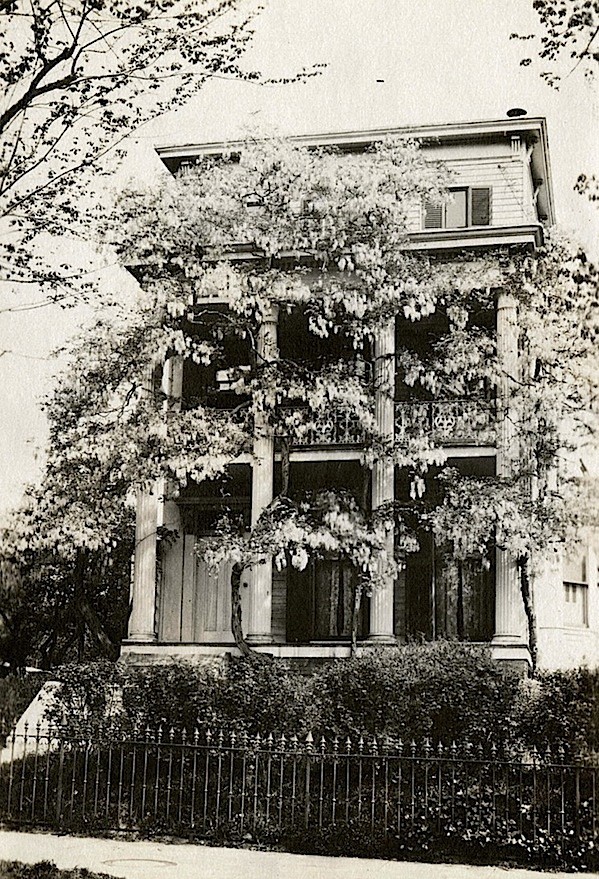
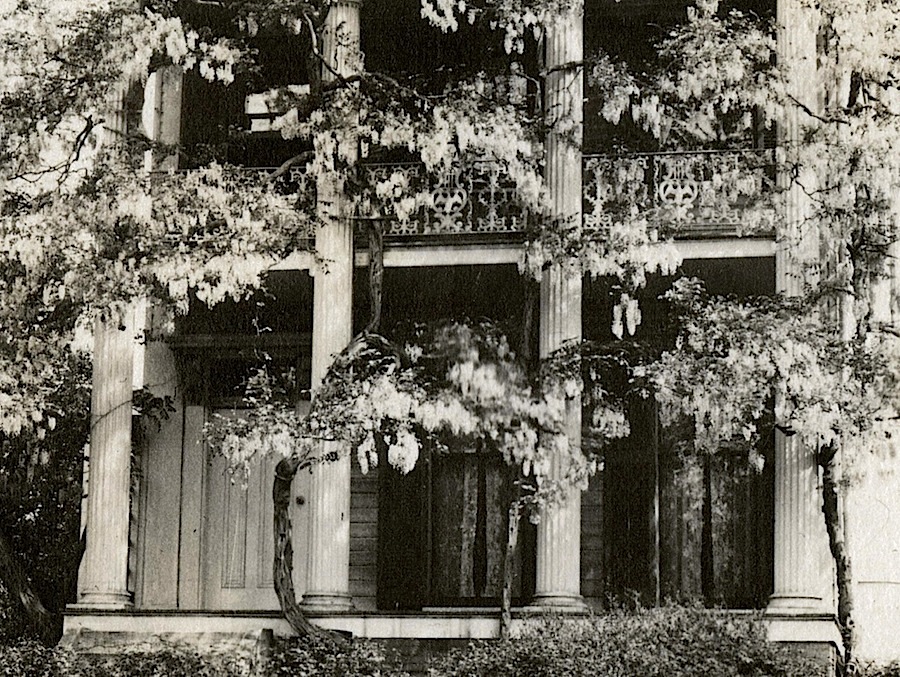
full croppedI think this is the loveliest wisteria I have ever seen.  It grew on the porch columns of “Wisteria House,” at Massachusetts Avenue and Eleventh Street, N.W., in Washington, D.C. The photo was taken in 1919, by Martin A. Gruber.**

The house was torn down in 1924 to make room for the Wisteria Mansion apartment building.

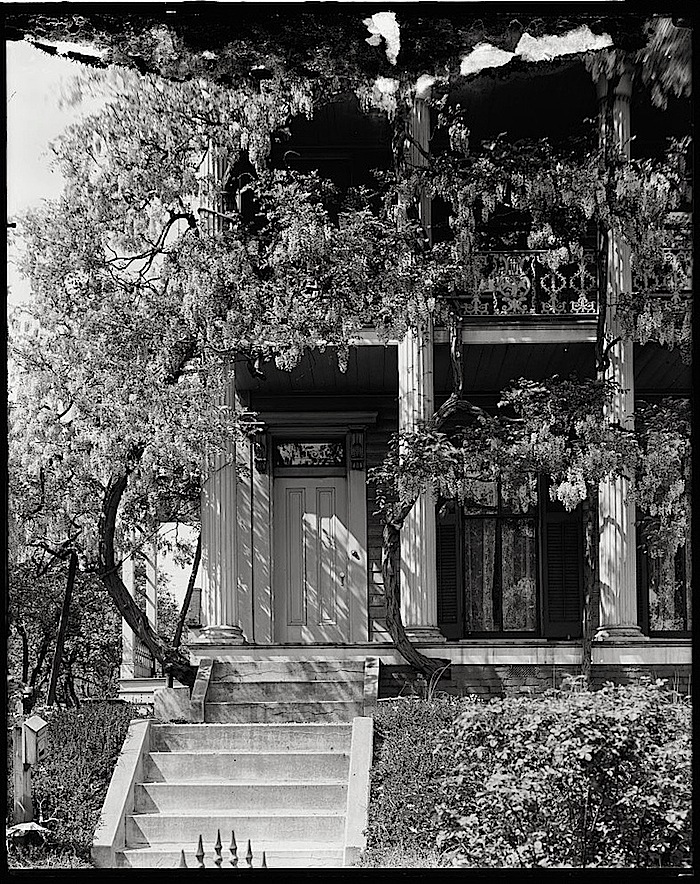
Wisteria House detail, 1919, via Smithsonian Institution CommonsA naval officer brought the vine from China and gave it to the owner of the house, probably during the 1860s, according to the blog Greater Greater Washington.

Wisteria House, Harris & Ewing photoThe Harris & Ewing** photo above, taken between 1910 and 1920, shows the trunks of the (one?) plant emerging through openings at the base of the porch.  The house was built in 1863, and the two-story portico was added in 1869 — so it looks like the wisteria was planted between those years and protected during the construction.

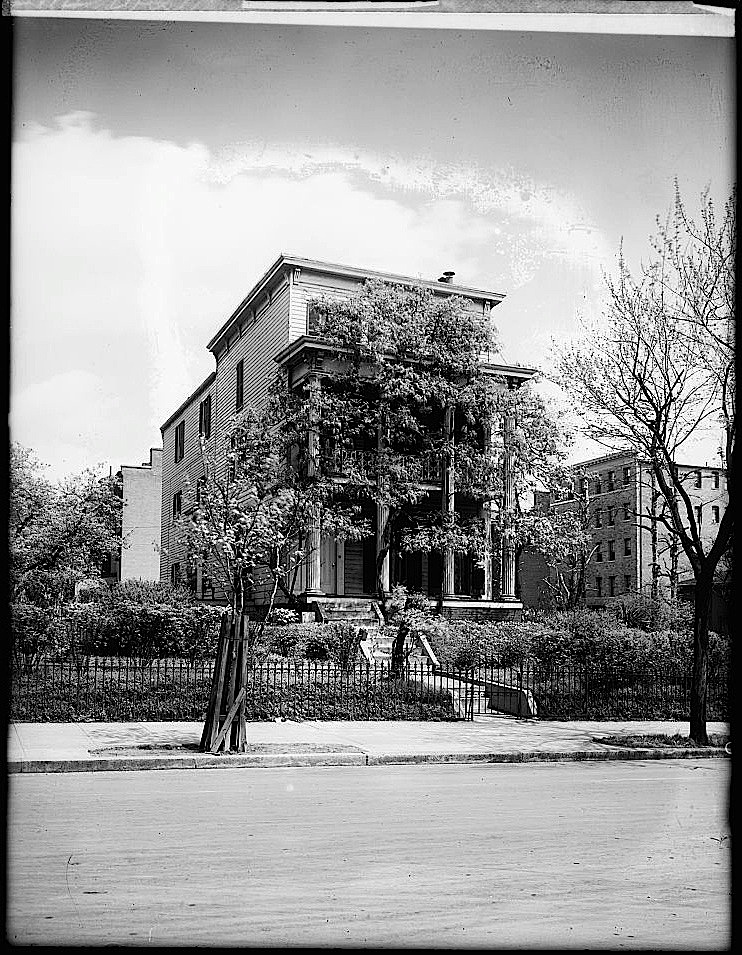
Wisteria House, LOC photoThe National Photo Company image above shows the house about 1920.


*Lucie Brock-Broido, from “Extreme Wisteria

**Top and second (a detail of the first) photos via the Smithsonian Institution Archives Commons on flickr.  Third and fourth photos via Library of Congress Prints and Photographs Division.