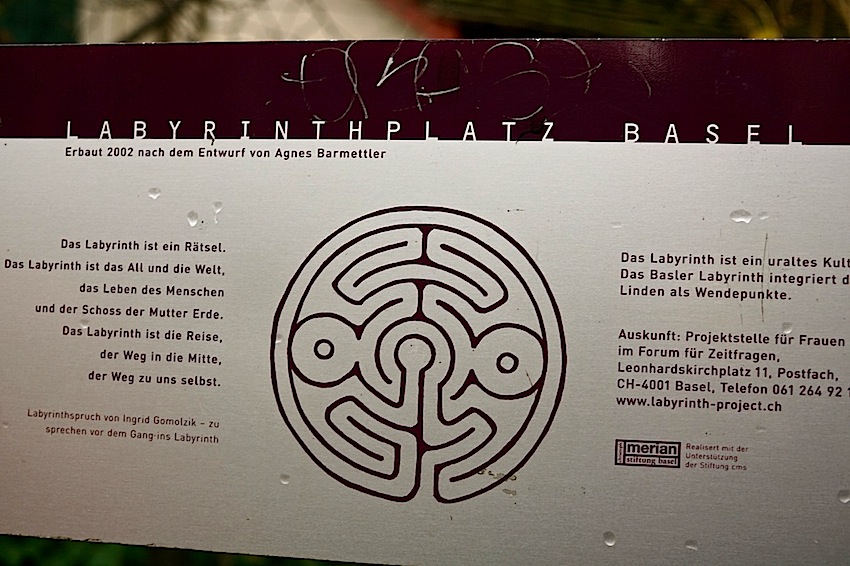
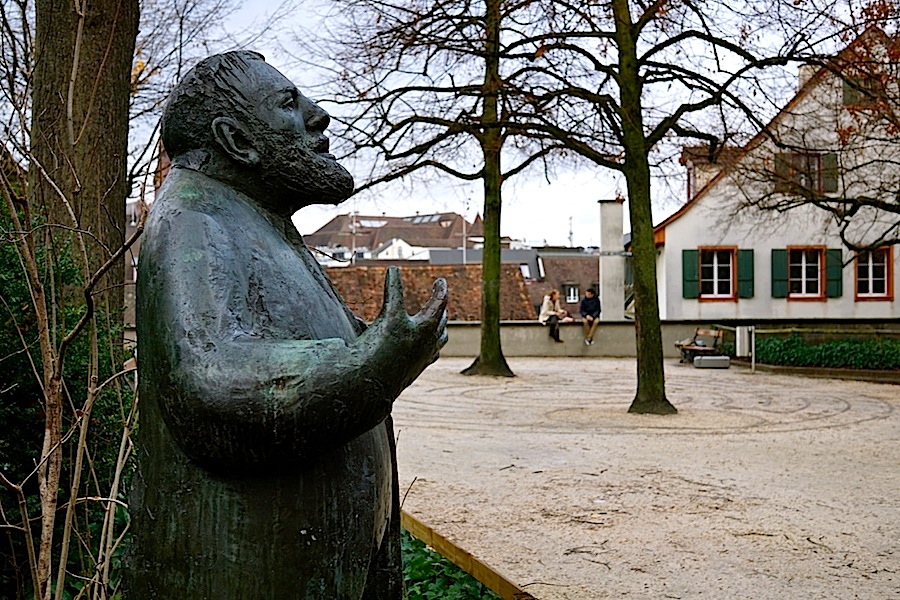
On the right side of the sign is a poem, “Labyrinth Spell” by Ingrid Gomolzik, meant to be spoken before entering the circuit: “The labyrinth is a mystery. . . the giant, the path in the middle, the way to ourselves.”
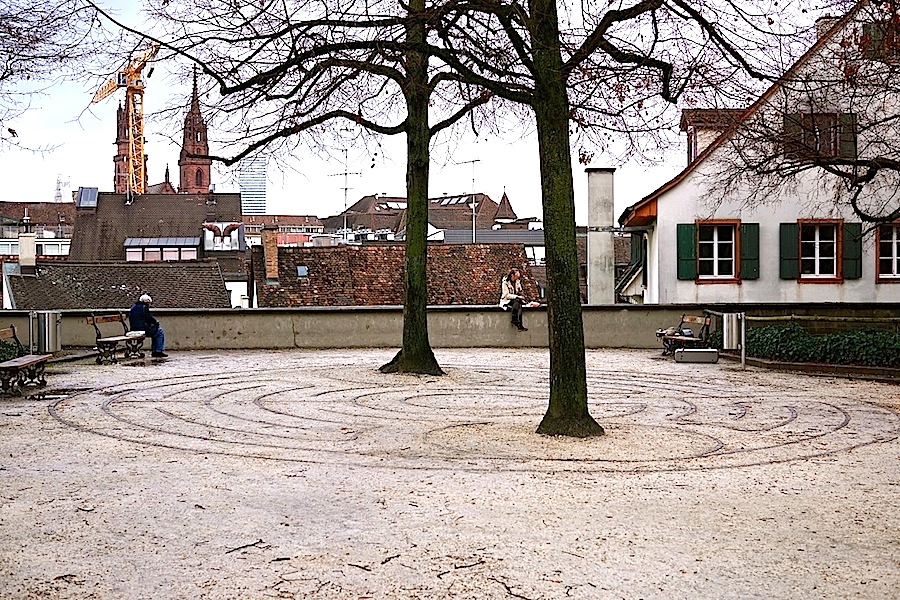
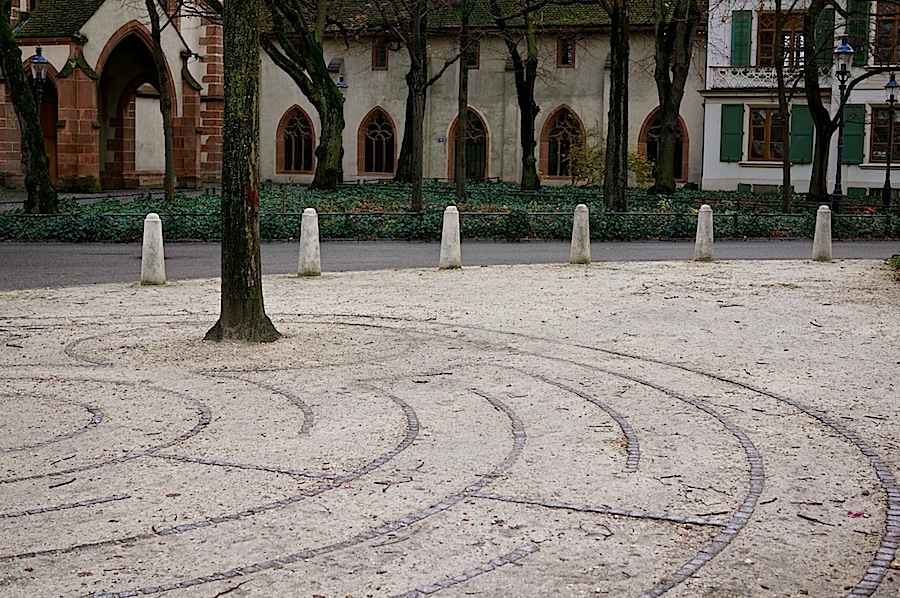
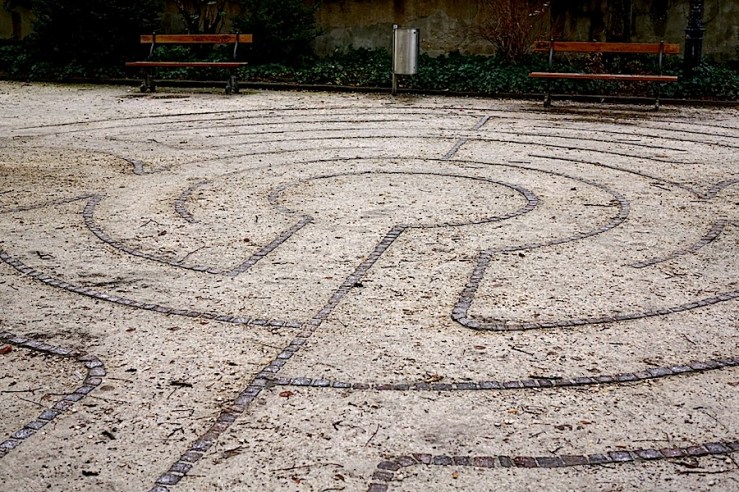
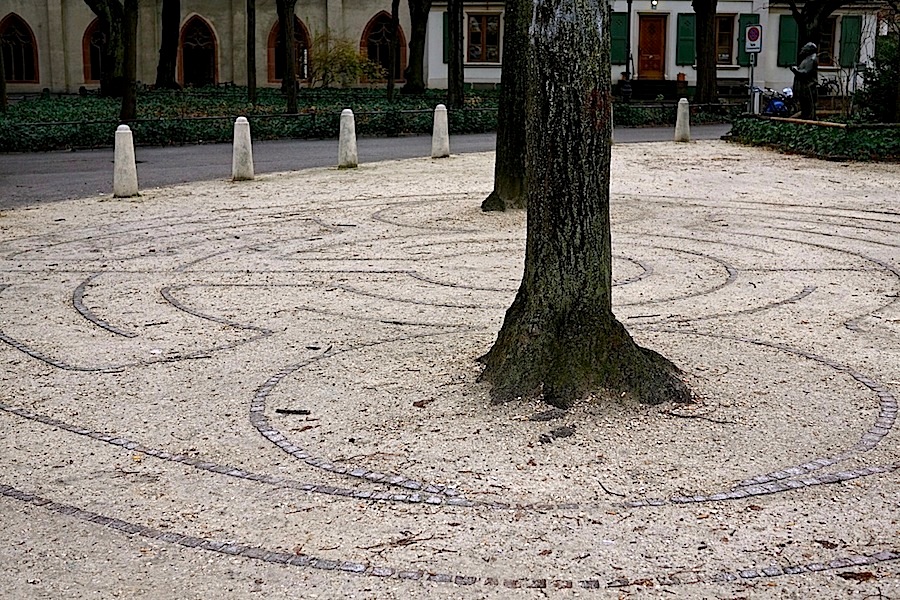
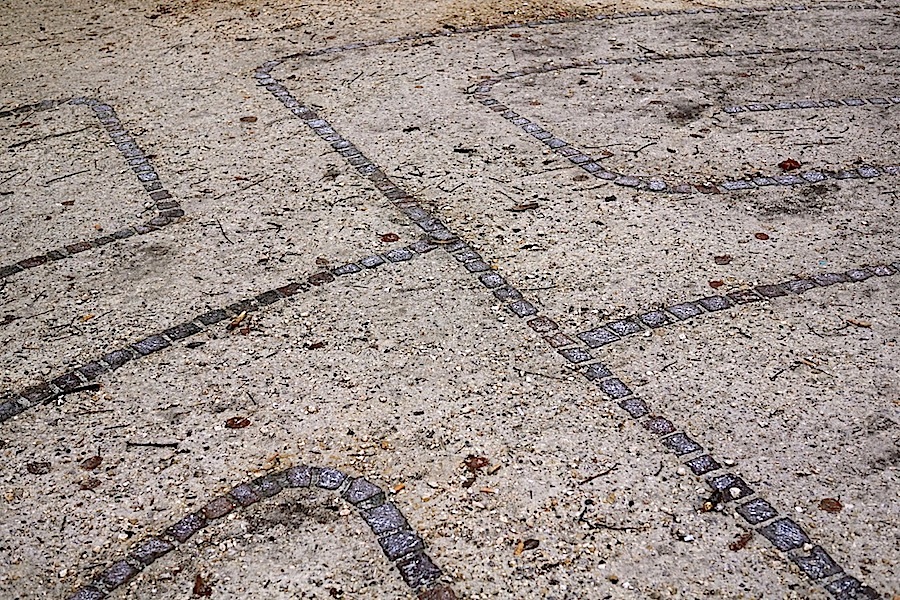
The design features two turning points around linden trees.
You can scroll through larger versions of the photos by clicking on ‘Continue reading’ below and then on any thumbnail in the gallery.
Torn turned and tattered
Bowed burned and battered
I took untensed time by the teeth
And bade it bear me banking
Out over the walled welter
cities and the sea. . .
Both photos are via the Library of Congress Prints and Photographs Division.
Wolcott had been charged with photographing the recovery of the western cattle industry. The Quarter Circle U ranch in Birney, Montana, like many others in the region, had begun entertaining dudes in the 1920s to augment ranch income, and so she photographed that side of the modern ranch business as well as cattle raising. The ranch scattered its grounds with covered wagon love seats designed for trysting young couples, many of whom purchased western wear as part of their Montana adventure.
— Mary Murphy, from “Romancing the West: Photographs by Marion Post Wolcott”
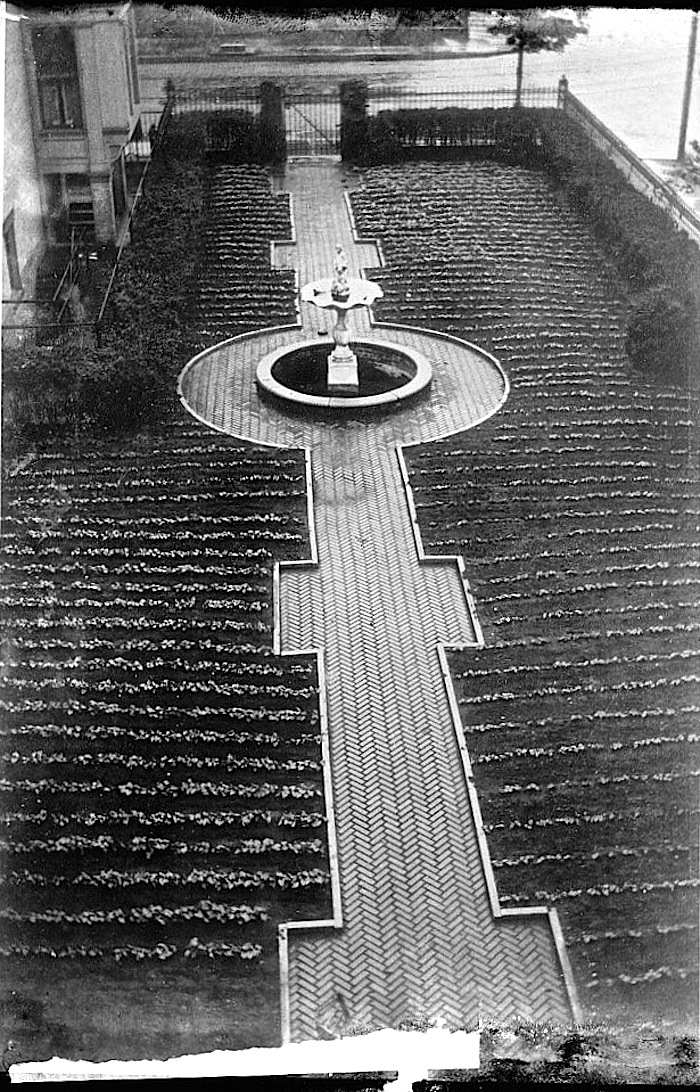
World War I victory garden in a formal setting, location unknown,* ca. 1917 – ca. 1920, by Harris & Ewing, via Library of Congress Prints and Photographs Division.
The organization was created in early 1917 by Charles Lathrop Pack. It sponsored a campaign of pamphlets, posters, and press releases aimed at “arous[ing] the patriots of America to the importance of putting all idle land to work, to teach them how to do it, and to educate them to conserve by canning and drying all food that they could not use while fresh.”
Like it or not, what you do with the land around your house tells the world what sort of citizen you are.

 Wicker and wood. (Check out the lamp/table in the lower left corner.)
 From the outside: Leonard Mudge residence in Delray Beach, Florida, February 1959. The upper porch is shown above.


 enclos*ure