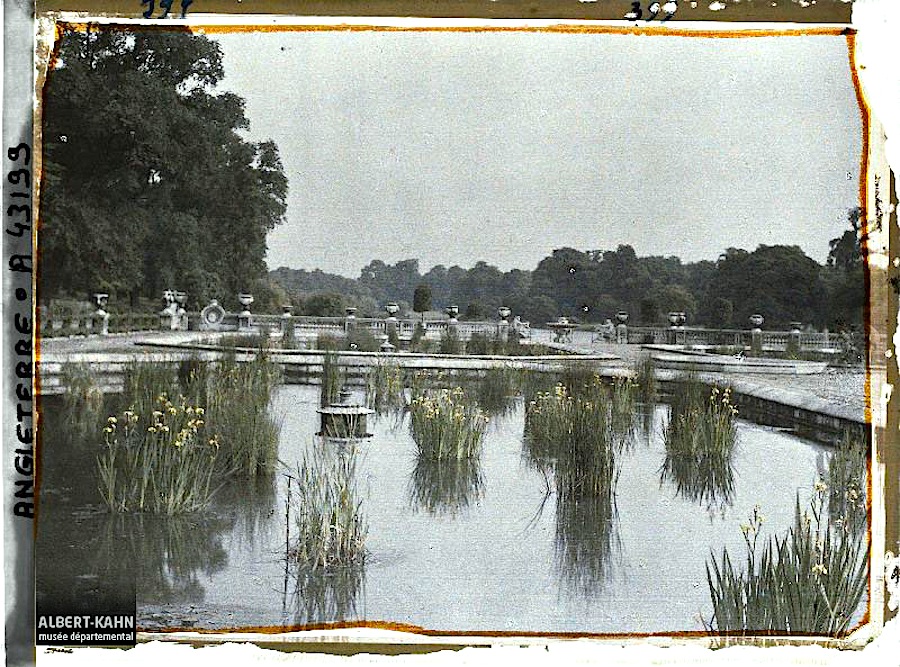
Kensington Gardens, London


Yellow flag iris (I. pseudacorus) in the basins of the Italian Gardens of Kensington Gardens, London, June 1924, by Roger Dumas, via Archives of the Planet Collection – Albert Kahn Museum /Département des Hauts-de-Seine.

These water gardens are over 150 years old and may have been a gift from Prince Albert to Queen Victoria.

This autochrome is one of about seventy-two thousand that were commissioned and then archived by Albert Kahn, a wealthy French banker and pacifist, between 1909 and 1931. Kahn sent thirteen photographers and filmmakers to fifty countries “to fix, once and for all, aspects, practices, and modes of human activity whose fatal disappearance is no longer ‘a matter of time.'”* The resulting collection is called Archives de la Planète and now resides in its own museum at Kahn’s old suburban estate at Boulogne-Billancourt, just west of Paris. Since June 2016, the archive has also been available for viewing online here.


*words of Albert Kahn, 1912. Also, the above photo (A 43 199) is © Collection Archives de la Planète – Musée Albert-Kahn and used under its terms, here.

Edmonton, Alberta

Gladys Reeves and father, W.P. Reeves, ca. 1940, vía Provincial Archives of Alberta Commons on flickr.

Gladys Reeves immigrated from England to Alberta with her family when she was 14 years old. A year later, she began working for photographer Ernest Brown as a receptionist and later as an apprentice. In 1920, she set up her own studio, The Art League, in Edmonton. She may have been the first woman in the region to operate her own photography business — which she ran until 1950. She was also a serious gardener and won a medal for best garden in the city in 1907.

You can click on the picture to get a larger view.

The Sunday porch: County Armagh

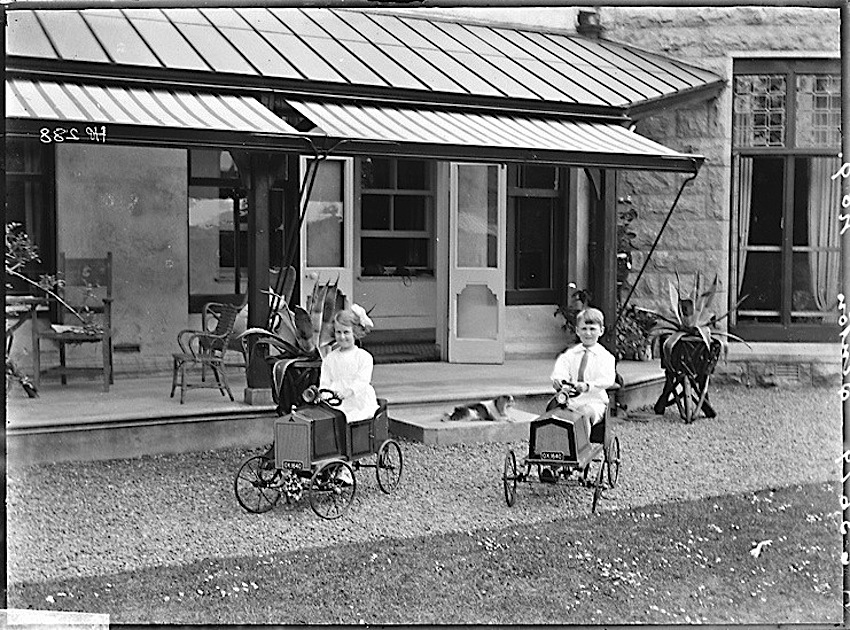
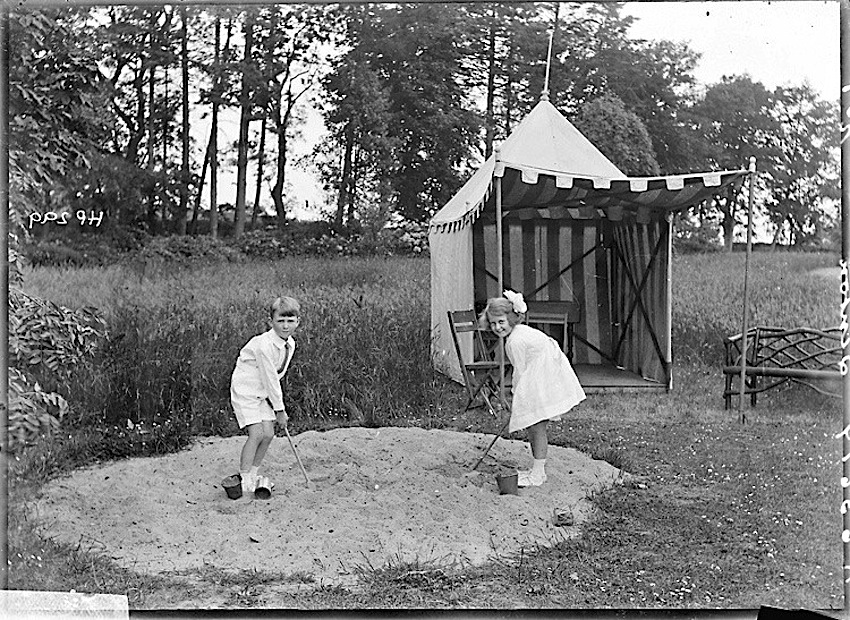
Bridget and Maynard Sinton at their family home of Ballyards, County Armagh, June 17, 1921, by H. Allison & Co. Photographers, via Public Record Office of Northern Ireland Commons on flickr.

That retractable striped awning emerging from the terrace roof looks very sleek and was brand new.  A ca. 1920 photo of the house in this biography of the children’s father shows the terrace with no cover. (You can read a brief history of awnings here.)

Ballyards was built in 1872 and sold to the father, a linen manufacturer, in 1908. He almost doubled its size and called it “Ballyards Castle.”

The children playing in a sandpile. (This photo has been printed in reverse from the others.)

Maynard was killed in WWII, but Bridget (age 7 in these photos) lived until 1975.

Among daisies

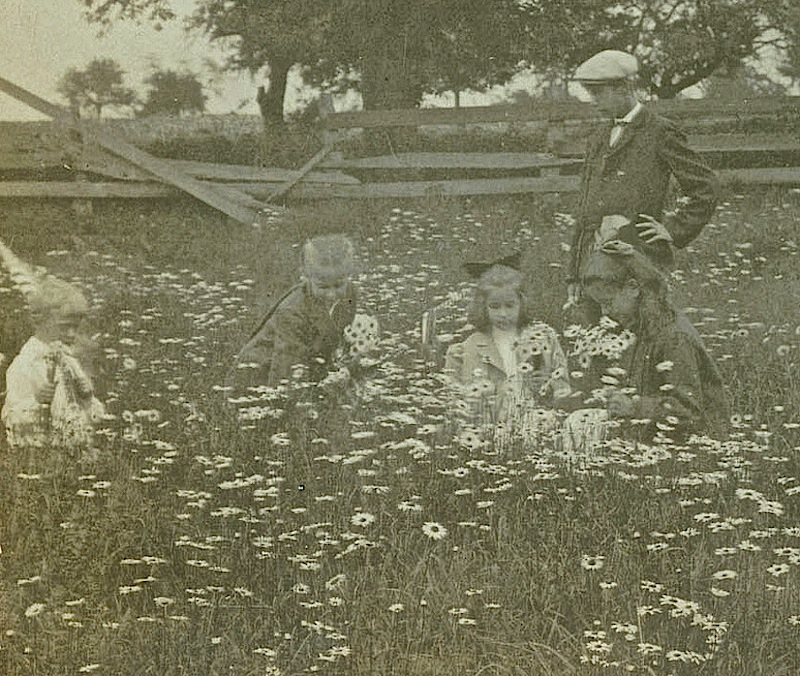
Children in daisies, Library Company of PhiladelphiaWallace and Dot Boyd, Fossie, and “Mother,” with “Uncle Phil” (standing) in a field of daisies. ca. 1900, one half of a stereographic portrait by an unknown photographer, via Library Company of Philadelphia Commons on flickr.

Cheshire County, N.H.


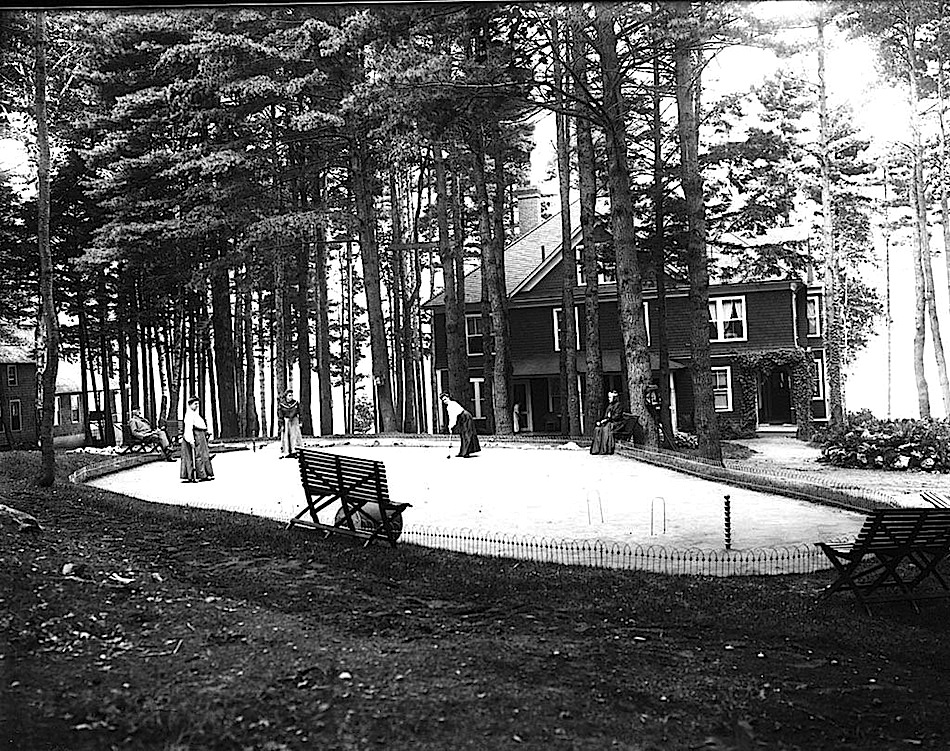
“Ladies playing croquet,” probably Cheshire County, New Hampshire, ca. 1900, by Bion Whitehouse, via Keene Public Library and the Historical Society of Cheshire County Commons on flickr.

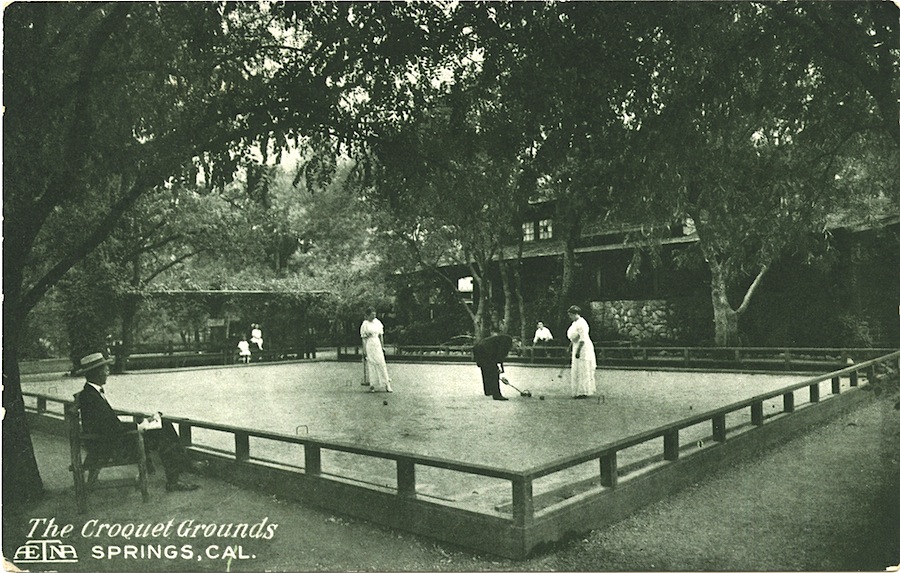
Technically, they are playing roque, an American variant* of croquet, which is played on a hard sand or clay surface. Introduced in the late 1880s, it was extremely popular in the first few decades of the 20th century — and an Olympic sport in 1904 — and then almost entirely disappeared after the 1950s.

The roque grounds.

The photo above was published between 1900 and 1919, photographer unknown. It is part of the Termaine Arkley Croquet Collection and via UBC (University of British Columbia) Library Digitization Centre Commons on flickr.

There’s also a photo of 1918 roque grounds in Florida here.


*There is also a modern game of beach croquet.