
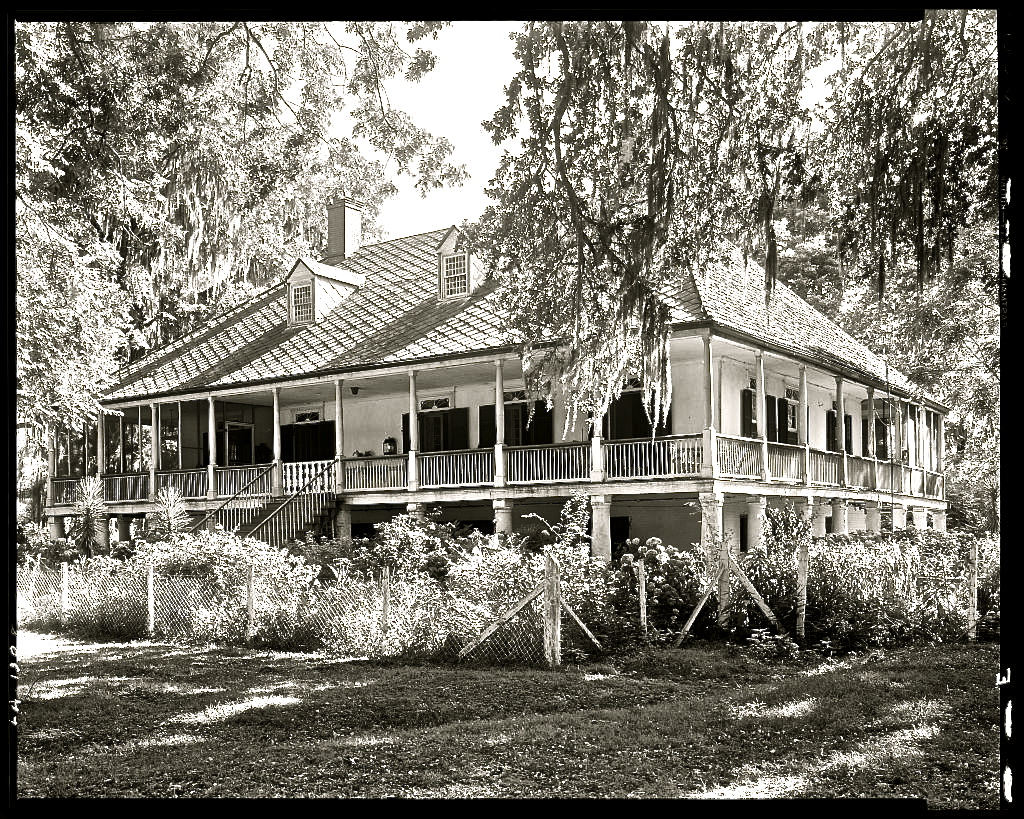
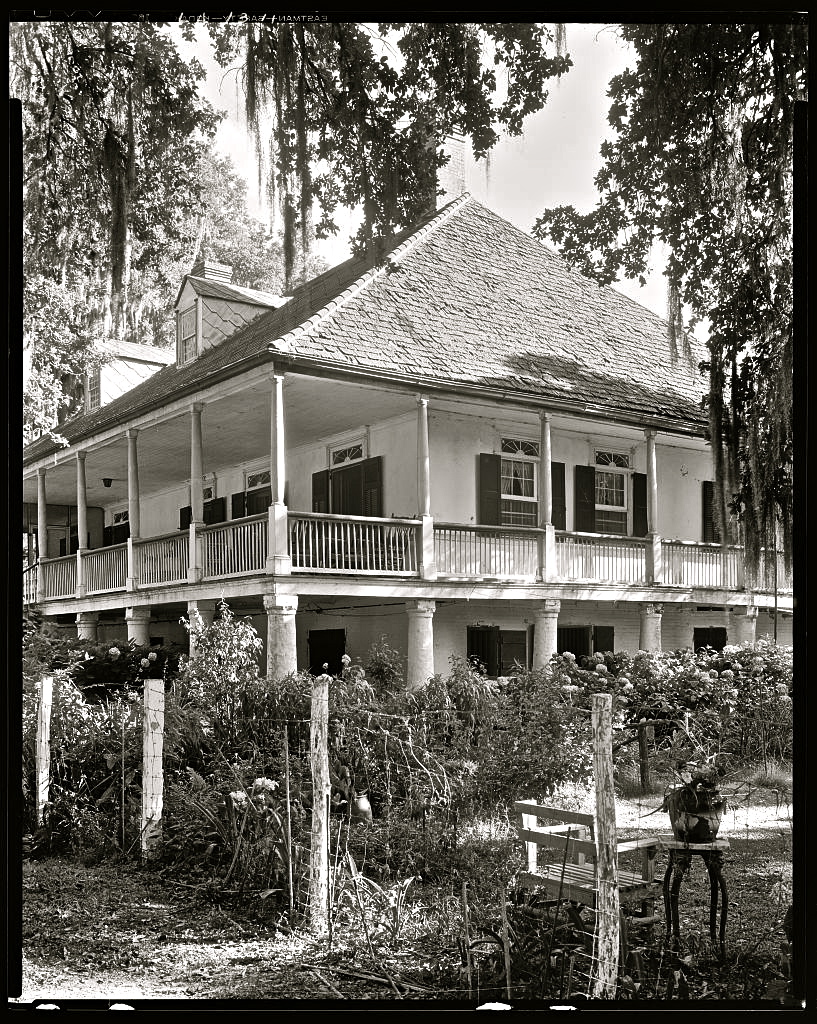
If it’s cold outside where you are (or rainy like here), imagine yourself on this wonderful Louisiana porch surrounded by a flower garden.
And then click here to listen to this classic by Etta James. Everything’s great now, right?
In the last couple of weeks, I’ve enjoyed a lot of posts on the blog Studio G, but especially those about Brazil, here and here. I really liked looking at her six sets of “before and after” pictures from a Brazilian home makeover show on Thursday. My favorite is here. I also enjoyed her post on a different kind of roller coaster in Germany here.
Grounded Design’s post, “Why We Plant,” here, was inspiring. “Designers don’t create beauty. To believe otherwise makes us guilty of forgery and blasphemy. But what we can do is create the conditions where people can have an experience of beauty.”
Phyllis Odessey at her eponymous blog wrote here about the Hudson Valley Seed Library and its seed packets with original artwork. Also, if you have an interest in school gardens, take a look at an older post here, about a rice garden in New York.
If you’ve been outside since Tuesday, pulling up your lawn (and here), as per Garden Rant’s anti-valentine to the lawn, here are some funny things to do with the now superfluous sod, thanks to Black Walnut Dispatch. (BWD also has a very funny visual here about how landscape designers are perceived by different groups.)
The New York Times has an article on artist Cindy Sherman this morning. Interestingly, this 2010 article in Smithsonian magazine makes a brief connection between Sherman’s work and Frances Benjamin Johnston’s self portraits.
From Pinterest, I just discovered this odd, but rather lovely, blog. See what you think here.
What are the best blog and website posts that you’ve read this month?
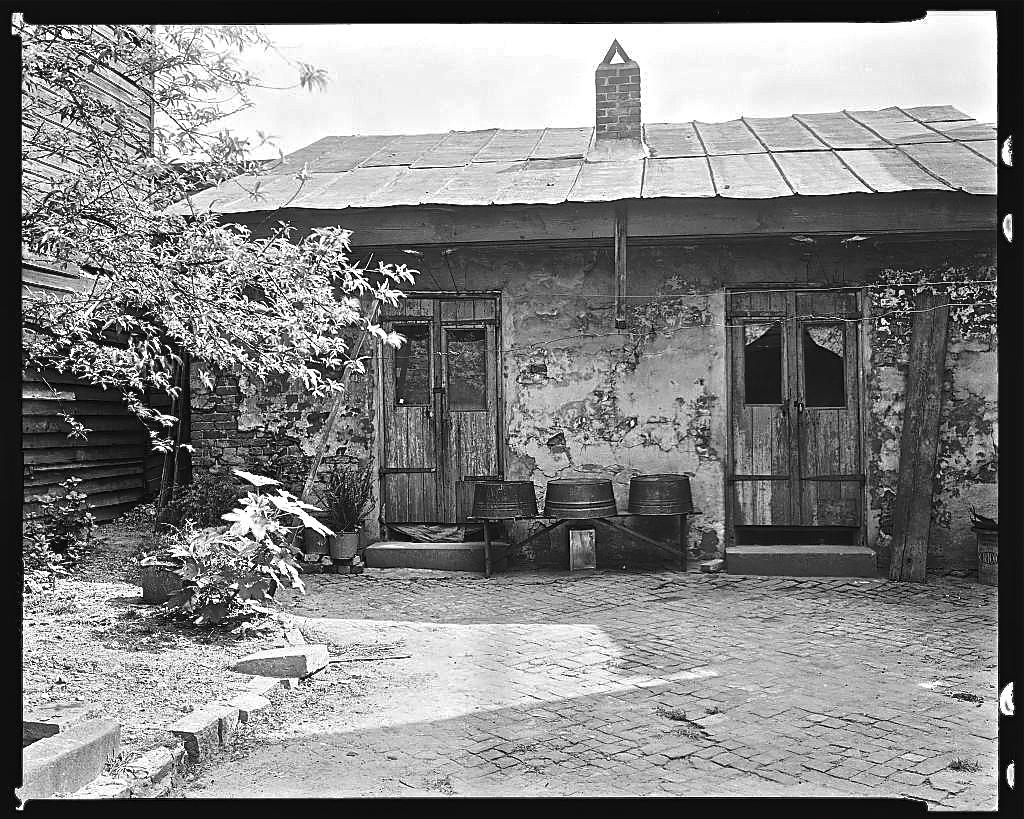
I’ve been thinking a lot about New Orleans and its special style since we were finally able to watch season one of the HBO series, Treme, in December and January. We lived in an Uptown neighborhood briefly many years ago, and I think the Crescent City is like Paris or Rome: any time passed there stays with you deeply.
It was that way for Walt Whitman, who was editor of the New Orleans newspaper The Crescent for few months in 1846.
Once I pass’d through a populous city, imprinting my brain, for future use, with its shows, architecture, customs, and traditions. . .
— Walt Whitman, Leaves of Grass
I tracked down a column by Dave Walker of The Times-Picayune on its website, nola.com, called “Treme Explained,” which explicates all the local references in each episode. I’m trying not to read ahead, because we’ll eventually get season two here.
More recently, I found these beautiful photographs by Frances Benjamin Johnston of courtyards and gardens in New Orleans in the late 1930s.
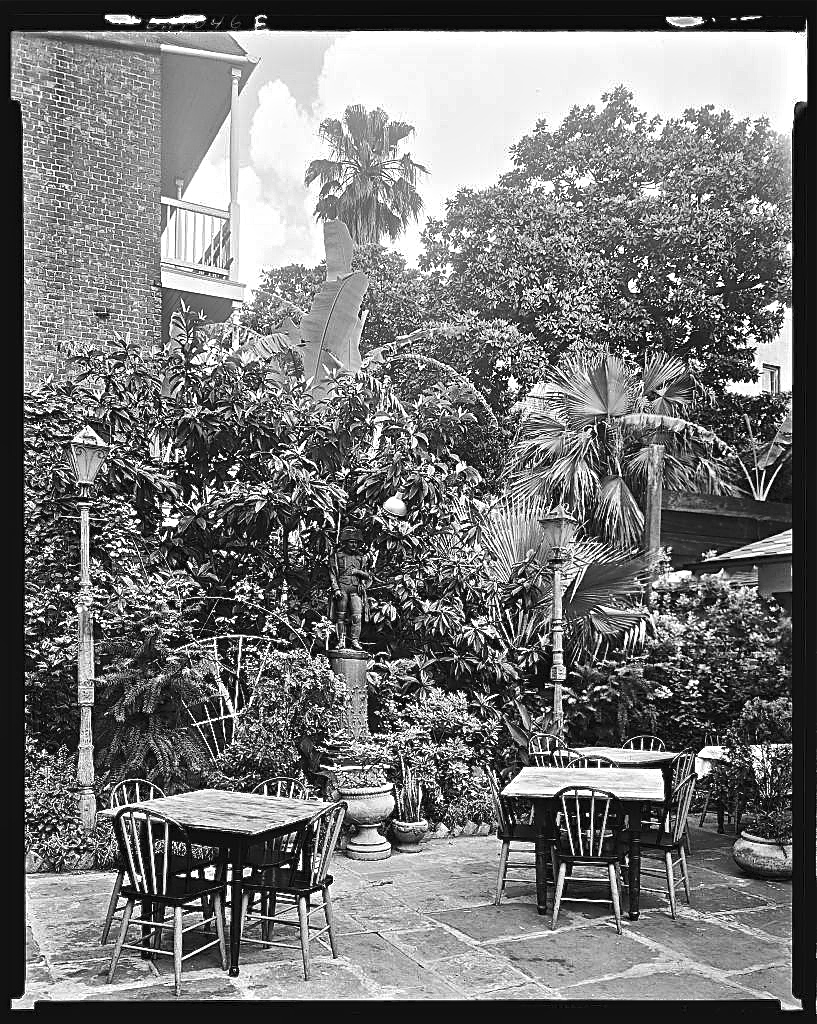
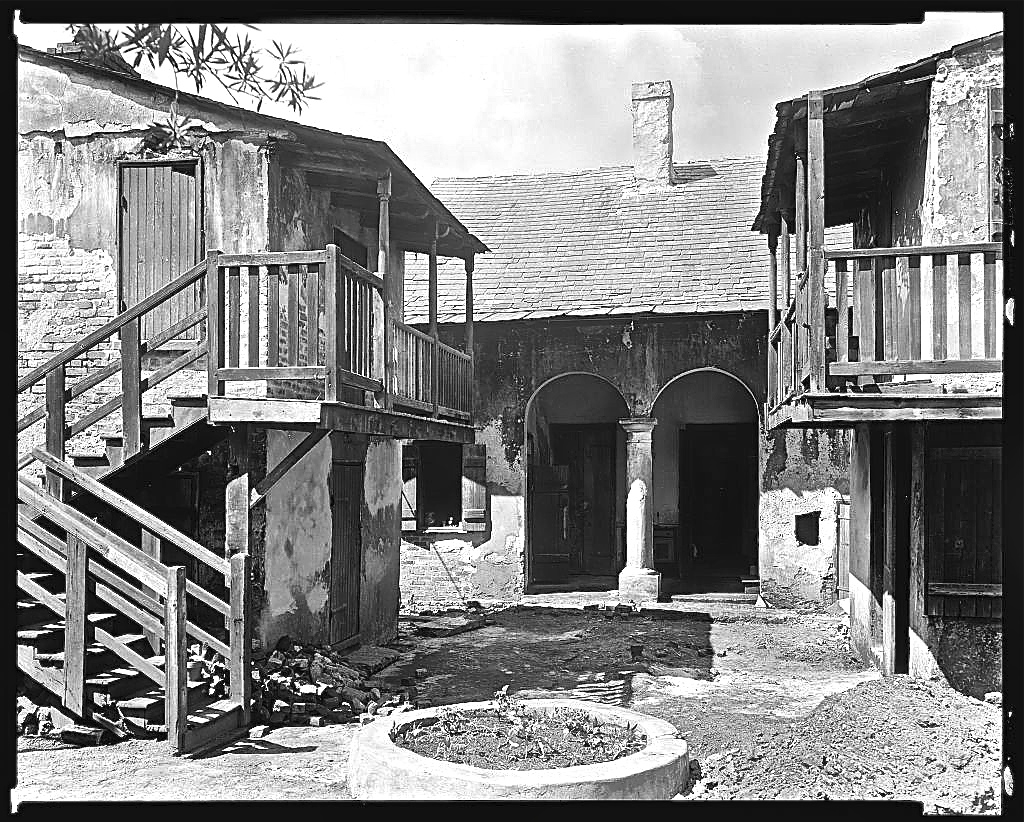
They are all from the Carnegie Survey of the Architecture of the South of the Library of Congress.
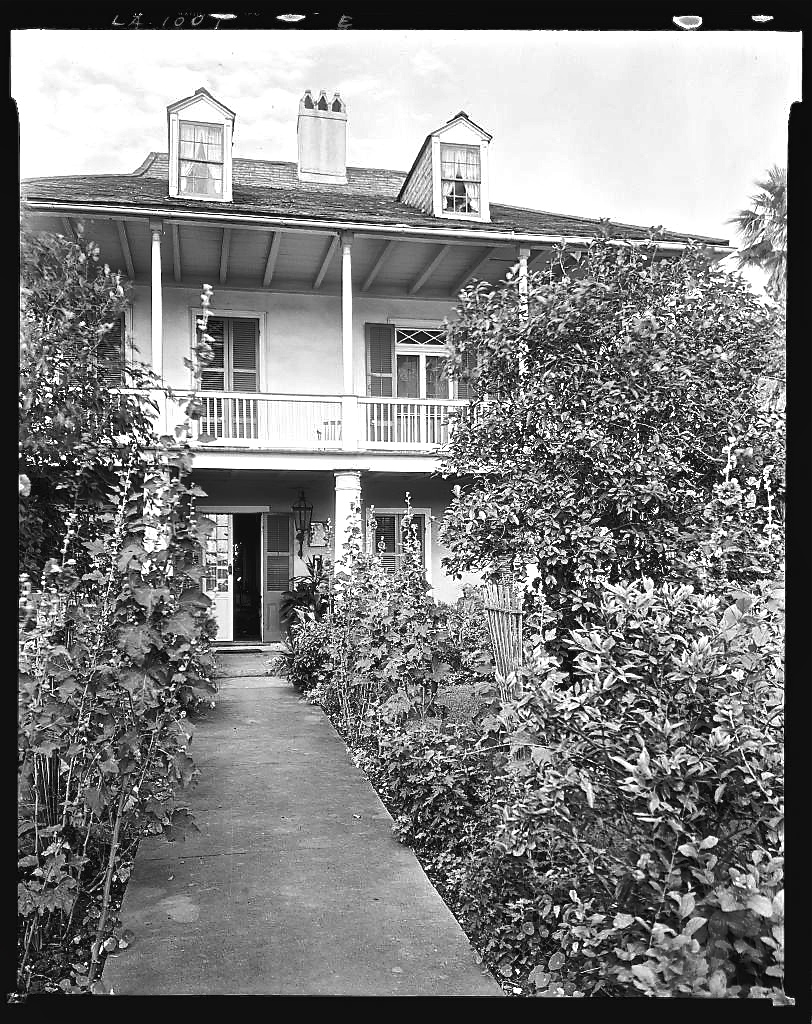
From 1933 to 1940, Johnston photographed buildings and gardens in nine southern states, funded by a grant from the Carnegie Corporation. She was one of the first to photograph and record southern vernacular architecture.
Her entire collection is fascinating. It contains 7,100 images of 1,700 structures and sites.
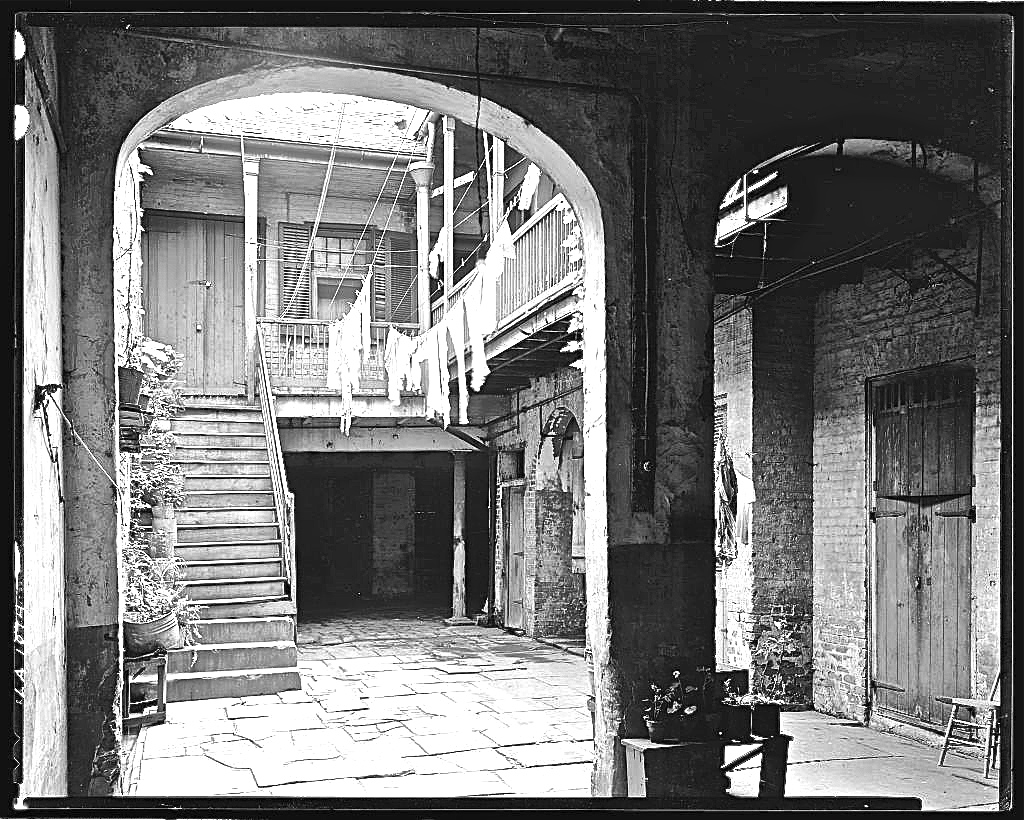
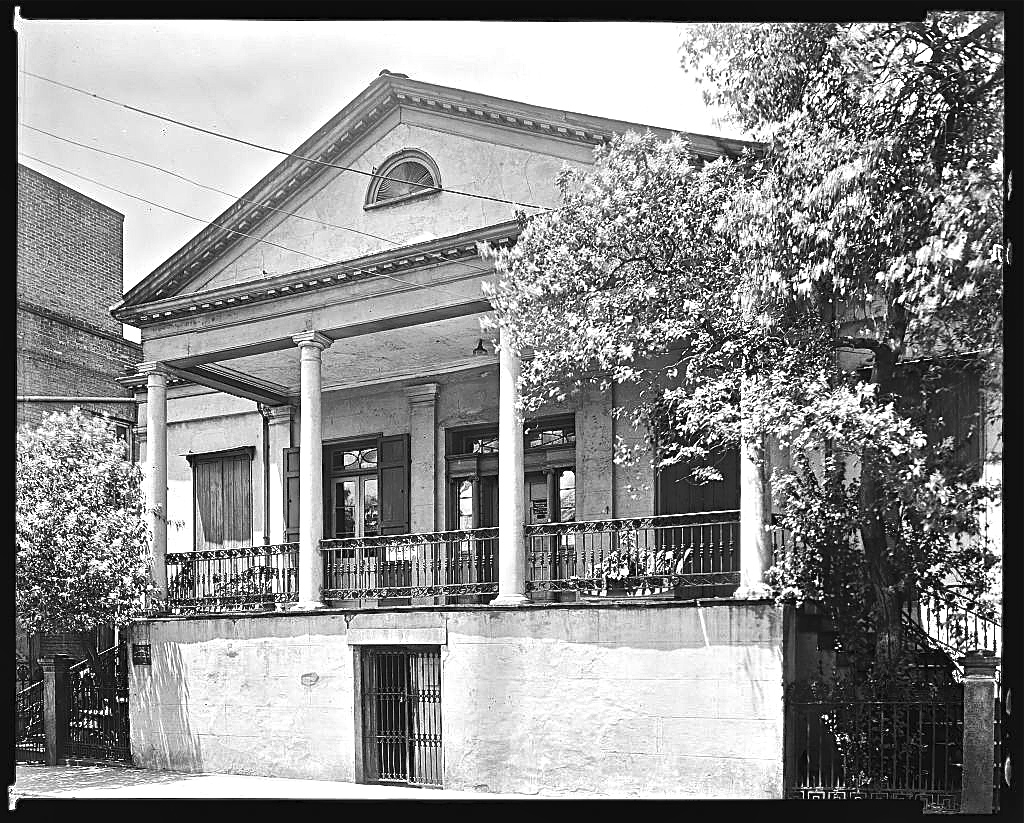
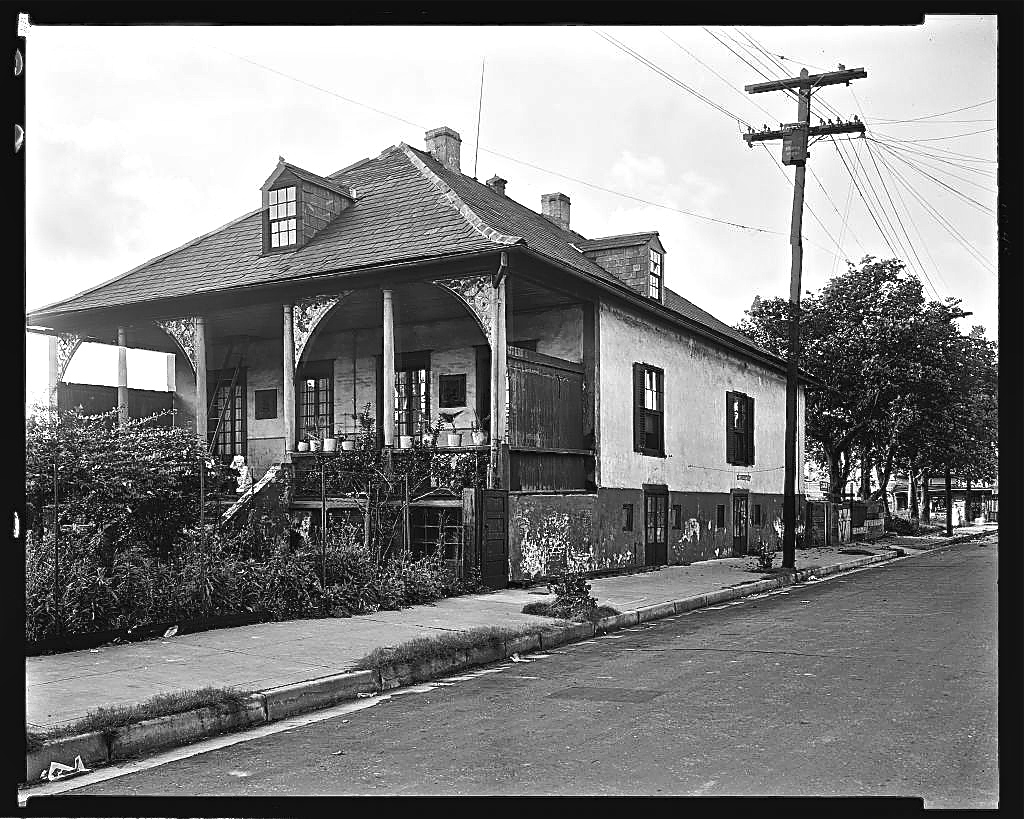
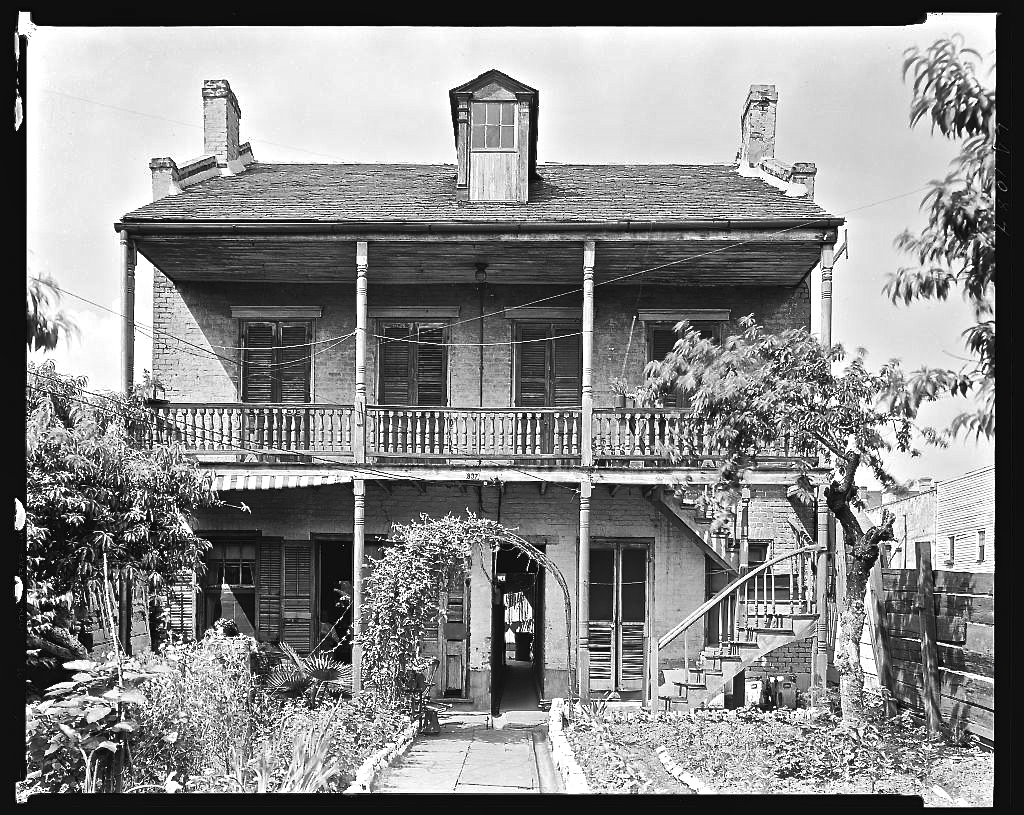

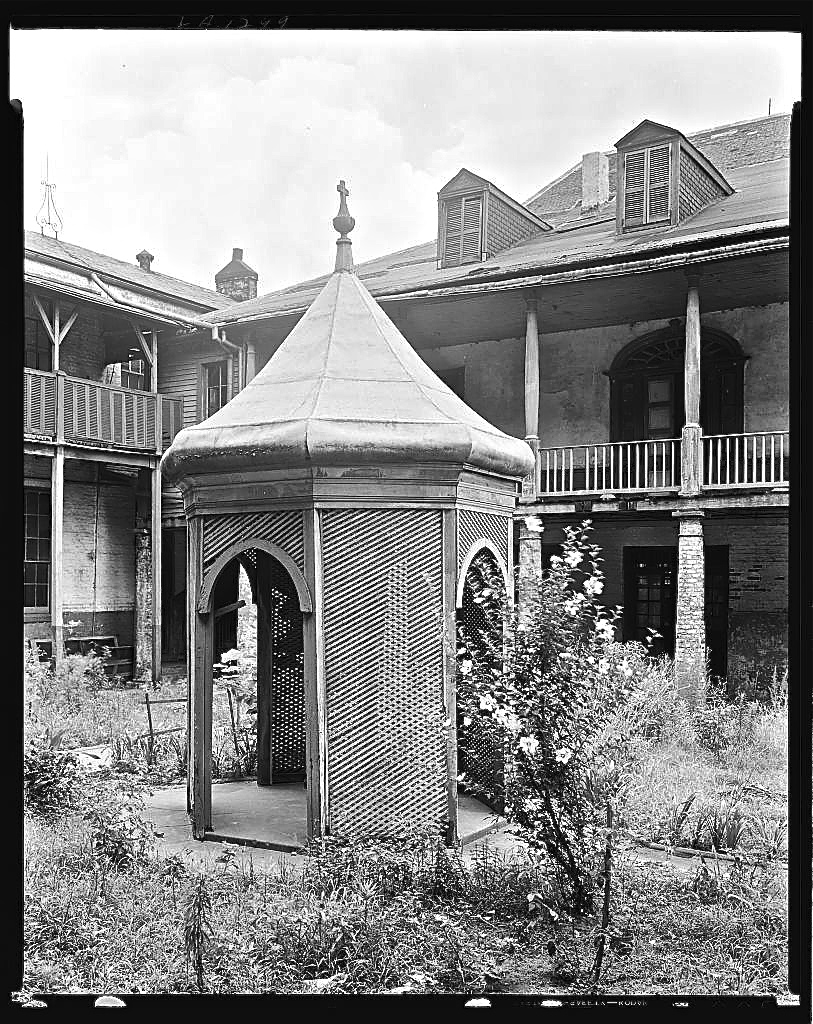
There are more Johnston photos of New Orleans in the gallery after ‘Continue reading’ below. Click on any thumbnail to scroll through all the pictures in full size.
In 1945, Johnston moved to New Orleans, where she enjoyed the lively bohemian atmosphere. She lived in her house on Bourbon Street until her death in 1952 at the age of 88. These two photos are from the Frances Benjamin Johnston Collection of the LoC.
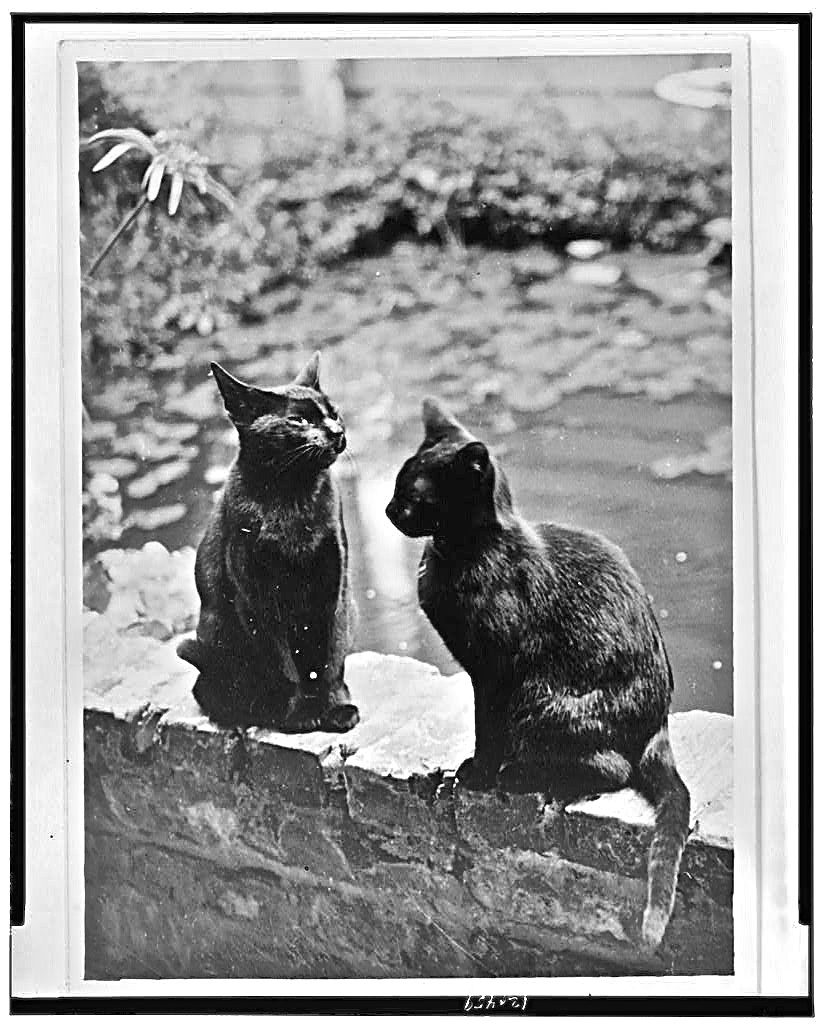
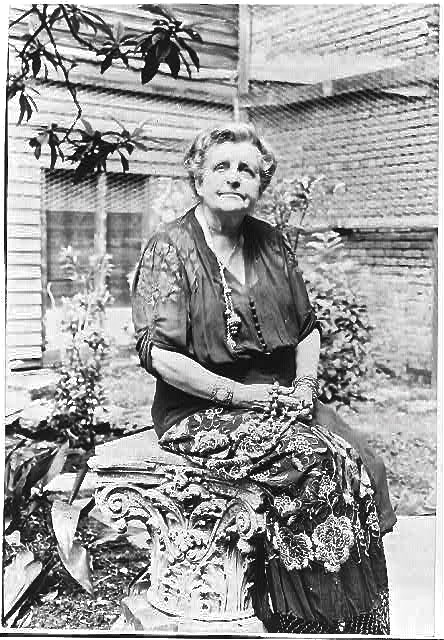
You can buy prints of Johnston’s photos at Shorpy.com here.
If you’re thinking of visiting the Big Easy, you can read “36 Hours in New Orleans” in The New York Times travel section.
About.com has a list of New Orleans blogs here.
Tulane University’s Southeastern Architectural Archive maintains the Garden Library, a collection of over 1,000 titles, including published materials associated with women’s garden culture. Currently, the Archive is showing an online exhibit of vintage Reuter’s Seed Company catalog covers (here).
Continue reading “Nostalgia for New Orleans”
Rosamond Carr’s cottage in the Virunga hills is covered in creeping fig or Ficus pumila. The plant (along with the nice windows and the stone steps) turned a little square box into something really charming.
The Orangery of Dumbarton Oaks is also draped with a wonderful specimen, which was planted in its northwest corner in the 1860s.
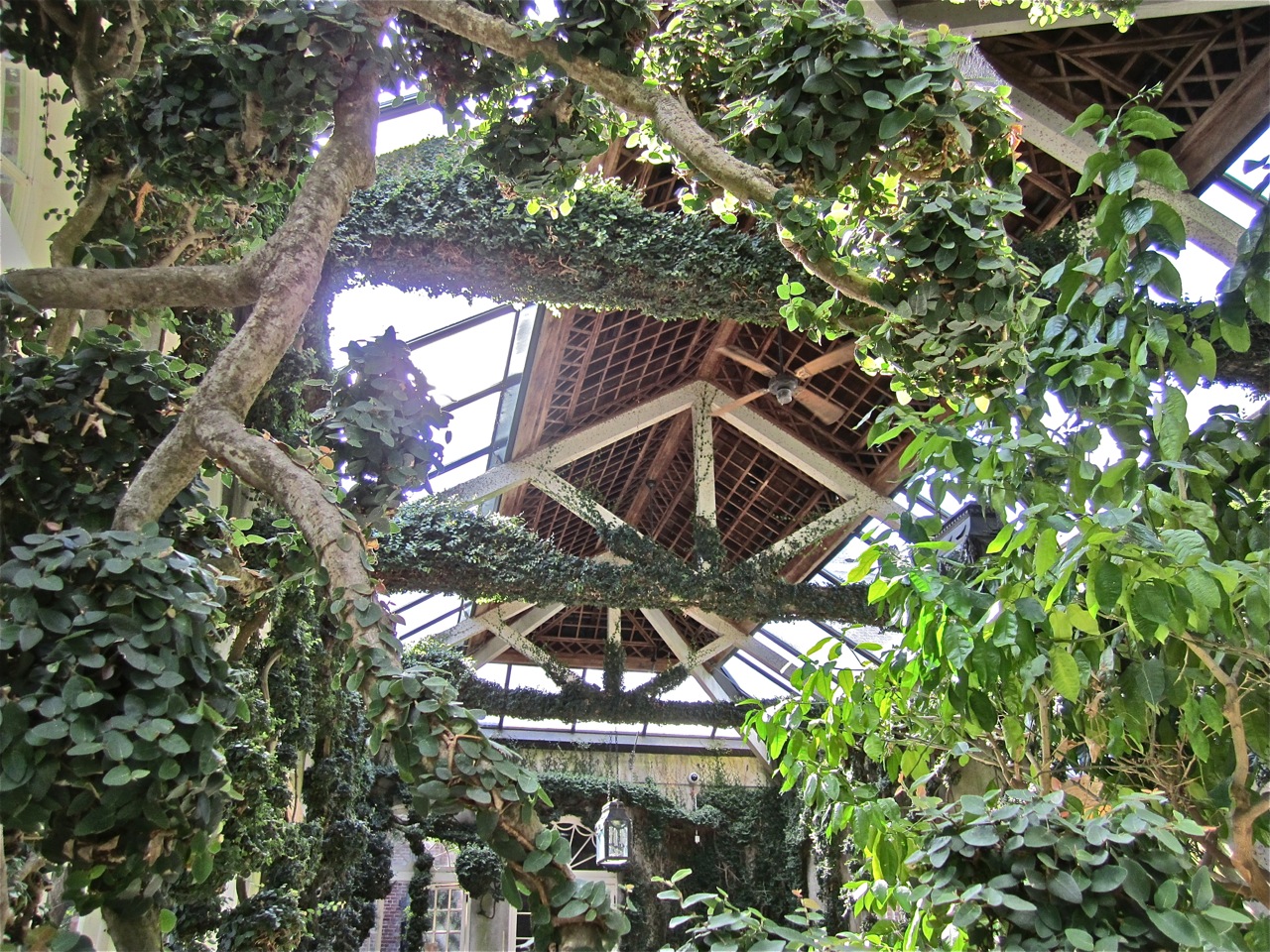
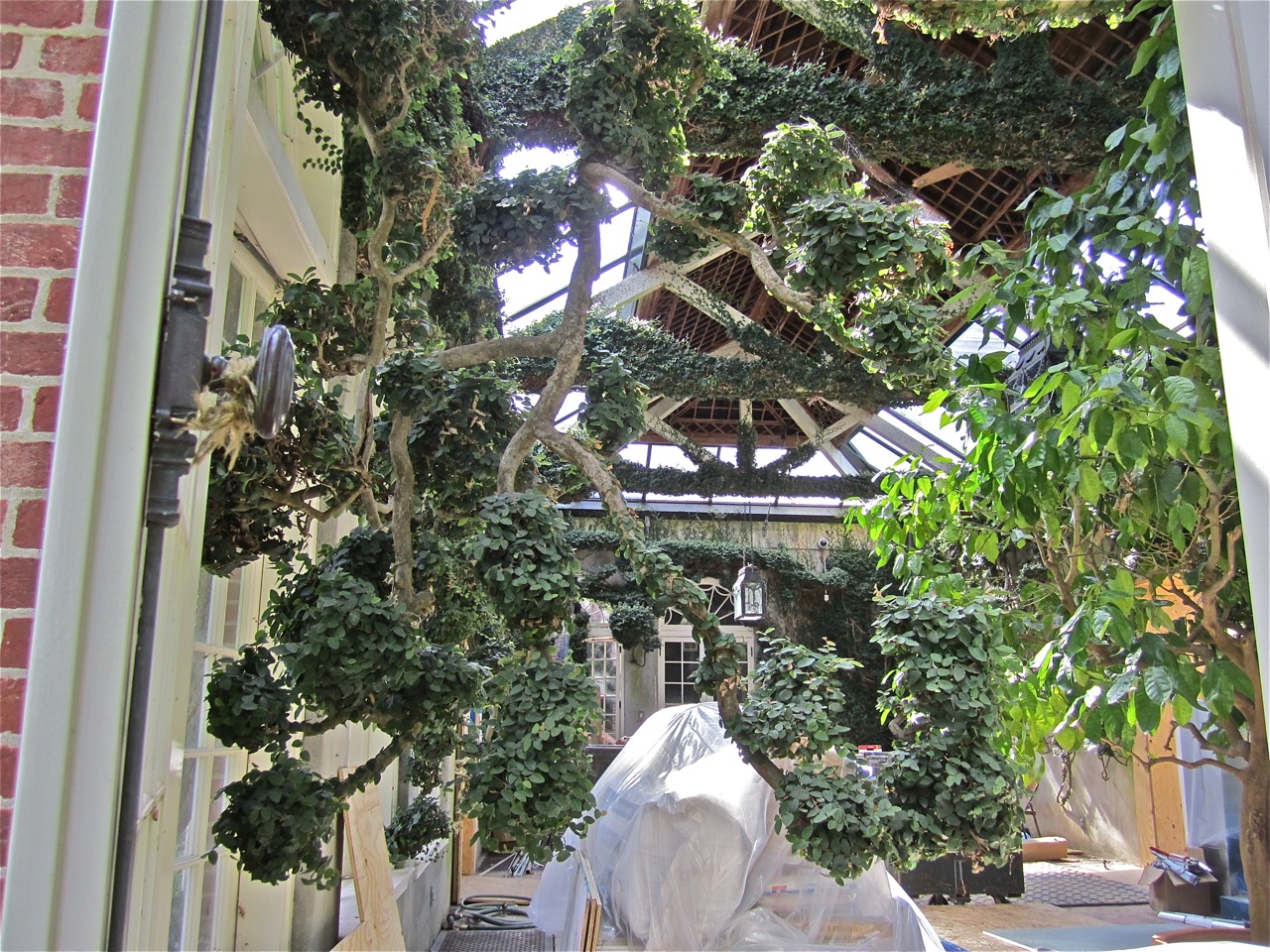
Creeping fig will survive outdoors in (U.S.) zones 8 – 11. It is native to east Asia.
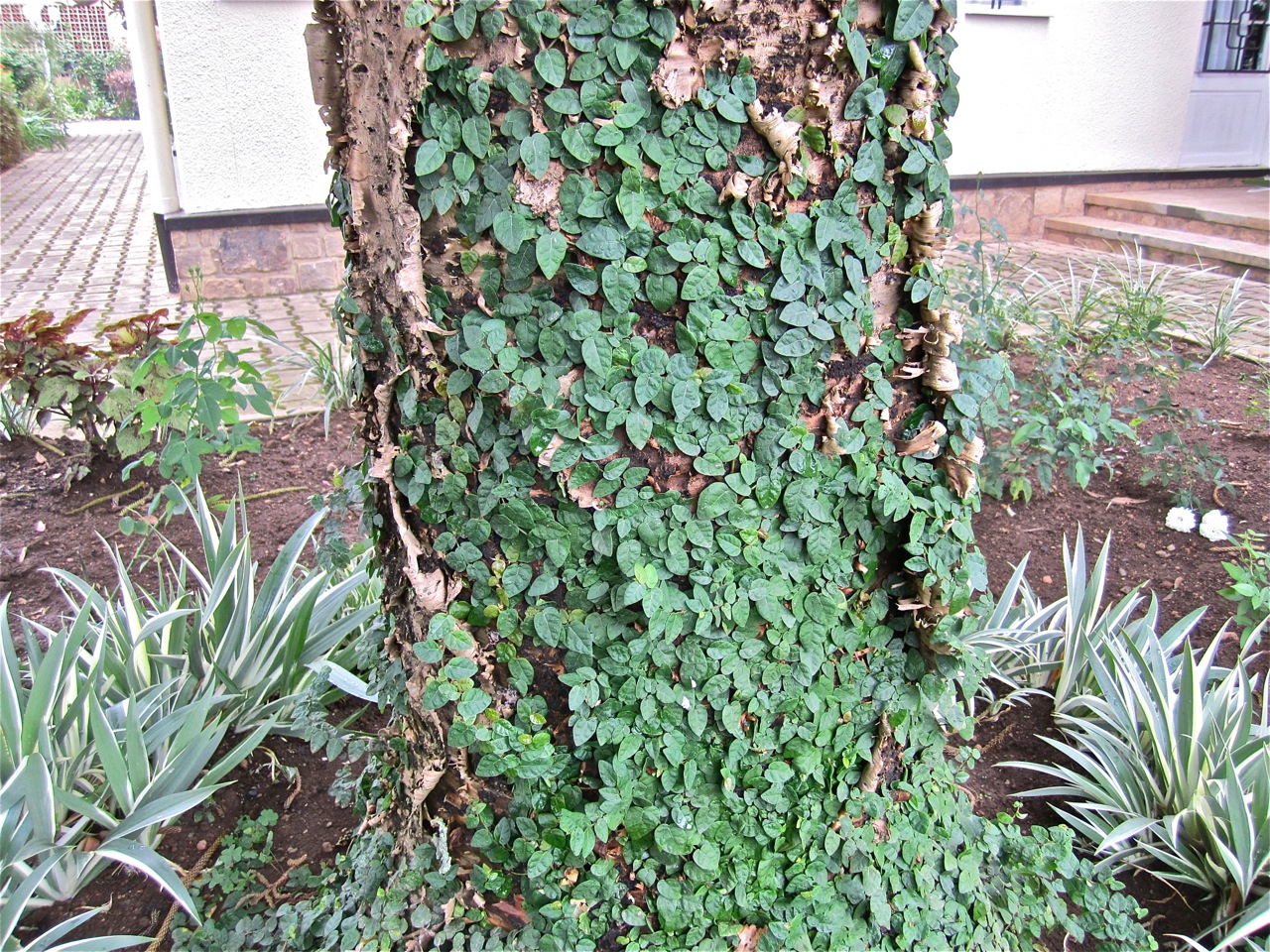
The plant is not fussy about its conditions, but does need consistently moist soil. Very fast growing, its aerial roots will adhere to anything, even metal and glass. All the sources I consulted warned against letting it attach to a wooden structure. With brick or concrete, it should be grown on something designed to support the plant forever, as the little rootlets will be very hard to remove if you later want a bare surface.
The fruit of the ‘Awkeotsong’ variety is used to make aiyu jelly in Taiwan (and ice jelly in Singapore). But several websites warned that all parts of the plant are poisonous. It may be that the processing technique makes the jelly safe to eat.
Since you inquire about creepers and ficus pumila,
They sum up the mood of a dweller in the wilds;
Respectfully visiting you in calf’s muzzle breeks* with a dove-headed walking stick.— Ruan Dacheng, Chinese poet (1587-1646)
Thanks to Pam at Digging for hosting Foliage Follow Up today (always the 16th of the month).
* “. . . a kind of shorts, or possibly a kilt, associated with a casual way of life in ancient times.”
Over 10 years ago, when we lived in Rwanda the first time, Rosamond (or Roz) Carr was by far the most prominent American resident in the country. She had arrived there with her British adventurer husband in 1949 and was the last remaining foreign plantation owner.

Born in 1912 to a wealthy (until the 1929 stock market crash) New Jersey family, she had grown up with “boarding schools, country clubs, and debutante balls” and was working as a fashion illustrator in Manhattan when she married the much older Kenneth Carr in 1942. By the end of the decade, their relationship (and their finances) were faltering, and they decided to try farming in the Belgian colonies of Congo and Rwanda in the foothills of the Virunga Mountains.
They first managed a pyrethrum plantation in the eastern Congo. Then, in 1955, her marriage over, Roz bought a 270-acre plantation of her own in Rwanda, called Mugongo. Within view of the Karisimbi, Mikeno, and Nyiragongo volcanoes, she began to create an extensive formal English-style garden. In 1957, when the price of pyrethrum dropped, she started supplementing her income by selling cut flowers to hotels on Lake Kivu.

Roz was a woman of great elegance, charm, and determination. In the 1950s, she enjoyed the social highlife of the region’s Belgian planters, but when colonialism ended and they (and Kenneth) went home, she resolved to remain with the farm, the garden, and the lifestyle she’d created. She often lived on the edge of bankruptcy, but always considered Rwanda the right place to be.
In 1967, she began a long friendship with the mountain gorilla researcher, Dian Fossey, who often used Mugongo as a refuge from the hardships of living on the volcanoes.
In 1986, Vanity Fair editor Alex Shoumatoff wrote a long article about Fossey’s murder. In it, he described Roz as “glamorous” (she was 74). Shoumatoff recounted his visit to Mugongo, with its garden “in spectacular bloom” and the cottage “cozy . . . with a fireplace, rugs, pillows, a pet gray parrot on a stand, lots of books, old New Yorkers on the table.” By that time, the market for pyrethrum was so poor that almost all of the plantation had been converted into a flower farm supplying hotels, businesses, and embassies in Kigali.
Roz enjoyed some mild celebrity while advising the makers of the 1988 film Gorillas in the Mist. She was played by Julie Harris, and her garden played itself.

By the age of 82, she’d had a long eventful life, firmly rooted to a piece of land and a country. Then, in April 1994, it all turned upside down and she had to start again.
The violence of the genocide forced her out of Mugongo and back to the U.S. Horrified by the killings on her farm, she initially thought that she would never go back to Rwanda. But in August, she received word that her old farm manager had survived. She managed to get on to a U.N. cargo plane and returned home to find everything in ruins. Seeing the many lost and orphaned children, she turned the farm into an orphanage for 40 children by the end of the year. She called it Imbabazi, which means “a place where you will receive all the love and care a mother would give.”
One of her few regrets in life had been that she had never had children, but in her autobiography, she wrote, “I can only surmise that God didn’t feel I was ready to have children until I was 82 years old. Then he sent me forty all at once.”
Imbabazi has cared for more than 400 children since then.
When I would occasionally meet Roz in Kigali in 2000 and 2001, she was always beautifully coiffed and dressed and never looking her 88 years. With her niece, Ann Howard Halsey, she had written her autobiography, Land of a Thousand Hills, in 1999, and it had expanded her already wide circle of friends and supporters. When violent insurgencies in 1997 pushed her and the children off the farm, the Heineken-Bralirwa brewery housed them in Gisenyi. Checks from abroad always came just in time. Flowers from the garden continued to be sold in Kigali (they are still delivered around town today).
 In 2002, she formed the Imbabazi Foundation with an international board of directors to oversee the orphanage’s operations and to insure its continuity. In 2005, Roz and the children finally returned to Mugongo. She died there in 2006, at the age of 94. She was buried in the garden, and her children planted out the ground around her grave.
Today, about 90 children remain at Imbabazi. Most are preteens and teenagers, and the Foundation is preparing them for meaningful, independent lives through education and vocational training. A few have gone to college.
Imbabazi will accept no more children and is considering ways that it can work for the community in the future. It has a working farm on the property, which produces milk, meat, and vegetables for the children. It is considering using the house and garden for tourism. If you go there today, you can tour the garden and take tea (a donation of $20 per person is suggested).

Friday before last, I finally got to see Roz’s celebrated garden. It is as beautiful as it was always described to me, not only for the long English-style flower borders, but more particularly for the deep planting beds off the formal lawn on the side of the house. Temperate climate perennials and annuals mix with orchids, calla lilies, tree ferns, and other tropicals. A number of paths, most paved in lava rock, wind through the thick flora and out to the old fields and the views of the volcanoes.
I have put all my photos into the gallery below. Click on any thumbnail to scroll through all the enlarged pictures.
You can see an interesting 2004 video interview with Roz here. You can also make a (U.S.) tax-deductible donation to Partners in Conservation and indicate that the money should go to Imbabazi. It is the only privately run group home for children in Rwanda and depends entirely on donations. See the Imbabazi Foundation website for more information.
ADDENDUM: You can see the garden in May 2014 here.


 enclos*ure