In Brussels Park

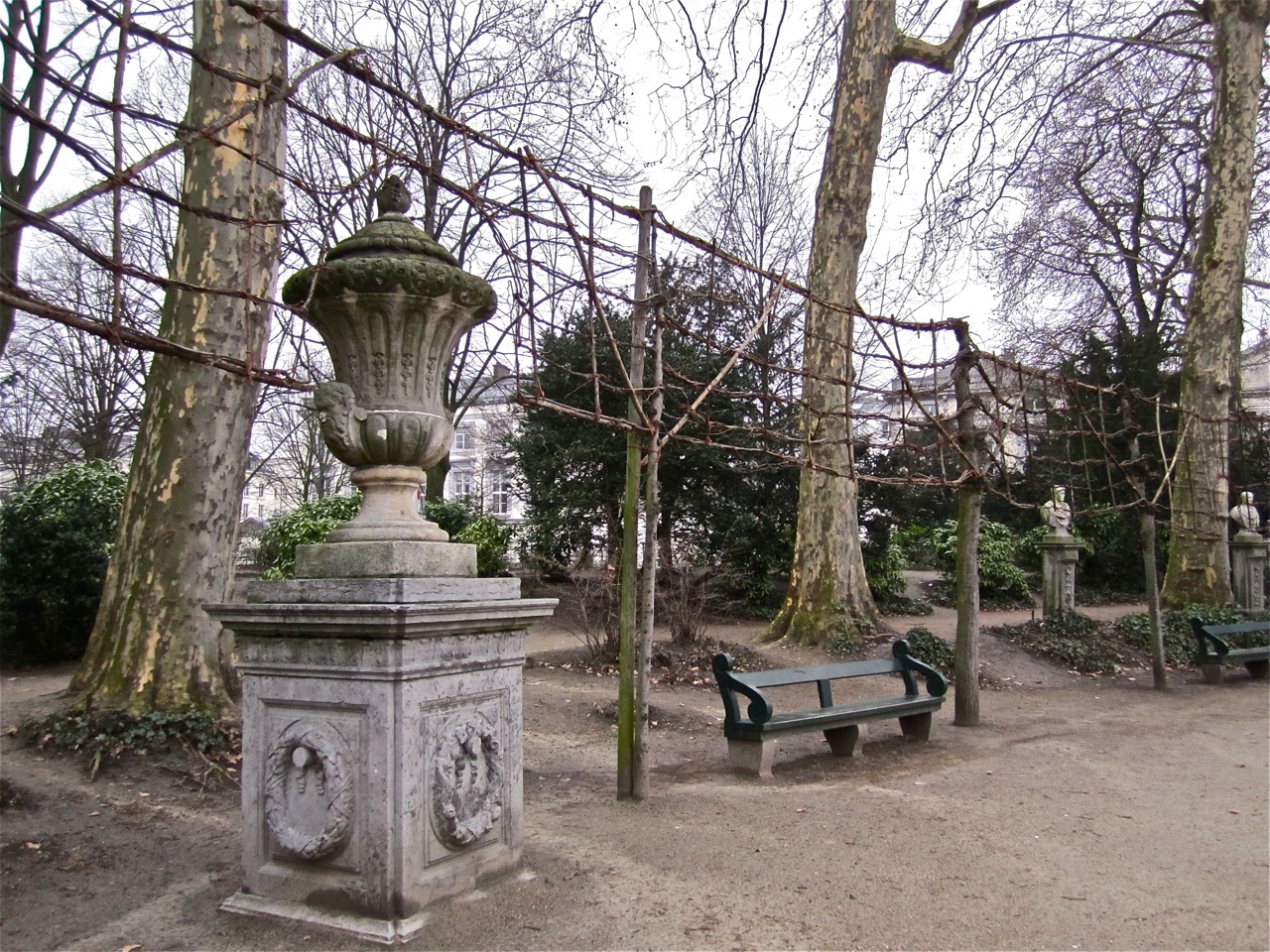
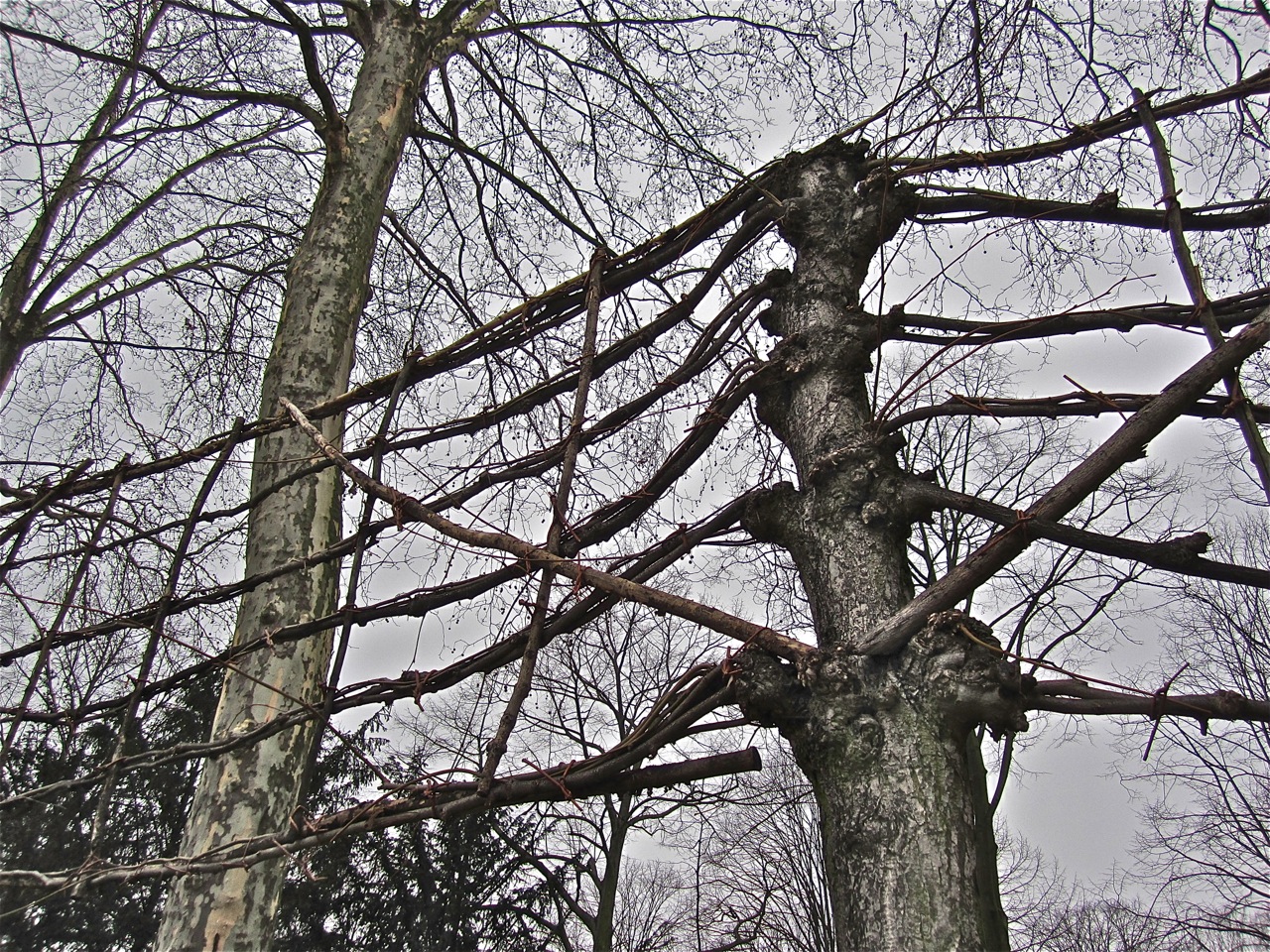
I noticed the bare, pleached trees near the end of the taxi ride from the airport  — a double row of long limbs on high, grid supports.
As soon as we dropped our bags at the hotel (and after a mid-morning snack of Liege waffles), we walked back to Brussels Park.
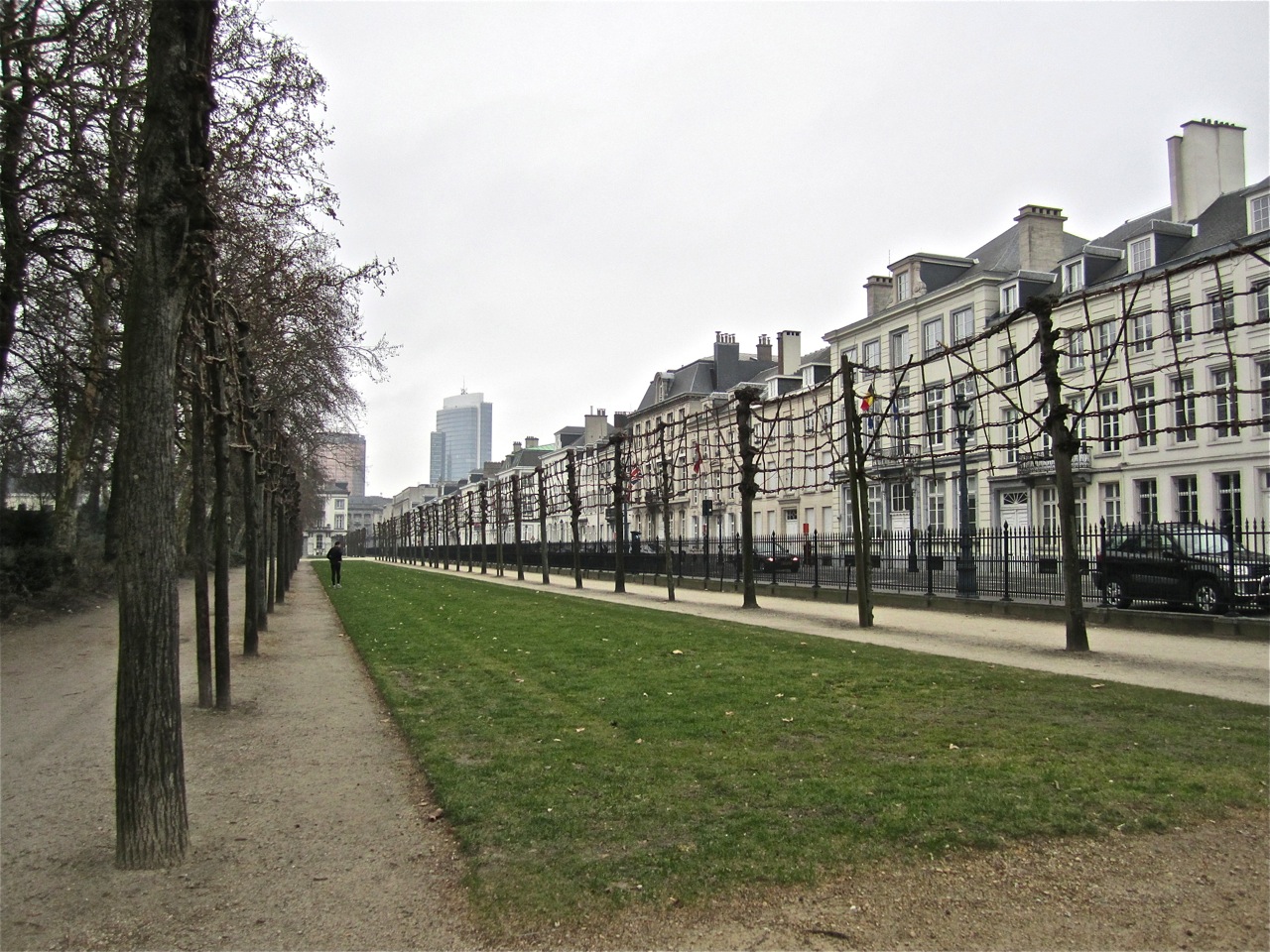
The Parc de Bruxelles (or Warandepark in Dutch) is the largest urban park in the city center, as well as the oldest. A rectangle, it is capped on the north end by the Belgian Parliament (the park is on a north-east to south-west axis) and on the south end by the Royal Palace (below).

In the 12th century, it was the hunting ground for the dukes of Brabant. In 1774, Empress Maria Therese of Austria (the ruler of Brussels at that time) ordered that the space be turned into a French-style garden.
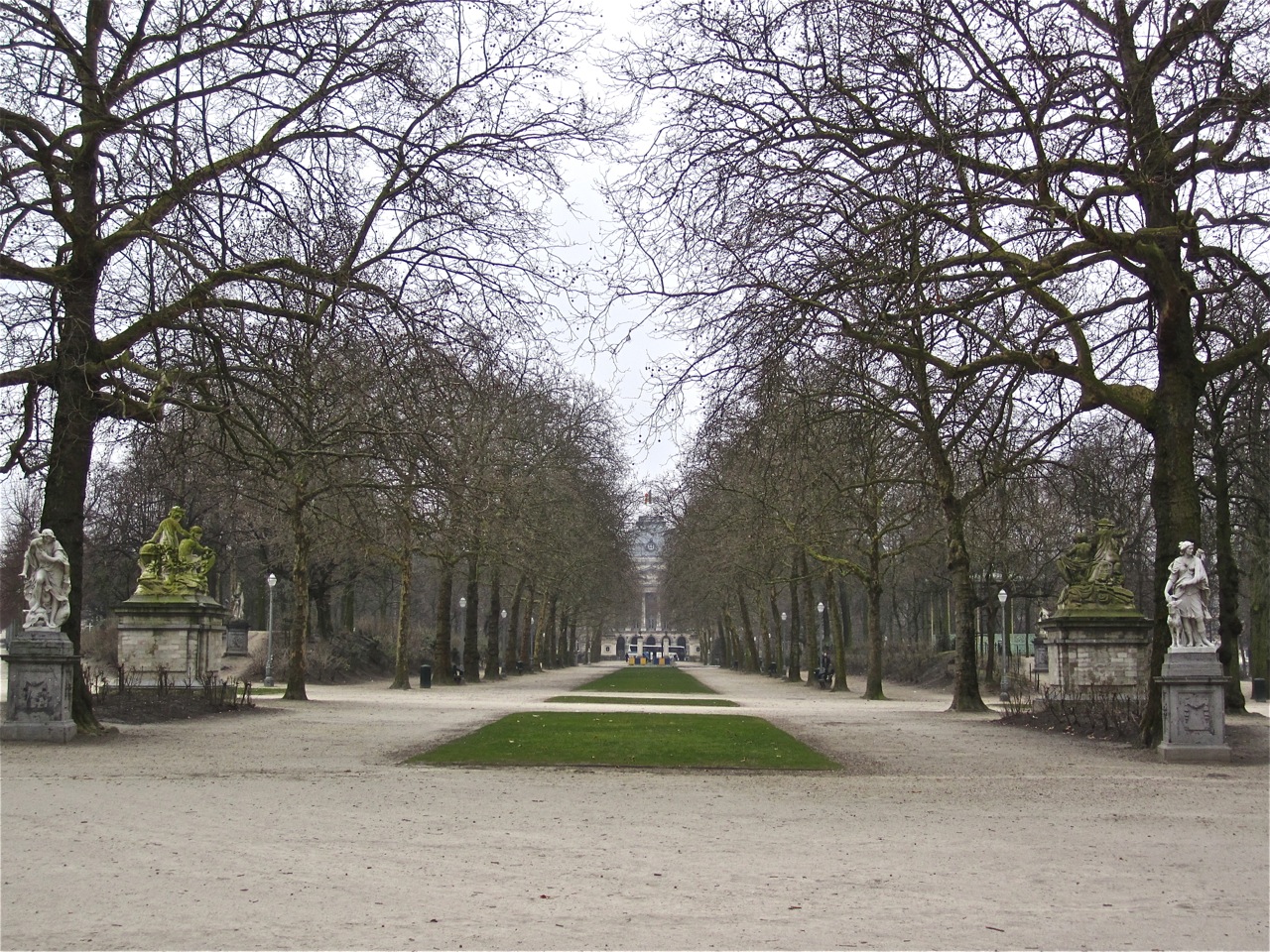
The original design by Barnabé Guimard remains to this day.  The predominate feature of the layout — that the north fountain and the two outer wide allées form the shape of an architect’s compass — reflects the influence of Free Masonry in 18th c. Brussels.

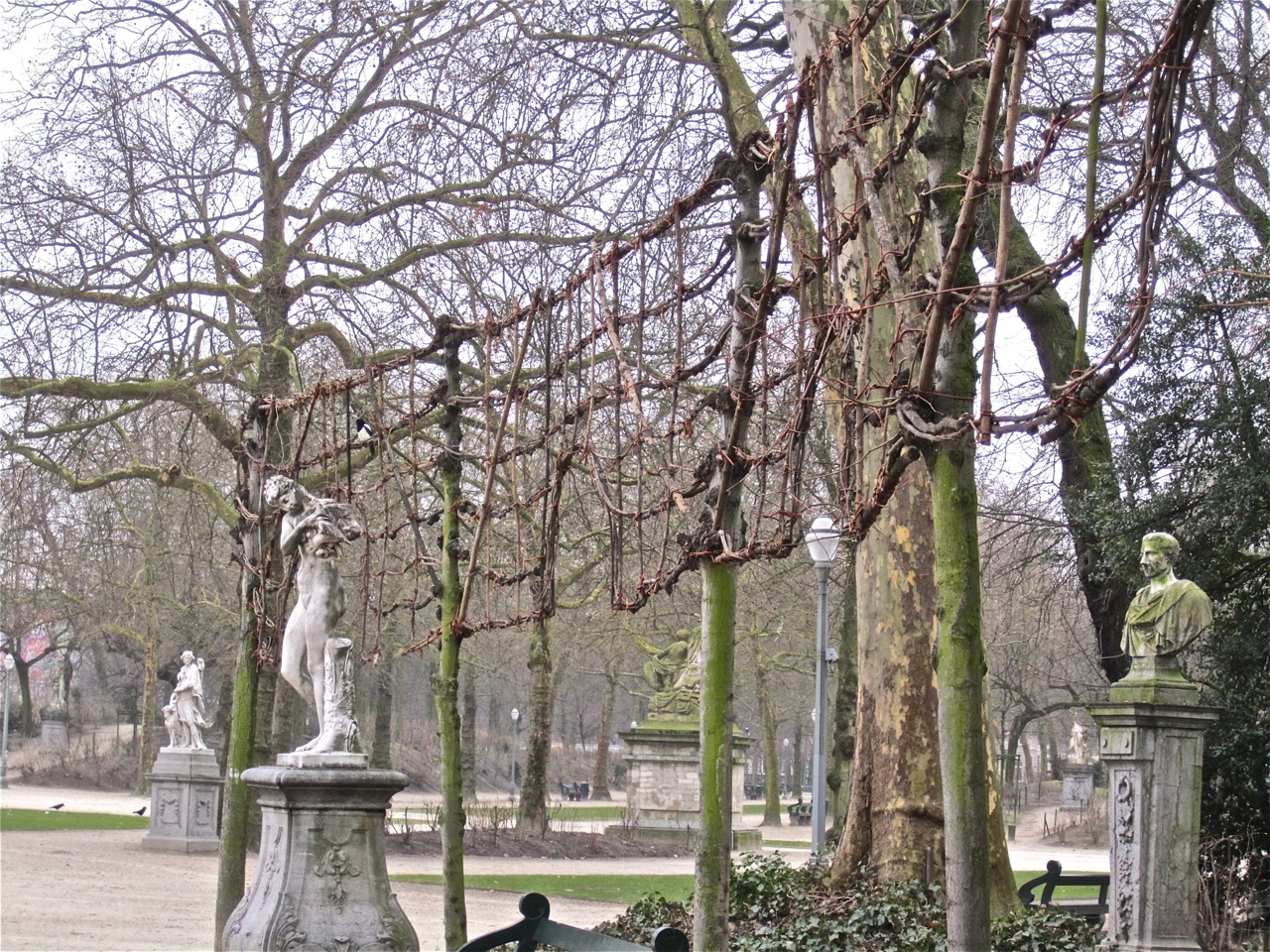
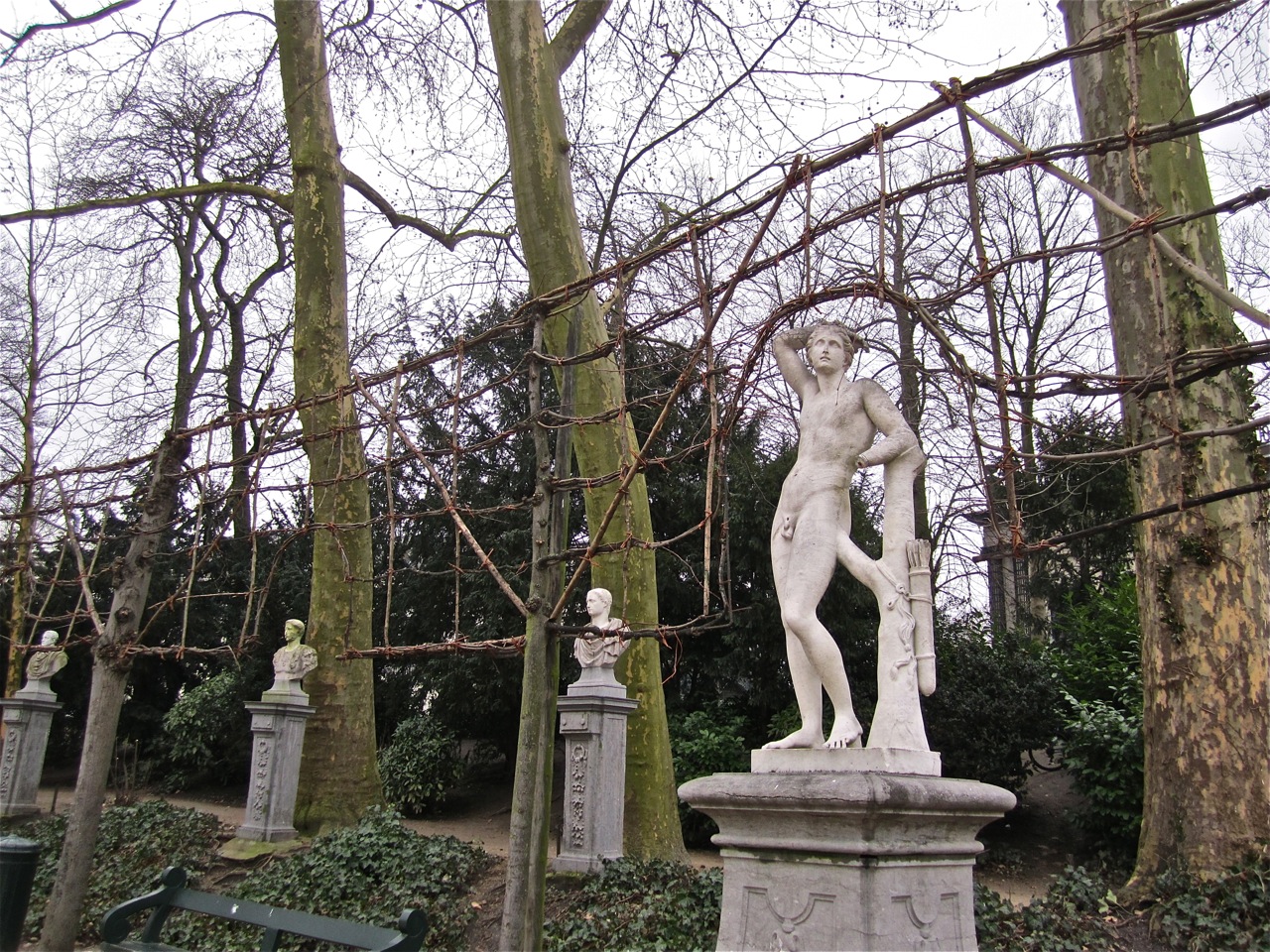
While formal, symmetrical, and on a grand scale, the park is simply planted with banks of shrubs, forest-style groupings of tall (naturally shaped) trees, and the rows of pleached lime trees, which border the whole garden and the north fountain.

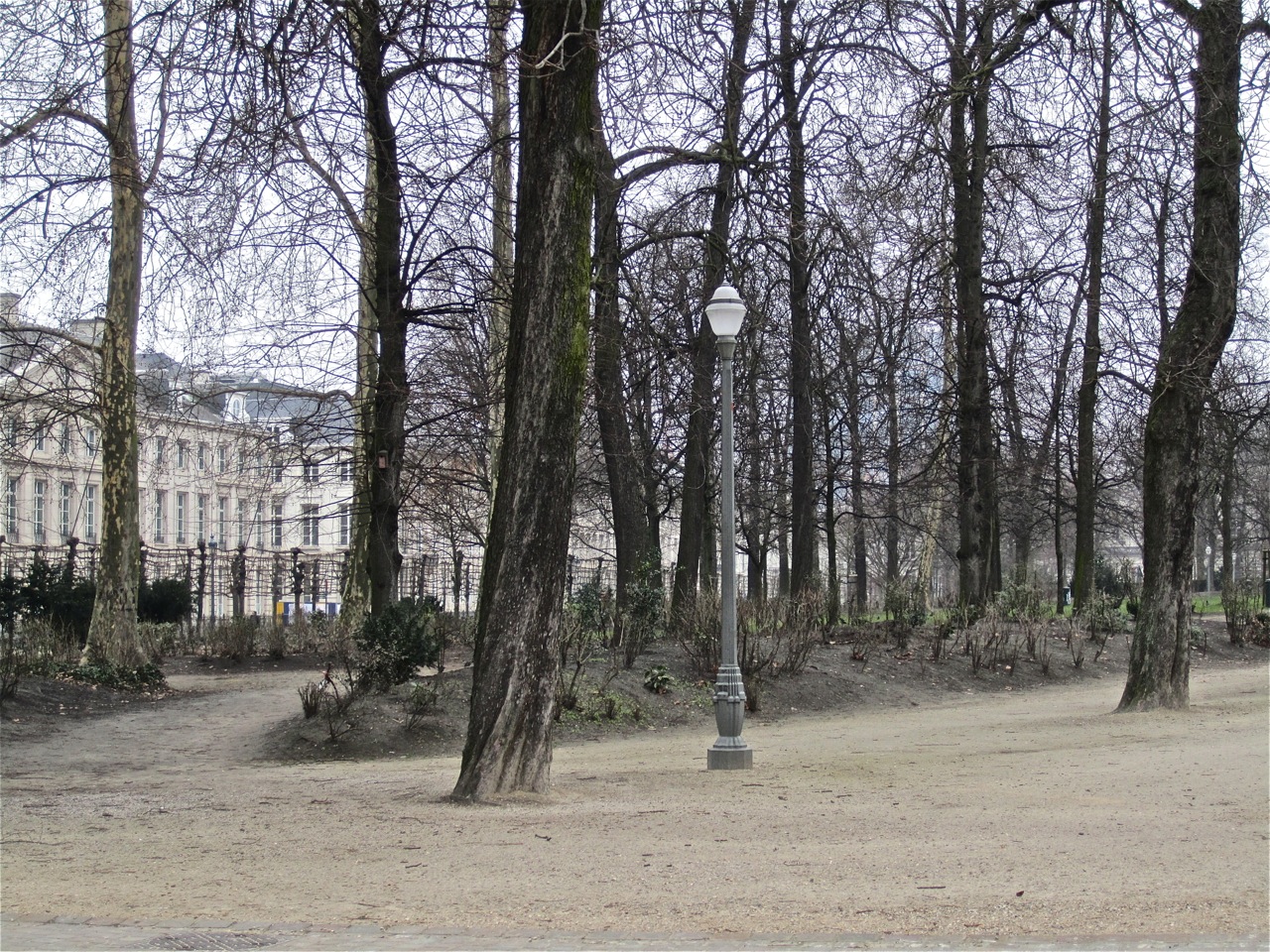
Curvy, auxiliary paths wind between the main allées.
On the west side is a lovely 1841 bandstand designed by Jean-Pierre Cluysenaer.

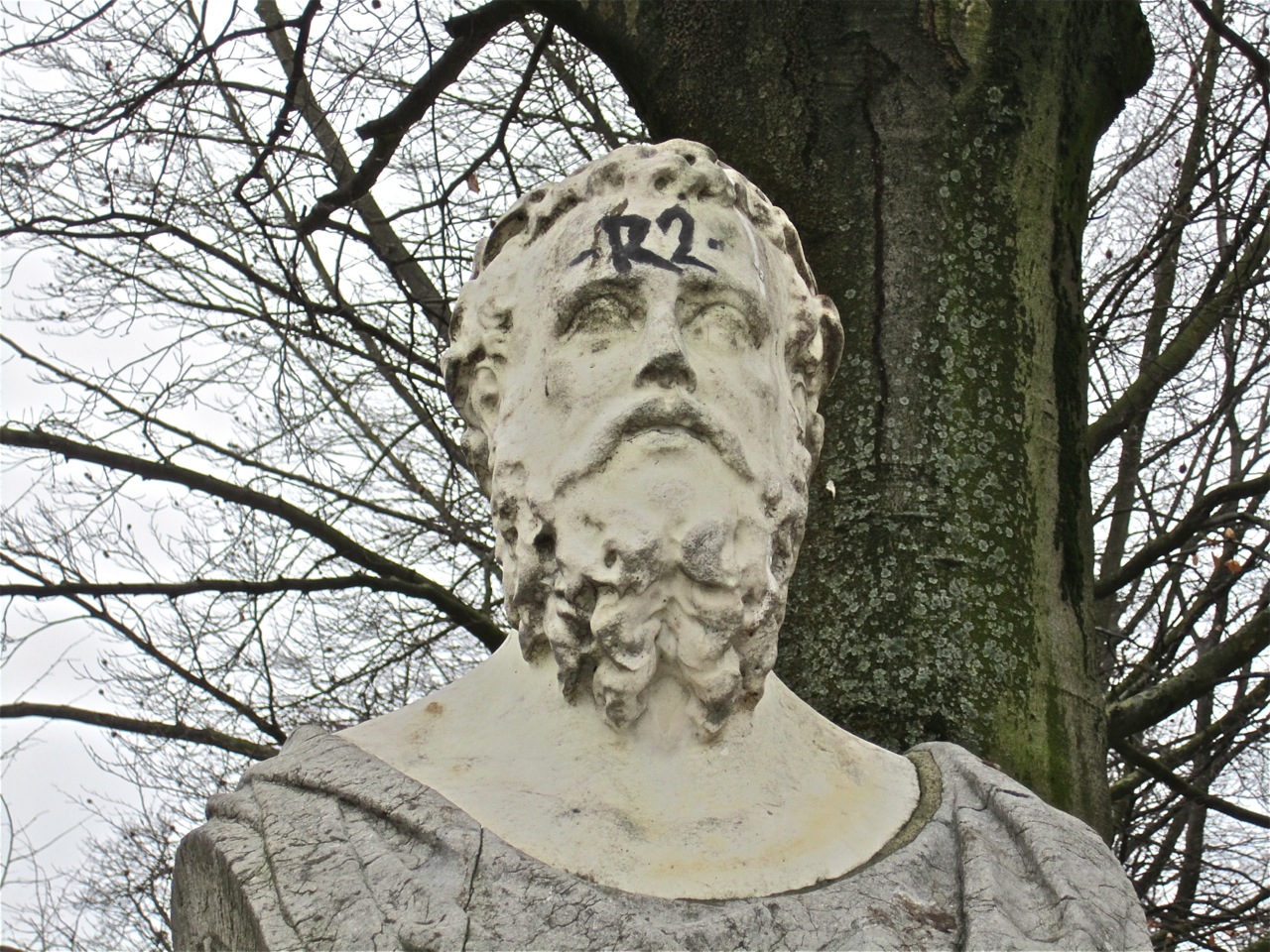
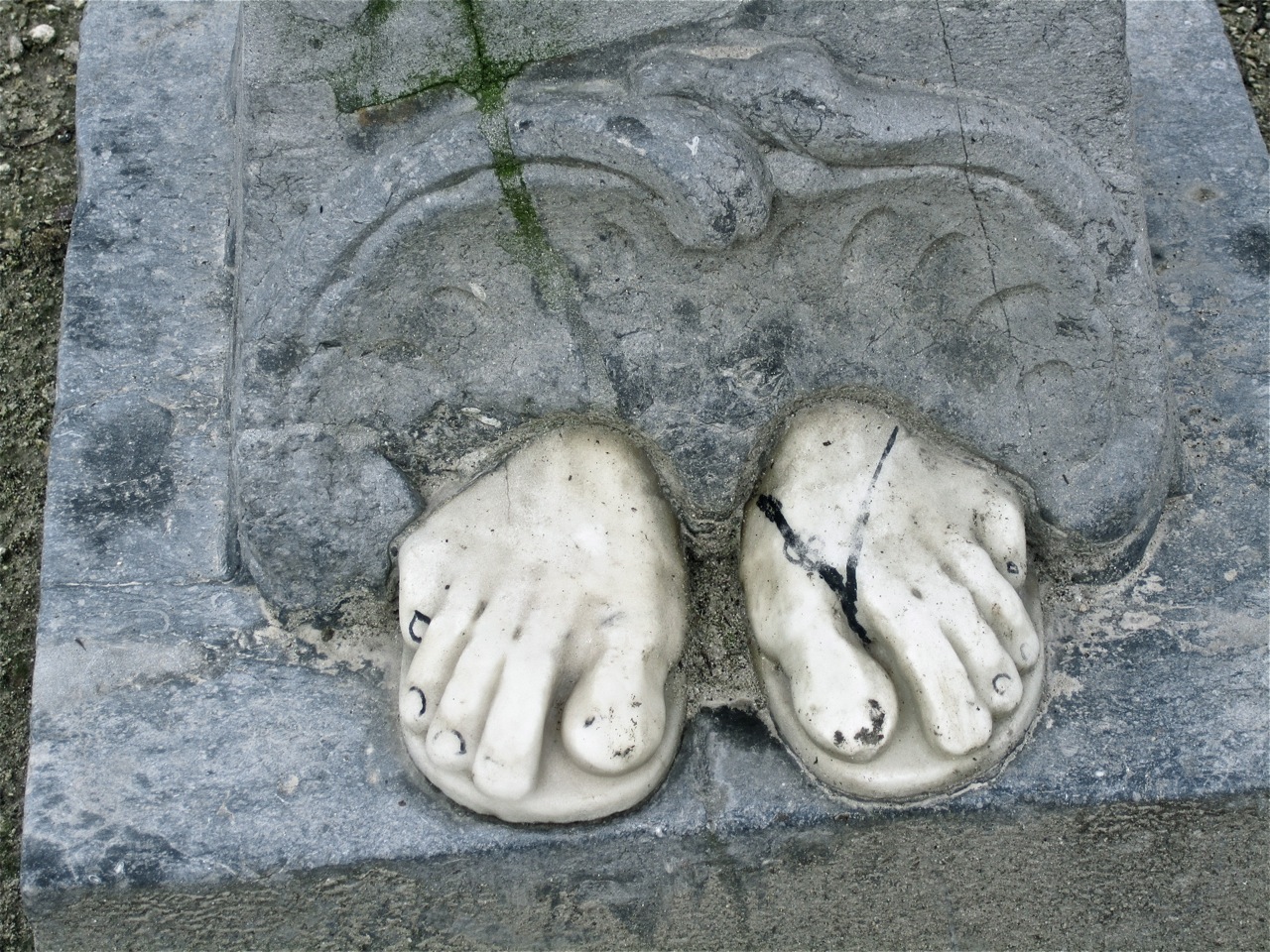
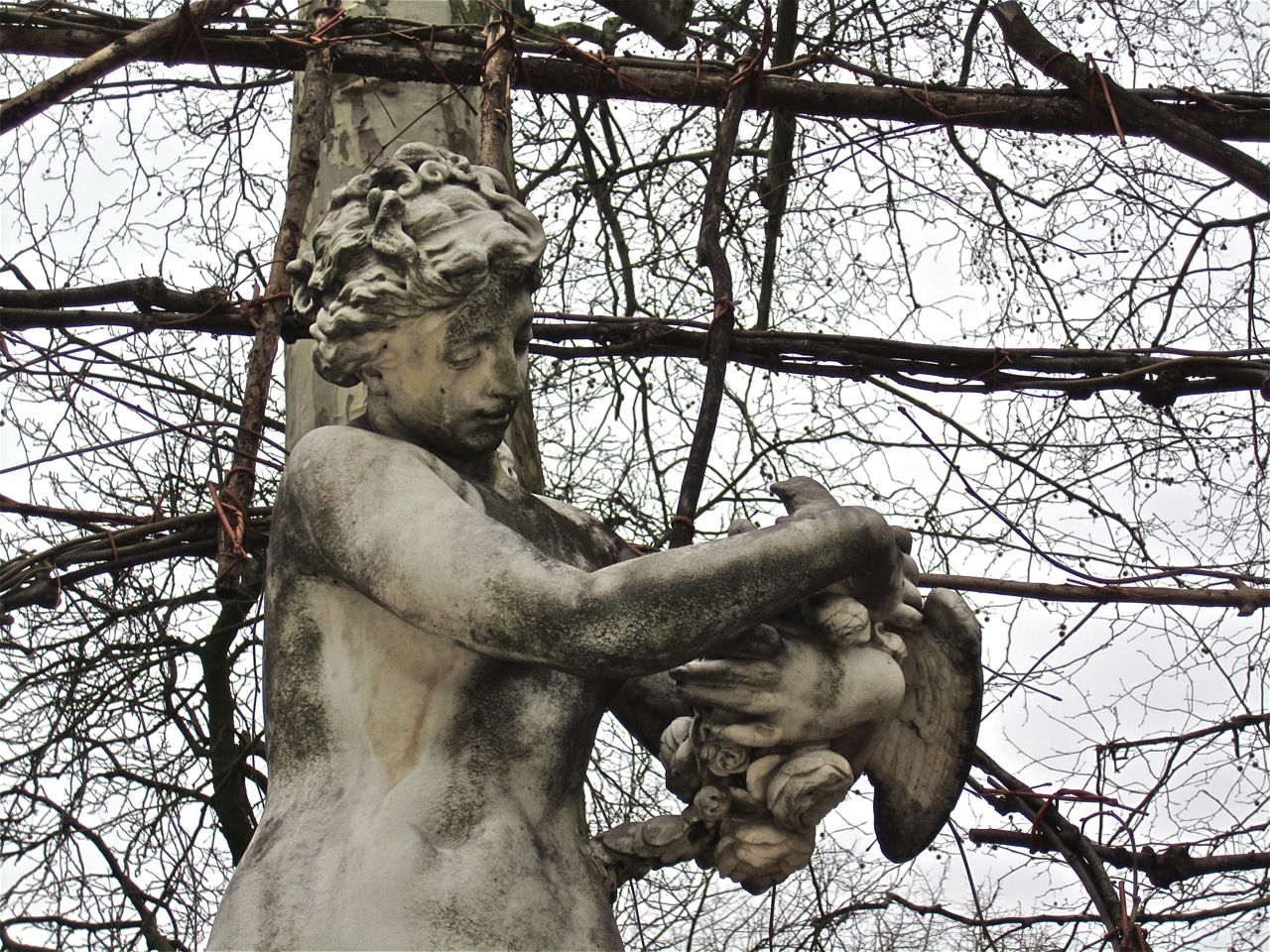
The park also contains about 60 sculptures inspired by Roman-Greek myths.  Most were originally taken from the Brabant dukes’ castle, Tervuren, and the Thurn und Taxis Palace.  Today, however, many are copies.  The entire park underwent a restoration in 2001.

The urns and sculptures below circle the north fountain.

To scroll through larger versions of the above photos (and some others), click on ‘Continue reading’ below and then on any thumbnail in the gallery.

Continue reading “In Brussels Park”

And in Lyon

During three days in Lyon, France, last month, we also found some wonderful pollarded London plane trees in the old city areas of Vieux Lyon and Presqu’île.

Click on any thumbnail in the gallery to scroll through larger images.

Pollarded trees in Brussels

An advantage of visiting Brussels in the final days of winter is being able to see the bare knobby limbs and whippy branches of the city’s many pollarded trees.  They “can look weird,” wrote Landscape Designer Clive West in The Guardian at this link.  But, like him, I am fascinated by the particular aesthetic of their gnarly forms — ancient and modern at the same time.

Click on any thumbnail in the gallery to scroll through larger images.

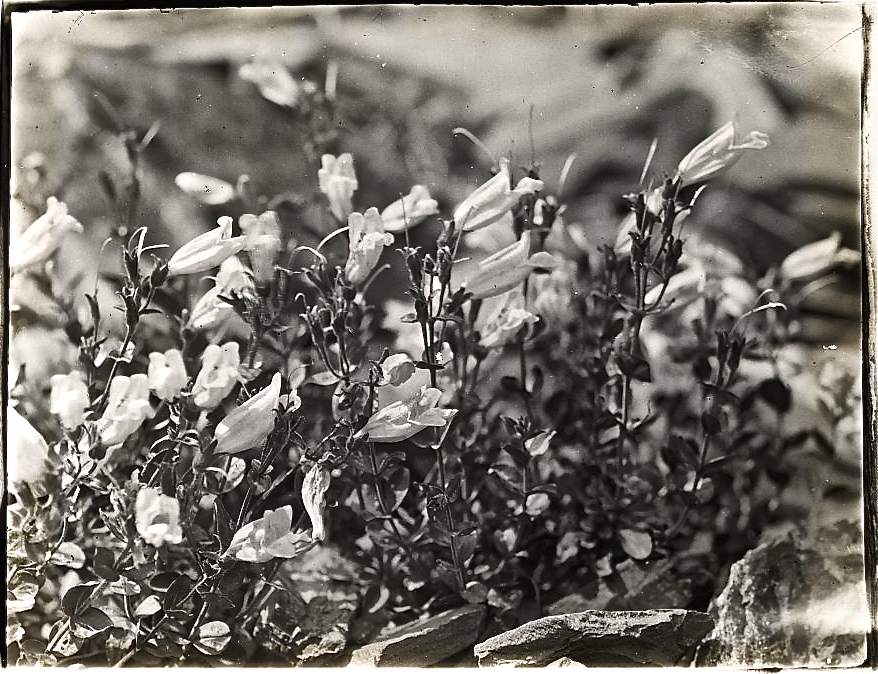
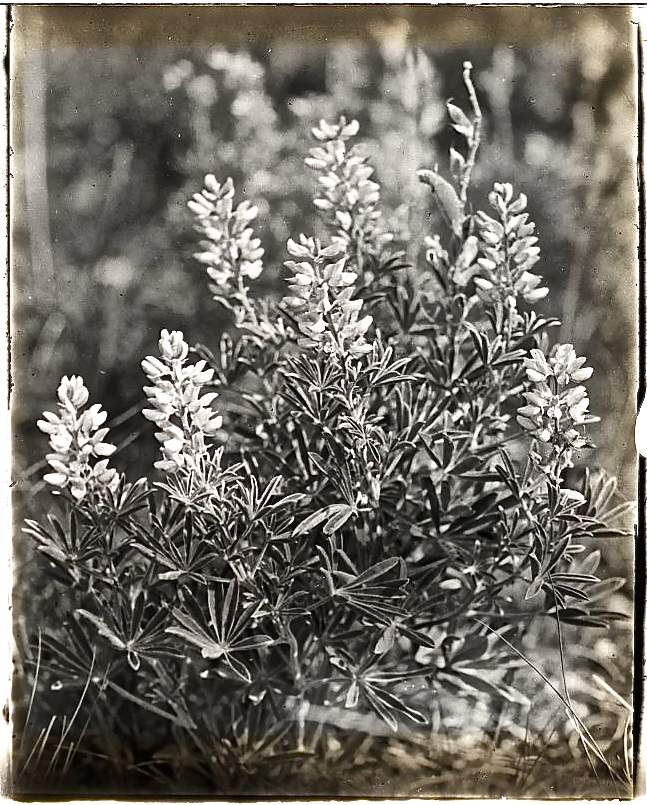
Vintage landscape: wildflowers

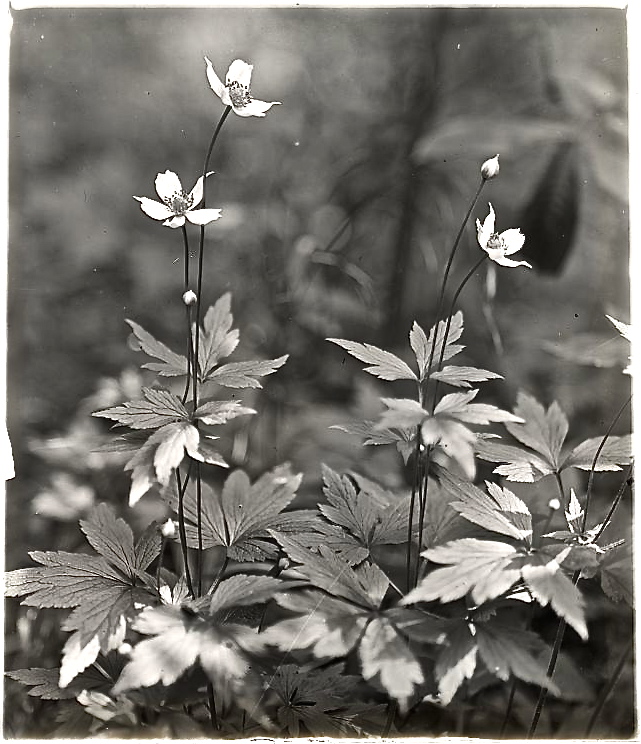
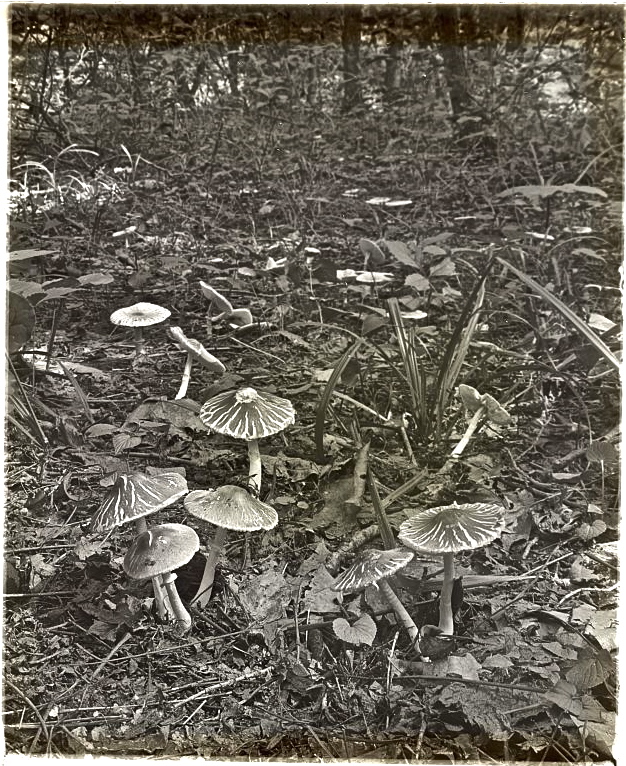
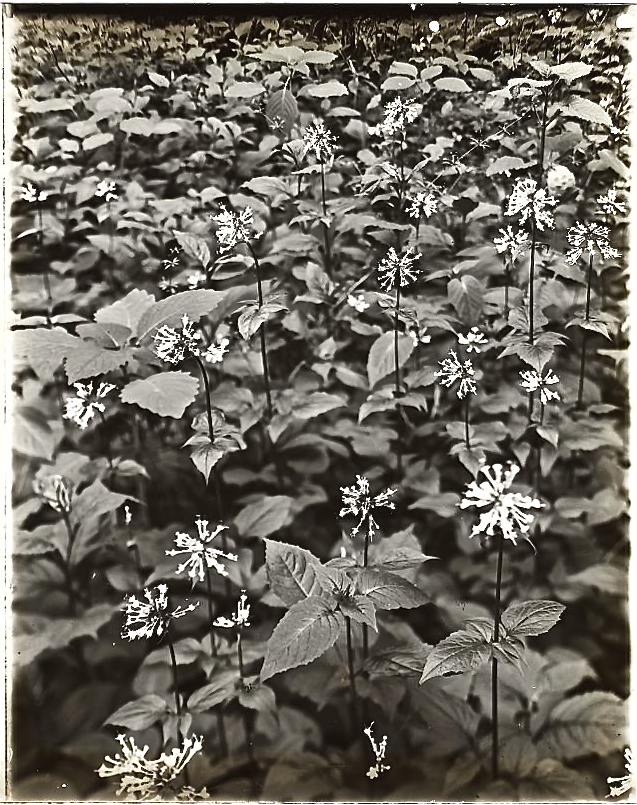
While the hand-colored images are the stars of the recently released collection of lantern slides taken by Frances Benjamin Johnston, among the new material are these lovely black and white photographs of wildflowers. Johnston used these pictures to illustrate her popular lecture, “Wild Flower Gardening.”

The slide at the top is “Unidentified house, woodland pathway, 1920.” All the portraits of flowers below were taken between 1915 and 1927.

Wood anemone. (All labels by the Library of Congress; click any photo to enlarge it.)

Wildflowers.

Bell flower (campanula).

Woodland mushrooms.

Wildflowers in bloom.

Bell flower (campanula).

Lupin (lupinus).

Unidentified garden or park, woodland daffodils, 1920 (also the photo below).

All photos are from the Frances Benjamin Johnston Collection, Library of Congress Prints and Photographs Division.

Garden Bloggers’ Bloom Day in April

I’m afraid this will have to count for my Bloom Day post this month — it’s pouring outside.  To see what’s blooming in other garden bloggers’ gardens, go to May Dreams Gardens, here.

The lantern slides

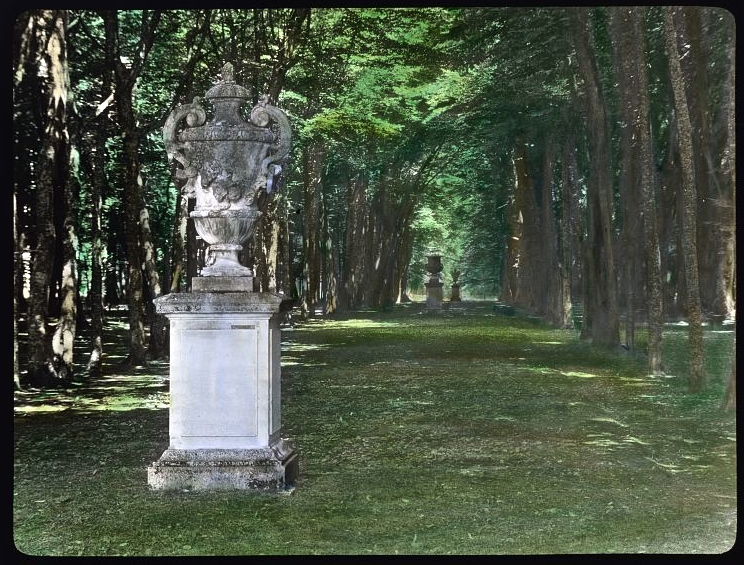
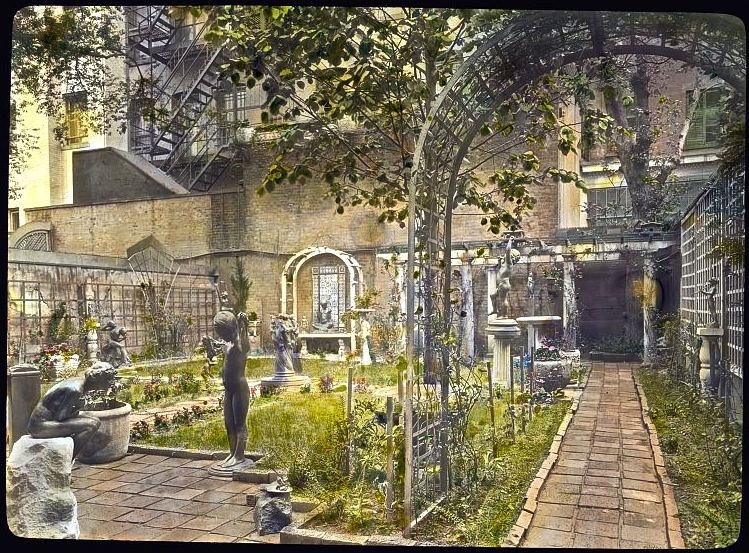
This is really exciting.  Yesterday, the Library of Congress released online the digital images of more than 1,000 hand-colored, glass-plate lantern slides of gardens taken (mostly) by Frances Benjamin Johnston.

The images in the collection were taken from 1895 to 1935.  Originally black and white photographs, Johnston had them hand tinted and made into slides to illustrate her popular garden lectures, which she gave to garden clubs, horticultural societies, and museum audiences from 1915 to 1930.  As part of the Garden Beautiful Movement, she encouraged Americans to grow gardens on tenement lots, in row-house yards and in parks, which had deteriorated from industrial pollution and neglect during the Gilded Age.

The slides have not been seen in public since Johnston last projected them during her lectures.  They depict more than 200 sites — primarily private gardens — in all regions of the United States and in Europe.  The entire collection, 1,130 digital images, can be found in the Library’s Prints and Photographs Online Catalog, here.

I’ve just begun to enjoy this beautiful resource, but here are 11 images that I pulled out quickly during my first enthusiastic look.

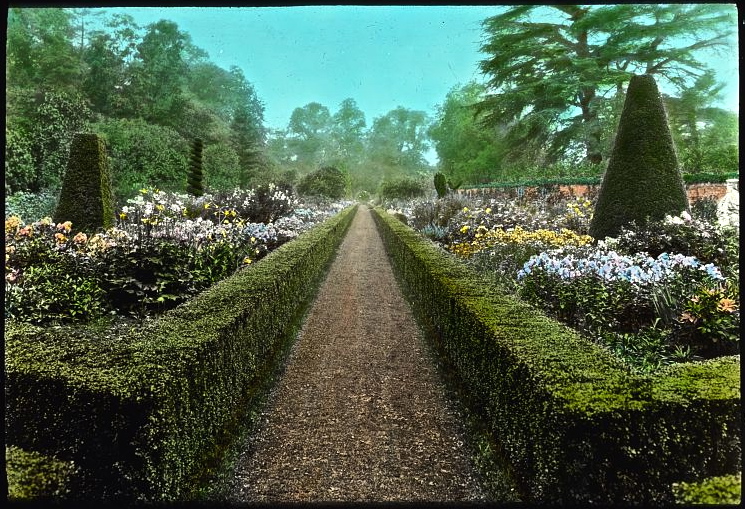
The photo above is of Chateau of Bréau, Dammarie-les-Lys, Seine-et-Marne, France.  July 1925. (Click any photo to enlarge it.)

The Touchstone Garden, New York, New York. Sculpture exhibition, summer 1919.

“Cliveden,” Viscount Waldorf Astor house, Taplow, Buckingham, England.  Long Garden, summer 1925.

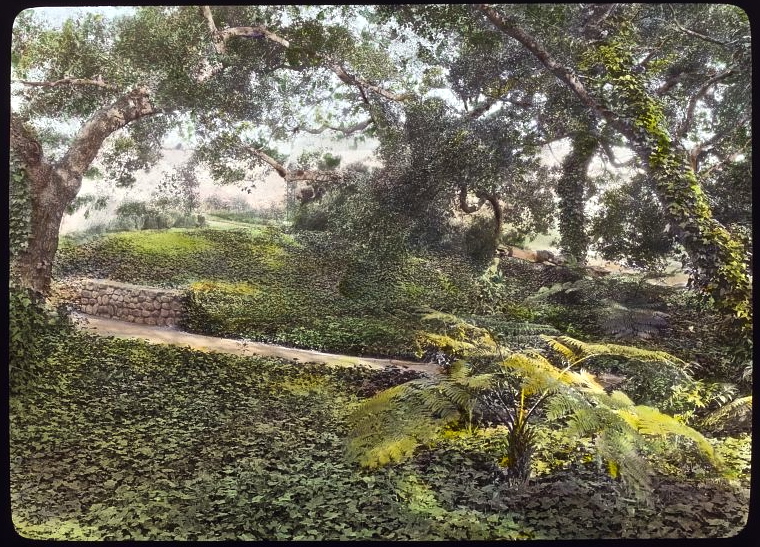
Myron Hunt house, 200 North Grand Avenue, Pasadena, California. Garden Terrace, spring 1917.

“Inellan,” Walter Douglas house, Channel Drive, Montecito, California.  Pathway to Pacific Ocean, spring 1917.

“Flagstones,” Charles Clinton Marshall house, 117 East 55th Street, New York, New York.  Tea house/sleeping porch.

“Gray Gardens,” Robert Carmer Hill house, Lily Pond Lane, East Hampton, New York, New York.  View to Garden Trellis.

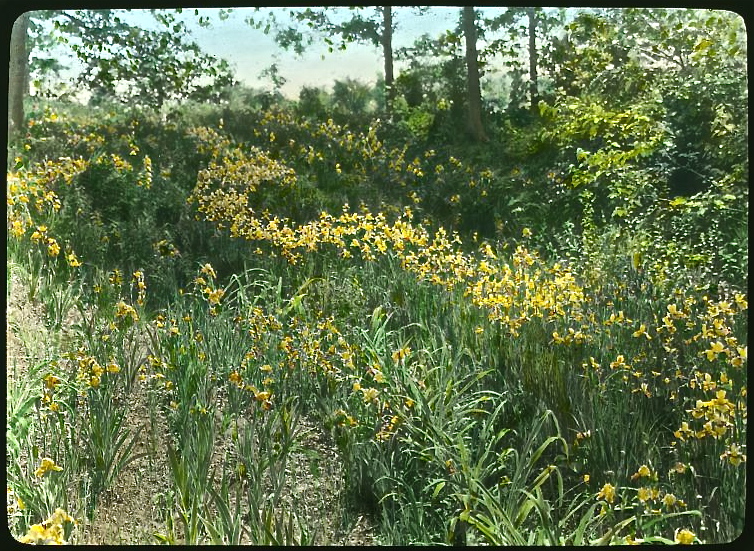
West Potomac Park, Washington, D.C.  Irises along the embankment, April 1905.

Dr. Charles William Richardson house, Chevy Chase, Washington, D.C.   Irises, 1921.

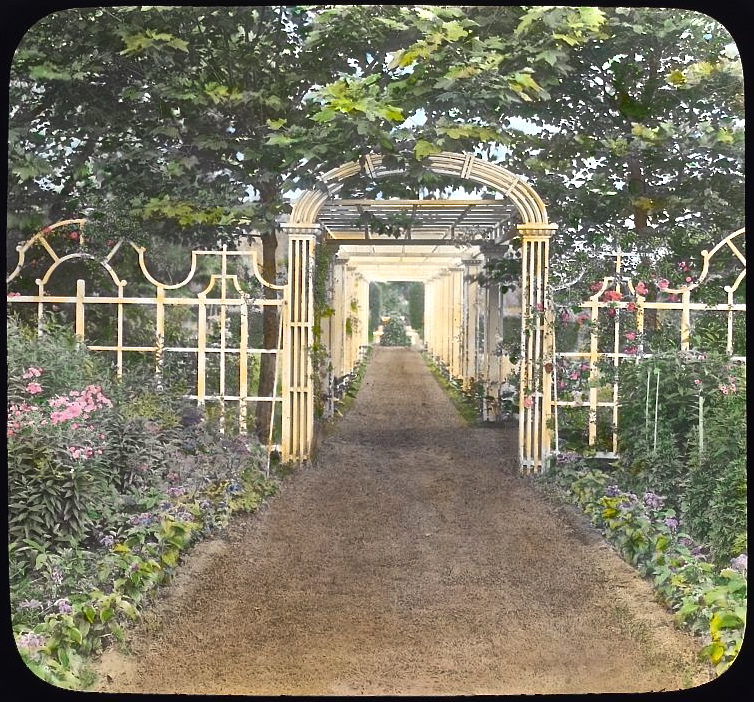
“The Fens,” Lorenzo Easton Woodhouse house, Hunting Lane, East Hampton, New York. Pergola, 1914.

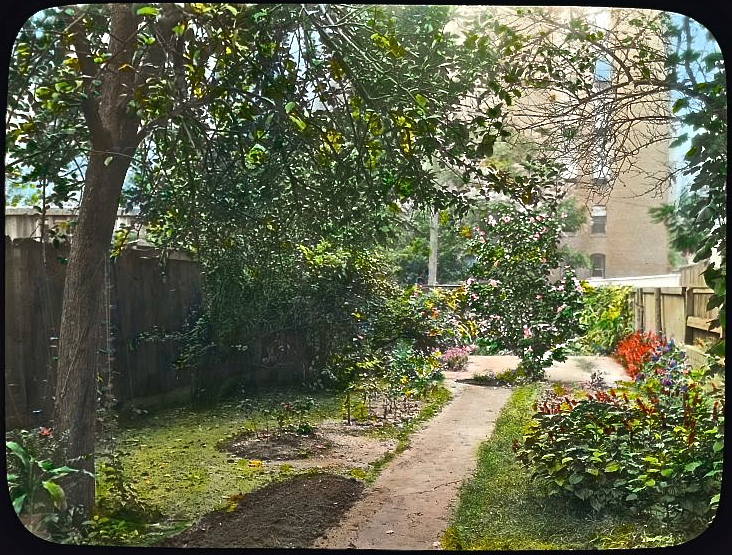
Unidentified city garden, probably in New York, New York.  Pathway, 1922.

A selection of 250 of the color images can also be seen in a new book by house and garden historian Sam Watters, Gardens for a Beautiful America, 1895-1935: Photographs by Frances Benjamin Johnston.  It will be published this month by Acanthus Press, in association with the Library. ($79, here — not yet available.)
The Library of Congress is the repository of Johnston’s personal papers and approximately 20,000 photographs. But the lantern slides lacked garden names, locations, and dates and, therefore, had not been released to  general public access.  Watters took on the challenge of cataloging the collection, and after five years of research in libraries and archives, he has transformed vague earlier library notations into detailed data.  For example, an unlabeled slide was recognized as a prize winner in a 1922 design contest and is now identified as “The Janitor’s Garden, 137 E. 30th St., New York City.”
For more information about Frances Benjamin Johnston, see here and here.