It has been two years since I made a number of significant changes to our Kigali, Rwanda, garden, and I thought this would be a good time to look back with a series of “before and after” pictures.
Today, I’ll focus on the “lower lawn” — the largest part of the garden, which is parallel to and just below the “upper lawn.”
(You can read about the upper lawn’s “before and after” in my July 25 post here).
Before
 Photos above and below: late 2011.
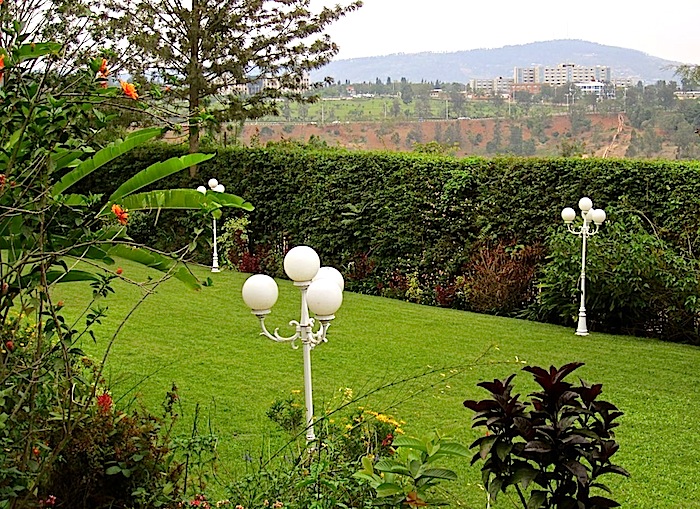
Then and now, looking down on the lower lawn from the front of the house, you see grass and a clipped bougainvillea hedge along the front of the property — and then the view above.
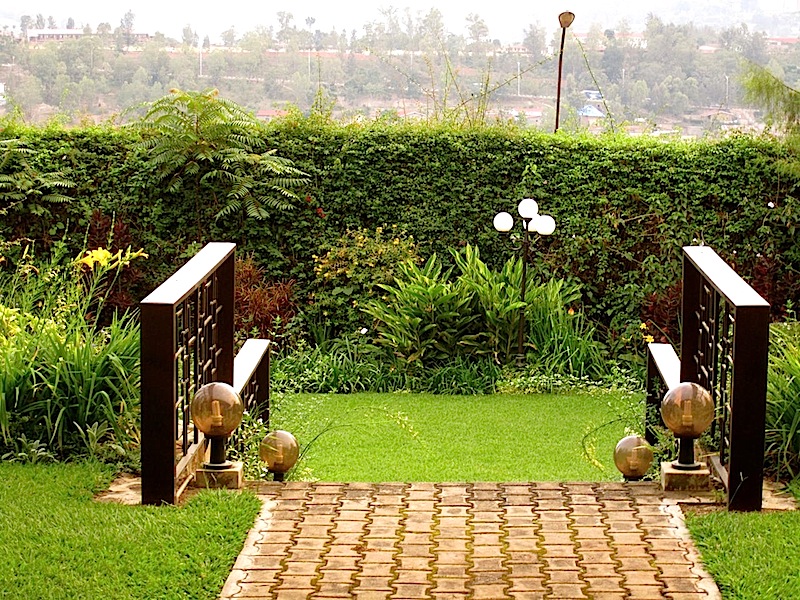
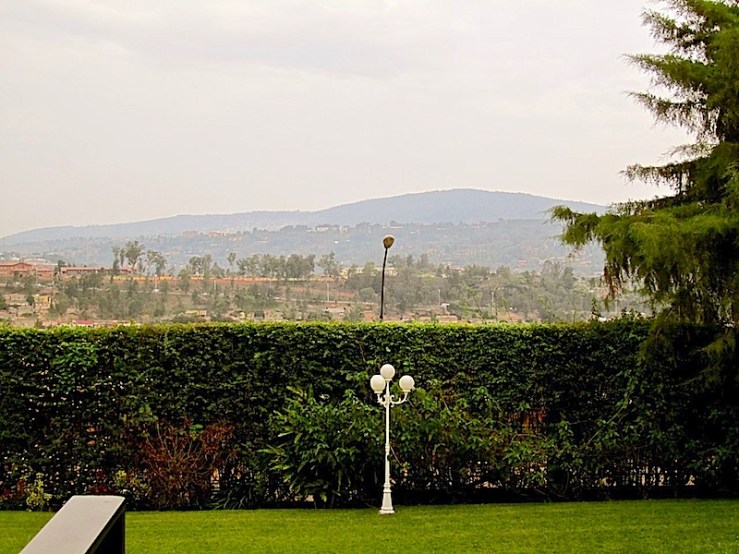 This is to the right of the previous photo; that’s Mt. Kigali over the front hedge — seen from the center steps that align with the middle of the house and terrace.
When you go down the center steps and stand on the lower lawn, the views of the city and hills are hidden and the flower/shrub borders are all you see.
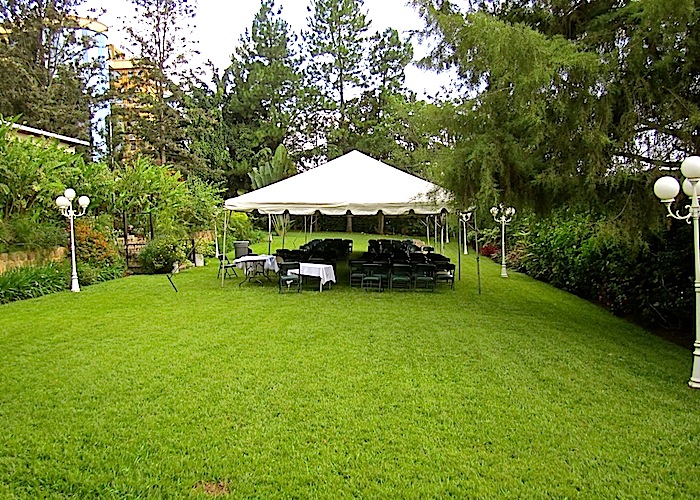
Back in 2011, I thought it was all too straight, too wide (the grass), too dull. And the bright white Victorian lampposts lined up out in the grass drove me crazy.
 There is a slight slope to the lawn, toward the front hedge. Along that hedge (shown above, right) was a very narrow planting strip, into which a variety of nice shrubs were wedged. I always had a feeling that they and the lawn could just slide down under the hedge.
The practical purpose of the lower lawn area is holding large events. And from that standpoint, it was already working well. The occasional need to put up tents meant that we could not remove a lot of the grass, but, as you can see in the picture just above, there was enough room to create a wider, much more interesting planting bed along the front hedge.
After
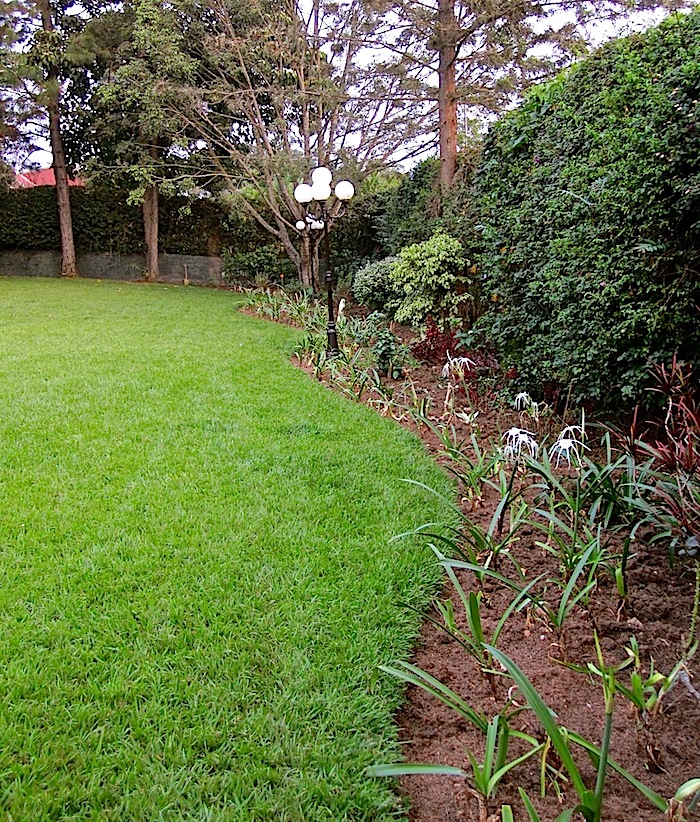 Above is the same area of the previous photo in the summer of 2012, soon after we started making changes. At this point, we had already painted the lampposts dark brown.
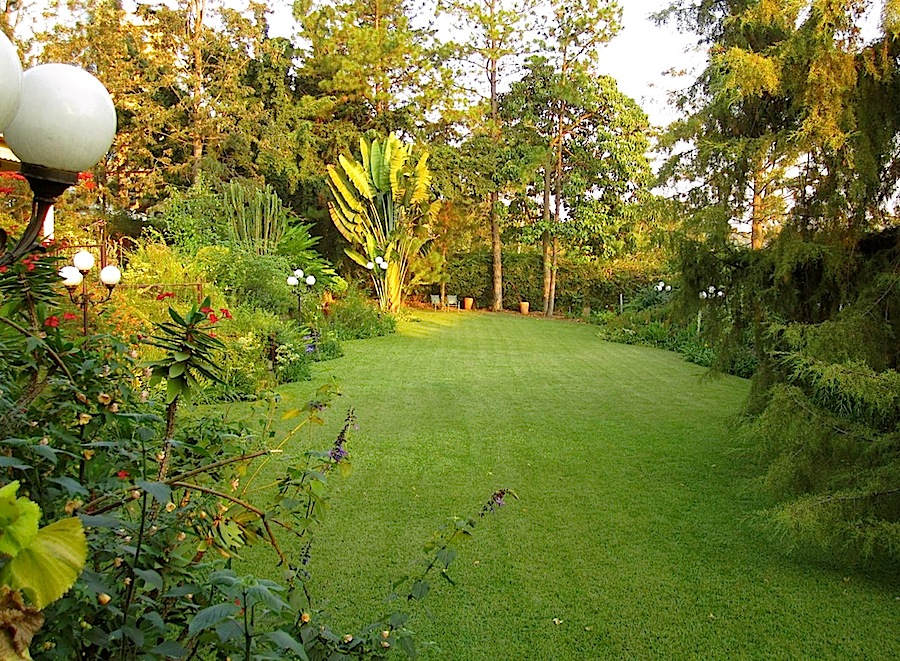
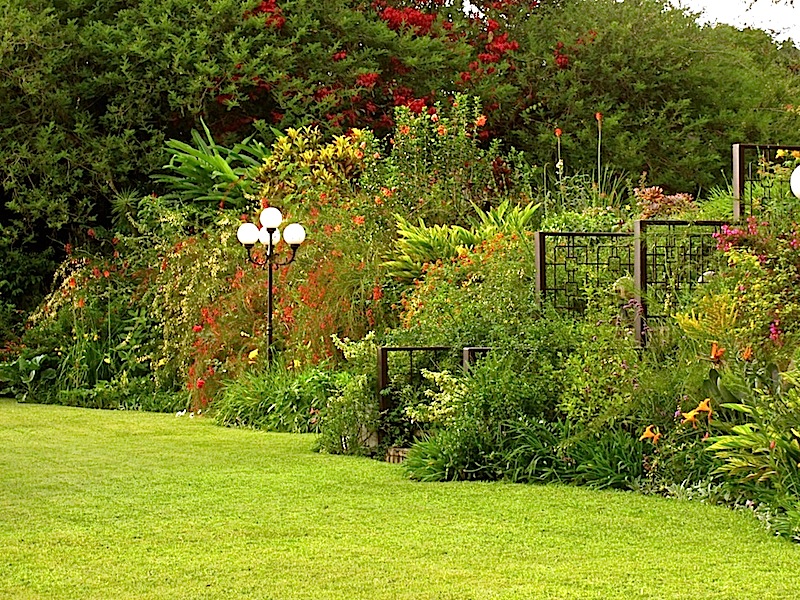
All the borders in the garden on the north side of the house (next post) and along the upper and lower lawns were re-cut in irregular curves — echoing the forms of the surrounding hills. The curves also provide a counterpoint to the long straight lines of the parallel lawns, borders, walls, and front hedge.
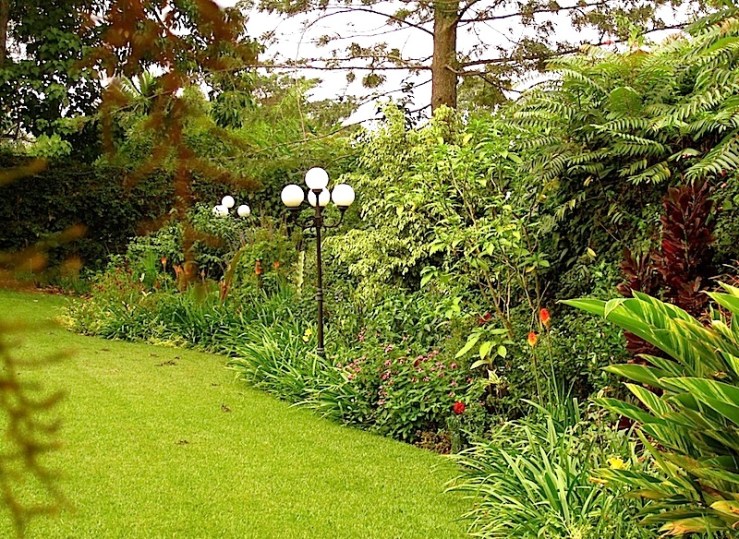 Above: the same section in late June 2014.
While I couldn’t remove a lot of grass in the center section of the lawn, the curvy borders can swing out a bit at the north and south ends.
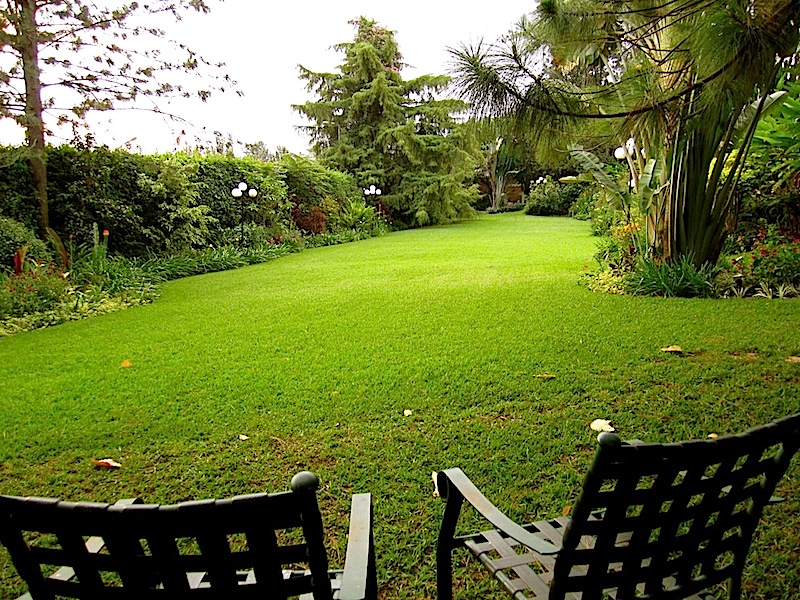
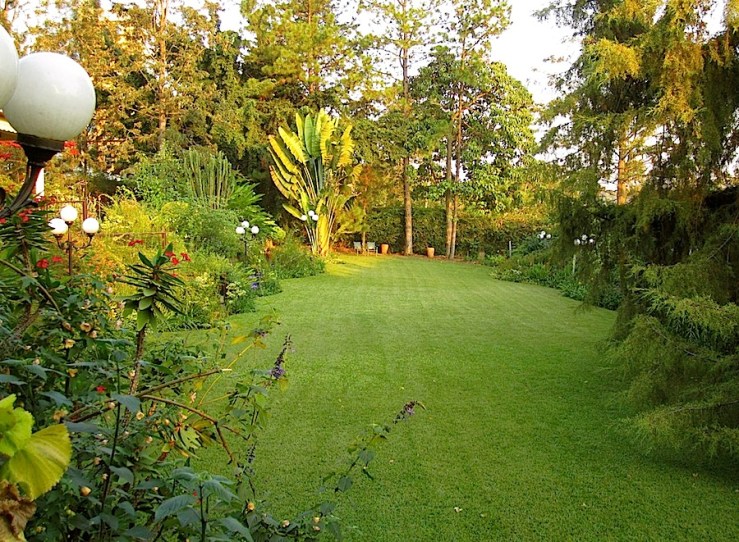 Above: the full lower lawn, looking from the north.
 Above: standing on the upper lawn, looking across to the front border in April 2014.
 Above: standing at the center steps, looking across — this is the same view as in the second photo in this post, above.
 Above: the full lower lawn, looking from the south.
Before
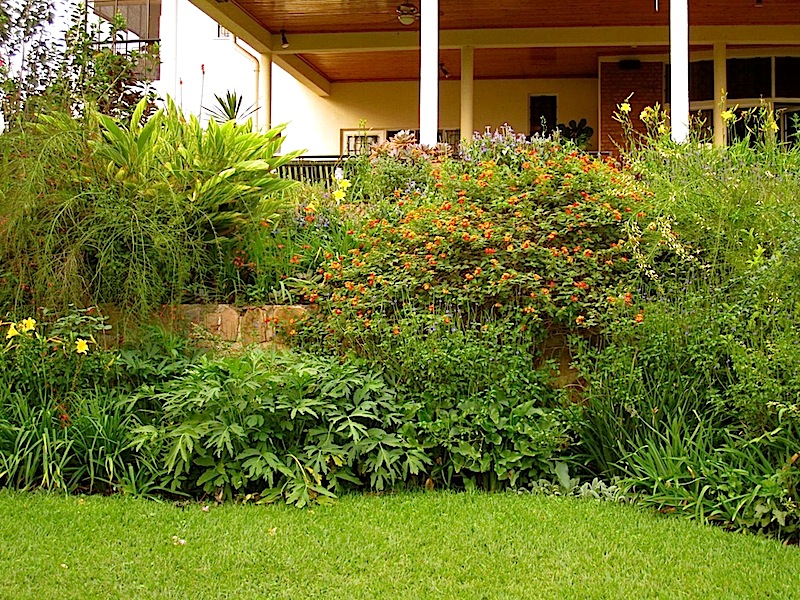
 Above: in late 2011, on the house side of the lawn, the old 9′ heliconias in the border between the two retaining walls loomed down. . .
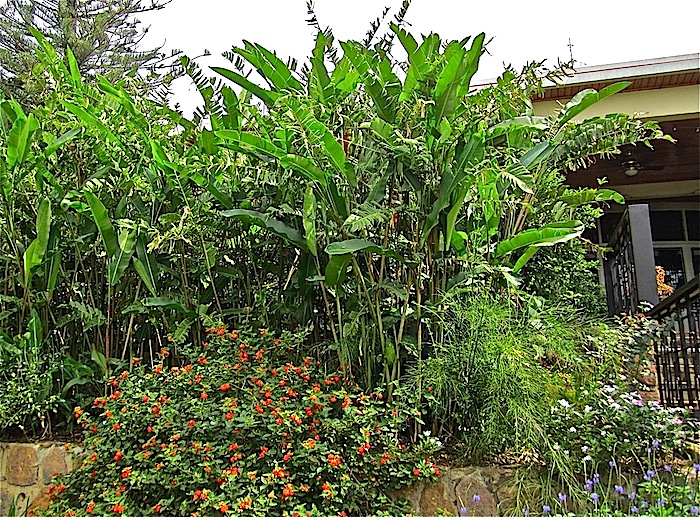 . . . and were pretty tattered; I think we had had a hail storm not long before I took the photo above.
After
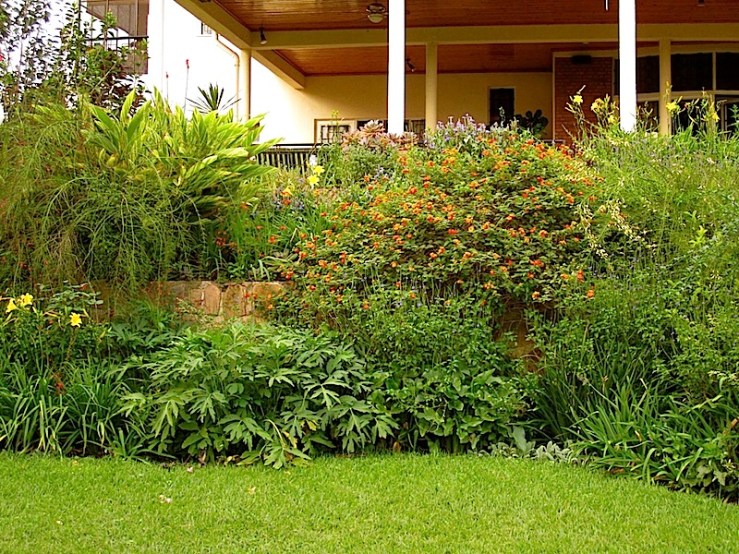 Above: the same section, in late June 2014.
 Above: the grass-level planting bed was extended out to contain the lampposts.
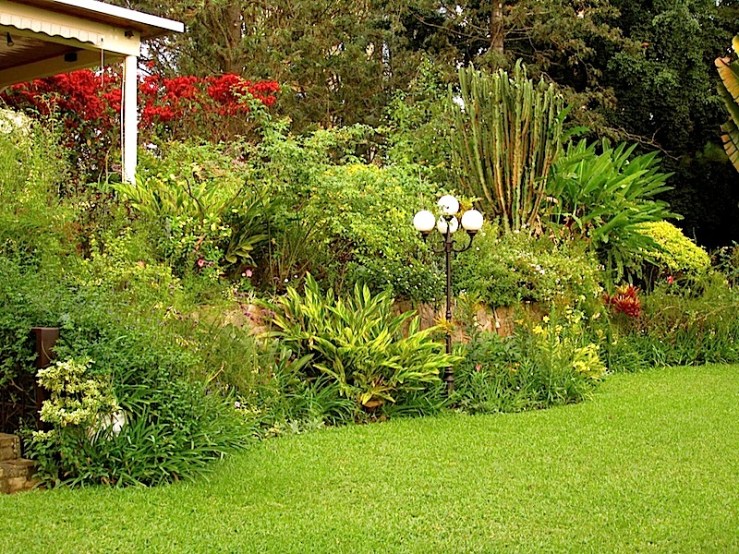 Above: from the center of the lawn, looking at the south side of the retaining walls.
 Above: looking north in April 2014.
Continue reading “Before and after: the lower lawn” →

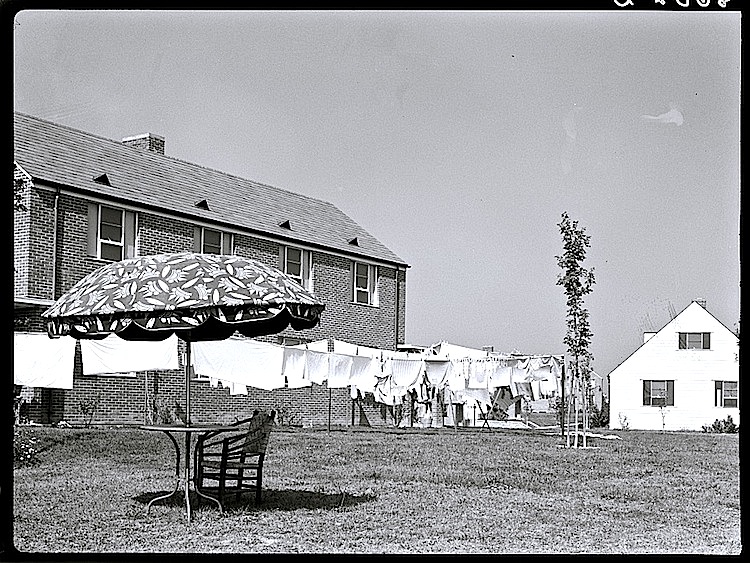 Greenhills, Ohio, October 1938, by John Vachon for the U.S. Resettlement Administration, via Library of Congress Prints and Photographs Division.

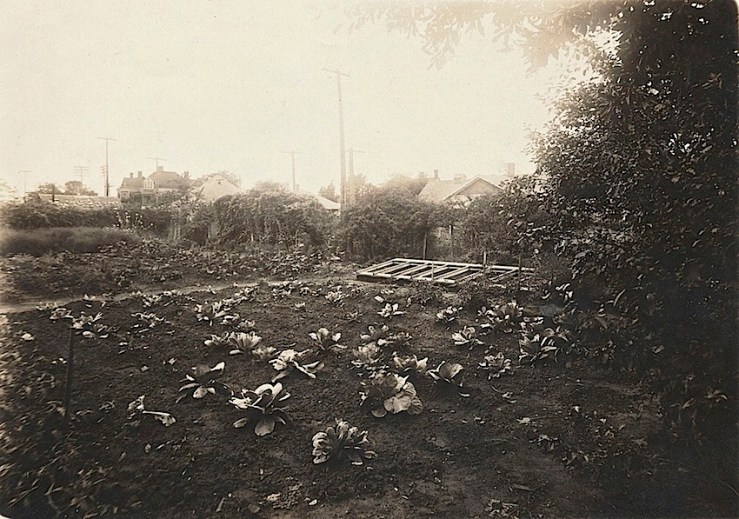 The vegetable garden and cold frames of the







 enclos*ure