
 Corner of Boulevard Saint-Germain and Rue du Four, May 27, 2016.

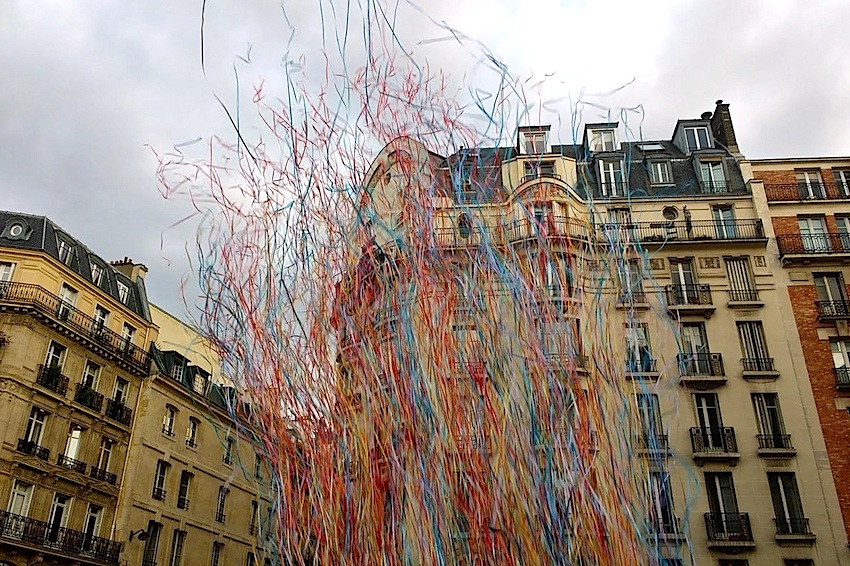

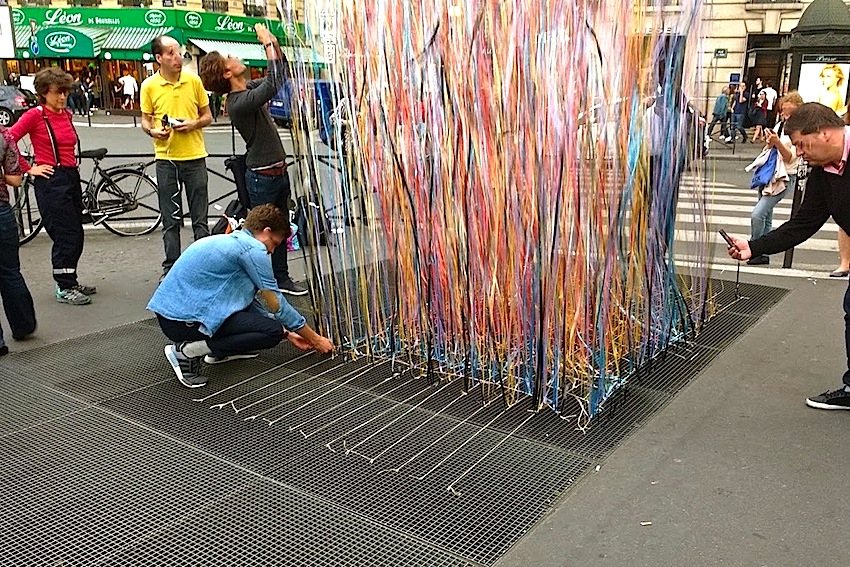
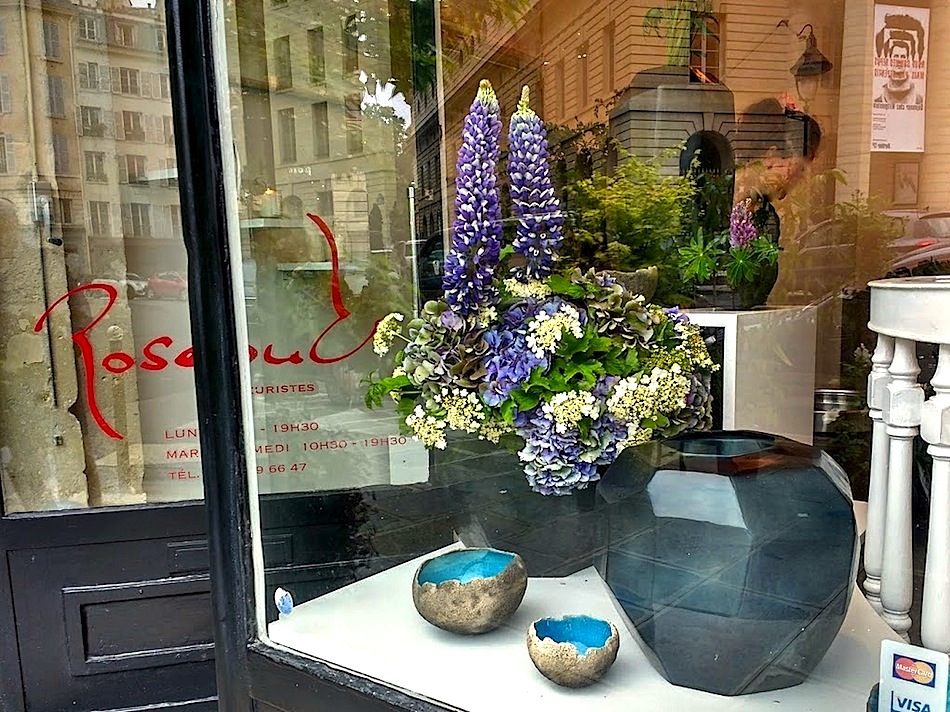
We spent the long holiday weekend in Paris, just getting back this afternoon — so I don’t have a flower arrangement of my own today. But I can offer a few pictures of the windows of two florists in the area north of the Luxembourg Garden: Rosebud and Stanislaus Draber.

On the train to France, I read an article in Paris-Match magazine, “La Fleur Fait Sa Révolution!”
“The flower has become a symbol of an urban renaissance, creative and super-cool,” it said. “One talks flowers with the same appetite that characterizes the foodistas for cooking. The opening of peonies, the Japanese [pruning] knife, and the art of the bouquet are now at the heart of urban conversations.” The trend is “embodied by the explosion of the neo-artisans who are also called the ‘makers’ (les «makers»).”
The article also mentions that the flower-market gardens around Paris “have almost disappeared in favor of the industrialized Dutch market. If nothing is done within ten years, there will be no bouquets of real scented garden roses for the high fashion Parisian florists.”

To see what other gardeners/bloggers/makers have put in vases today, please visit Cathy at Rambling in the Garden.
ADDENDUM: There’s an interesting video clip by Rick Steves of a giant Dutch commercial flower auction here.
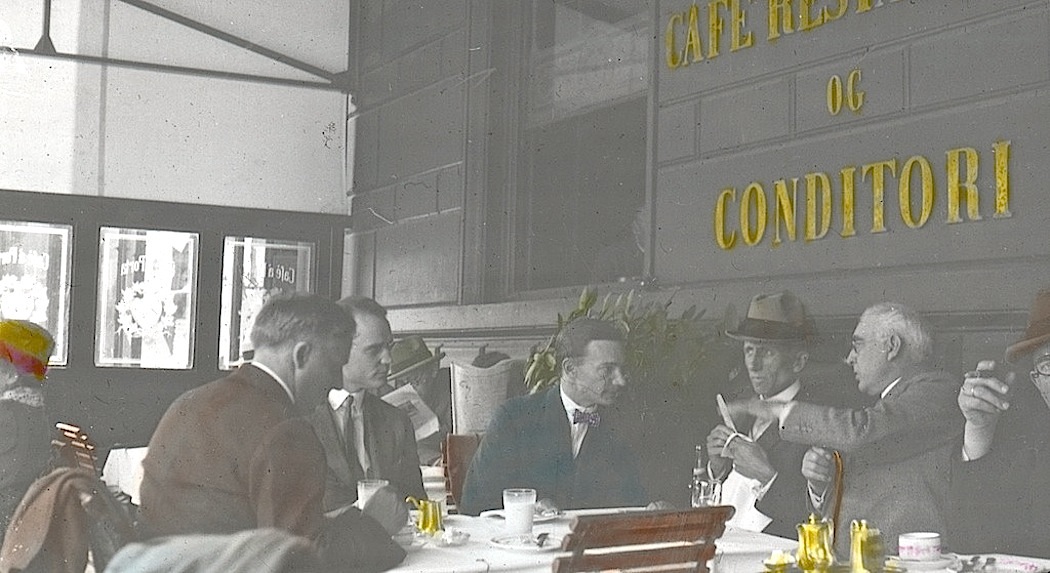 “Outdoor Restaurant,” Copenhagen, ca. 1915, via Oregon State University Special Collections & Archives on flickr. The image is from a collection of lantern slides of the “Visual Instruction Department.”
The accompanying bit of the class lecture observed that “[European] eating places have less of the haste and nervous tension which characterize cafeterias and cafes in American cities. In Copenhagen it is common for tables to be set out under an awning on the broad sidewalk. Here folk can eat leisurely and watch the happenings in the neighborhood.”
In the lettering above the tables, “og Conditori” means “and cake/pastry shop.” There’s another cake shop with nice outdoor seating (in Sweden) here.
I used to mock my father and his chums
for getting up early on Sunday morning
and drinking coffee at a local spot
but now I’m one of those chumps.— Edward Hirsch, from “Early Sunday Morning“
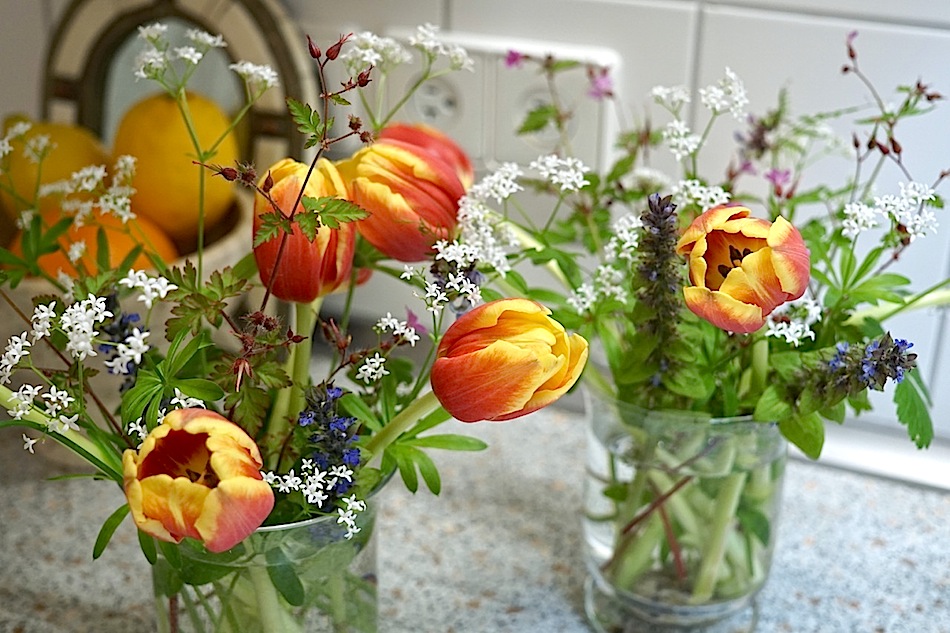 This morning, I combined the tulips that I bought last week at the supermarket with some white sweet woodruff, or Galium oderatum, just picked from a shady spot in our backyard.
The flowers in my arrangements smell lightly of honey, but sources say that as the plant wilts and dries, its leaves will smell like fresh-cut hay and vanilla.
G. oderatum is native to Europe. In Germany, it is known as Waldmeister or ‘master of the forest.’ Traditionally in spring, before it blooms, its leaves have been added to wine to create May wine or Mai Bowle.
For a good discussion of the culinary uses of the herb in Germany — where it flavors jell-O and hard candy — see this article, “May’s sweetest herb,” in the blog Spoonfuls of Germany.
To see what other gardeners have put in a vase today, please visit Cathy at Rambling in the Garden.
Another picture from a file of bookmarked photos I have labeled “children made to pose in gardens.”
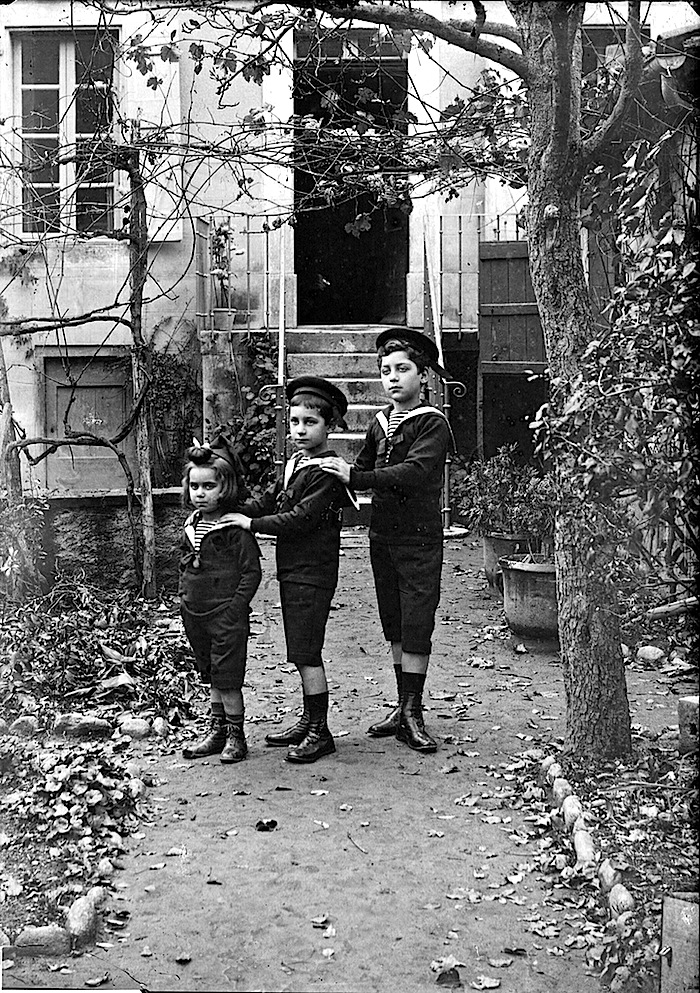 “Three children in sailor suits,” between 1859 and 1910, in the Pyrénées, by Eugène Trutat, via Bibliothèque de Toulouse Commons on flickr.
I think the little girl has just about had enough. I like the way she has her hands in her pockets.
There is another photo from the Bibliothèque that I believe shows the same three children, captioned “Enfants Servell, 2 novembre 1905,” here.
 enclos*ure