Our August yard

August 16, 2016, enclos*ure

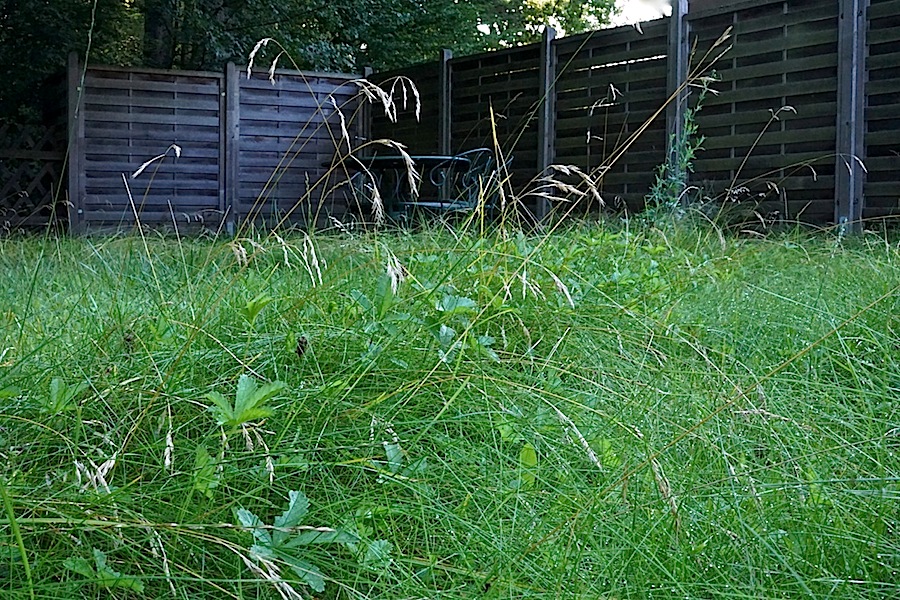
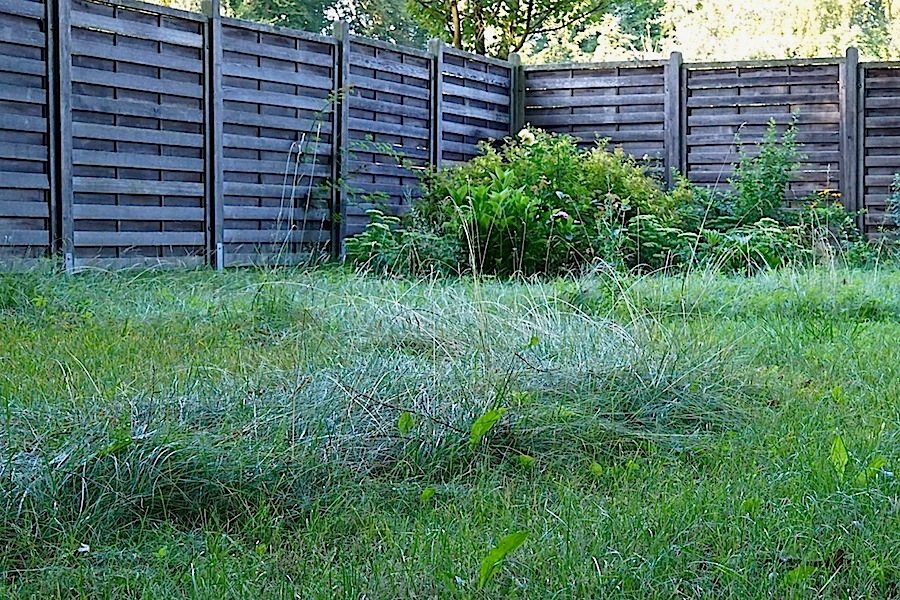
Here are some mid-month pictures of our shaggy backyard on one side. (Click on any thumbnail image below to enlarge it.)

The pattern that I cut in the grass in May has blurred quite a bit, but I still enjoy it, especially in the morning light.
August 16, 2016, enclos*ure

Our little corner bean-shaped flower bed has produced a surprising number of blooms this summer, considering that I had pretty much written it off last fall and had started using it as a compost pile. I thought this would kill off everything but the golden spirea and the “Fairy” rose, and then I could start over with better ground.

Instead, the previously sickly looking hydrangea, hybrid tea roses, and sedums seem to like growing under at least 3″ to 6″ of half-rotted leaves and grass clippings (and some coffee grounds).  I did smother a lot of weeds, but I don’t know what has happened to the mice that were living there too.

My plan to follow the Spielhaus Garden this year for Bloom Days and Foliage Follow Ups has not worked out very well due to travel, rainy weather, and a sometimes hurting foot — with surgery planned in a few weeks — but I hope I can get over there sometime this month and bring you an update.

Thanks to Pam at Digging for hosting Garden Bloggers’ Foliage Follow Up on the 16th of every month. And to see the mid-month flowers of other garden bloggers, please visit Carol at May Dreams Gardens.

The Sunday porch: Strasbourg, France

St. Pierre le Jeune 5, Strasbourg, Aug2016, by enclos*ure

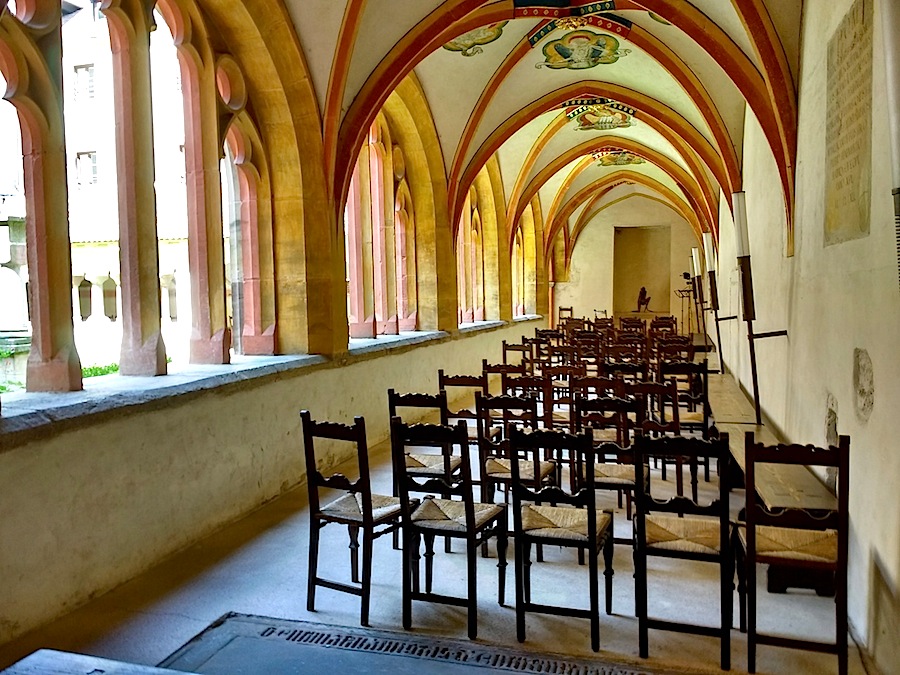
We spent Thursday through Saturday this week in Strasbourg, and a highlight of this trip for me — aside from two great meals (here and here) — was a visit to the Église protestante Saint-Pierre-le-Jeune or Young* Saint Peter’s Protestant Church.

The church has the oldest surviving cloister “north of the Alps,” according to its website.

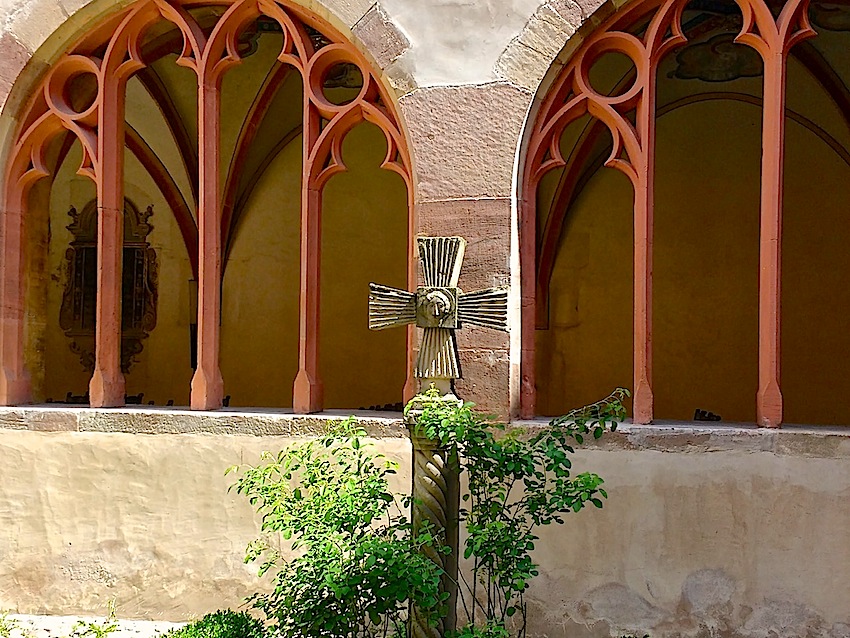
Three of the four galleries were constructed in the Romanesque style in the 11th century. The fourth, shown above and in the three photos below, was completed in the 14th century in the Gothic style.

St. Pierre le Jeune 6, Strasbourg, Aug2016, by enclos*ure

The gallery shown above and below was set up for a performance that day.

St. Pierre le Jeune 1, Strasbourg, Aug2016, by enclos*ure

St. Pierre le Jeune 7, Strasbourg, Aug2016, by enclos*ure
Behind the small stage was a modern sculpture. There were modern works throughout the church. (Unfortunately, I didn’t think to photograph their labels.)

St. Pierre le Jeune 8, Strasbourg, Aug2016, by enclos*ure

Above: a Romanesque gallery, also ready for a performance or lecture. I loved the pretty chairs, used throughout the church.

St. Pierre le Jeune 2, Strasbourg, Aug2016, by enclos*ure
A stone mason’s mark?

St. Pierre le Jeune 11, Strasbourg, Aug2016, by enclos*ure
Above and below: the garden in the center.

St. Pierre le Jeune 9, Strasbourg, Aug2016, by enclos*ure

The cloister was heavily damaged and partly buried in the 1700s and then re-built in other ways. After the French revolution, the site was privatized — serving over the years as a wine cellar, a cloth factory, and apartments. It was restored to its original appearance between 2000 and 2008.

St. Pierre le Jeune 12, Strasbourg, Aug2016, by enclos*ure
On the inside, Église Saint-Pierre is remarkable for its array of colors and forms. The church was built in the 14th and 15th centuries in the Romanesque and Gothic styles.

Originally Catholic, of course, in 1524, it became Protestant.  Then in 1682, Louis XIV gave over the choir area behind the rood screen for the exclusive use of the Catholic parish. A dividing wall was built, and it remained there until 1898, when the Catholic congregation moved to its own “Young Saint Peter’s.”  In the meantime, in the 18th century, the choir had been redecorated in the Baroque style, in green and gold. Continue reading “The Sunday porch: Strasbourg, France”

Vintage landscape: Stockholm

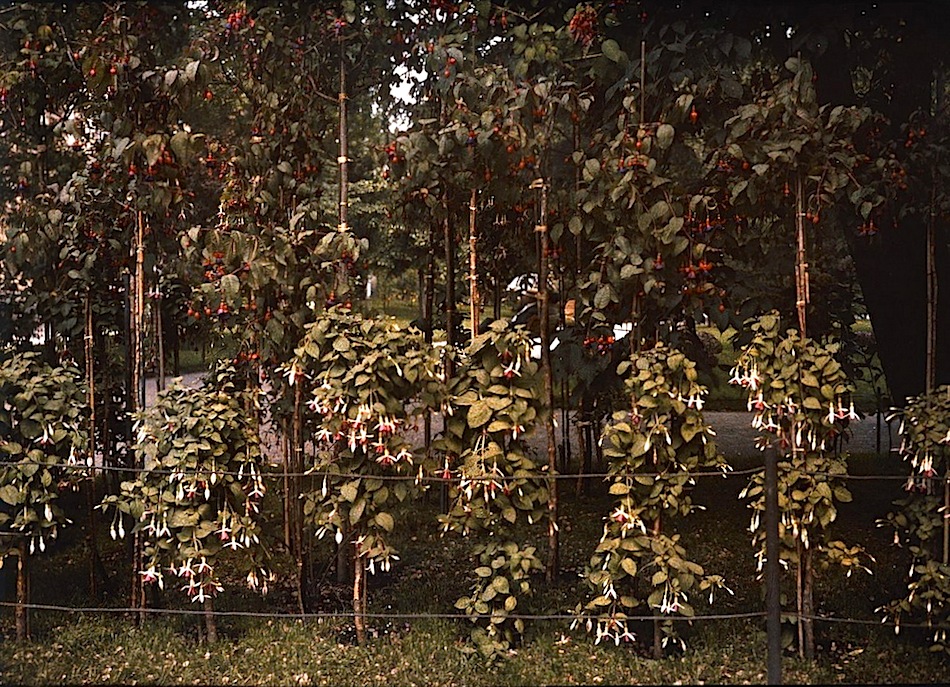
fushias in Olympic Park, 1912, Stockholm, Tesniska MuseetFuchsias at Stureparken, Stockholm, Sweden. Photographed in June 1912 at the Olympic Games,” an autochrom by John Jäderström, via Tekniska Museet Commons on flickr.

The Stureparken is a small park in a wealthy area of Stockholm near the Östermalm Athletic Grounds, site of the 1912 Games’ equestrian, fencing, and tennis events.

Vintage landscape: oh, that old thing. . .

clothes line and ancient standing stone in Sweden, 1949, Swedish Natl Heritage BoardBackyard prehistoric standing stone supporting a section of clothesline, Borgholm, Sweden, July 1949, by Mårten Sjöbeck, via Swedish National Heritage Board Commons on flickr.

There appears to be another stone in the neighbor’s yard, on the right side of the photo.

Vintage landscape: the glads

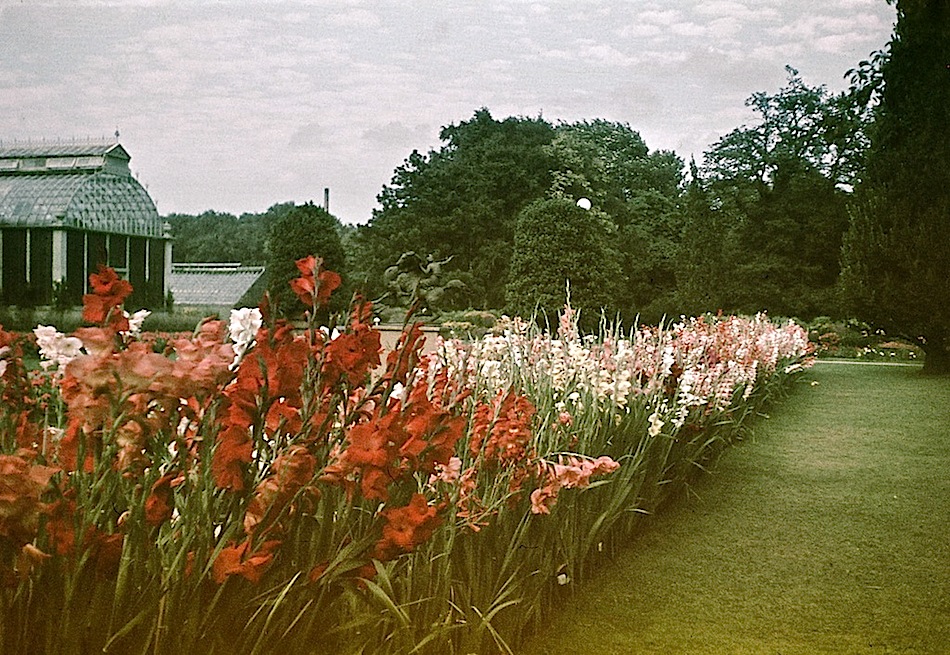
Gladiolus, 1944, Sweden, F. Bruno, Swedish National Heritage Board“Flower bed (blomsterrabatt) with gladiolus at Trädgårdsföreningen, The Garden Society of Gothenburg, founded in 1842,” Göteborg (Gothenburg), Sweden, 1944, a color slide by Fredrik Brunovia Swedish National Heritage Board Commons on flickr.

The glads offer no solution:
being—falling—
you mustn’t count the days—
fulfillment
livid, tattered, or beautiful.

— Gottfried Benn, from “Gladioli