The flower sellers, Paris

Flower sellers at Place Louis-Lépine on the l’île de la Cité, at Quai de la Corse, Paris, France, May 2, 1918, by Auguste Léon, via Archives of the Planet Collection – Albert Kahn Museum /Département des Hauts-de-Seine (both photos).

There has been a flower market on or near this spot since 1808. Since June 2014, it has been called Queen Elizabeth II Flower Market, to commemorate the visit of the British queen just prior to the 70th anniversary of D-Day.

Behind the sellers, on the other side of the river, is the Palmier Fountain and Châtelet Theater.
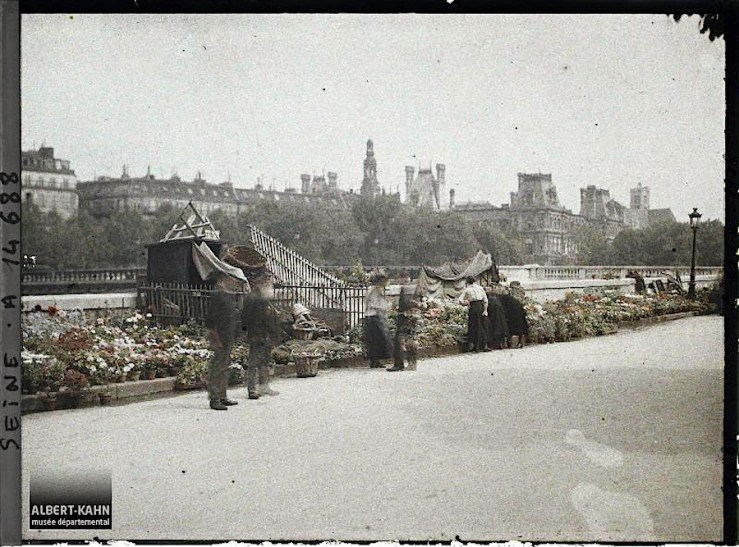
France, Paris, Marché aux fleurs
Looking the other directions, with the Hotel de Ville in the background across the river.

These autochromes are two of about seventy-two thousand that were commissioned and then archived by Albert Kahn, a wealthy French banker and pacifist, between 1909 and 1931. Kahn sent thirteen photographers and filmmakers to fifty countries “to fix, once and for all, aspects, practices, and modes of human activity whose fatal disappearance is no longer ‘a matter of time.'”* The resulting collection is called Archives de la Planète and now resides in its own museum at Kahn’s old suburban estate at Boulogne-Billancourt, just west of Paris. Since June 2016, the archive has also been available for viewing online here.


*words of Albert Kahn, 1912. Also, the above photos (A 13 994, A 14688) are © Collection Archives de la Planète – Musée Albert-Kahn and used under its terms, here.
In a vase on Monday: red, yellow, orange

This slideshow requires JavaScript.

Supermarket tulips, sweet woodruff, and some other little weed wildflower from behind our fence, as well as golden spirea leaves from the flower bed.

To see what other gardeners have put in a vase today, please visit Cathy at Rambling in the Garden. She hosts this Monday theme.

Happy May Day!

Gerbéviller, France

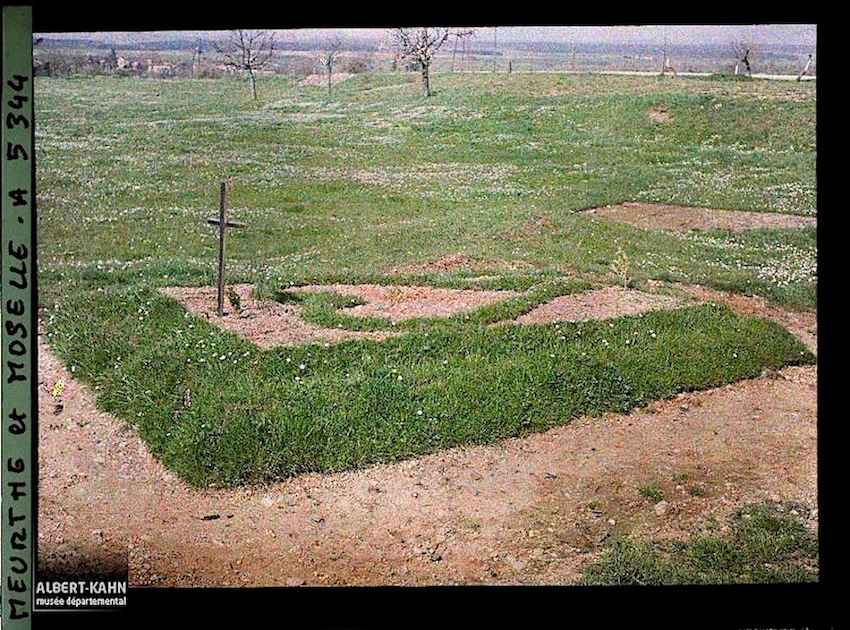
“La Tombe des Coloniaux, a heart of grass, near Gerbéviller,” April 28, 1915, by Georges Chevalier, via Archives of the Planet Collection – Albert Kahn Museum /Département des Hauts-de-Seine.

This seems to be the grave of a soldier (or perhaps soldiers) from one of the French Colonial Infantry Regiments. He probably fell in the Battle of Lorraine about seven or eight months before the photo was taken. Such men, called “Marines,” were recruited from both France and the white settler and indigenous populations of the French colonial empire.

The town of Gerbéviller itself had been caught in the same battle’s crossfire. German troops had systematically burned over 400 houses and killed over 60 inhabitants. It became “Gerbéviller-la-Martyre” in the press and a kind of pilgrimage site.

Today, there are both French and German WWI cemeteries in Gerbéviller.

This autochrome is one of about seventy-two thousand that were commissioned and then archived by Albert Kahn, a wealthy French banker and pacifist, between 1909 and 1931. Kahn sent thirteen photographers and filmmakers to fifty countries “to fix, once and for all, aspects, practices, and modes of human activity whose fatal disappearance is no longer ‘a matter of time.'”* The resulting collection is called Archives de la Planète and now resides in its own museum at Kahn’s old suburban estate at Boulogne-Billancourt, just west of Paris. Since June 2016, the archive has also been available for viewing online here.


*words of Albert Kahn, 1912. Also, the above photo (A 5 344) is © Collection Archives de la Planète – Musée Albert-Kahn and used under its terms, here.

Tulip fields

Having a picnic near the tulip bulb fields of Aalsmeer, the Netherlands, 1960, via Collectie SPAARNESTAD, Nationaal Archief Commons on flickr.

The largest flower auction in the world is in Aalsmeer. There’s an interesting video clip of it here.

GB Bloom Day in April

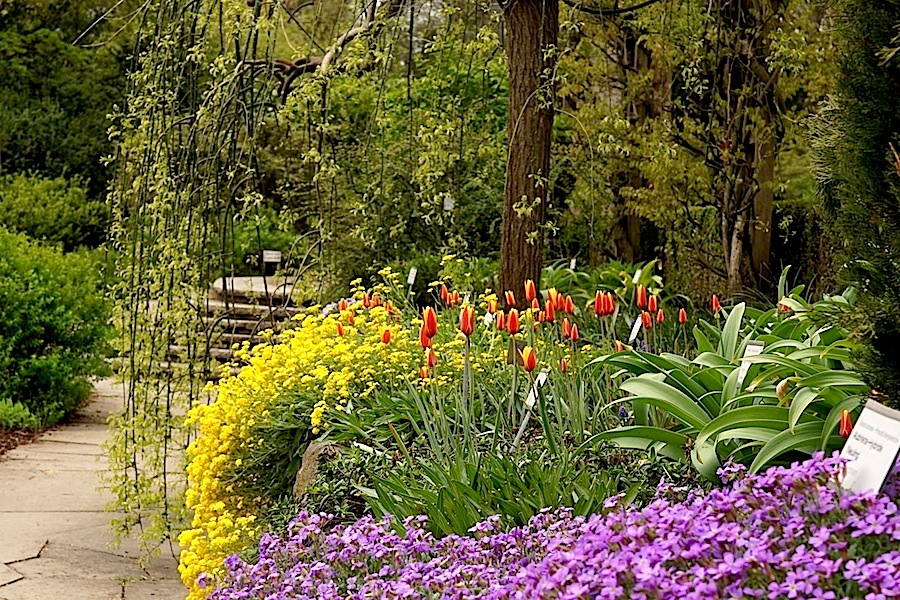
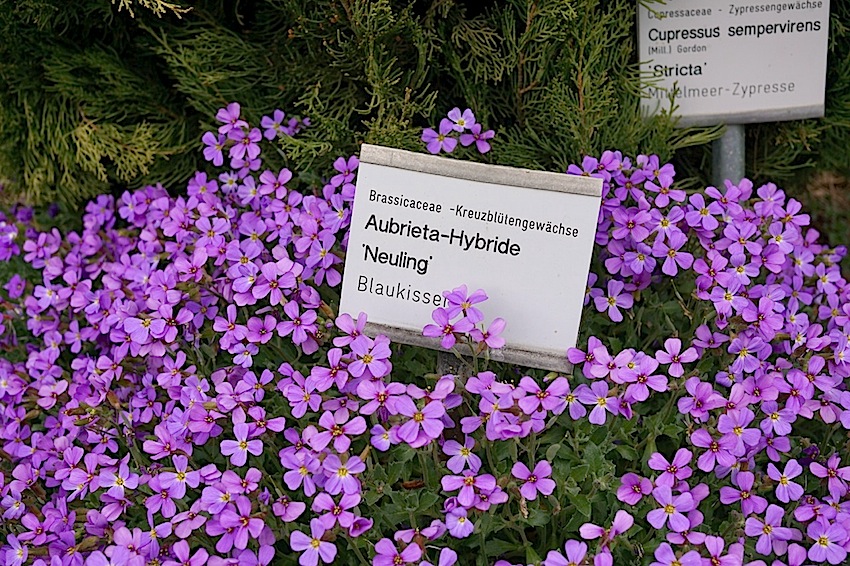
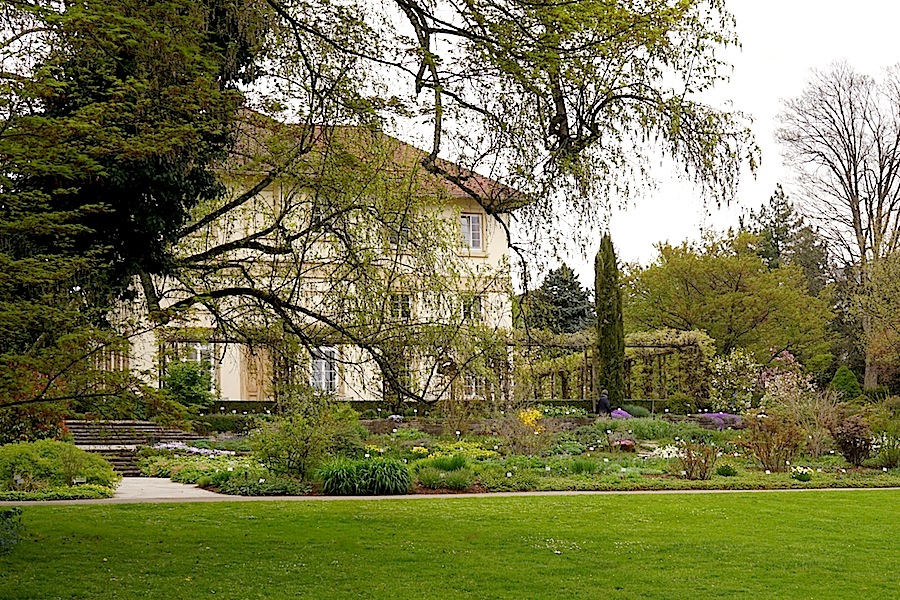
I went over to the University of Hohenheim’s Spielhaus garden for the first time in months yesterday to see what was blooming in mid April.  The cherry trees that were so amazing this time last year had finished and the magnolias were also winding down.  The perennial beds were still pretty subdued, except for this very nice bit just below the terrace and wisteria arbor.

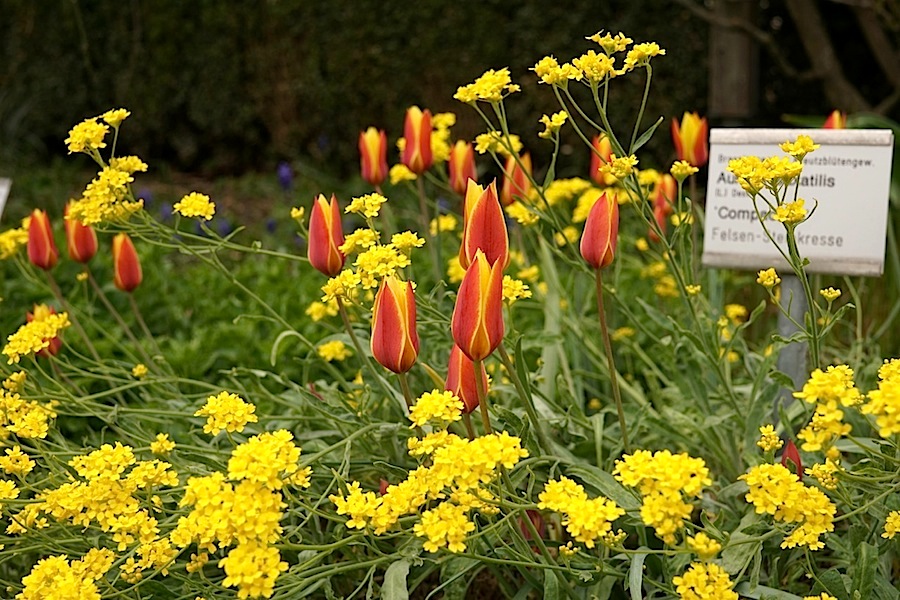
I thought this combination was great: Tulipa clusiana ‘Tubergen’s Gem’ and yellow Aurinia saxatilis ‘Compactum’. The little weeping tree above them is Sophora japonica ‘Pendula’.

The Spielhaus (play house) was built in the 1780s for Grand Duke Carl Eugen von Württemberg and Franziska von Hohenheim, his mistress and then morganatic wife. It originally only had one floor and was one of about 60 folly-type structures in their “English garden” of Hohenheim Palace.

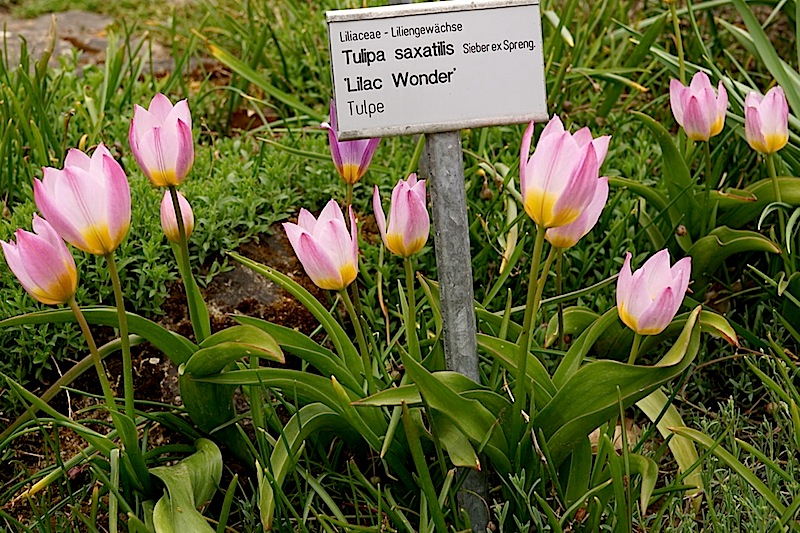
In another part of the Spielhaus garden, these small tulips were really sweet.

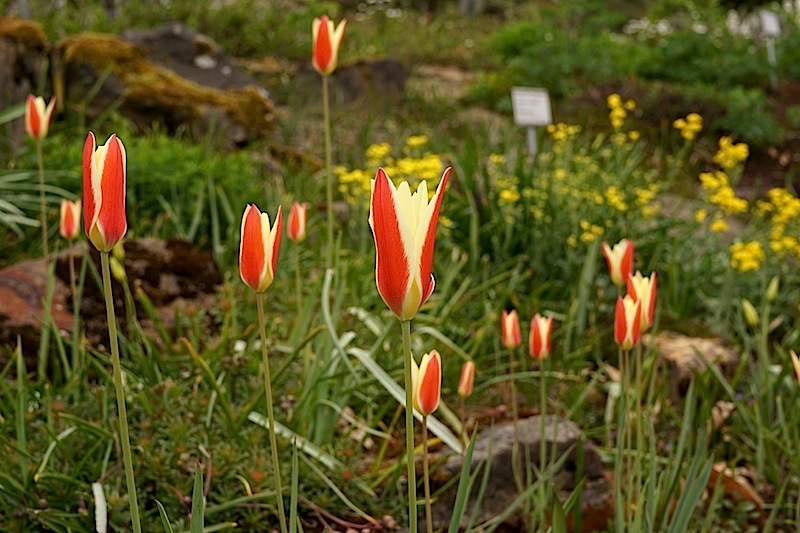
I loved these Tulipa clusiana var. clusiana.

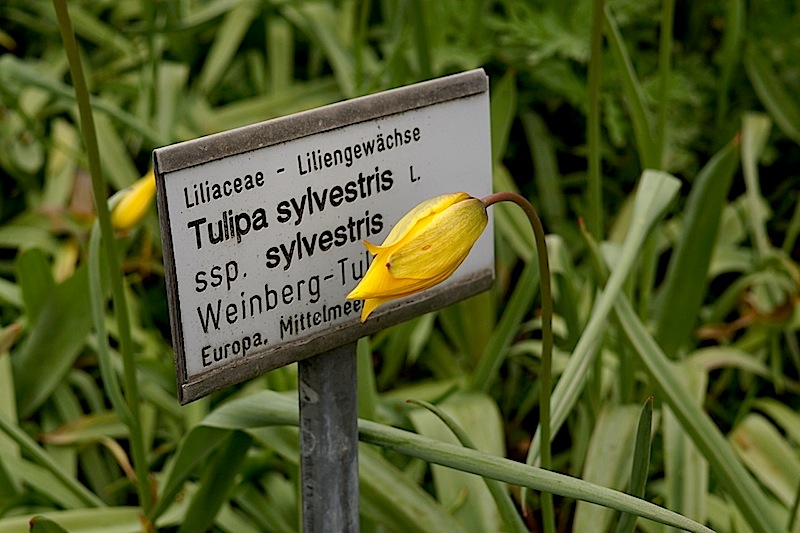
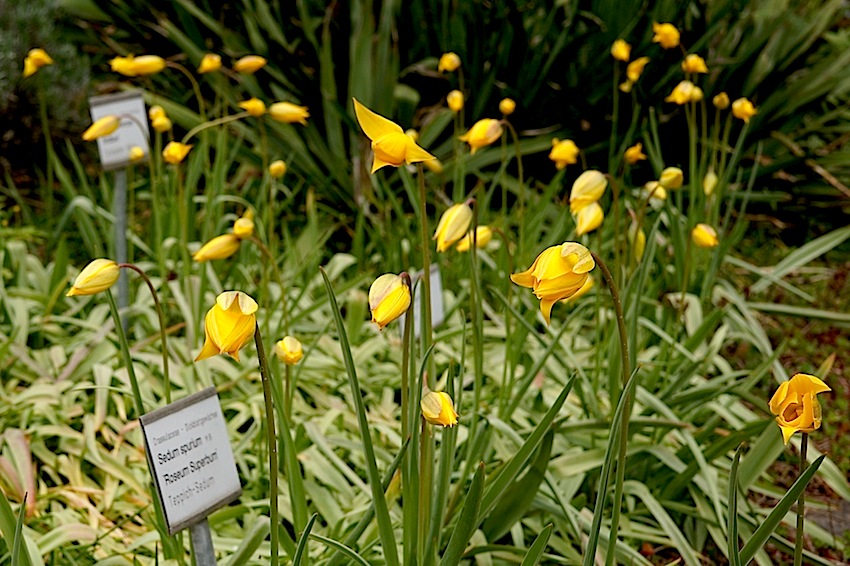
I also loved the Tulipa sylvestris, although I didn’t take a very good picture of them.

I like the way they all turn in more or less the same direction.

To see the mid-April flowers of other garden bloggers, please visit Carol at May Dreams Gardens.