The Sunday porch: Charleston piazzas

Charleston, S.C.Piazzas and garden, Charleston, South Carolina, ca. 1910-20, by Detroit Publishing Co., Library of Congress Prints and Photographs Division.

The double side porches of Charleston are traditionally called ‘piazzas’ (pee-AH-ahs), a term that came into local use about 1730.

It’s also a feature of the city’s 18th and 19th century homes to have the formal front door (behind the cute little dog above) open onto the lower piazza instead of to the interior of the house.

If you click on the photo and enlarge it, you can better see all the little terracotta pots and geraniums lined up on the shelves along the railings.

I’ve sent my empty pot again
To beg another slip;
The last you gave, I’m grieved to tell
December’s frost did nip.

I love fair Flora and her train
But nurse her children ill;
I tend too little, or too much;
They die from want of skill.

I blush to trouble you again,
Who’ve served me oft before;
But, should this die, I’ll break the pot,
And trouble you no more.

Christian Milne, “Sent with a Flower-Pot Begging a Slip of Geranium”

The Sunday porch: Wiseman, Alaska

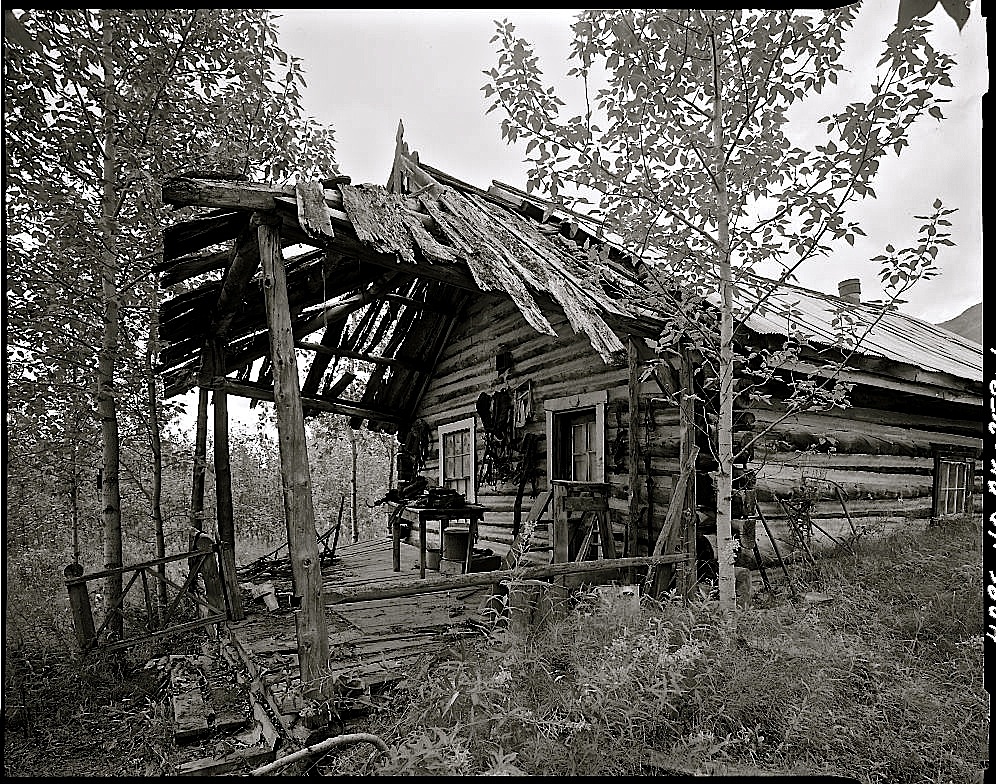
Igloo No. 8 by Jet Lowe, Library of CongressFront porch near the Koyukuk River at Wiseman Creek, Wiseman, Alaska, July 1984. Photo by Jet Lowe for an Historic American Buildings Survey (HABS), via the Library of Congress Prints and Photographs Division.

For over six decades, this little porch sheltered many hours of masculine leisure and conviviality. In 1913, it fronted the Siverly and Bowker Saloon.  The following year, the building was sold to the Pioneers of Alaska and used as one of its local chapters — an ‘Igloo;’ it was Igloo No. 8.   The Pioneers, a fraternal organization, was formed in 1907 “for social purposes to keep alive the memories of the early trailblazers.”

By 1972, the building had been sold again.  At the time of these photos, it was the home of the owner’s son.

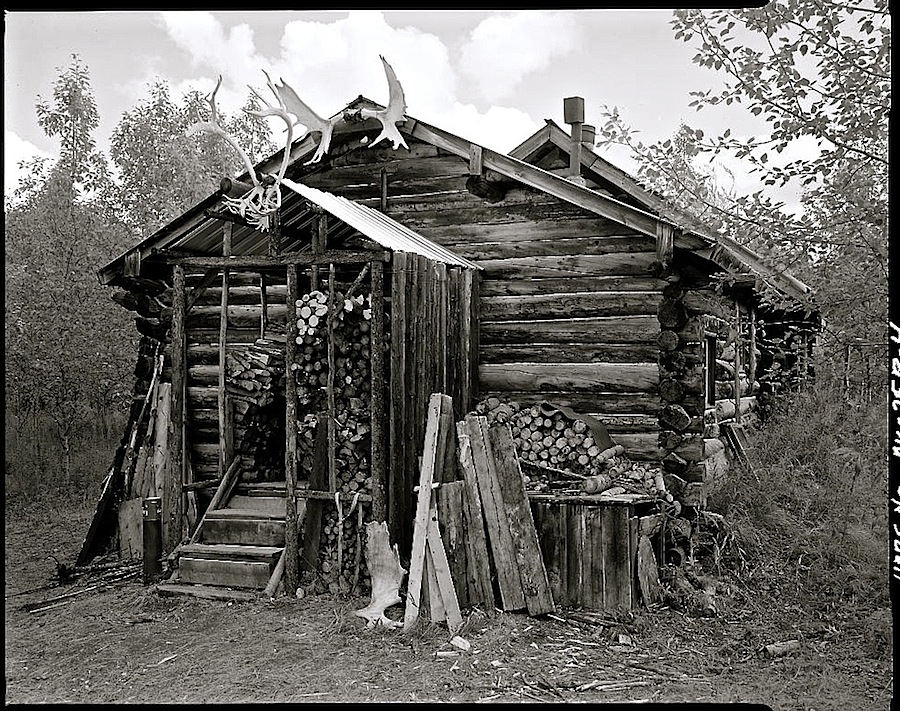
Igloo No. 8, HABS, Library of CongressAbove is the back porch and entrance to the kitchen.

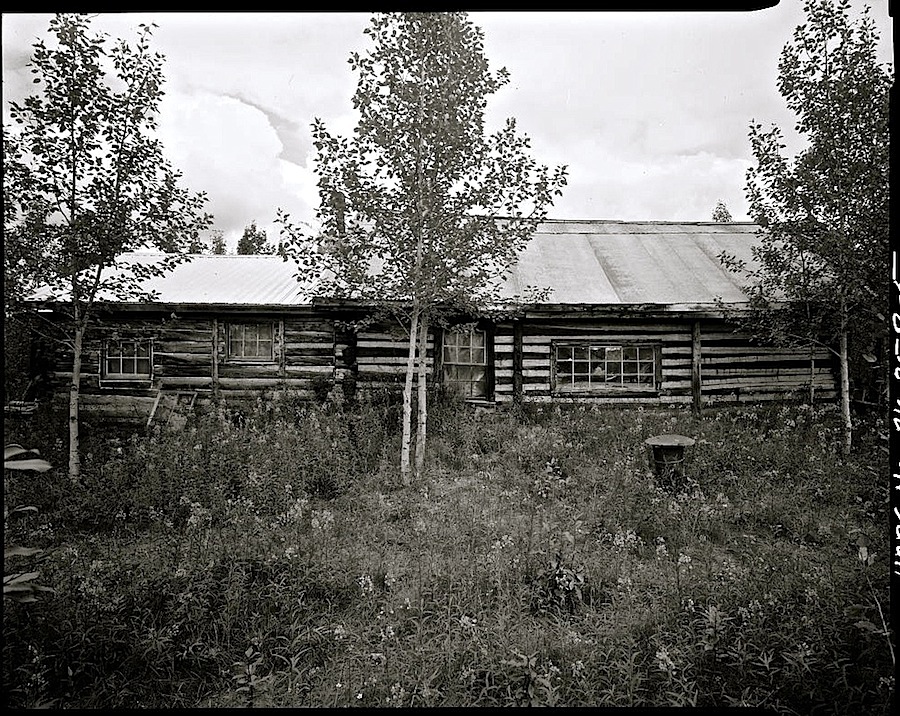
Igloo #8, HABS, Library of CongressAbove is the side view. The flowers and birch trees are so pretty; it’s a pity we don’t have a picture of the view from the front porch. All photos by Jet Lowe.

Tan is the color of the season

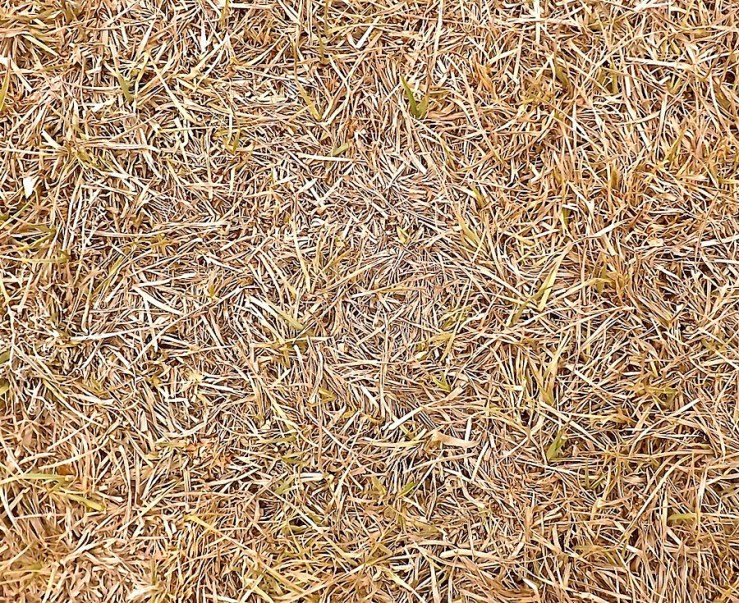
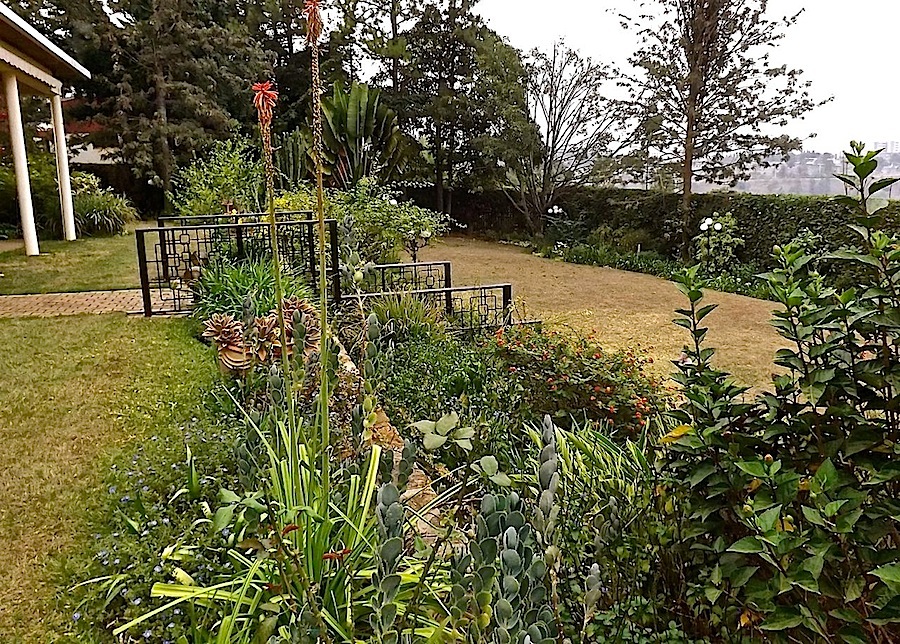
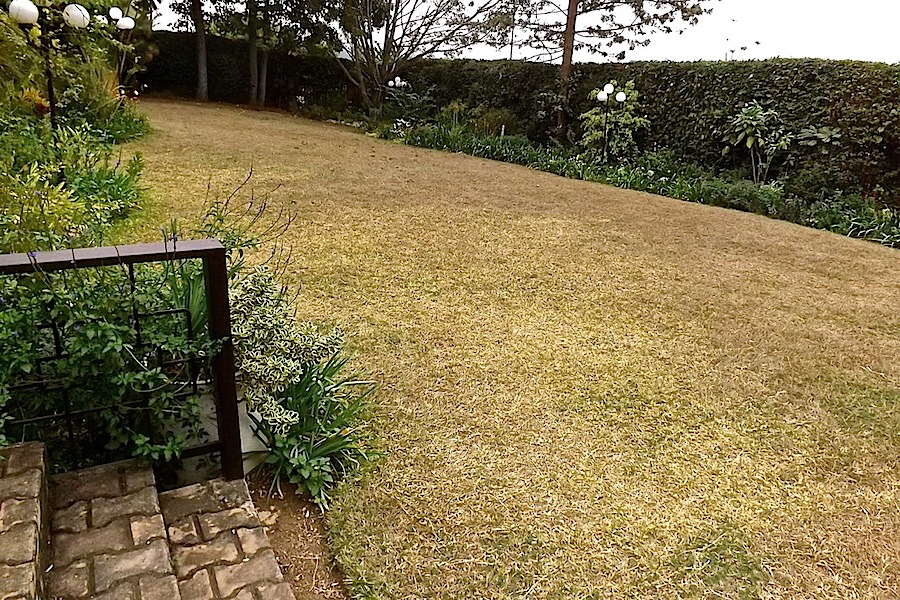
Not much is happening in our garden these days — except that the lawn becomes more and more tan-colored as the long dry season continues.

This year, we stopped watering it about the end of June. It seemed wrong to maintain green grass while the hills in our view were brown, and some city neighborhoods were having their water cut off during the daytime.
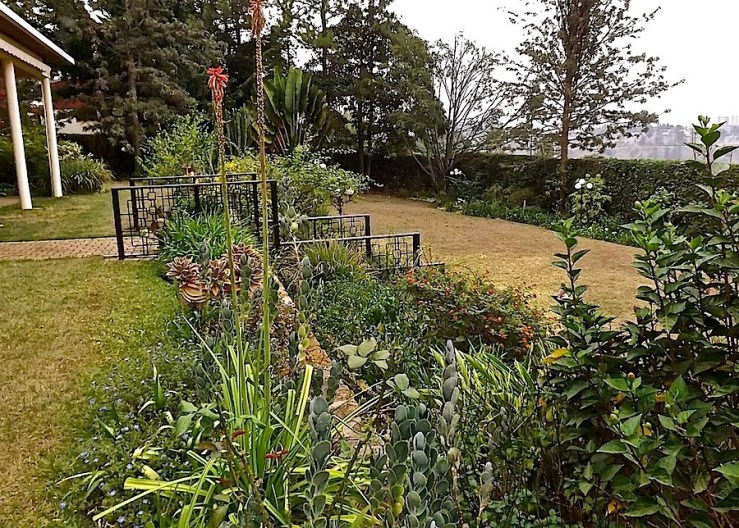
Our garden in the dry season/enclos*ure

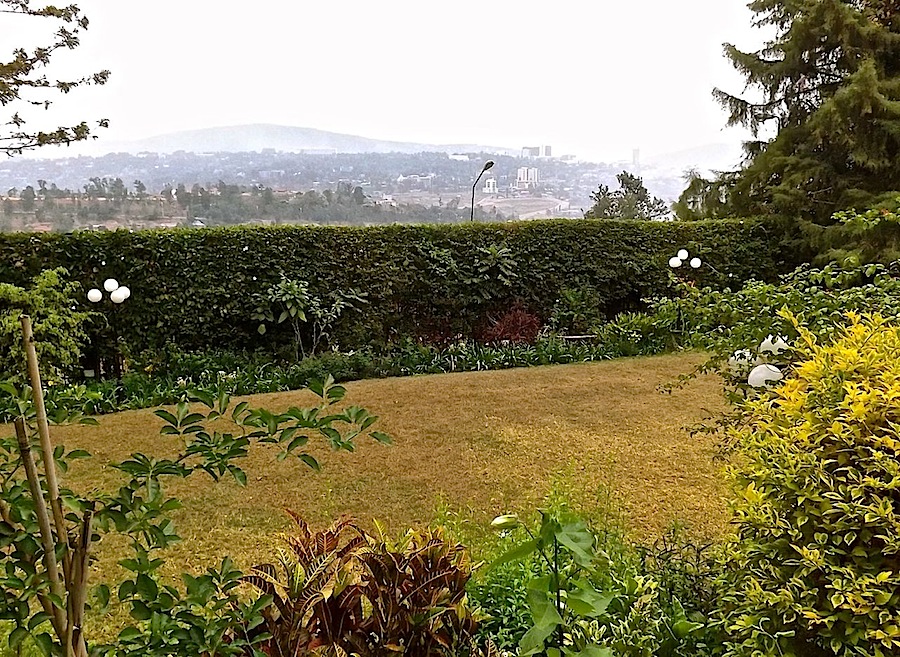
Above is a view of the upper and lower lawns.

I took these pictures this morning.  The sky was actually full of grey, rather menacing clouds (and dusty haze), and there was some wind.   This is not unusual for August, but we haven’t had any rain since May, except very briefly about three weeks ago and almost all night two weeks ago. That last one was nice, and the grass seemed to get a little greener within 12 hours, but it didn’t last.   The long rainy season normally begins in early September.

We do still water the flower borders, although not very generously.  Kniphofia, daylilies, gerbera daisies, lantana, Missouri primrose, and small shrub roses are blooming steadily.  But, of course, most plants are in a “holding pattern” and not really increasing in size.  I want to make some changes and additions to the borders, but I’ll wait until we have a rain or two.  Then, we need to work quickly before the soil becomes too soggy.

Below is the lower lawn, looking south at the steps at the center of the lawn. Actually, the tan is kind of pretty.
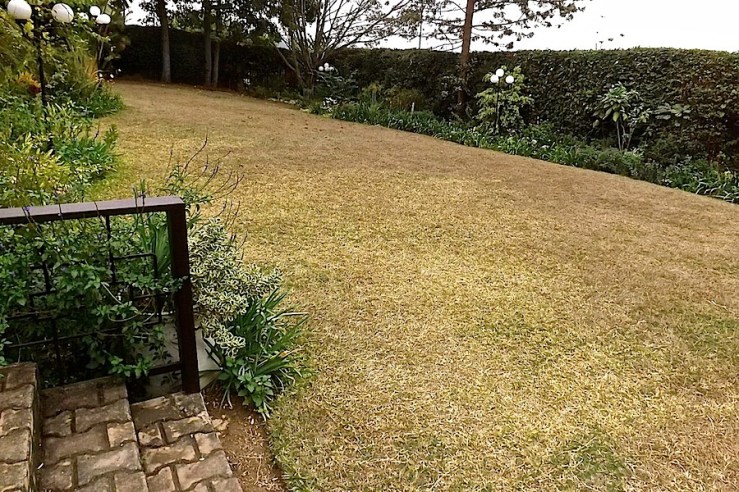
Our garden in the dry season/enclos*ure

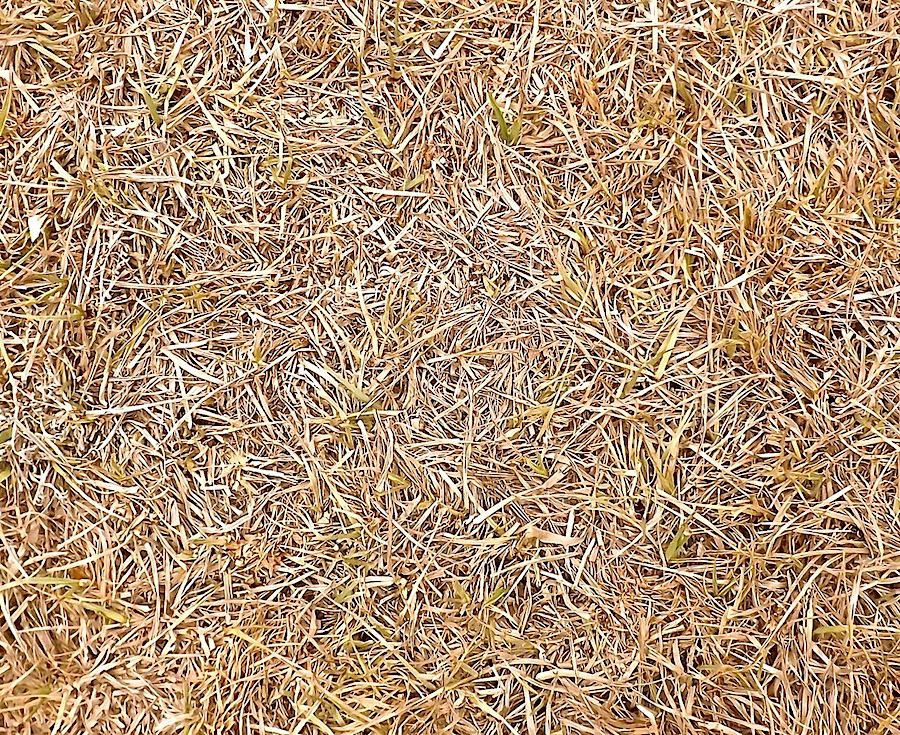
Below, a closeup.  I know it will come back, but it’s hard not to get out the sprinkler.Our garden in the dry season/enclos*ure
Below,  from the upper lawn, looking back across the lawn to the northwest — with a hazy view of central Kigali.
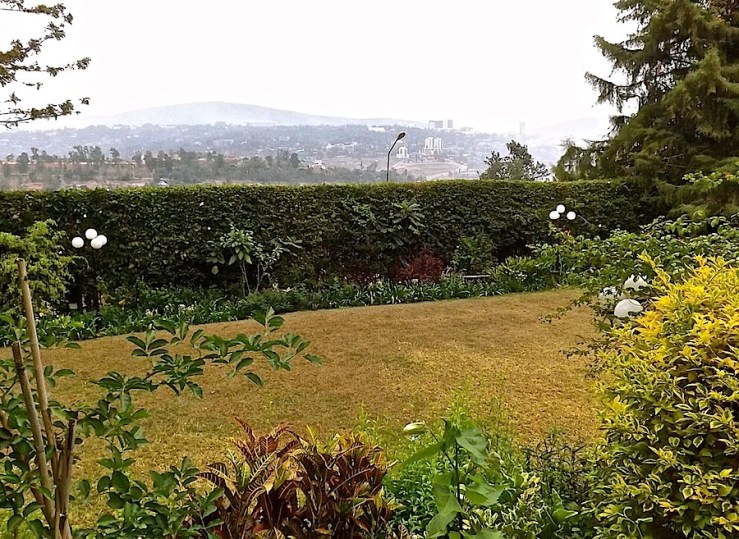
Our garden in the dry season/enclos*ure

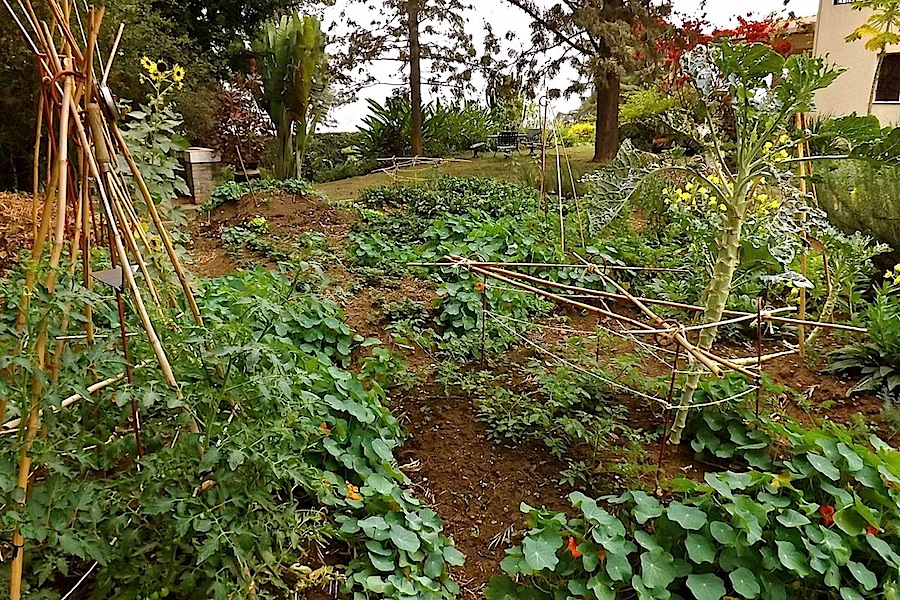
I’ve been working more on the vegetable garden lately.  This summer winter, we’ve divided it into many small* raised beds instead of a few really large ones.  It’s easier to manage now, and the kale, strawberries, basil, dill, arugula, lettuce, and rosemary are doing well — in the photo below.
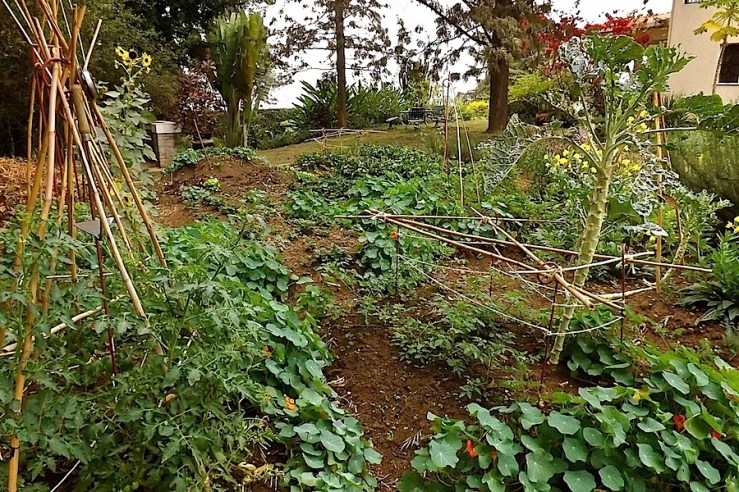
Our garden in the dry season/enclos*ure

That’s one of our two compost piles in the back.  You can just see a bamboo pole sticking out of it.  I pull the pole out occasionally and feel it.  If it’s warm and damp, the pile should be cooking nicely.

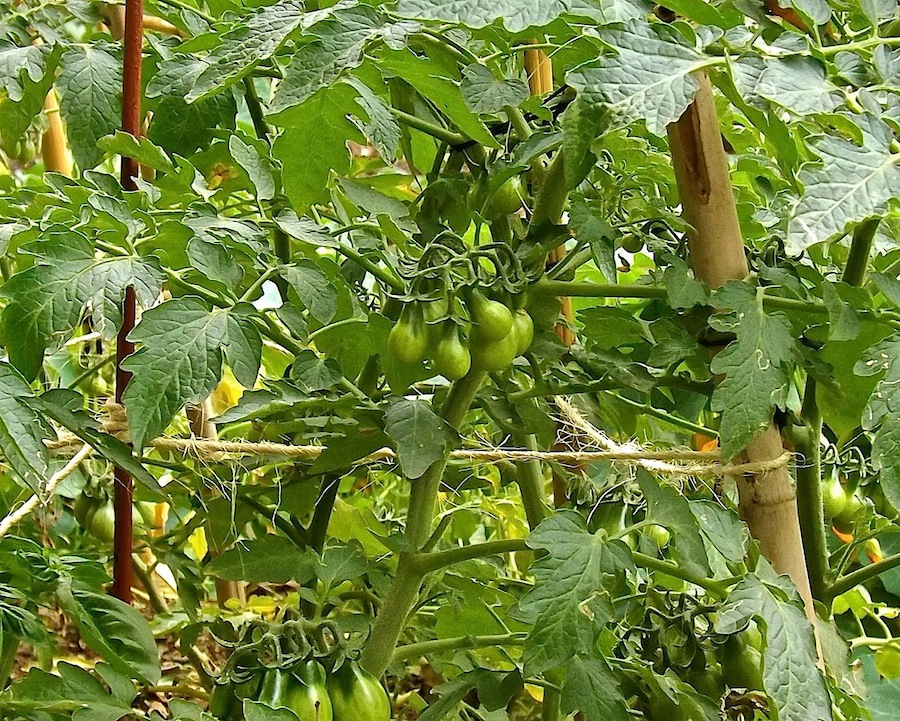
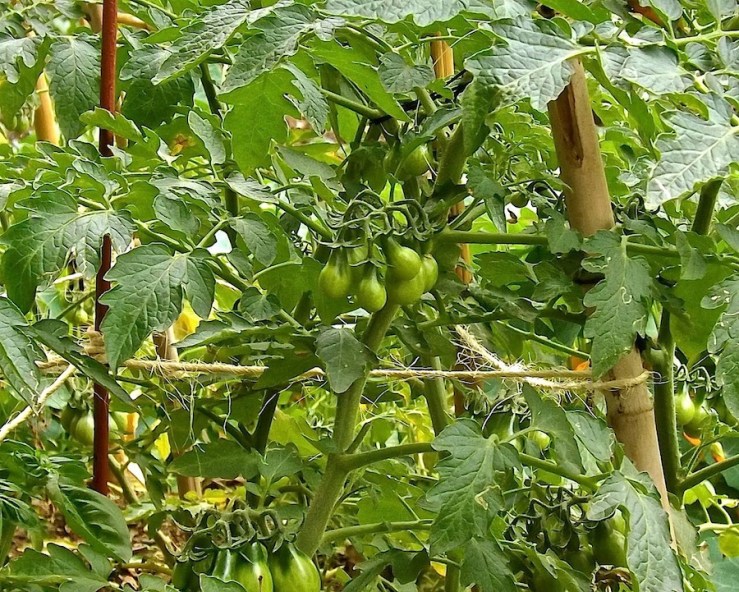
Below are my still-green cherry tomatoes; I planted both red and yellow.  The plants look good now, but when the rains start, they may suffer from too little sun and too much water. The dry season (with watering) is a good time for tomatoes and basil, but I should have started them sooner.Our garden in the dry season/enclos*ure
Finally, below, this is a little sad.  It’s an child’s stuffed toy — no head, no legs — that the hawks in the tree above pushed out of their nest.

Toy dropped by hawk/enclos*ure

The nest is at least 3′ across and seems to be made of as much waste paper and cloth as of sticks and twigs.  A few weeks ago, I found someone’s bank statement under the tree, complete with name, account number, and balance.  It’s now shredded and in the compost pile; I gave this little fellow a burial there too.

When we get our first big rain and wind storm, I expect to be picking up all sorts of things.


*3′ or 4′ x 5′ (more or less)

The Sunday porch: Strawberry Hill

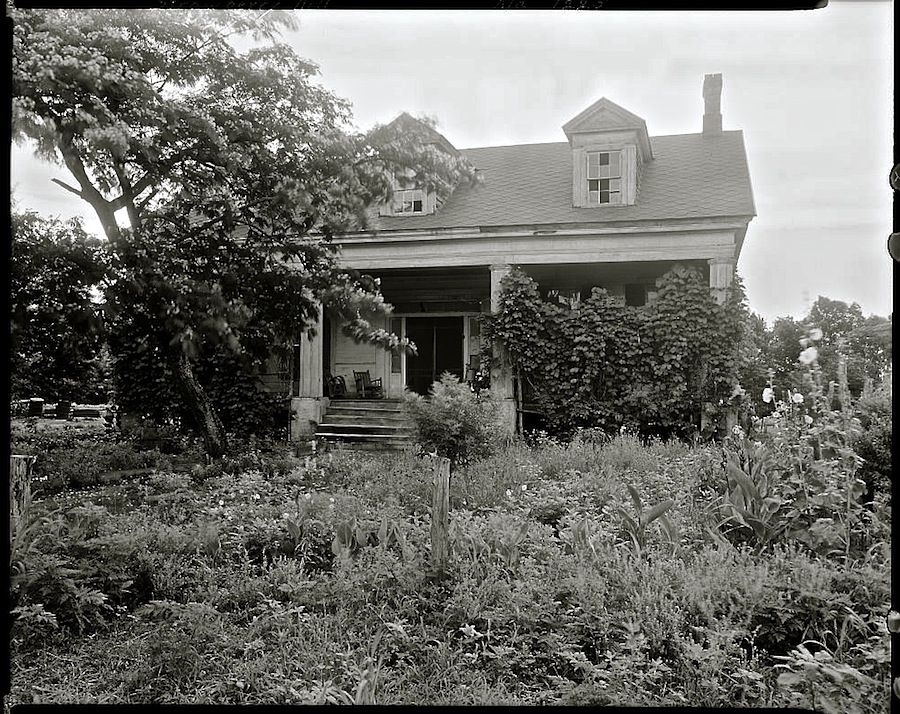
Vintage Photo of Strawberry Hill, Forkland vic., Greene County, Alabama, via Library of Congress Prints and Photographs Division Strawberry Hill, Greene County, Alabama, in 1939.  Photo by Frances Benjamin Johnston, via the Library of Congress Prints and Photographs Division. (Click on the image for a larger view.)
I’ve been looking at and bookmarking a lot of old photographs of beautiful porches lately, so today, I’m starting a Sunday series for these pictures.

The porch, particularly the front porch, connects — with a pause — the private interior of the house with the communal landscape beyond it.   Andrew Jackson Downing wrote:

A porch strengthens or conveys expression of purpose, because, instead of leaving the entrance door bare, as in manufactories and buildings of inferior description, it serves both as a note of preparation, and an effectual shelter and protection to the entrance. . . .

The unclouded splendor and fierce heat of our summer sun, render this general appendage a source of real comfort and enjoyment; and the long veranda round many of our country residences stands instead of the paved terraces of the English mansions as the place for promenade; while during the warmer portions of the season, half of the days or evenings are there passed in the enjoyment of cool breezes, secure under the low roofs supported by the open colonnade, from the solar rays, or the dews of night.

In his pattern books of the 1840s and 50s, Downing popularized the front porch for the American home as a link to nature.

I see it as a box seat for the theater of the garden or of the street.  Although the one above seems to have half drawn its curtains against the buzzing and chirping action of the cottage garden below.

The porch — and 1821 house attached — still exist, although without the vines and flowers.  The surrounding land is now a cattle ranch. In fact, it is currently for sale for about $3.8 million.

Picturing D.C. (year by year)

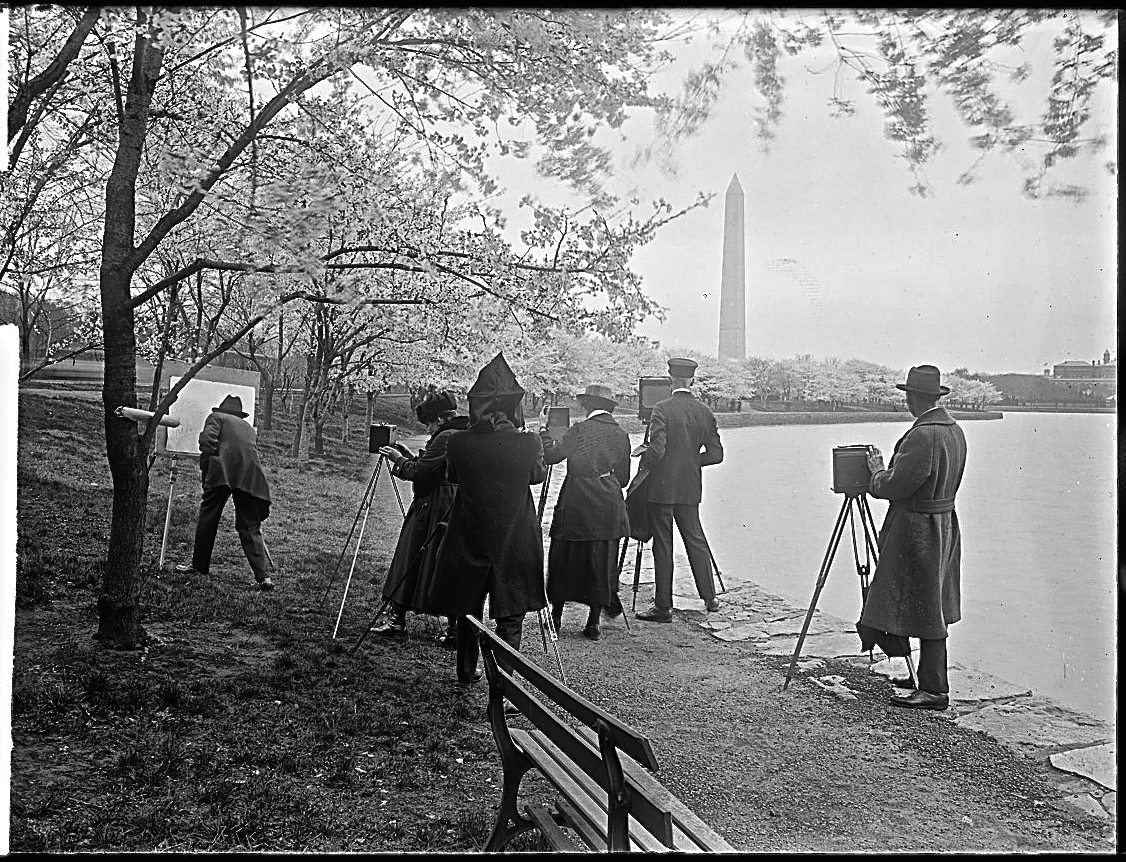
"Photographers shooting cherry blossoms, Washington D.C., April 7, 1922," by National Photo Company, Library of Congress Prints and Photographs Division.
“Photographers shooting cherry blossoms, Washington D.C., April 7, 1922,” by National Photo Company, Library of Congress Prints and Photographs Division and D.C. Past.

I want to share my recent discovery of D.C. Past, a tumblr blog that is “curating the photographic history” of Washington, D.C.

Kate Birmingham and Guillermo Esteves choose 19th and 20th century photos from the online catalogues of the Library of Congress and the National Archives.  However, when shown on D.C. Past, the images are generally much larger and (pretty darn) sharp.

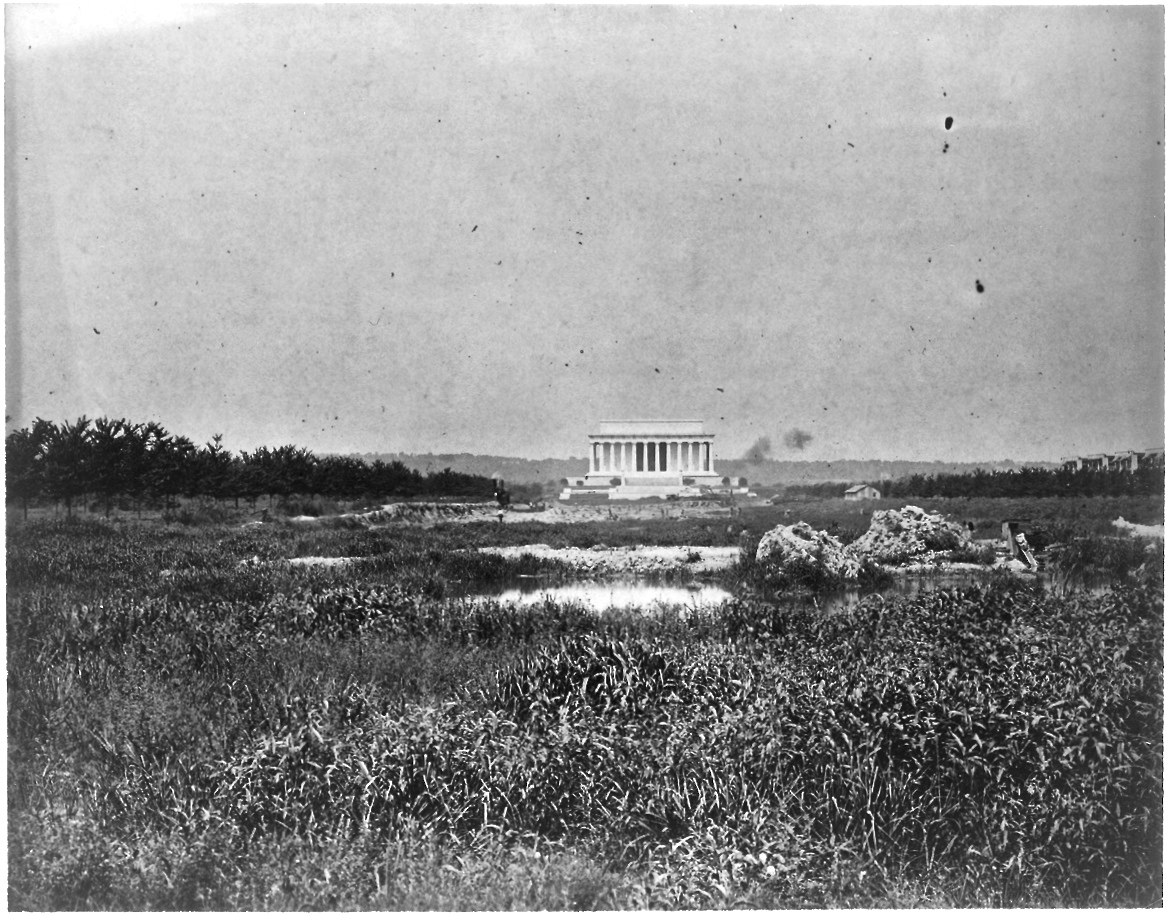
I love this early shot, below, of the Lincoln Memorial — the Reflecting Pool is still only a wetland.

"Lincoln Memorial with Marsh in foreground," 1917, by National Photo Company, Library of Congress Prints and Photographs Division.
“Lincoln Memorial with marsh in foreground,” 1917, by National Photo Company, Library of Congress Prints and Photographs Division and D.C. Past.

Four years later. . .

"Lincoln Memorial from Monument," May 30, 1922, by National Photo Company, Library of Congress Prints and Photographs Division.
“Lincoln Memorial from Monument,” May 30, 1922, by National Photo Company, Library of Congress Prints and Photographs Division and D.C. Past.

You’ll have to go to D.C. Past, here and here, for the “much larger” part.

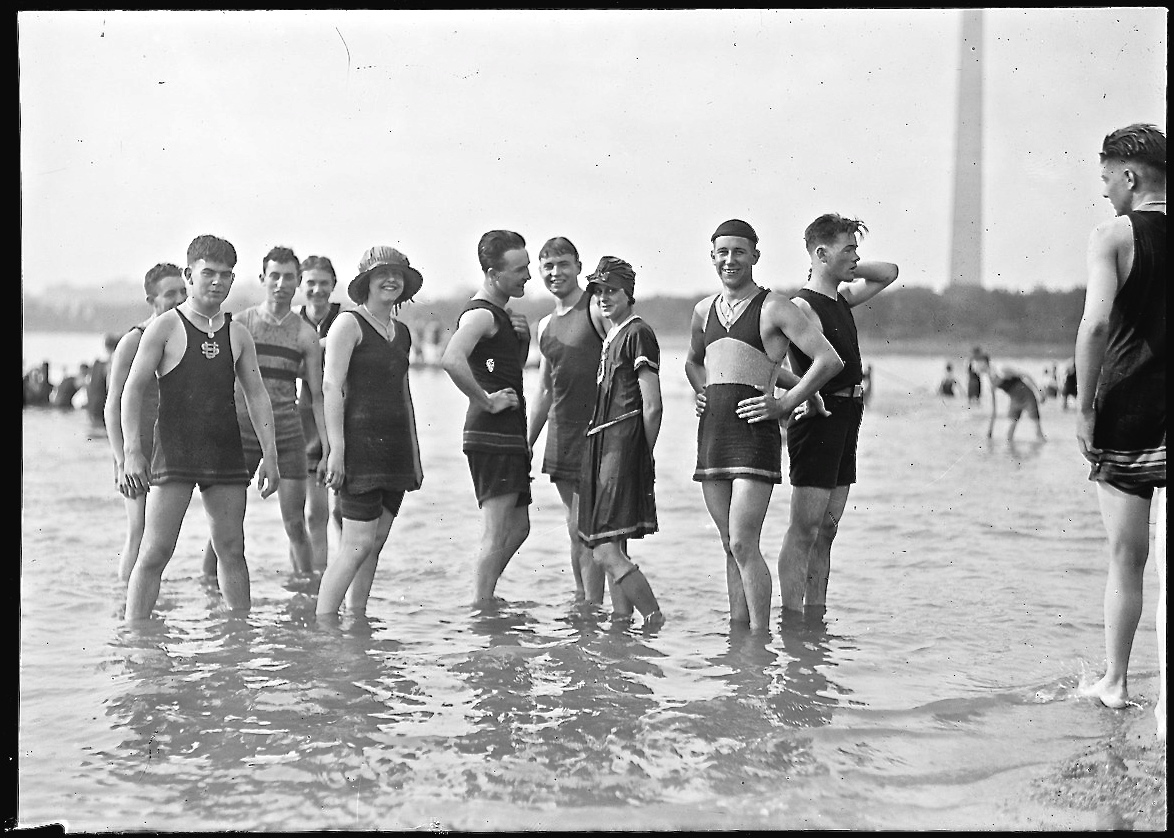
I like these swimmers below too.  They’re in the Tidal Basin.  And yesterday’s post was interesting — look at the (lack of) height of the fence.

"Bathing Beach,"  Washington, D.C., Tidal Basin, ca. 1912-1930, by National Photo Company, Library of Congress Prints and Photographs  Division.
“Bathing Beach,” Washington, D.C., Tidal Basin, ca. 1912-1930, by National Photo Company, Library of Congress Prints and Photographs Division and D.C. Past.

(A link to the photo at the top is here.)

D.C. Past is still rather new; its first picture was posted in March 2013.  But this makes it easy to catch up and get hooked.

There is also a NYC Past here and a Chicago Past here.