Green space

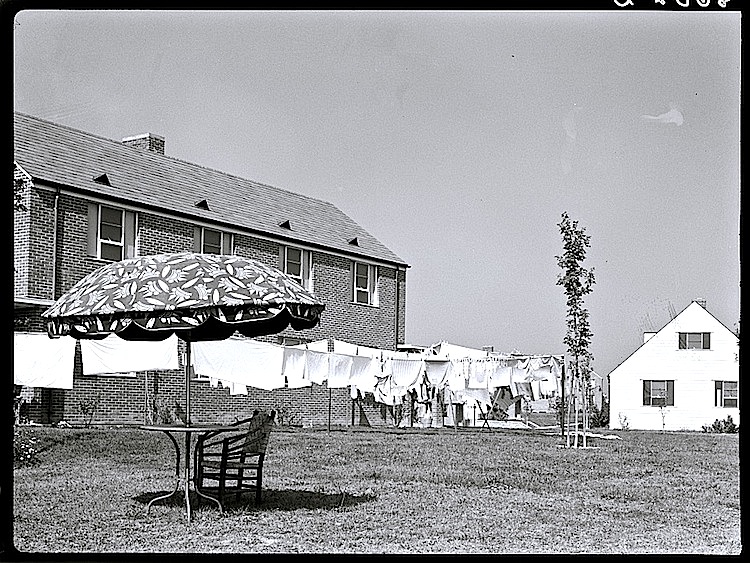
Greenhills, Ohio, 1938, J. Vachon, via Library of CongressGreenhills, Ohio, October 1938, by John Vachon for the U.S. Resettlement Administration, via Library of Congress Prints and Photographs Division.

Greenhills, Ohio is one of only three “Greenbelt Towns” built [by the federal government] in the United States. The other two are Greenbelt, Maryland, and Greendale, Wisconsin. The three towns had their start during the Depression Era.*

.  .  . The building of these towns provided much needed jobs for those in the trades (brick layers, plumbers, carpenters, electricians, etc.), as well as people not in the trades who worked at clearing land, digging trenches, etc.

.  .  . The most important aspect of these towns was to provide low income families with affordable housing to raise their children in and a safe environment with access to large open “green” spaces. Pathways were created in each section of homes to connect the sections to each other, as well as provide a pathway to the Village center.

— The Village of Greenhills website

There are more Library of Congress photos of Greenhills here.


*The first residents moved in in April 1938.
Life in gardens: dance!

This slideshow requires JavaScript.

It’s the first day of the last month of summer.

In observance of this moment, you might want to put on something gauzy, go outdoors, and cavort {gambol, caper, dance, frisk, frolic, rollick, romp, leap and skip about playfully} — as many were apparently wont to do in the first decades of the 20th century.

These performers were certainly influenced by American dancer Isadora Duncan, who, by 1900, was performing and teaching a “natural” modern dance. “With free-flowing costumes, bare feet, and loose hair, she took to the stage inspired by the ancient Greeks, the music of classical composers, the wind and the sea,” according to the Isadora Duncan Dance Foundation.

All photos here via Library of Congress Prints and Photographs Division, except for “Sisters of the Sun,” which is via Shorpy.

What mattered in Isadora’s Hellenic dances was not the Greek themes or the gauzy costumes, but the uninhibited vitality, the sense of a glorious nakedness.”

— Lewis Mumford, 1905

Vintage landscape: Yorktown, Va.

More big (boxwood) love.  .  .

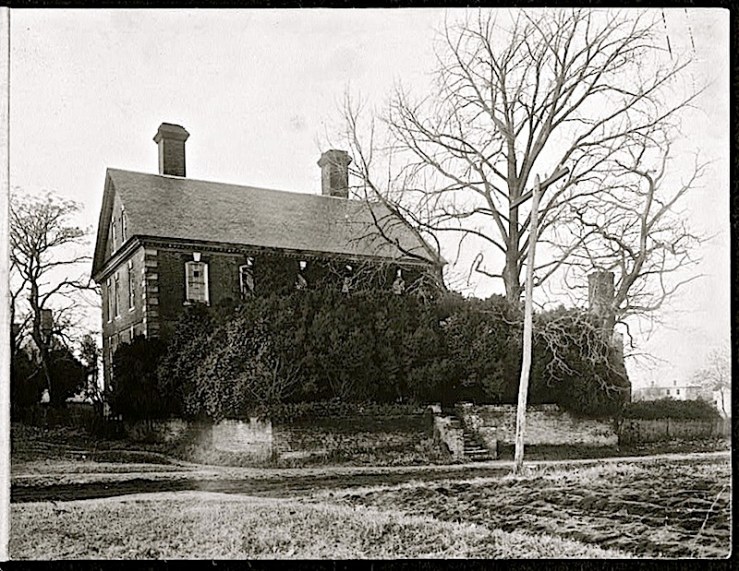
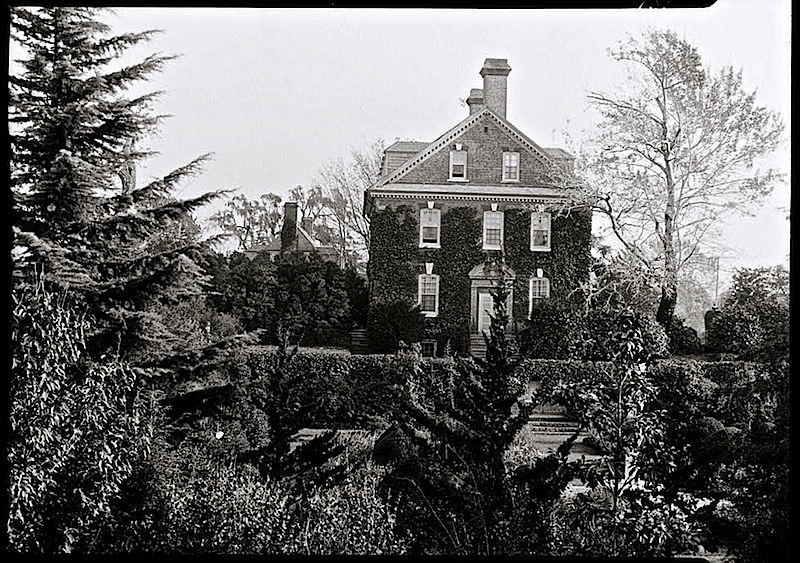
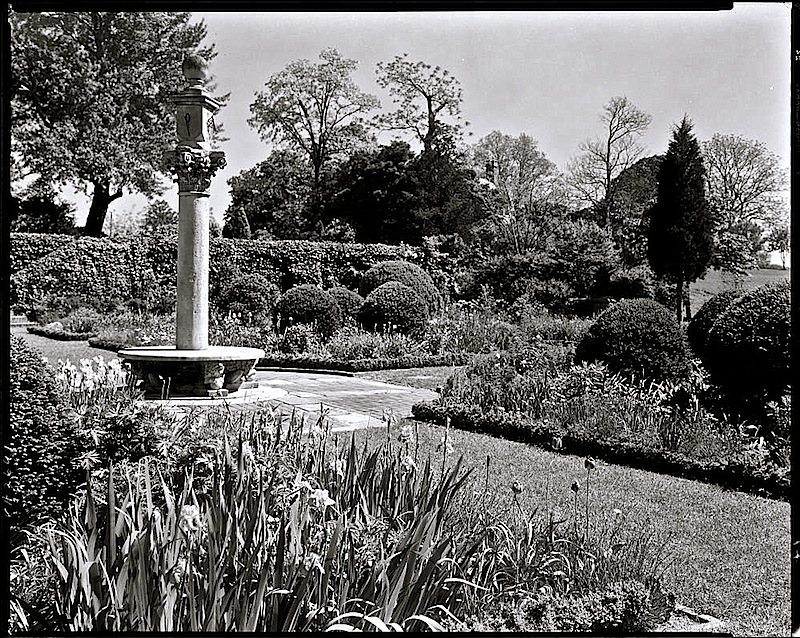
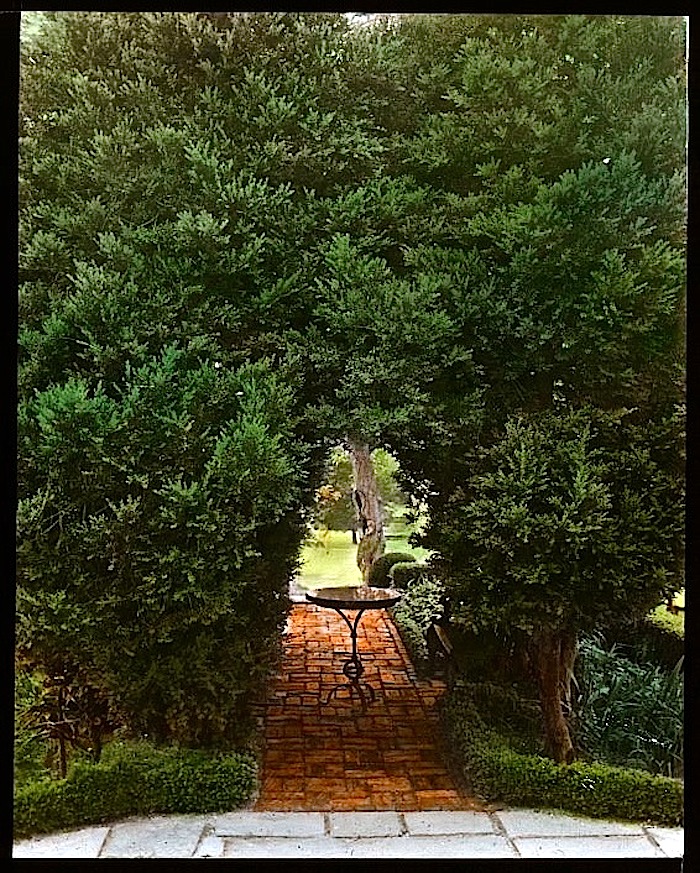
#1, Nelson Hse. garden, ca. 1930, FBJohnston, LoC“‘York Hall,’ Captain George Preston Blow house, . . . Main Street, Yorktown, Virginia. Table in boxwood garden,” 1929, by Frances Benjamin Johnston.*

The house is more often called the Nelson House for the family that built it in the 1740s and owned it throughout the 19th century.  George and Adele Blow purchased it and began to restore it in 1914.  In 1968, it became a National Park Service site.

#2, Nelson hse., 1903, WHJackson, LoCThe front of the house and Main Street as it appeared about 1902. Photo by William Henry Jackson for Detroit Photographic Co.

#4, Nelson Hse., c. 1915, HABS, LoC The front of Nelson House in 1915. This photo is part of an Historic American Buildings Survey (HABS).

(There’s a photo of the front of the house and the younger boxwoods in 1862 here.)

#5, Nelson Hse., c. 1915, HABS, LoCThe front door, inside the boxwood hedge, 1915, HABS.

#9, view from hall, Nelson house, ca. 1915, LoCThe center hall, looking out the front door, 1915, HABS (photo cropped by me).

#6, Nelson Hse., c. 1915, HABS, LoCThe side view of the house, ca. 1915 (I think it may be later), HABS.  The front boxwood hedge is on the left.

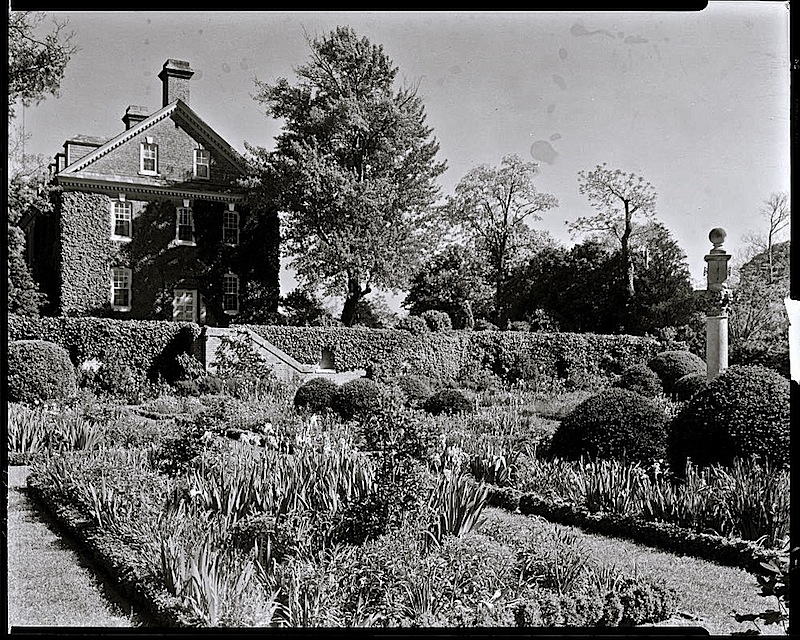
#16, Nelson Hse, ca. 1930s, FBJohnston, LoCThe side garden in the 1930s by Frances Benjamin Johnston.

The garden during the Blow’s ownership was designed by Charles Freeman Gillette, a landscape architect known for working in the Colonial Revival style. Today, little remains.  The giant boxwoods at the front of the house are gone.

#19, Nelson Hse, ca. 1930s, FBJohnston, LoCAnother view of the side garden in the 1930s by  Frances Benjamin Johnston.

More big boxwood photos here and here and here and here.


*All photos here via Library of Congress Prints and Photographs Division.


The Sunday porch: Centerville, Calif.

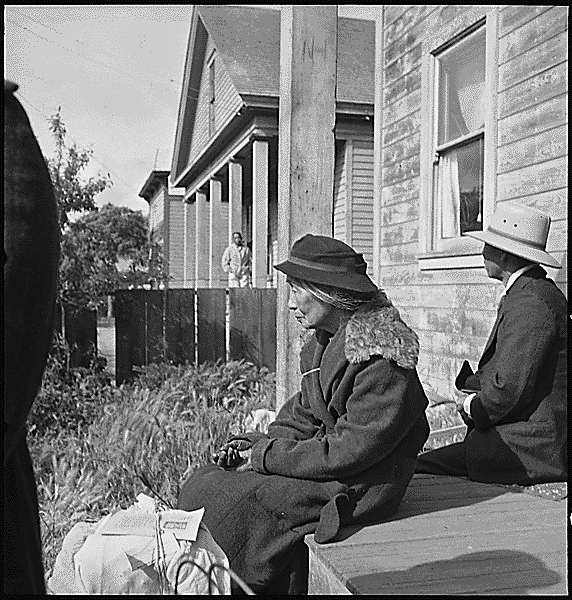
Japanese-American grandmother on porch 1942, U.S. National Archives“Grandmother of farm family awaits evacuation bus. Evacuees of Japanese ancestry will be housed in War Relocation Authority centers for the duration,” May 9, 1942, by Dorothea Lange for the U.S. War Relocation Authority, via U.S. National Archives on flickr.

Centerville is a community in northern California. All along the Pacific coast — from 1942 to January 1945 — over 110,000 people of Japanese heritage were forced into internment camps.  Sixty-two percent were American citizens.

In 1988, in the Civil Liberties Act, the U.S. Government admitted that its actions had been based on “race prejudice, war hysteria, and a failure of political leadership.”

Vintage landscape: Smiley Heights

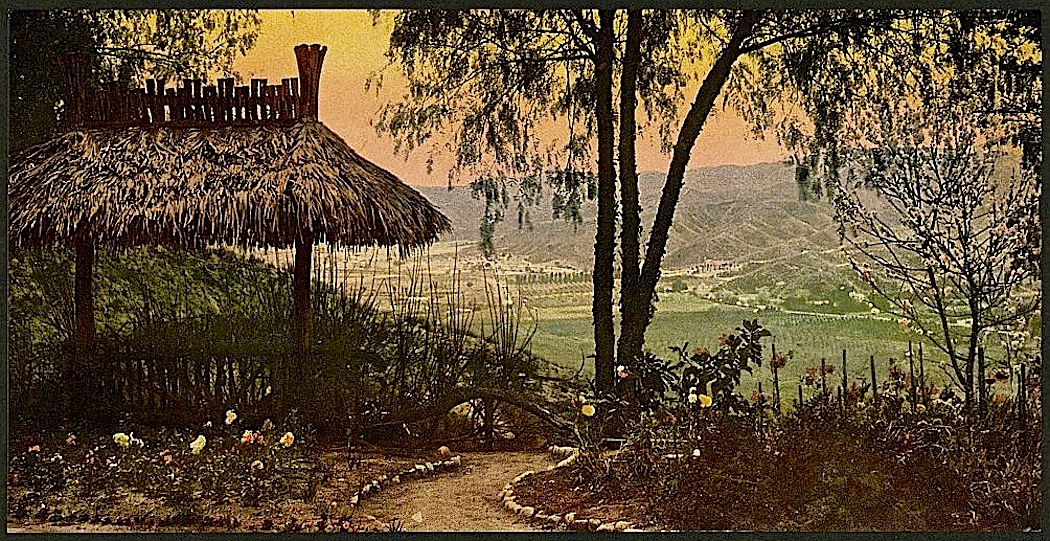
Smiley Heights, via LoCRoadside view from Smiley Heights, Redlands, California, between 1898 and 1905, a photochrom by Detroit Photographic Co., via Library of Congress Prints and Photographs Division.

(Click on the image to enlarge it.)

Alfred and Albert Smiley — twin brothers — were wealthy New York hotel owners who came to California in their sixties:

In 1889, while in California, the brothers became so impressed with the beautiful scenery and surroundings of Redlands that they purchased for a winter home 200 acres of the heights south of the town, through which tract they caused to be constructed a beautiful series of roads, both for driving and walking, and on the summit and along the northern declivities started a thousand or more species of rare plants and flowers of such varieties as flourish in this semi-tropical climate. Each of the brothers erected a beautiful and substantial residence on the crest of the hill. This property called the Canon Crest Park, commonly known as Smiley Heights, was thrown open to the public and the park has become famous throughout the land, being visited by thousands of Eastern tourists annually.

History of San Bernardino and Riverside Counties (1922) by John Brown, Jr., and James Boyd

The Smiley estate is now “covered by McMansions,”  according to this article about Redlands in The Atlantic.

Below the garden the hills fold away.
Deep in the valley, a mist fine as spray,
Ready to shatter into spinning light,
Conceals the city at the edge of night.

Yvor Winters, from “On a View of Pasadena from the Hills