Vintage landscape: First Birds

Wh.House birdhouse, Harding Admin., via Library of Congress“One of the many bird houses which Mrs. [Warren G.] Harding has installed in the White House grounds,” between 1921 and 1923, by National Photo Company, via Library of Congress Prints and Photographs Division.

First Lady Florence Harding was a great advocate for better animal care and protection. In addition to the birdhouses, she also had squirrel huts placed around the gardens  — and had the animal trophy heads removed from the State Dining Room, according to her biographer Carl Anthony.

Early changes to the residence’s outdoor space were part of the Harding  Administration’s determination to banish the “gloom” of the war years under President Wilson,  wrote John A. Morello in Selling the President, 1920. “More bulbs and flowers would be planted, and birdhouses were installed in trees.”

At least some of the official birdhouses came from Evans Brothers, “Manufacturers of Bird House and Lawn Accessories,” on Main Street in Evanston, Illinois.

A tiny article in the August 18, 1921, Chicago Tribune says, “Sparrows, robins, and other birds who are flat hunting at present may be interested to know that Conroy Evans. . . has just received an order from Mrs. Warren G. Harding for several bird houses to grace the White House grounds. . . and that Mrs. Harding will supervise the placing of the houses in trees.”

Conroy Evans contributed brief reports on the movements of Evanston birds to Bird Life magazine.  In its fall issue of 1919, Evans Brothers also placed a small ad:  “Who’s the ‘Mr. Hoover’ for the Birds? Why Evans Bros. of course.”

From 1917 to 1919, Herbert Hoover (later President Hoover) became well-known for his work on food relief for Europe as head of the U.S. Food Administration and then of the American Relief Association.
Vintage landscape: harvest

A few beautiful Kodachrome images of the season. . .

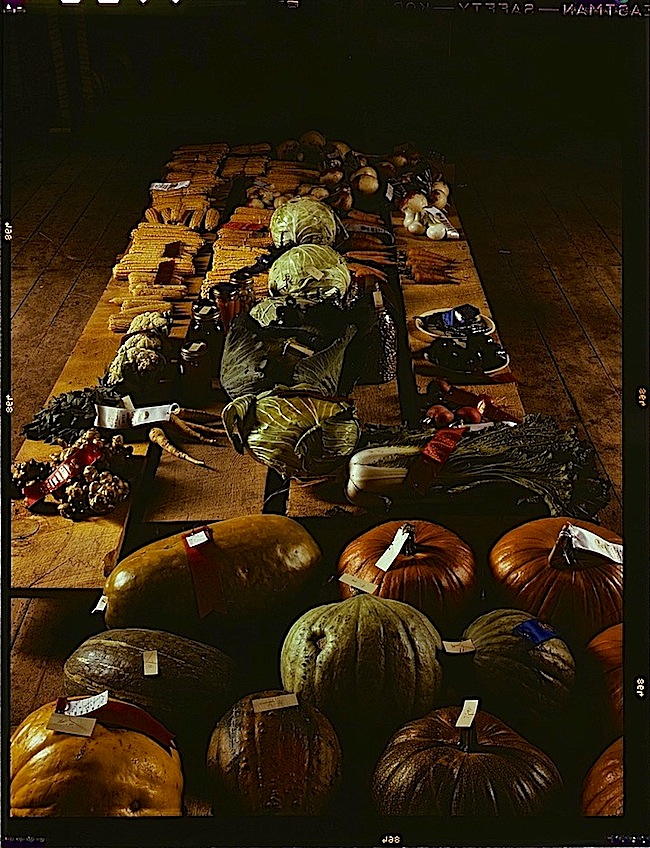
Harvest, 1940s, Library of Congress“Exhibit of crops and vegetables at the Pie Town, New Mexico, Fair,” 1940, by Russell Lee.

The story of Pie Town and of the photos Lee took there is here, in Smithsonian Magazine.

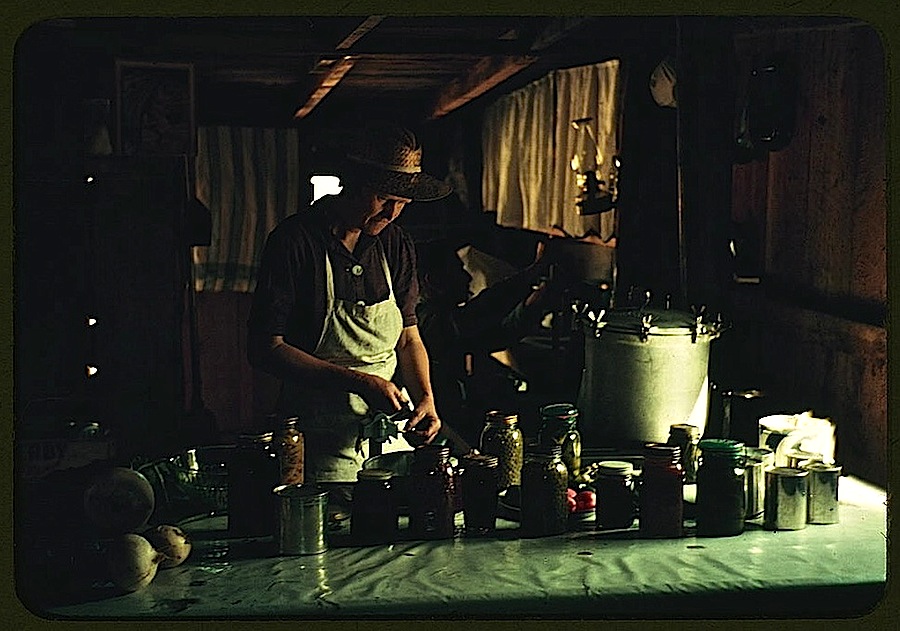
Harvest, 1940s, Library of CongressMrs. Jim Norris canning vegetables, Pie Town, New Mexico, 1940, by Russell Lee. (You can click on the image to enlarge it.)

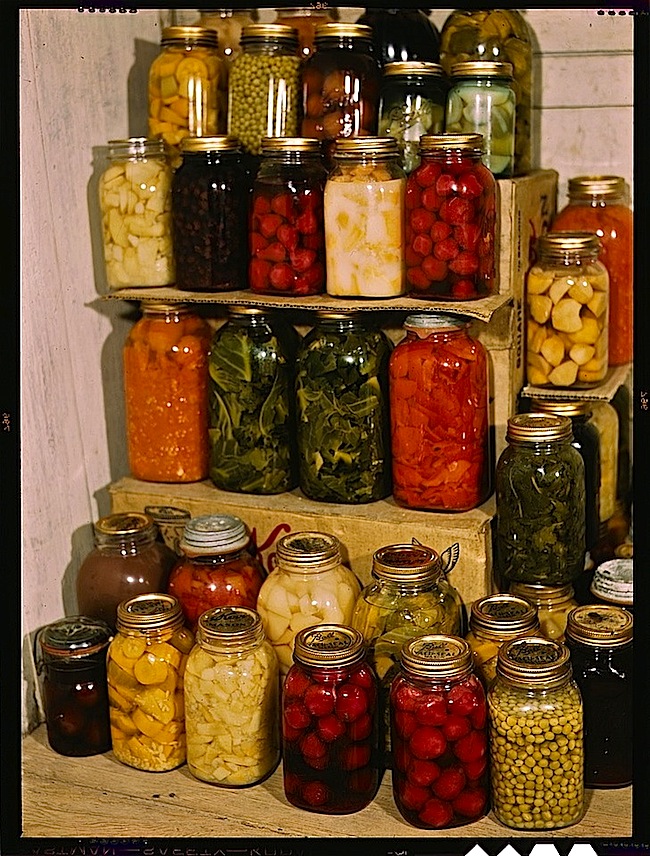
Harvest, 1940s, Library of Congress“Display of home-canned food,” between 1941 and 1945, photographer not noted.

All three images were taken for the U.S. Farm Security Administration/Office of War Information on the then new Kodachrome color transparency film.  All via Library of Congress Prints and Photographs Division.

Oh! for a thousand pumpkin seeds,
To plant for my son John;
He says that pumpkin pies are good
When the winter time comes on.

Robert Charles O’Hara Benjamin, from “The Farmer’s Soliloquy

The Sunday porch: Washington, D.C.

This slideshow requires JavaScript.

Rowhouses,  Southwest Washington, D.C., between 1941 and 1942, by Louise Rosskam on Kodachrome color film, via Library of Congress Prints and Photographs Division.

The photos show cast iron stoops and steps, which were typical in many D.C. neighborhoods after the city’s building boom of the 1870s.

“Iron was strong, inexpensive to produce, manufactured quickly, and easily assembled with little on-site labor,” according to an interesting pamphlet by the Capitol Hill Restoration Society on the history and care of old cast iron and wrought iron.

“Washington had five foundries in 1870 and fifteen most years from 1895 to 1905,” according to the pamphlet.  Because of the industry’s dependence on water (or rail) connections to obtain raw materials, they “were usually in Georgetown, near the canal terminus, or along Maine Avenue on the Potomac River Waterfront.”

At first, I thought that both of the photographs above were of the same two houses.  Then I realized that the screen doors are different and that the brickwork over the windows is painted white in only one of the pictures.

The narrow open passageway between both sets of houses is interesting.

You can see what the corner of N and Union (now 6th) Streets, S.W., looks like today here.

In the windows of the houses with the children on the steps, you can just see the families’ Blue Star service flags (put your cursor on the slideshow to pause it). They reveal that the family on the left had one son in the war and the family on the right had two. (A gold star on a window flag would indicate that a son had been killed.)

Life in gardens: animal court

Jane Addams Housing fountain, via LoC“Sculpture and children in fountains – Jane Addams Houses,” between 1938 and 1940, Chicago, Illinois, by Peter Sekaer for the U.S. Housing Authority, via Library of Congress Prints and Photographs Division.

The Jane Addams Homes public housing project was built in 1938 under the New Deal Public Works Administration Act. The “Animal Court” figures were carved from limestone by Edgar Miller.

The sculptures still exist, although the buildings around them were razed in the early 2000s.  As of September 2013, they were in storage awaiting restoration and a new home.  They may eventually return to a place near their old location, as part of a National Public Housing Museum.

There are more photos here, at the blog Playscapes.

Vintage landscape: a curious garden

So many little faces. . .

Old Curiosity Shop, Museum Victoria Garden and wall of the Old Curiosity Shop, Ballarat, Australia, ca. 1895, via Museum Victoria.

“Little girls would bring their broken dolls to Mr Warwick for him to mortar into this wall,” according to the museum’s online catalogue.

The photo (and the one below) were contributed by Mrs Wilma Mahoney to The Biggest Family Album of Australia project.

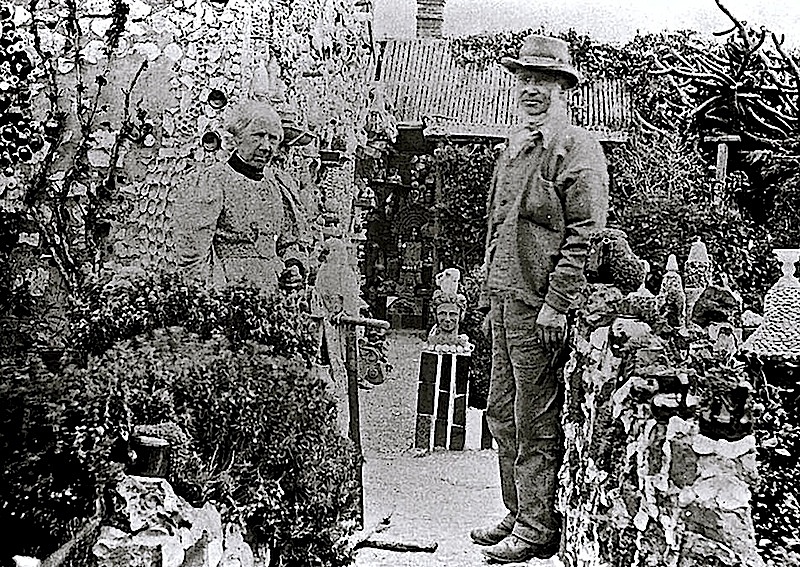
Old Curiosity Shop, 1895, Museum VictoriaMr. and Mrs. Warwick in the garden of their Old Curiosity Shop, ca. 1895.

Happy Halloween!