The Sunday porch: Strawberry Hill

My first “Sunday porch,” from August 2013. . .
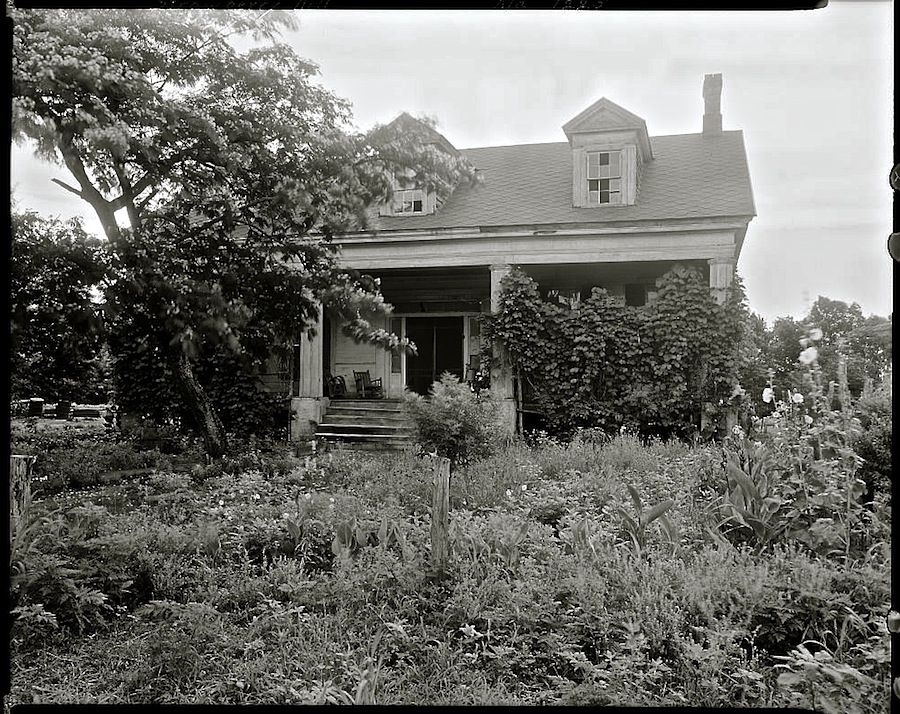
Vintage Photo of Strawberry Hill, Forkland vic., Greene County, Alabama, via Library of Congress Prints and Photographs Division Strawberry Hill plantation, Greene County, Alabama, in 1939, by Frances Benjamin Johnston, via Library of Congress Prints and Photographs Division.

The front porch is often a box seat for the theater of the garden or the street.  This one seems to have half drawn its curtains against the buzzing, chirping action of the cottage garden below.

Strawberry Hill, 1936, HABS, Library of Congress
Strawberry Hill, November 1936, by Alex Bush, for HABS, via Library of Congress.

The mid-19th century house still exists, although without the vines and flowers.  Its surrounding land is now a cattle ranch.
Vintage landscape: Stockholm

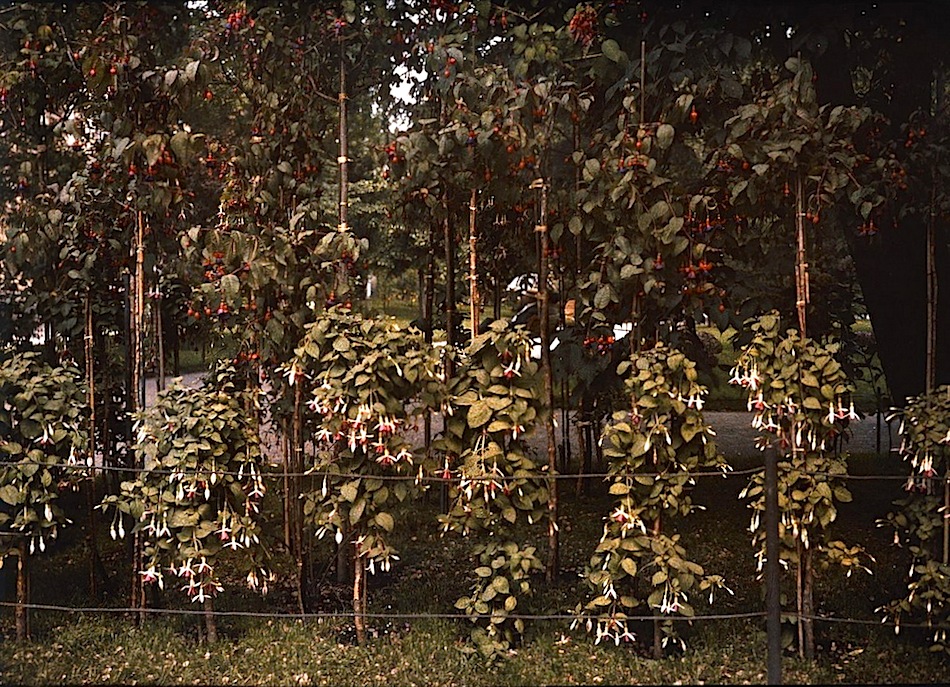
fushias in Olympic Park, 1912, Stockholm, Tesniska MuseetFuchsias at Stureparken, Stockholm, Sweden. Photographed in June 1912 at the Olympic Games,” an autochrom by John Jäderström, via Tekniska Museet Commons on flickr.

The Stureparken is a small park in a wealthy area of Stockholm near the Östermalm Athletic Grounds, site of the 1912 Games’ equestrian, fencing, and tennis events.

Vintage landscape: oh, that old thing. . .

clothes line and ancient standing stone in Sweden, 1949, Swedish Natl Heritage BoardBackyard prehistoric standing stone supporting a section of clothesline, Borgholm, Sweden, July 1949, by Mårten Sjöbeck, via Swedish National Heritage Board Commons on flickr.

There appears to be another stone in the neighbor’s yard, on the right side of the photo.

Life in gardens: summer class

Life class, Bain News Service, Library of Congress“Life class, summer school, National Academy of Design,” probably New York City area, ca. 1910 to ca. 1915, by Bain News Service, via Library of Congress Prints and Photographs Division on flickr.

The students are drawing or painting a boy left of center in the photo.

Vintage landscape: shady spot

%22As you like it,%22 Library of CongressGarden of “As You Like It,” the James Harper Poor House, East Hampton, New York, ca. 1915, by Frances Benjamin Johnston, via Library of Congress Prints and Photographs Division Commons on flickr.

Poor was a New York City businessman (dry goods) and Shakespeare devotee, who, in 1899, bought a shingled American Colonial country house, part of which was built in the 17th century. He then changed its style to English or Tudor Revival — all half-timber and stucco, as was so fashionable at that time.  Today, the property is The Baker House 1650 bed and breakfast.