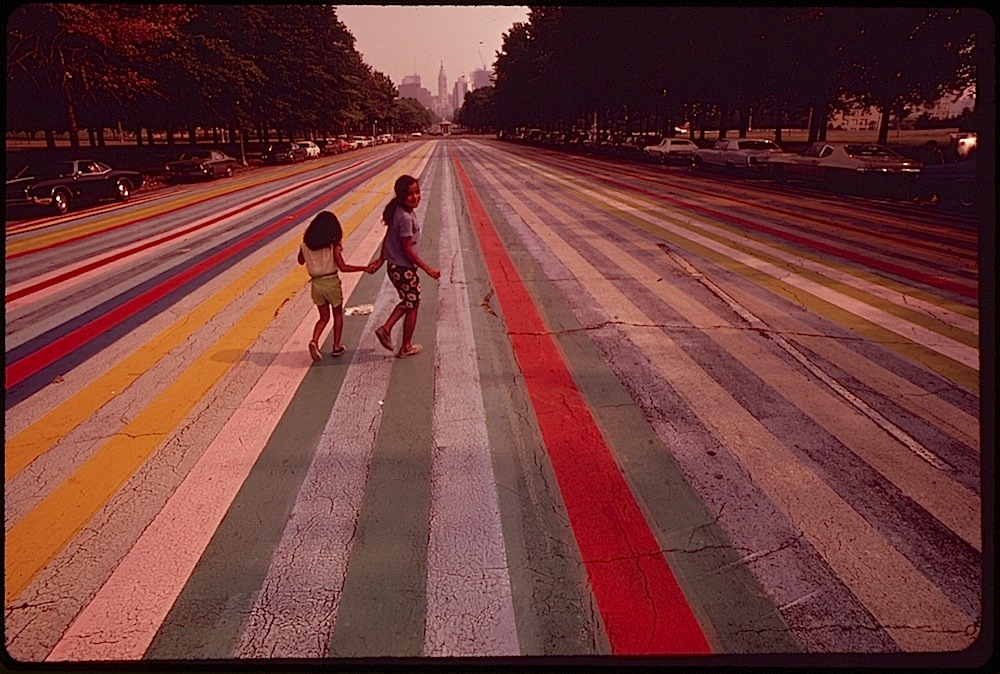
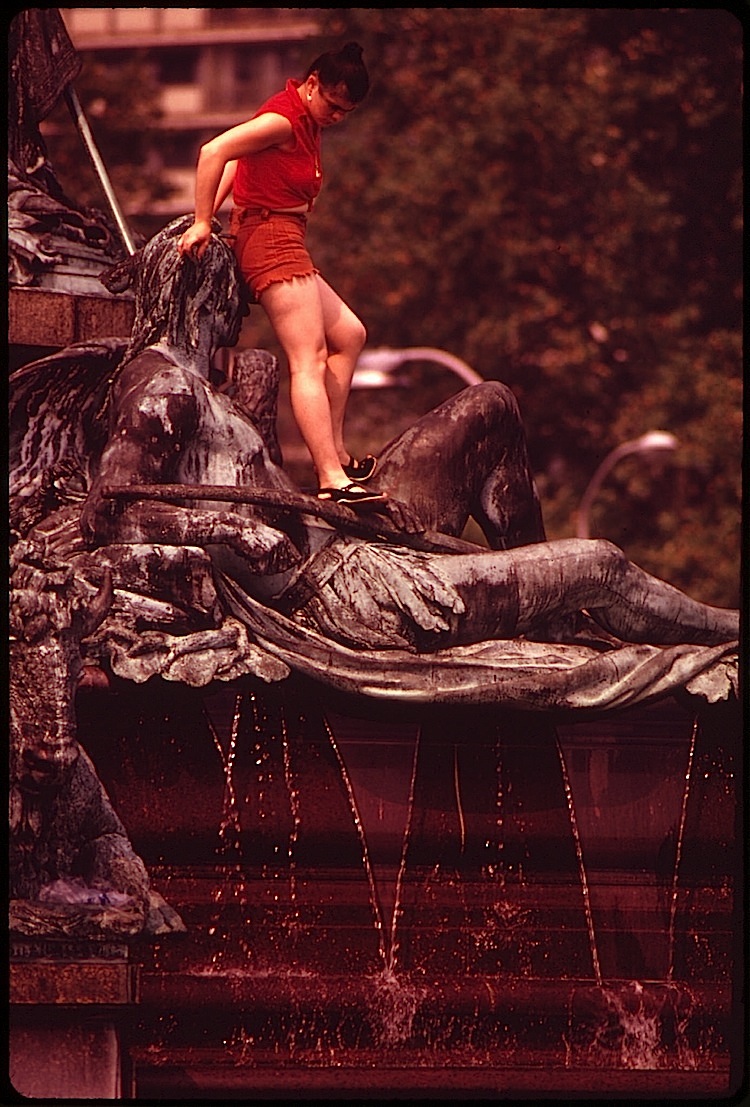
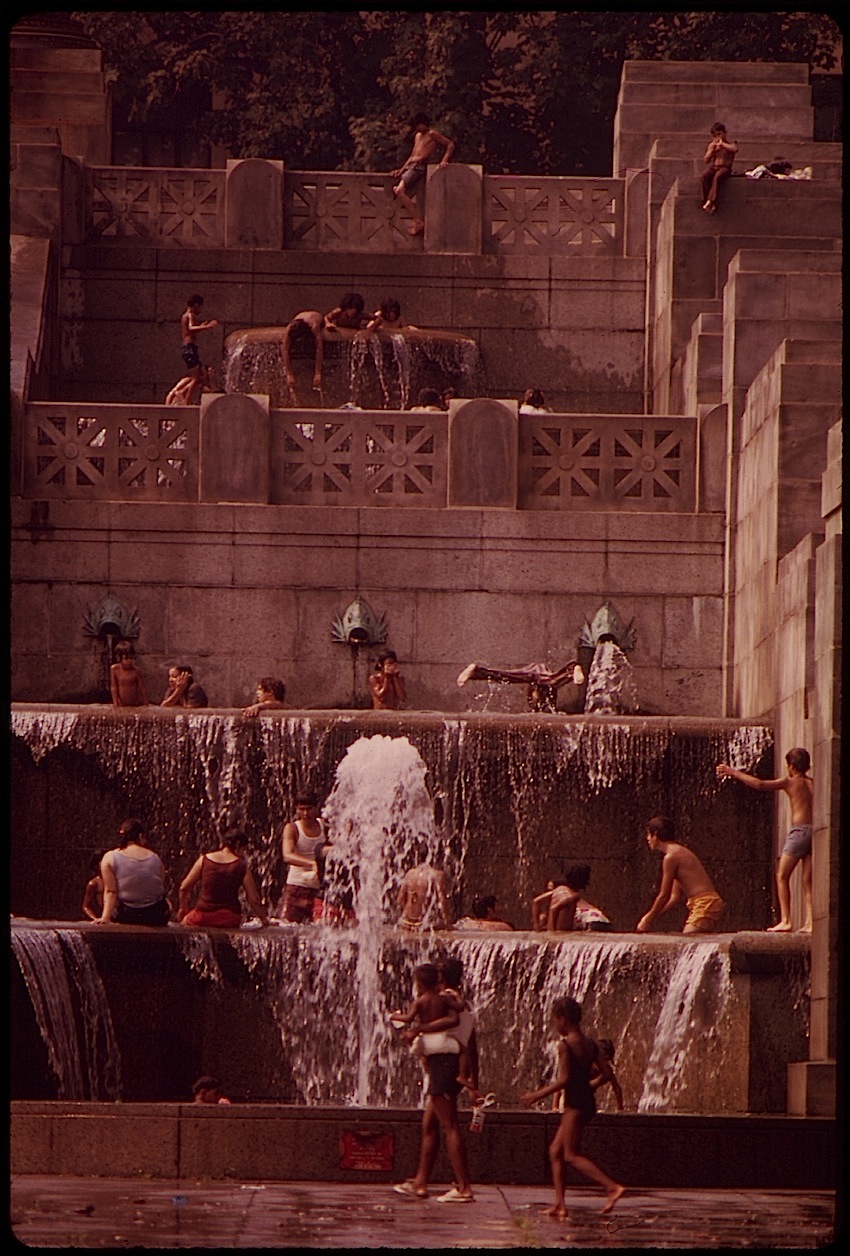
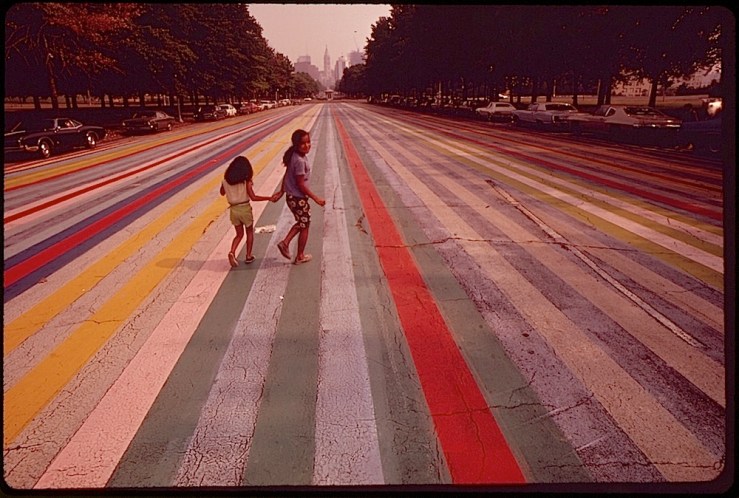
 “Crossing the painted road which extends east from The Philadelphia Museum of Art, August 1973,” by Dick Swanson, via the U.S. National Archives Commons on flickr (all photos and captions in quotes here).
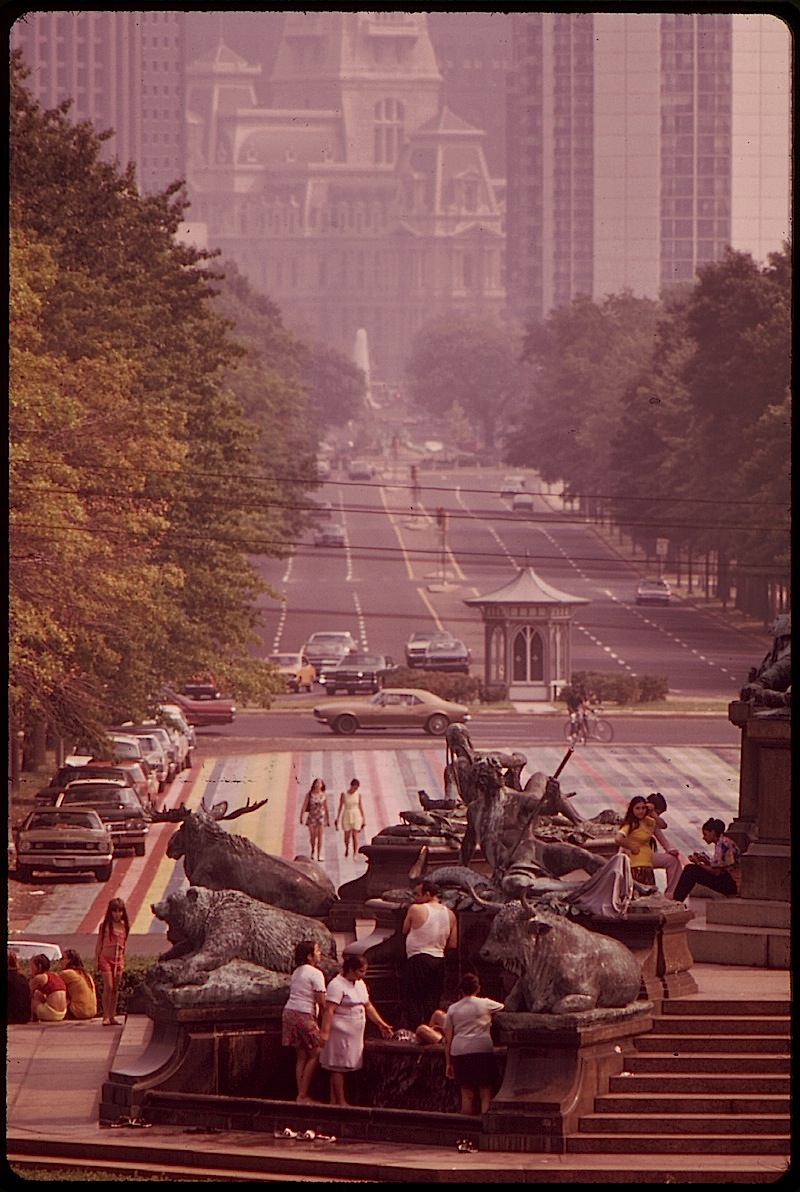
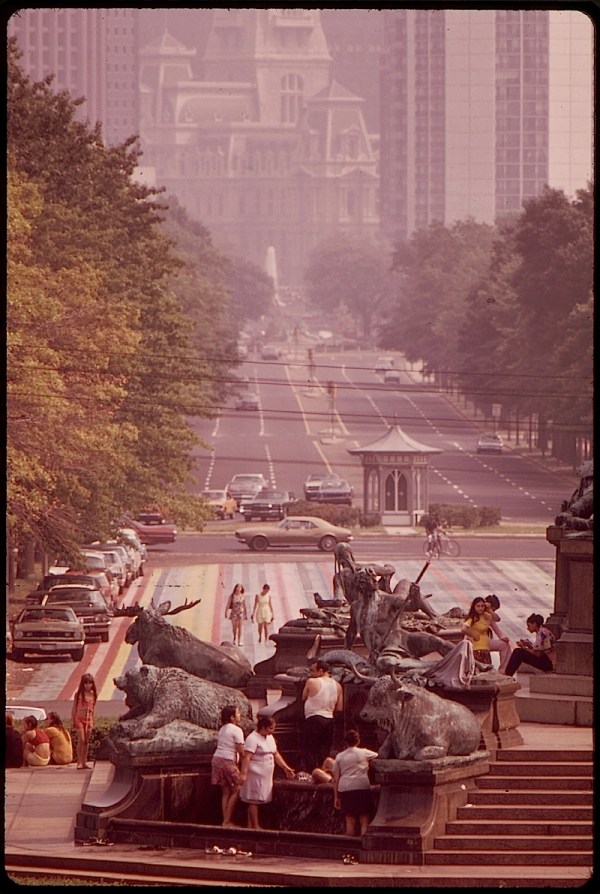 “From the steps of the Philadelphia Museum of Art — looking down Benjamin Franklin Parkway toward City Hall and Center City.”
The road painting, “Big Stripes,” was created by Gene Davis in 1972. At the time, it was the world’s largest painting. Davis was a leader in the Washington [D.C.] Color School.
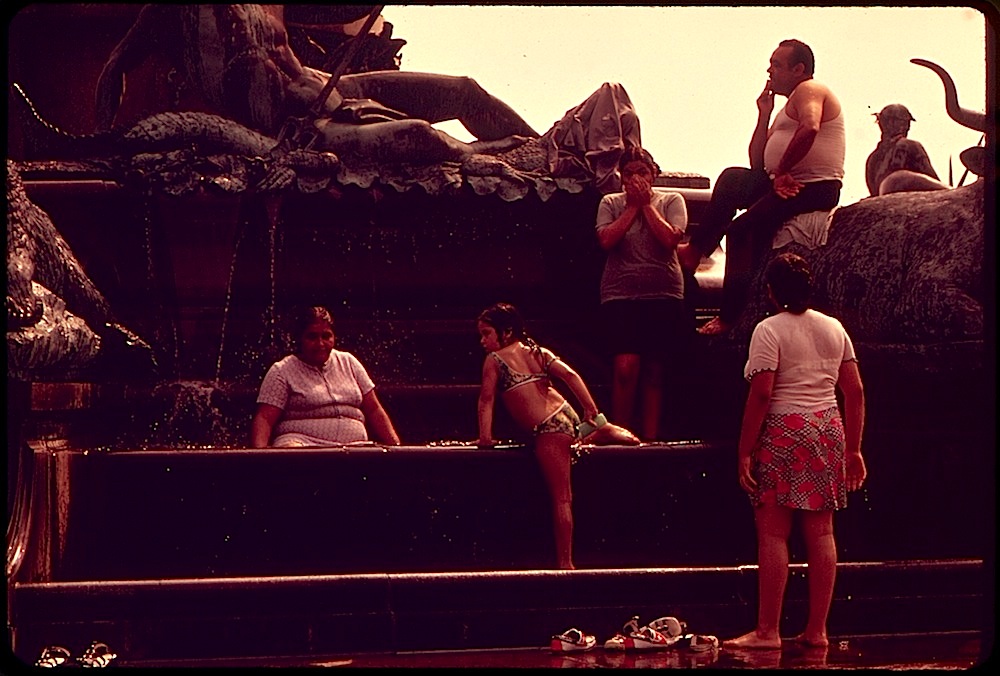
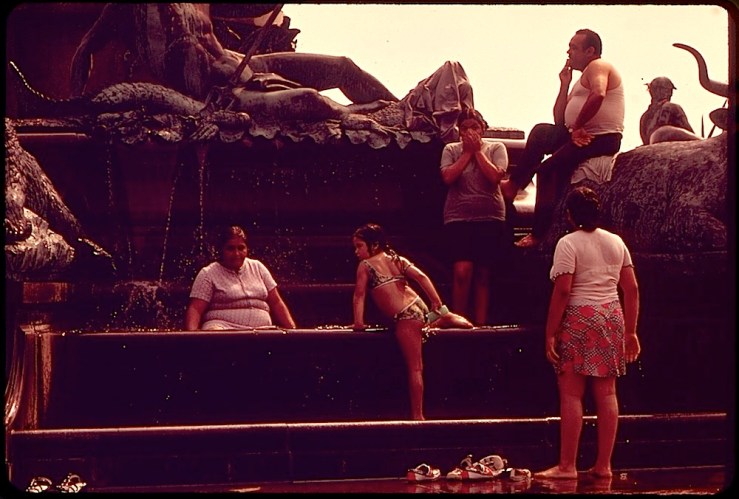 “Fountains surrounding Philadelphia Museum of Art are especially popular in a heat wave.”
Swanson took these images for DOCUMERICA, a photography program of the U.S. Environmental Protection Agency (EPA). From 1972 to 1977, it hired over 100 photographers to “document subjects of environmental concern.” They created an archive of about 80,000 images. In addition to recording damage to the nation’s landscapes, the project captured “the era’s trends, fashions, problems, and achievements,” according to the Archives, which held an exhibit of the photos, “Searching for the Seventies,” in 2013.
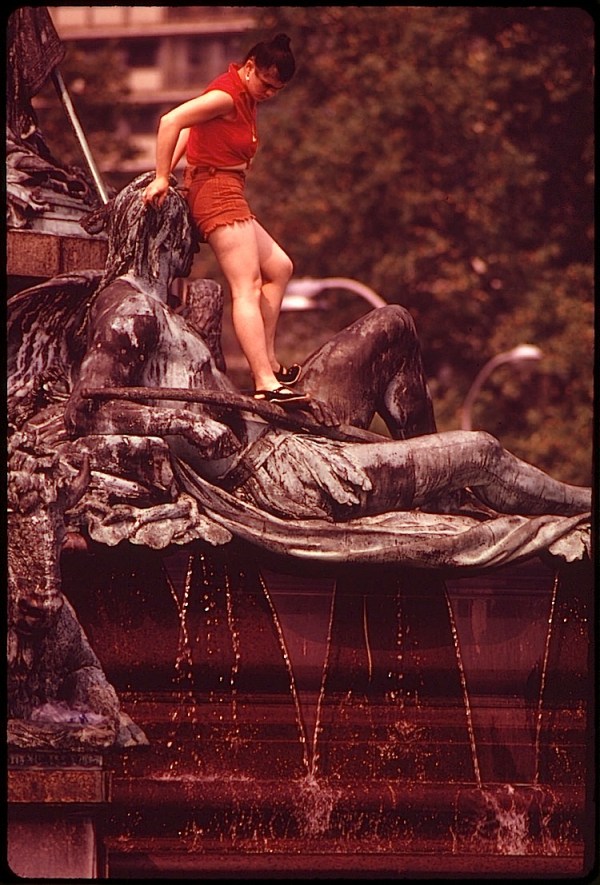
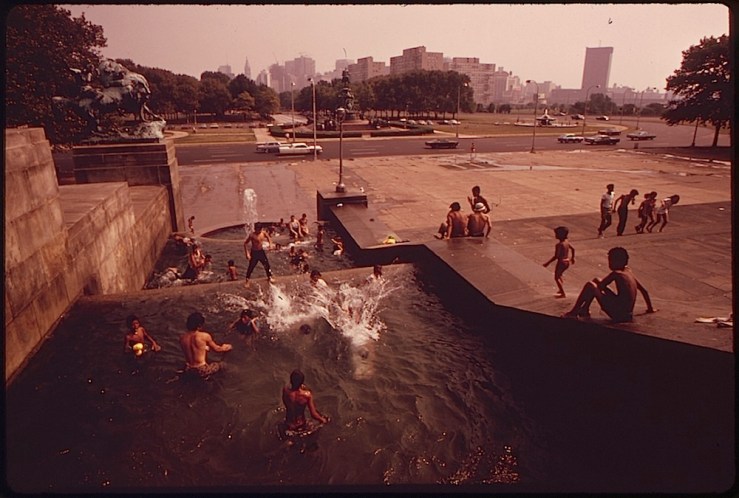 “The art of cooling off is enthusiastically pursued in the fountains of The Philadelphia Museum of Art.”
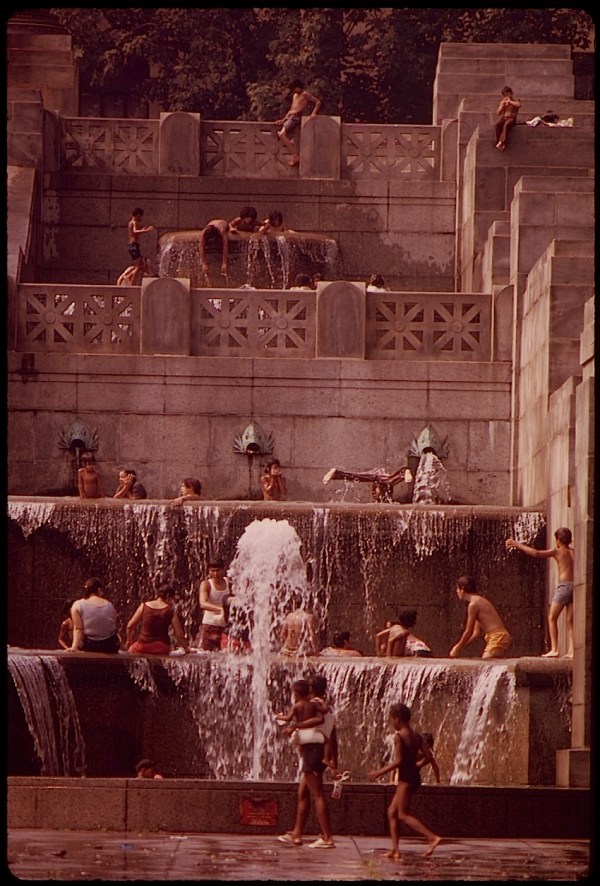


 They might want to keep an eye on what’s going on behind them.