Royal animals

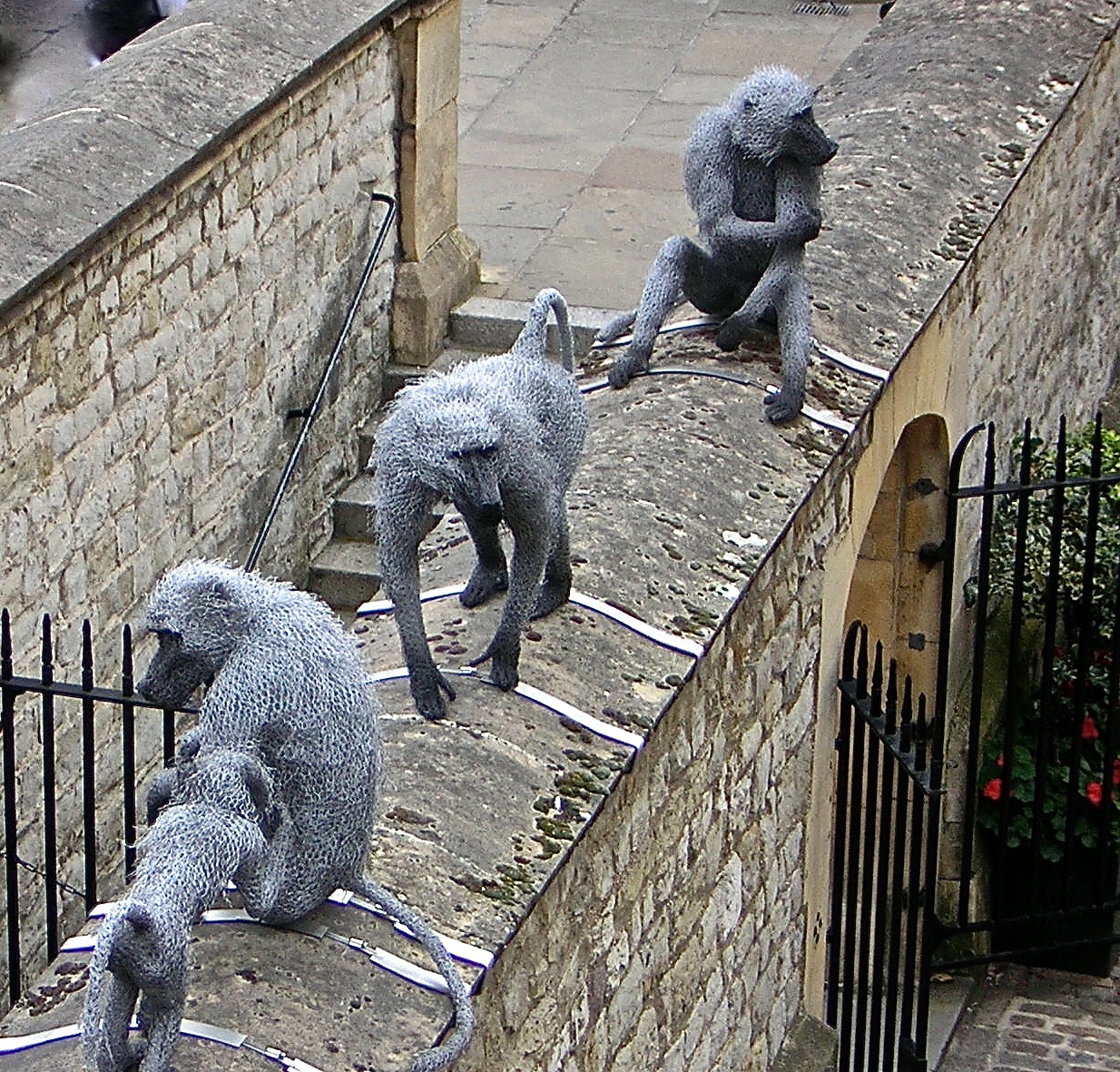
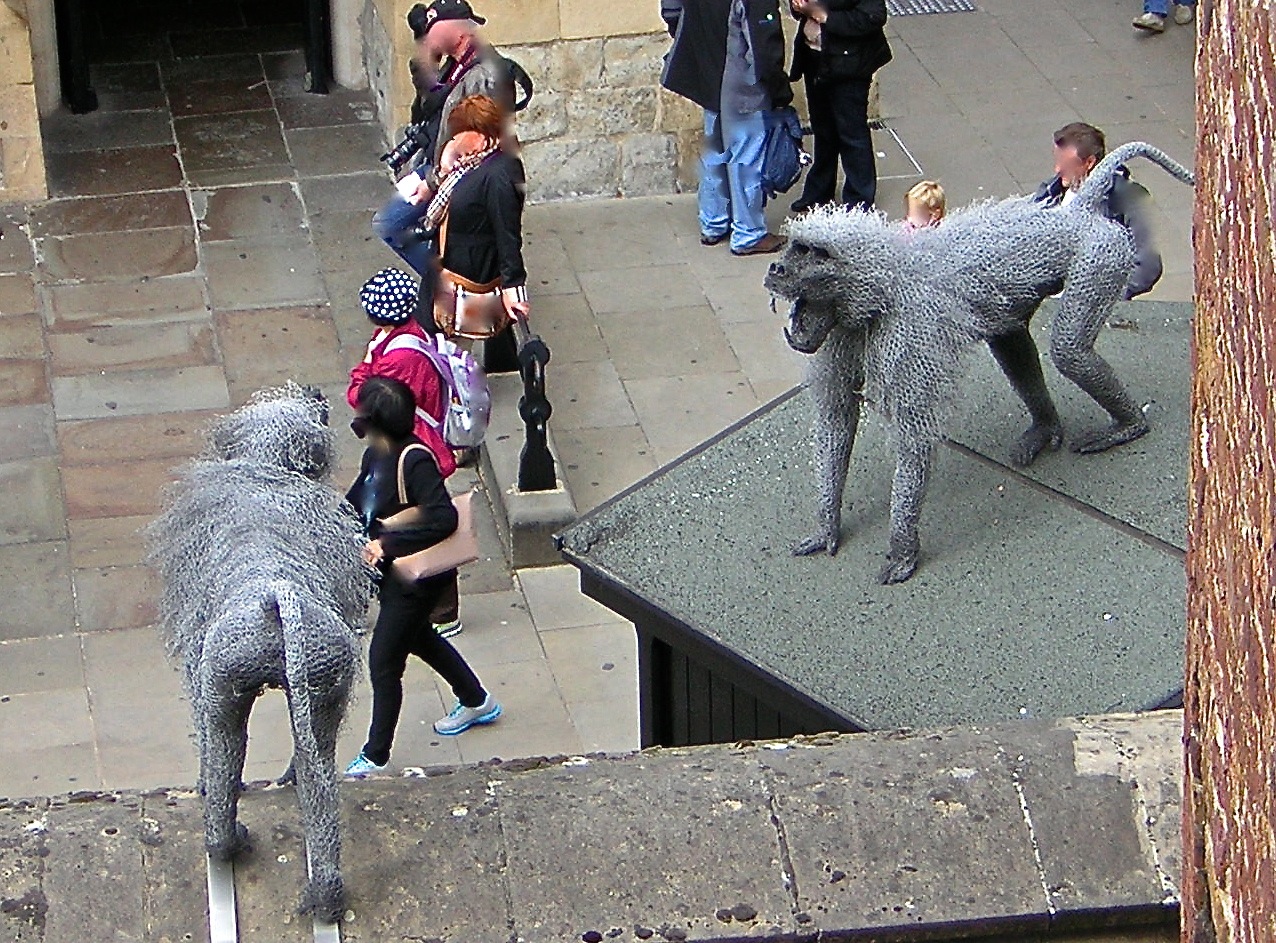
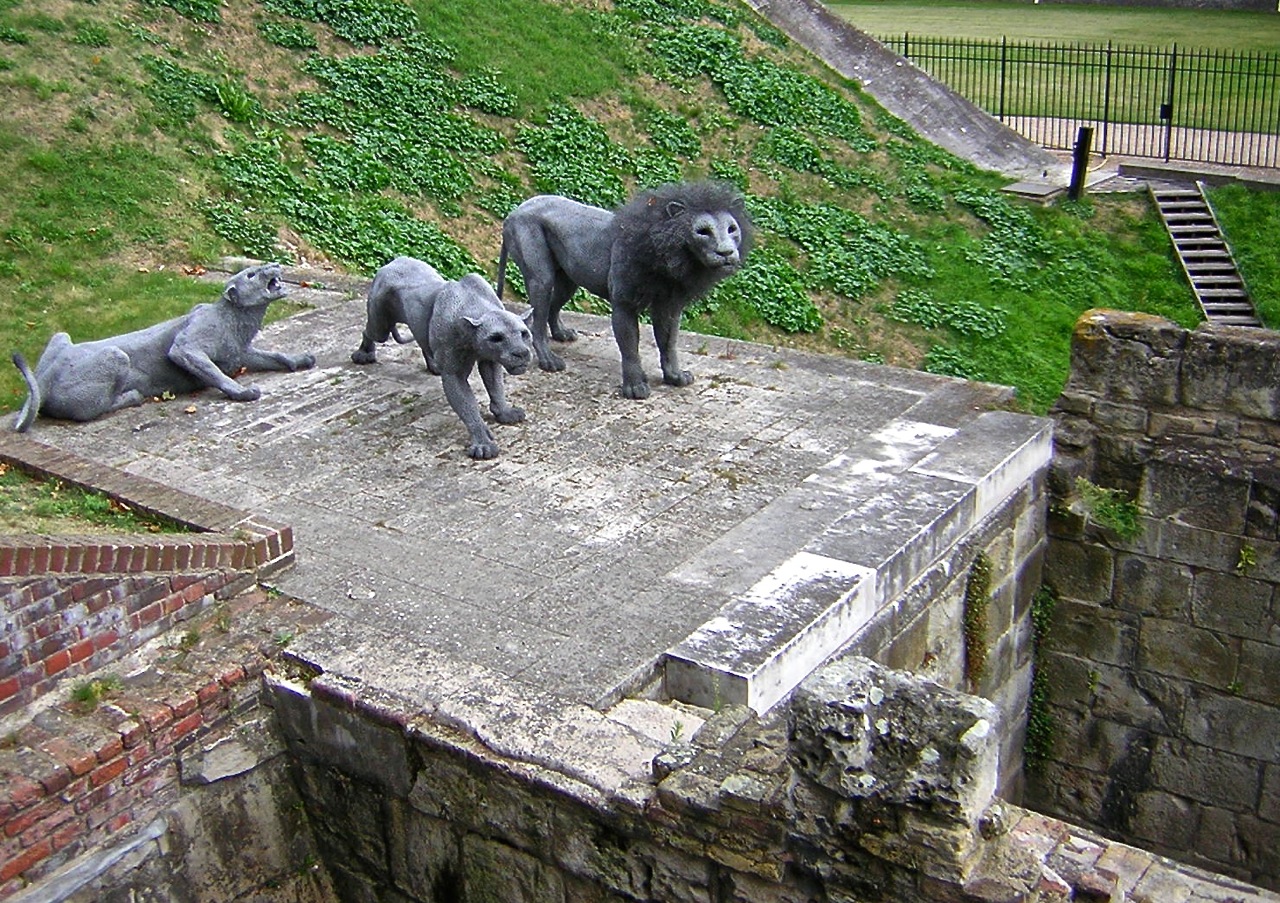
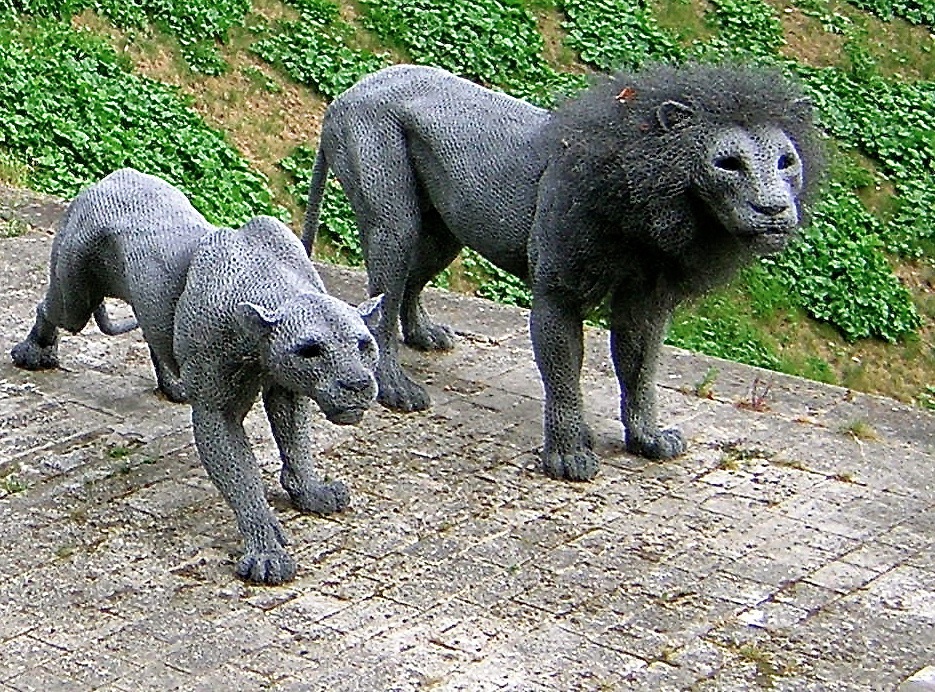
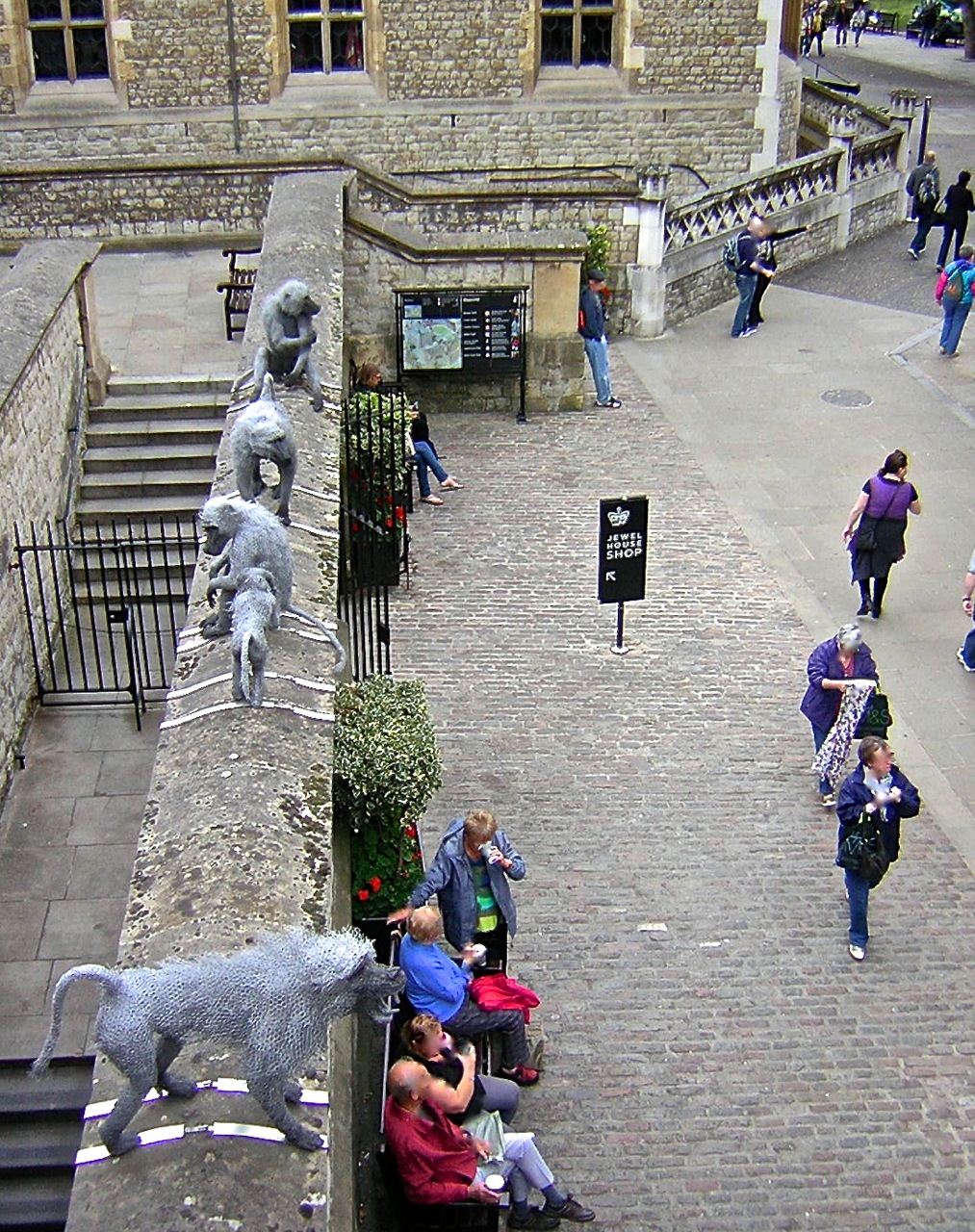
We visited the Tower of London during our September travels, and I really enjoyed these sculptures by artist Kendra Haste, representing the animals of the “Royal Menagerie,” who lived at the Tower for over 600 years.

The baboons, lions, elephant, and polar bear are remarkably life-like, especially considering that they are made out of chicken wire (with a steel armature within). Haste was commissioned to create the animals in 2010, and they were installed in 2011 as part of the Tower’s “Royal Beasts” exhibit. They will remain in place for 10 years.

There’s an interesting short video of Haste at work here.

The first animals at the Tower were lions (1210). An elephant arrived in 1255. In 1832, when attacks on visitors and staff could no longer be ignored, the animals were moved to the London Zoo.

Tavistock Square

Then one day walking round Tavistock Square I made up, as I sometimes make up my books, To the Lighthouse; in a great, apparently involuntary, rush.
— Virginia Woolf

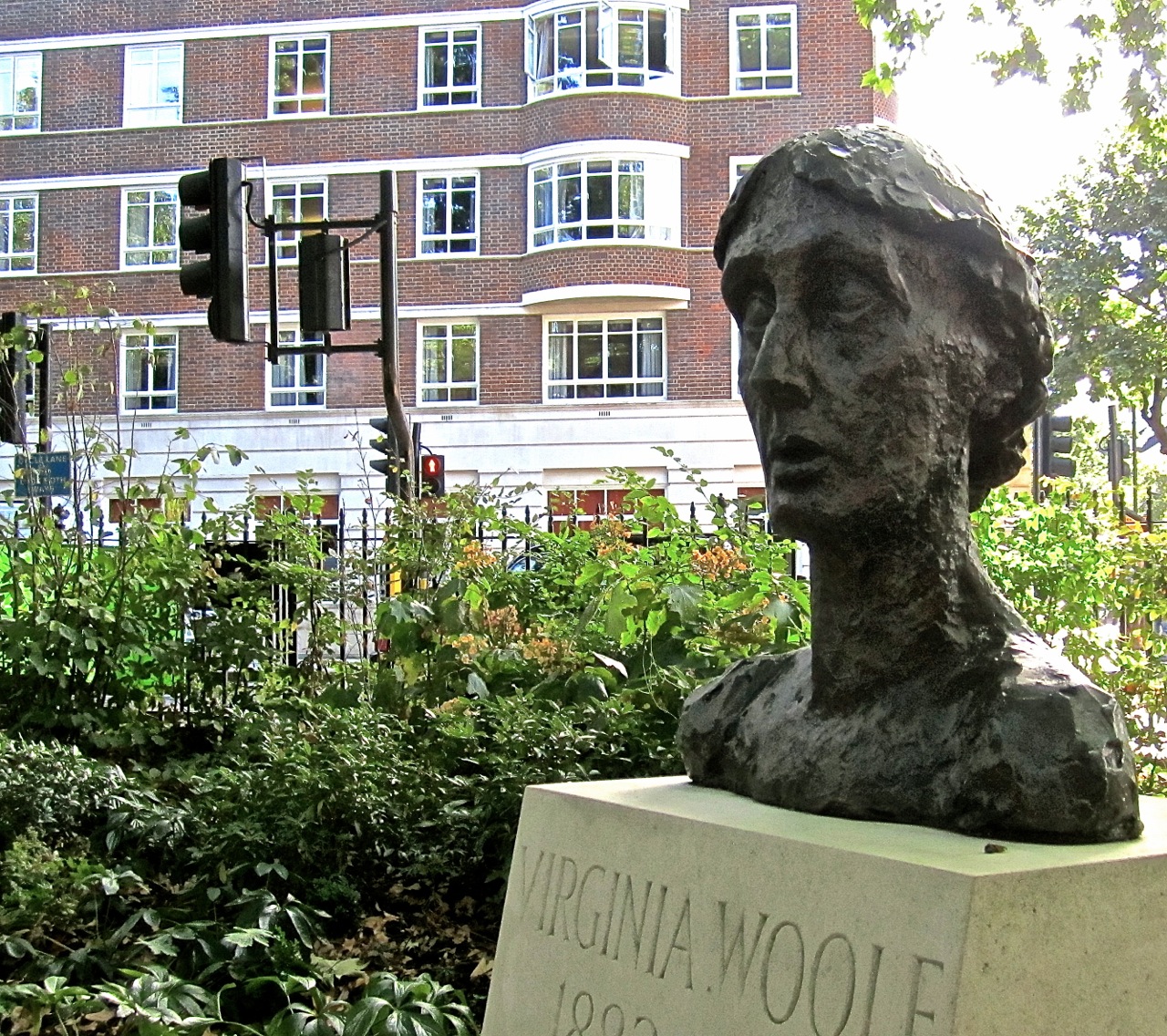
During our visit to London about a month ago, we stayed in a hotel in Bloomsbury, and on our last morning there, being a good former English major, I had to go looking for Virginia.

I found her small monument, inscribed with the above quote, in the south corner of Tavistock Square.  From 1924 to 1939, she and her husband lived in a house located on the site of the hotel that you can see behind her head in the photo above.

Leonard Woolf has his own memorial in the square: a Gingko biloba tree, planted in 2004 to mark his work as a colonial administrator in Sri Lanka.

Originally laid out about 1800, the square today is bordered by a wide path shaded by both tall and pollarded trees.  In the center of the park are flower beds and lawn, many benches, and a large sculpture.  It is conventional, but pretty, and a very nice place to stroll and think.

On the day when Virginia Woolf conceived her great book, only residents of the houses surrounding the square would have been able to enter its gates.  In an essay written during the hot summer of 1933, she approved “[t]he sensible and humane suggestion . . . that the squares should be opened … to those who would otherwise have no place to walk or sit but in the street.”

In 1940, Tavistock Square was temporarily opened to all when its iron fence was melted down for war use. (The park was officially opened to the public in the 1950s.)

The square is also associated with Charles Dickens, who lived in a house across from the north corner from 1851 to 1860. There, he wrote Bleak HouseHard TimesLittle Dorrit, and A Tale of Two Cities. The residence was demolished in 1901 and was replaced by an office building designed by Sir Edwin Lutyens. It is now the headquarters of the British Medical Association (BMA).

Lutyens also designed a large monument to Dame Louisa Aldrich-Blake, the first British woman to qualify as a surgeon, which was placed in the east corner in 1926.
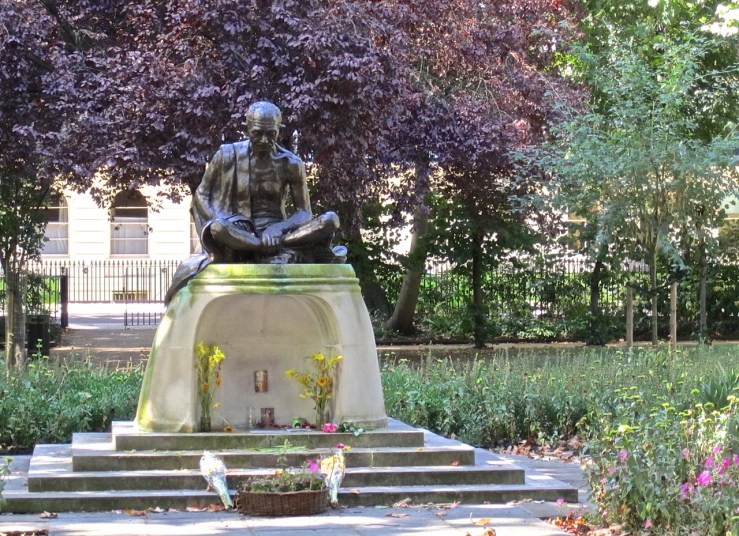
From the 1960s, Tavistock Square has been known for its various memorials to peace and non-violence, including

  • a sculpture of Mahatma Gandhi by Fredda Brilliant (shown above) (1968);
  • a cherry tree planted in memory of the victims of the nuclear bombing of Hiroshima (1967);
  • a maple tree planted by the League of Jewish Women in honor of the U.N.’s International Year of Peace (1986);
  • and the Conscientious Objectors Stone, installed by the Peace Pledge Union (1995).

Four of the park’s planting beds also honor memorial subjects  — two with plants from India and Japan, one with English shrubs for Woolf, and one with medicinal plants for Aldrich-Blake.

Several years ago, another memorial was added to the square, in the form of a small plaque affixed to the current iron fence. It marks the section of street in front of the BMA where the last of the four July 7, 2005, suicide bombers blew up the Number 30 double-decker city bus and killed thirteen of the fifty-two commuters who died that day.

Gordon Square

Most of the social and intellectual activity that we associate with the Bloomsbury Group took place about a block west of Tavistock Square in a row of houses on Gordon Square.
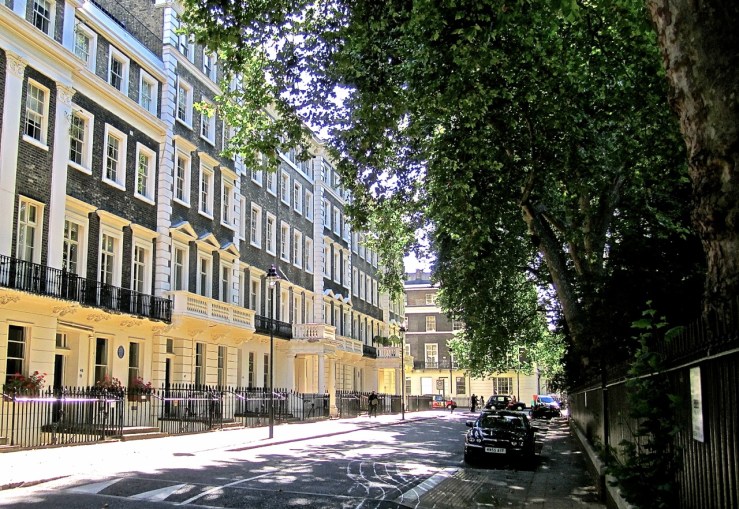
From 1904 to 1907, Virginia and Vanessa Stevens (later Woolf and Bell) lived in #46 Gordon Square with their brothers, Thoby and Adrian. The siblings held regular ‘at homes’ on Thursday and Friday evenings with such guests as Lytton Strachey, George Bernard Shaw, Maynard Keynes, E.M. Forester, Clive Bell, Duncan Grant, Roger Fry, and John Nash. (After their marriage, Vanessa and Bell took over the house from 1907 to 1916.)

From 1920 to 1925, Vanessa lived at #50 with her children and then at #39 with both her husband and lover Duncan Grant.  Strachey and other members of his family lived at #51 from 1919 to 1956.

In the photo above, #46 is the first house on the left side (with the oval plaque), four doors down is #50 and then #51.

Vintage landscape: tobacco flower

“George Barbee, 13 years old topping. . . . Nicholas County, Kentucky” by Lewis Hine, August 1916, via the Library of Congress Prints and Photographs Division.

Tobacco plants have to be topped and suckered in order to produce good leaves for market.   The flowers of Nicotiana tabacum are pink.

Photo by Donald Lee Pardue, via flickr.  

A short documentary about traditional tobacco growing methods is here.

Vintage landscape: Central Park

“View from apartment 9D, 146 Central Park West, in the rain, New York City, 1946 July 9.” By Carl Van Vechten, via Library of Congress Prints and Photographs Division.

Don’t threaten me with love, baby. Let’s just go walking in the rain.
— Billie Holiday

Central Park: An Anthology by Andrew Blauner was published this April. Read the New York Times review here.

Vintage landscape: 1890s Paris in photochroms

Among the many treasures of the Library of Congress’s online catalogue are several thousand digital images of antique photochrom prints.

The prints were colored images made from black-and-white photographic negatives transferred onto lithographic printing plates.  The process was invented at a Swiss printing company in the 1880s.  By the mid 1890s, it had been licensed it to many other companies, including the American Detroit Publishing Company, which had exclusive rights in the U.S.

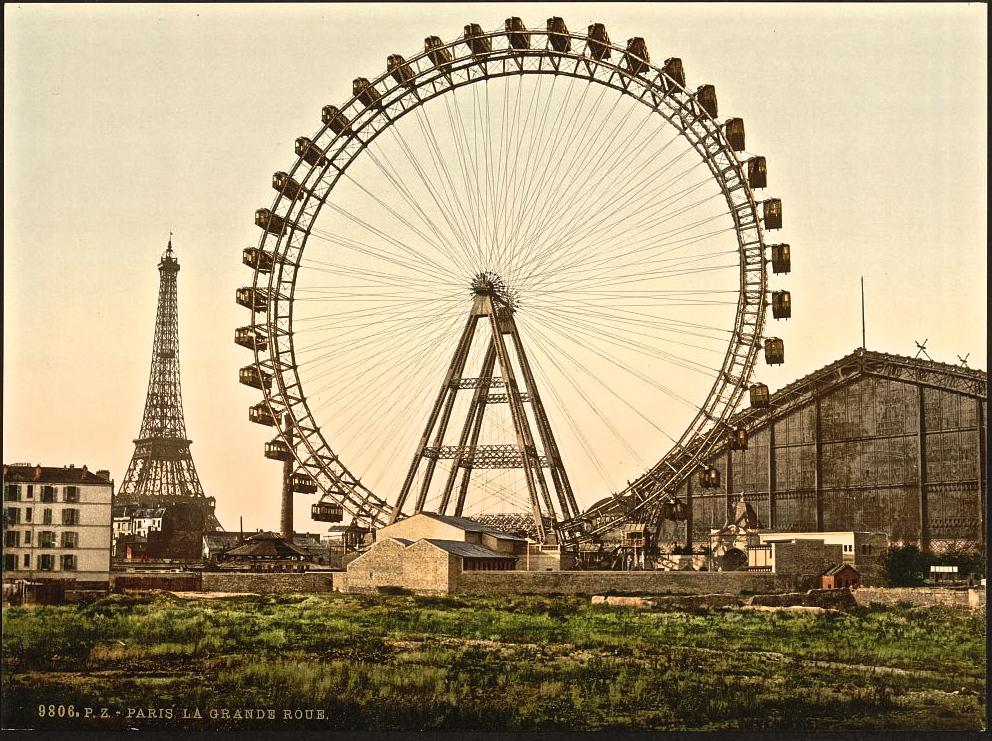
A ferris wheel (la grande roue) in Paris, near the Eiffel Tower, ca. 1890-1900.

In 1898, Congress passed an act allowing private publishers to print postcards that could be mailed for only a penny each — half the rate of a letter.  Millions of photochrom postcards were purchased — and often collected in albums or framed — in the first two decades of the nineteenth century.

Wikipedia describes the process:

A tablet of lithographic limestone, known as a “litho stone,” is coated with a light-sensitive coating, comprising a thin layer of purified bitumen dissolved in benzene. A reversed half-tone negative is then pressed against the coating and exposed to daylight for a period of 10 to 30 minutes in summer, up to several hours in winter. The image on the negative allows varying amounts of light to fall on different areas of the coating, causing the bitumen to harden and become resistant to normal solvents in proportion to the amount of light that falls on it. The coating is then washed in turpentine solutions to remove the unhardened bitumen and retouched in the tonal scale of the chosen color to strengthen or soften the tones as required. Each tint is applied using a separate stone bearing the appropriate retouched image. The finished print is produced using at least six, but more commonly from 10 to 15, tint stones.

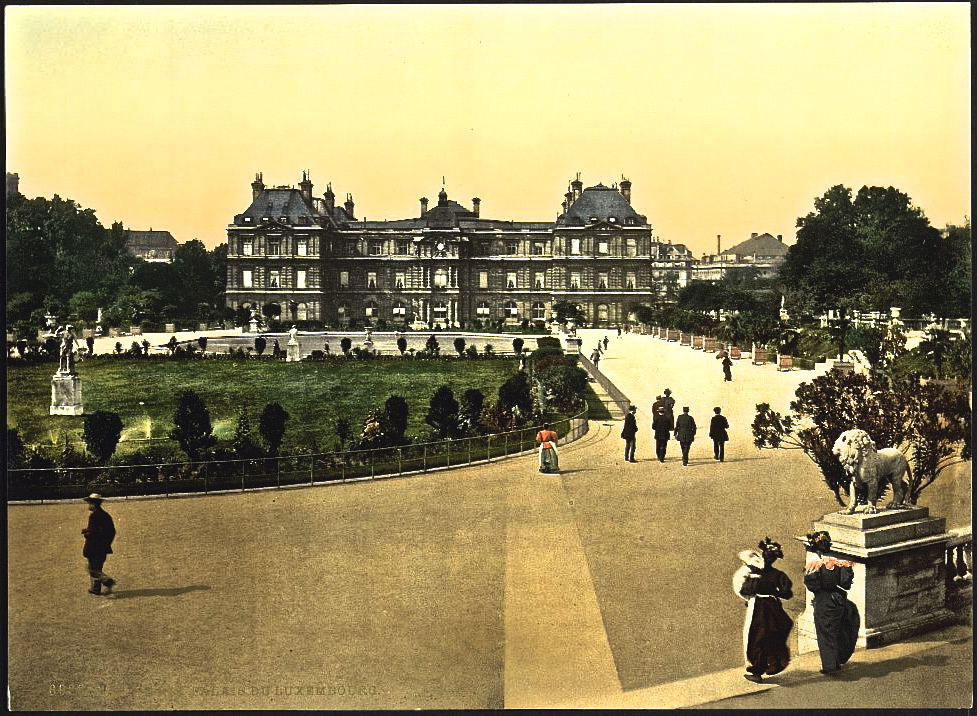
The Luxembourg Garden.

Often the printer was provided with notes about realistic colors, but sometimes he had to work from his imagination alone.  However, Detroit Publishing’s catalog said that its photochrom prints joined “the truthfulness of a photograph with the color and richness of an oil painting or the delicate tinting of the most exquisite water color.”

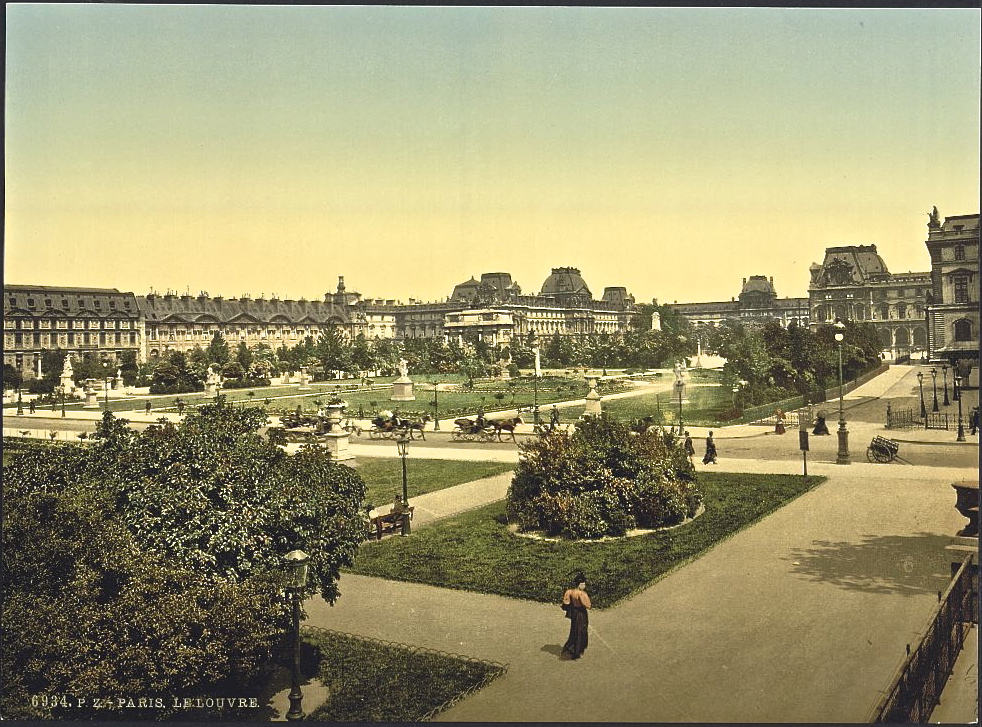
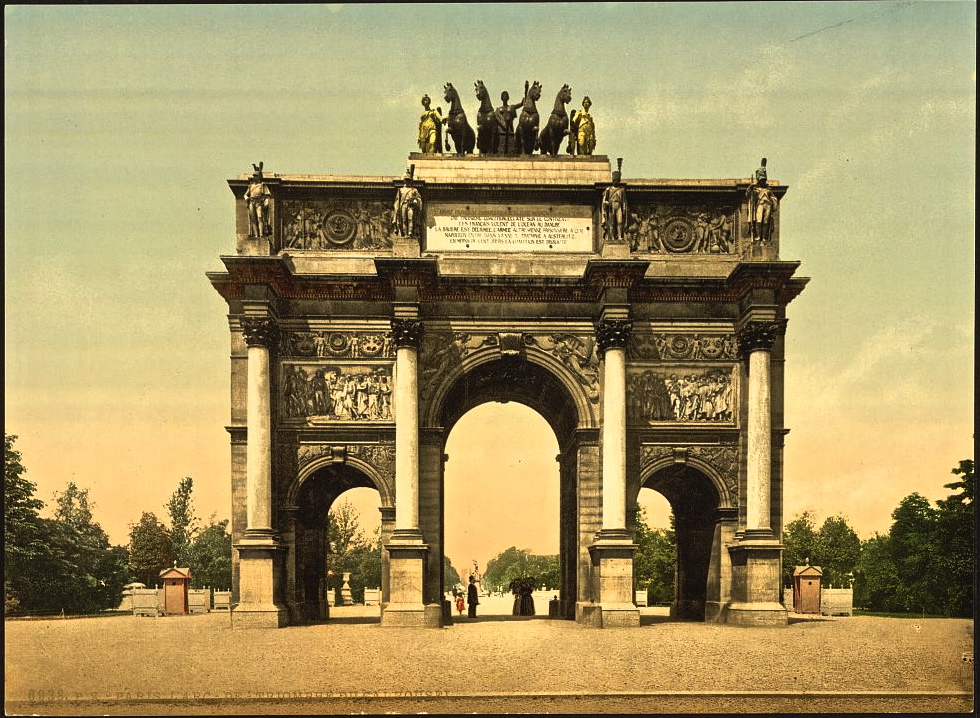
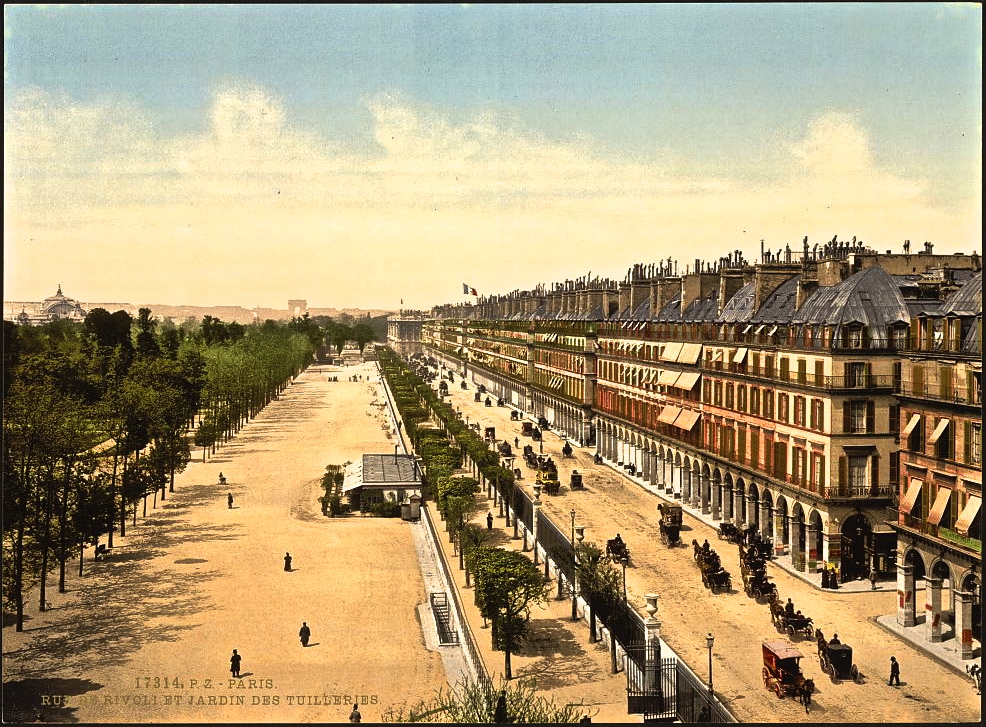
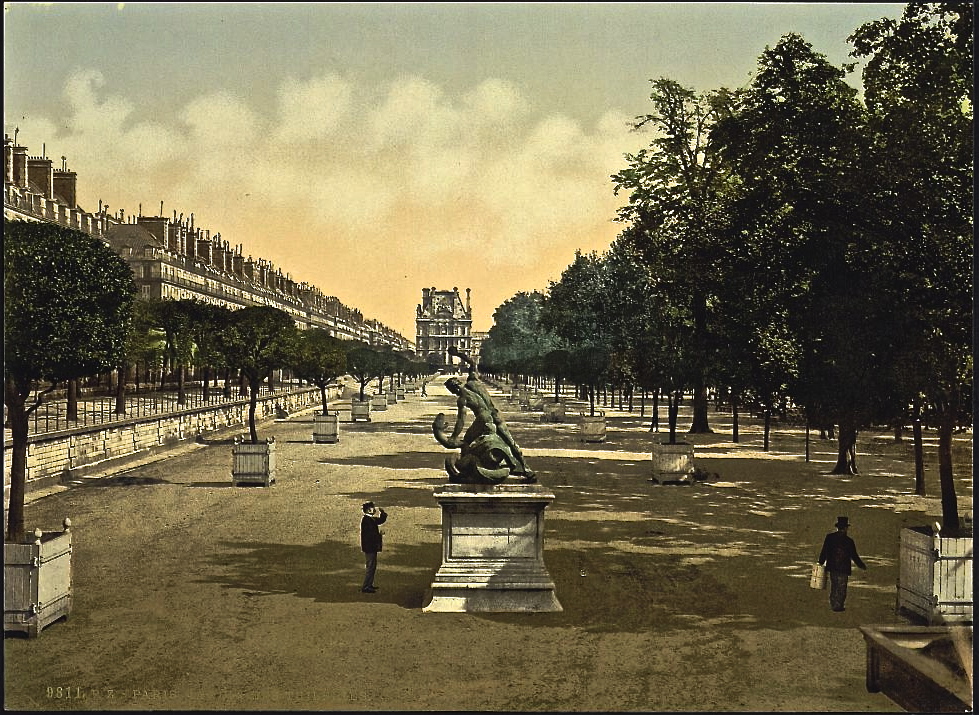
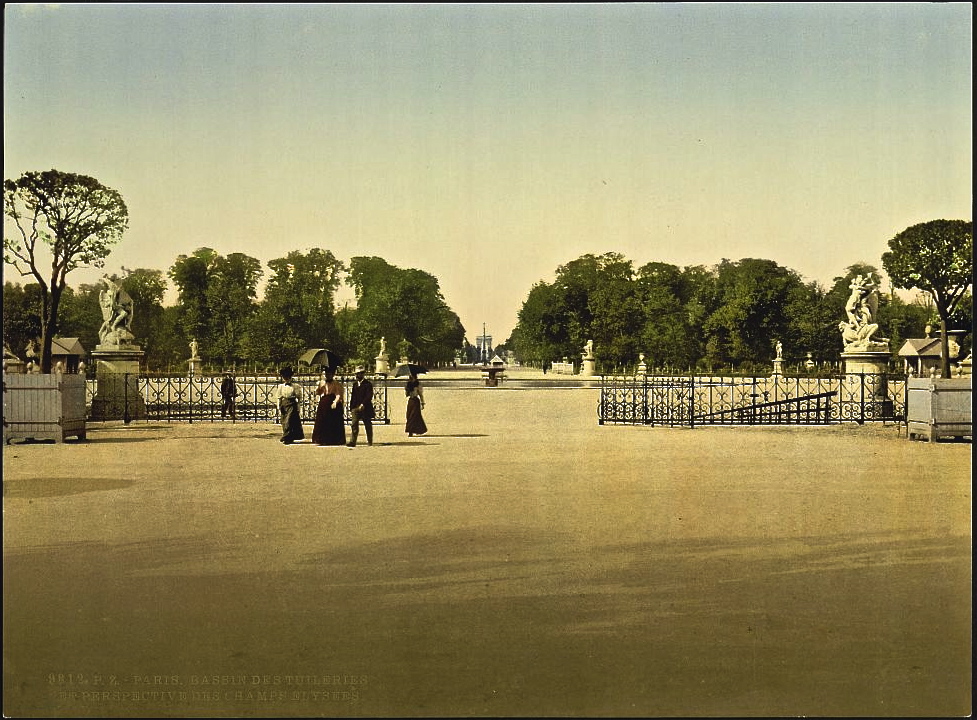
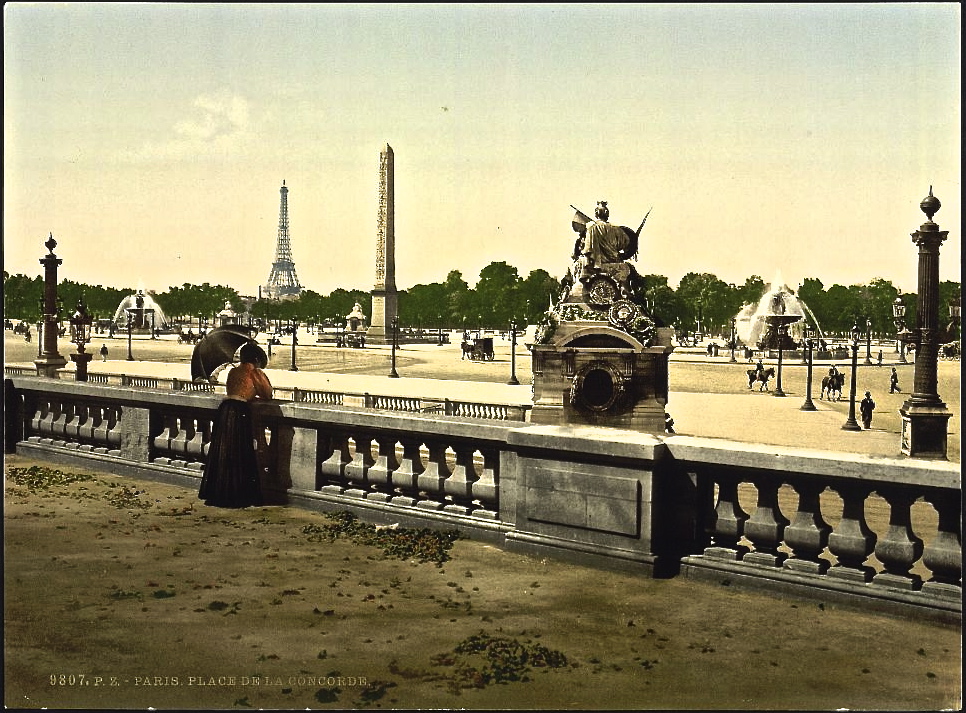
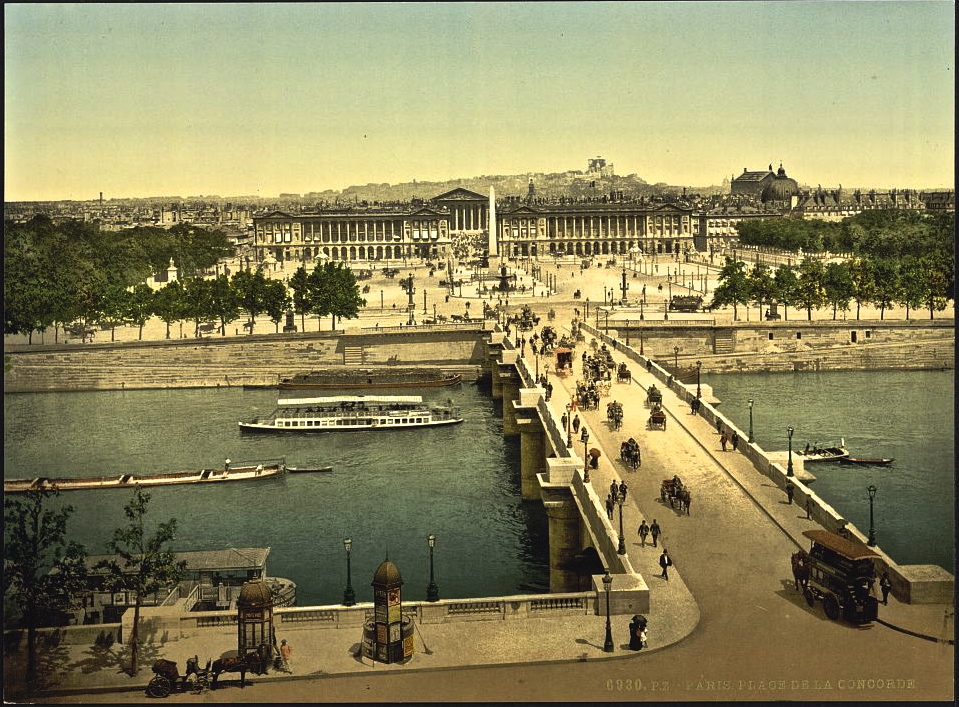
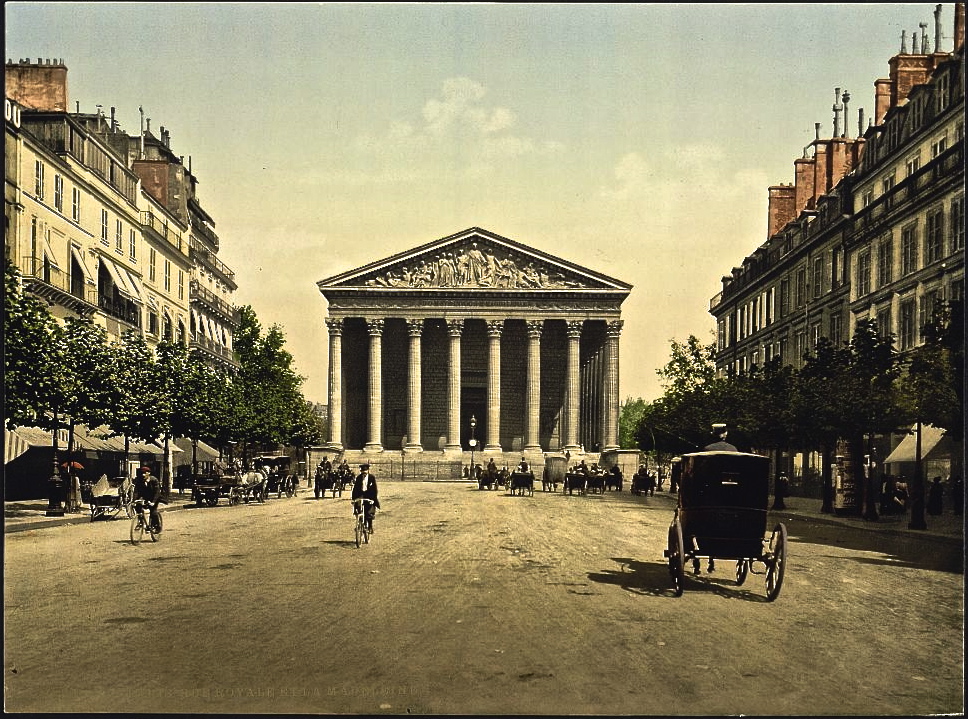
In these images of Belle Epoque Paris, the printer used ivory, pink, and apricot for the buildings and ground, quiet blues and greens for water and sky, and put a buttery light at the horizons.  The tints soften and still the monumental spaces on this walk from the Louvre to the Arc de Triomphe at L’Etoile.

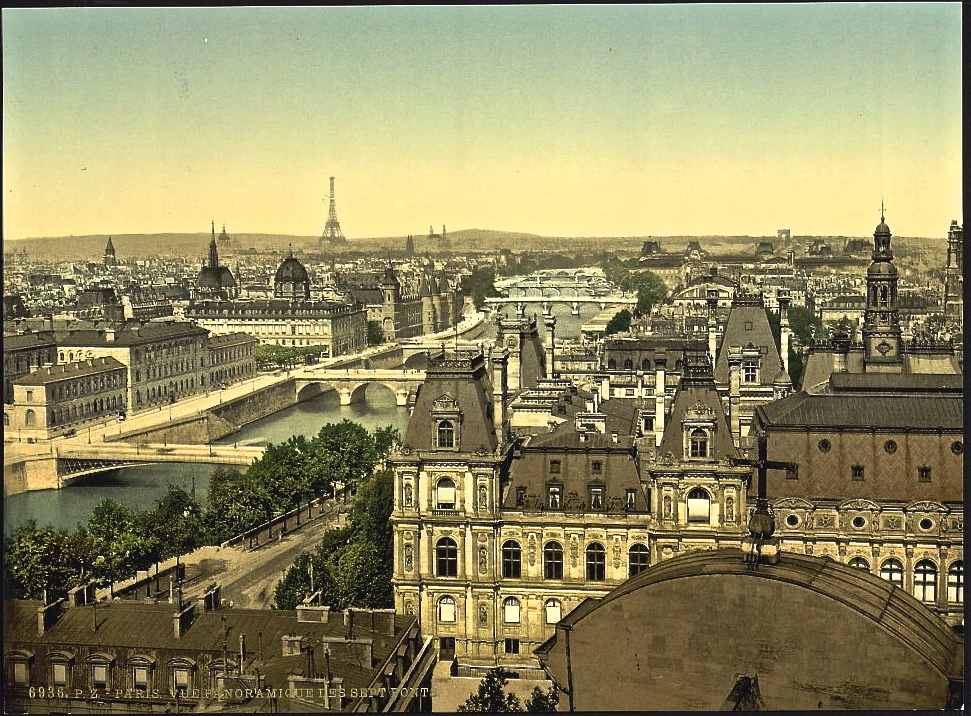
A panorama of the seven bridges over the Seine River. The Eiffel Tower in the distance was built in 1889.

(All photos were taken by the Detroit Publishing Company, ca. 1890-1900; all via the Library of Congress Prints and Photographs Division. To scroll through the images in full size, click on ‘Continue reading’ below and then on any of the thumbnails in the gallery.)

The Louvre.

The Carrousel. This arch was built in 1805 to celebrate Napoleon’s victories.

Rue de Rivoli. The arcades and shops along the street were built between the early 18th century and the 1850s.

The Tuileries Garden.  Its name came from the tile makers (tuileries) who were removed  from the site on Catherine de Medicis’s orders so that she could build a (later-destroyed) palace and grounds.   The palace garden was redesigned in the 17th century by André Le Nôtre for Louis XIV.

The Tuileries Garden.

Place de la Concorde.  During the revolution, the guillotine was placed here and took over a thousand lives. Later, the space was named la Concorde in a gesture of reconciliation. Since 1833, its central feature has been the 3,200-year-old obelisk from Luxor, Egypt.

Place de la Concorde and Pont (bridge) de la Concorde.

Rue Royale and Place de la Madeleine. This church is dedicated to Mary Magdalene. Its construction began in 1764, but it was not consecrated until 1845.

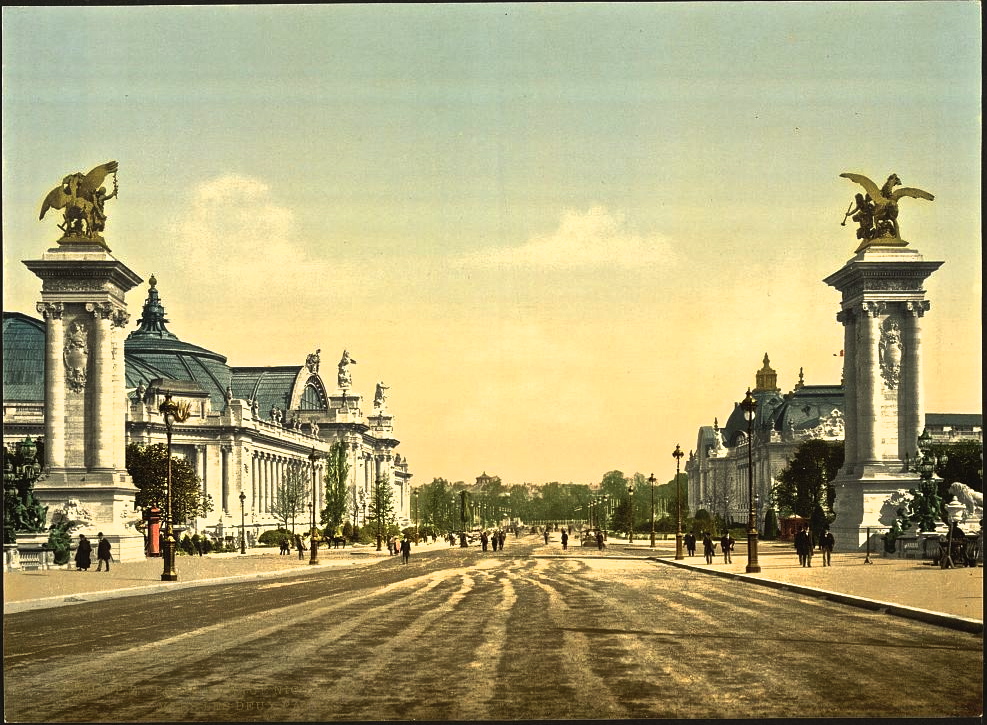
Ave. Napoleon III (now Ave. Winston Churchill) and the Grand Palais (left) and Petit Palais (right). The two display halls were built between 1896 and 1900 for the Universal Exhibition of 1900.

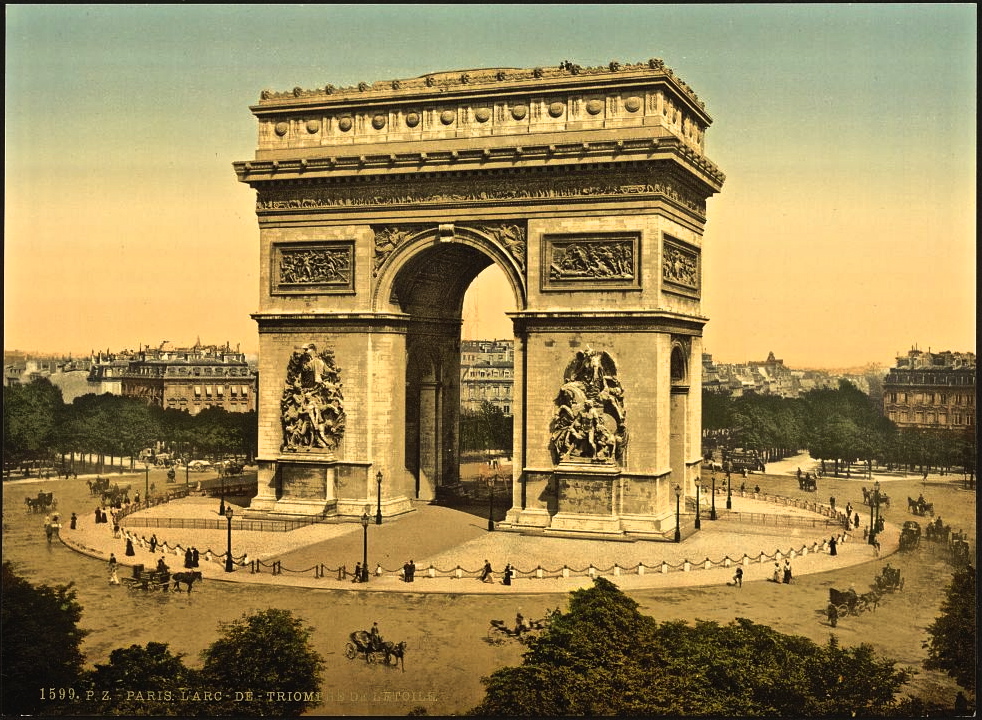
The Arc de Triomphe. The first stone of the arch was laid in 1806, but it was only completed in 1836 and dedicated to the French army.

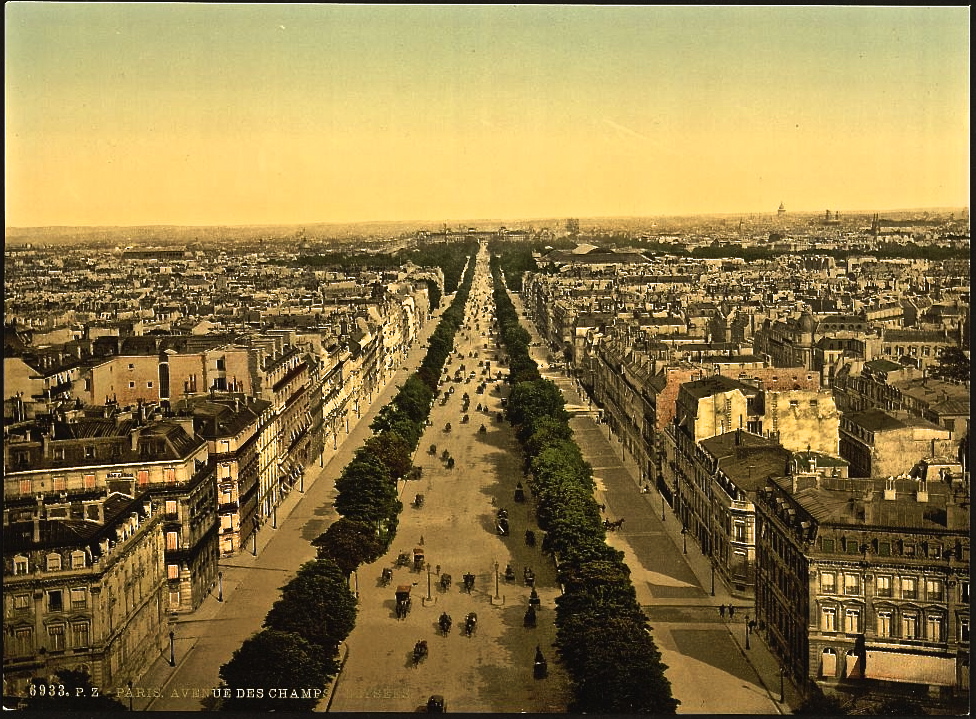
Avenue Champs Elysees, looking back toward the Tuileries Garden and the Louvre. The tree-lined boulevard was originally designed about 1667 by André Le Nôtre to extend the view from the Tuileries.