Staghorn ferns ornament the narrow porch of the Lands and Works Office, Brisbane, Queensland, 1904, photographer unidentified, via State Library of Queensland.
“Sitting on the Porch,” a postcard from ca. 1900, location and photographer unknown, via Miami University Libraries Commons on flickr.
(Click on the photo for a better look.)
The Bowden Postcard Collection of Miami University in Oxford, Ohio, holds over 480,000 postcards from nearly everywhere in the early 20th century world.
This image is not very seasonal, I must admit. Here in Stuttgart, we woke up this morning to a light covering of snow.
Children picking up our bones
Will never know that these were once
As quick as foxes on the hill. . .
And least will guess that with our bones
We left much more, left what still is
The look of things, left what we felt
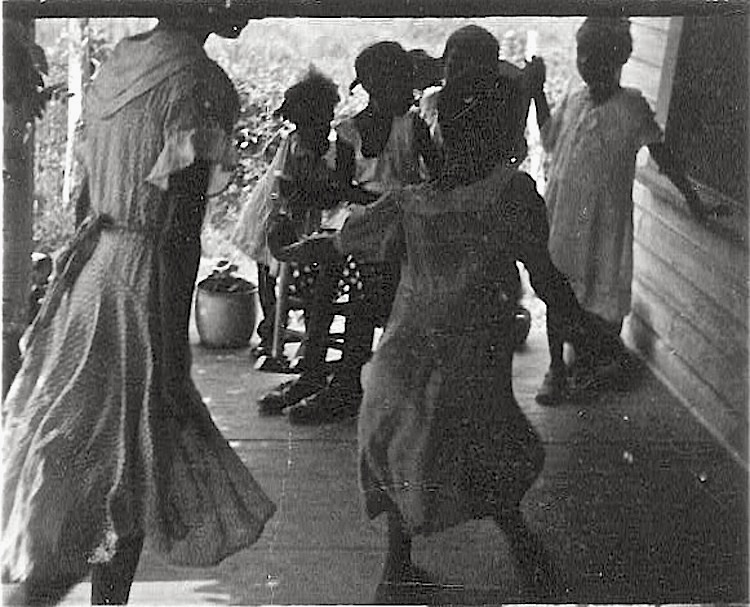
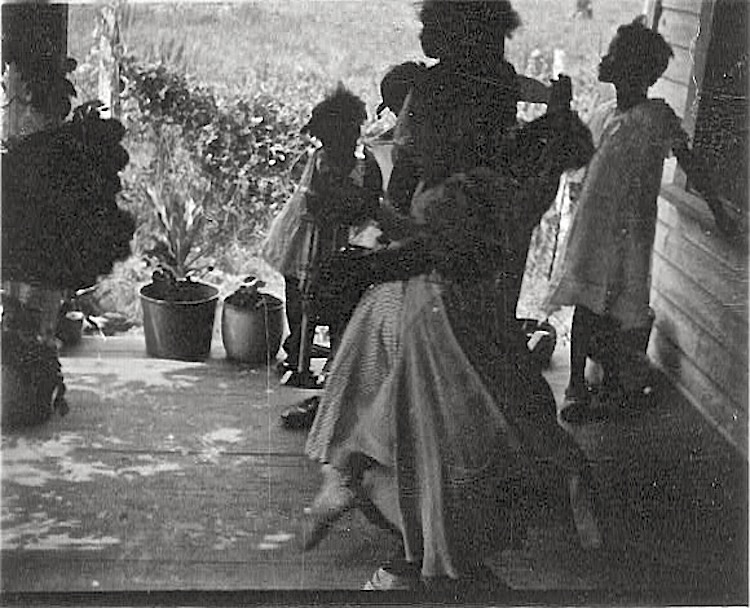
“Women and children on a porch,” in Georgia, Florida, or the Bahamas, 1935, from the Lomax Collection in the Library of Congress.
The snapshot photographs of the Collection document the expeditions by John Avery Lomax, Ruby Terrill Lomax, and Alan Lomax — in the 1930s and 40s — to record and preserve the folk music and folklore of the southern United States and the Bahamas for the Library of Congress.
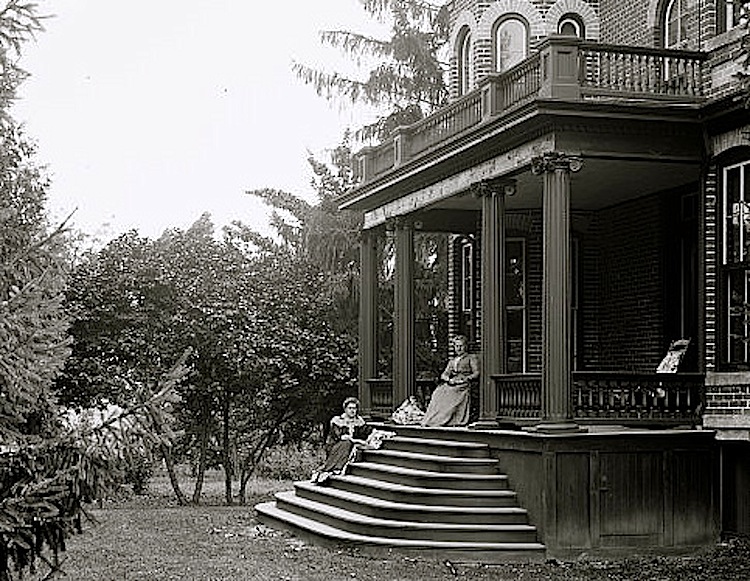
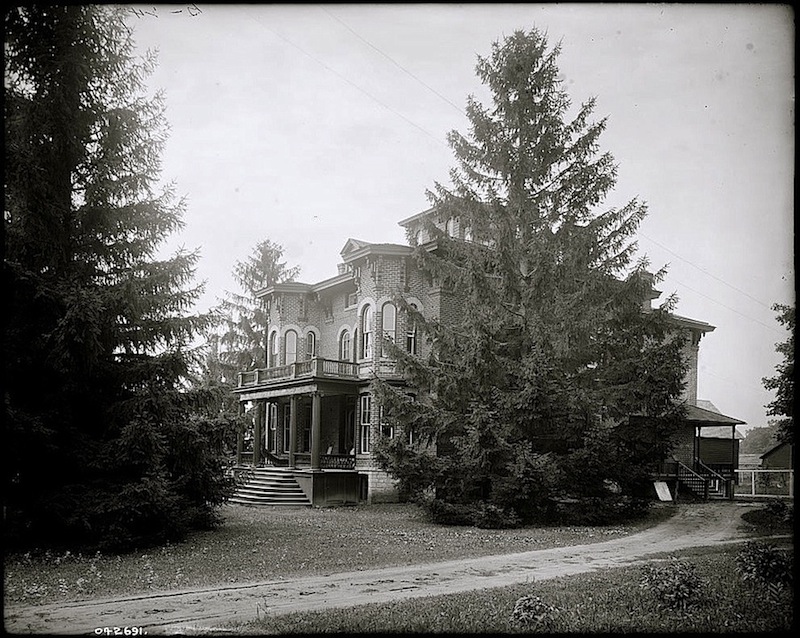
This was the front porch of “The Firs” in New Baltimore, Michigan, between 1901 and 1910.* At that time, it was a summer boarding house.
Detail.
Although the ladies above look calm enough, throughout the 20th century — and up until the house was torn down in 2005 — many residents, visitors, and trespassers reported weird phenomena there.
Lights flickered, dishes flew off the table, strange voices were heard, and invisible fingers stroked girls’ hair. Ghostly figures were sometimes seen — particularly those of a young woman, an older man, and a child playing in the yard — or so ’twas said.
The residence was first known as Hatheway House, for Gilbert Hatheway, a businessman who built it about 1860.
When he died in 1871, the house went to his son, James S. H. P. Hatheway. James had one daughter, Mabel, who died in March of 1881.
Mabel was only twenty at the time of her demise and had married a man from another town just three months earlier. Local legend has her being killed from a fall down the Hatheway House stairs.
One account of the alleged incident notes that her father, irritable from chronic pain, was also unhappy with her choice of husband; another brings up an older cousin with anger management issues. In at least one version of Mabel’s slight history, she is mentally ill.
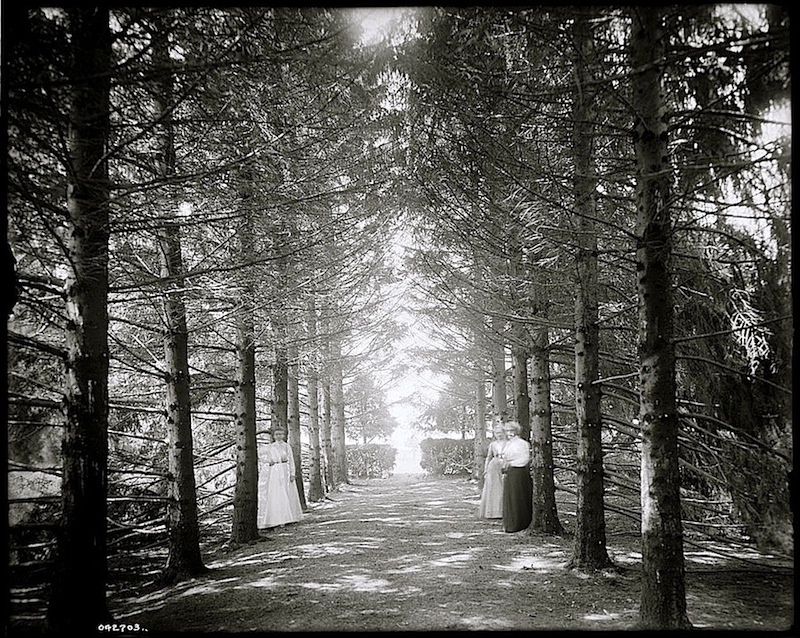
A slightly spooky allée in front of the porch.
In the late 1800s, the Hatheway family moved out of the house, and it became The Firs.
About the same time, or perhaps later during the WWI years, the west side of the building was turned into a small hospital, run by Dr. Virginia French. It was never a home for the insane, although that was the creepier story often passed down.
I haven’t been able to find out what happened to the property later in the 20th century, except that it seems to have been empty by the late 1990s, if not well before — perhaps because of its reputation as a haunted house.
Naturally, teenagers found it a fun place to explore at night and vandalize. In August 2005, much to the neighbors’ relief by one account, the house was demolished. However, there continue to be reports of strange lights and noises in the ruins of the basement.
A fairly cheerful side garden.
You can scroll through more (and larger) images of The Firs by clicking on ‘Continue reading’ below and then on any thumbnail in the gallery.
*Photos by Detroit Publishing Co., via Library of Congress Prints and Photographs Division.
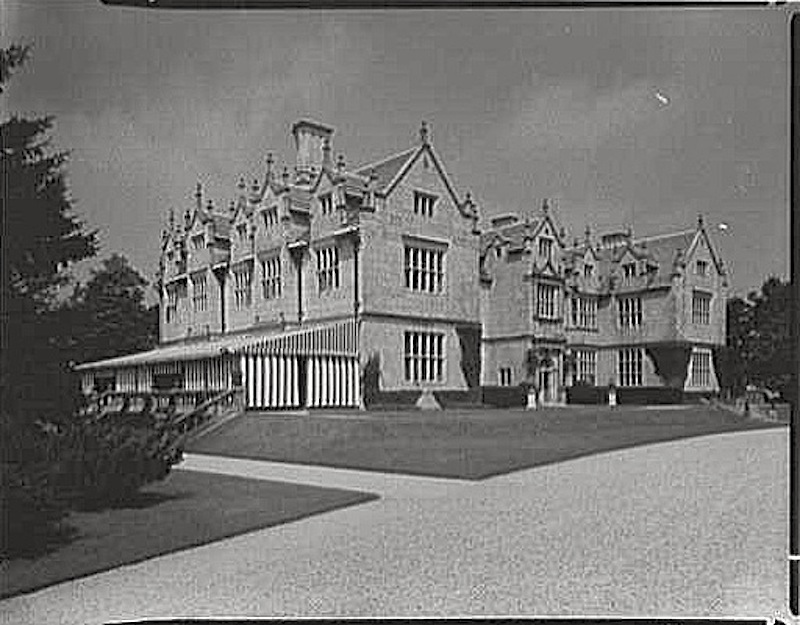
Porch at the residence of Margaret Brugiere, Wakehurst, in Newport, Rhode Island, August 6, 1958, by Gottscho-Schleisner, Inc., via Library of Congress Prints and Photographs Division.
Margaret, or “Daisy,” Brugiere was Van Alen’s daughter-in-law (widowed and remarried), and she kept the place going in a high style until her death in 1969.
At some point, the family must have wanted the comforts of an American porch and created one with awning. Its interior style seems inspired by Naples — both the city in Italy and the one in Florida.
The property exists today as the student center for Salve Regina University.

 Staghorn ferns ornament the narrow porch of the Lands and Works Office, Brisbane, Queensland, 1904, photographer unidentified, via State Library of Queensland.



 enclos*ure