The Sunday porch: the Jones

crj00 006Calvert Richard Jones (on the right), with six women, a man, boy, girl and dog, standing and sitting in a colonnaded porch way,” probably Swansea, Wales, ca. 1860, via National Library of Wales Commons on flickr.

Jones was a member of Swansea’s wealthly, landowning elite.  He studied mathematics at Oxford and was ordained as an Anglican priest, but spent much of his time traveling and painting. Like many men and women of his class in the Swansea area from the 1840s to the early 1860s, he was a photography enthusiast. In 1841, he took a daguerreotype that is now the earliest accurately dated photograph in Wales.

The photo may include Mrs. Jones (Portia Smith) and one or more of their three daughters.
Vintage landscape: hollyhocks

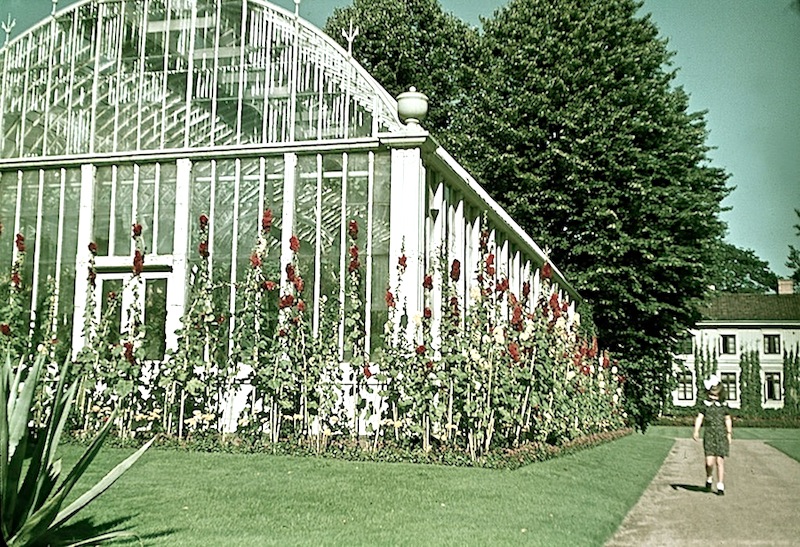
hollyhocks,1943, Swedish Heritage BoardGreenhouse in the park of Trädgårdsföreningen, The Garden Society of Gothenburg, Sweden, 1943, by Fredrik Bruno, via Swedish National Heritage Board Commons on flickr.

The Sunday porch: Danville, Virginia

Danville, Virginia farmhouse, 1935, Library of CongressFarmhouse on Michaux Plantation, Danville area, Virginia, 1935, by Frances Benjamin Johnston, via Library of Congress Prints and Photographs Division. (There are two more views here.)

I could not find out when this simple house* was built or if it still exists. It is somewhat similar to this house in the same area, which Johnston’s notes say was built between 1776 and 1850.

Michaux was one of eleven plantations in southern Virginia owned by the Hairston family, one of the largest slaveholders in the South. Its name probably indicates that the land was also once owned by a member (this one?) of the local branch of the Michaux family.

This is the kingdom that you find
When the brave eye-holes stare
impartially against the air. . .

Joy Davidman, from “Stark Lines-Resurrection”


*It reminds me of the old house or schoolhouse quilt block pattern.

The Sunday porch: conditori

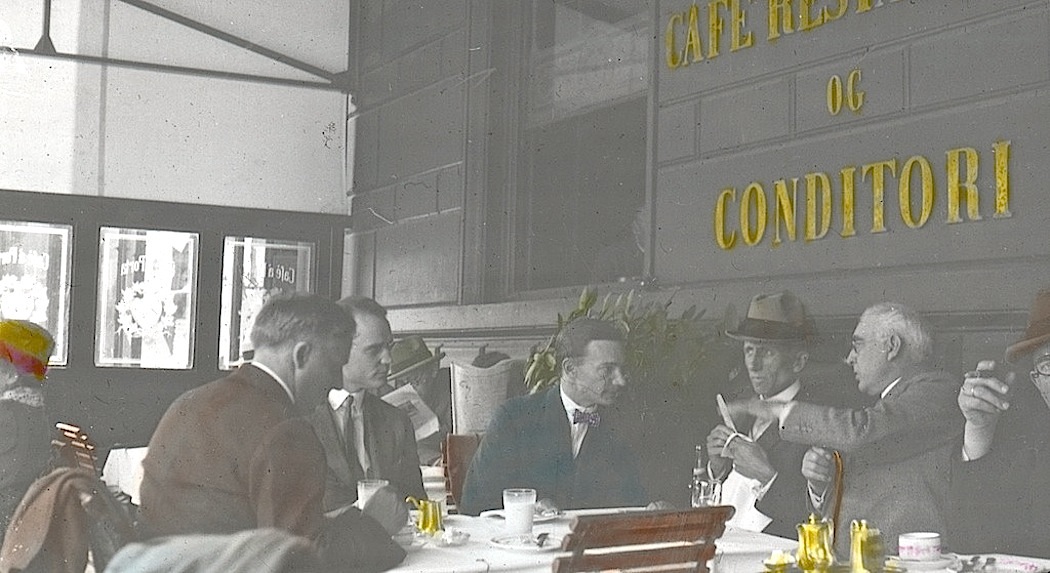
Copenhagen cafe, OSU on flickr“Outdoor Restaurant,” Copenhagen, ca. 1915, via Oregon State University Special Collections & Archives on flickr. The image is from a collection of lantern slides of the “Visual Instruction Department.”

The accompanying bit of the class lecture observed that “[European] eating places have less of the haste and nervous tension which characterize cafeterias and cafes in American cities. In Copenhagen it is common for tables to be set out under an awning on the broad sidewalk. Here folk can eat leisurely and watch the happenings in the neighborhood.”

In the lettering above the tables, “og Conditori” means “and cake/pastry shop.” There’s another cake shop with nice outdoor seating (in Sweden) here.

I used to mock my father and his chums
for getting up early on Sunday morning
and drinking coffee at a local spot
but now I’m one of those chumps.

Edward Hirsch, from “Early Sunday Morning

Life in gardens: bay trees

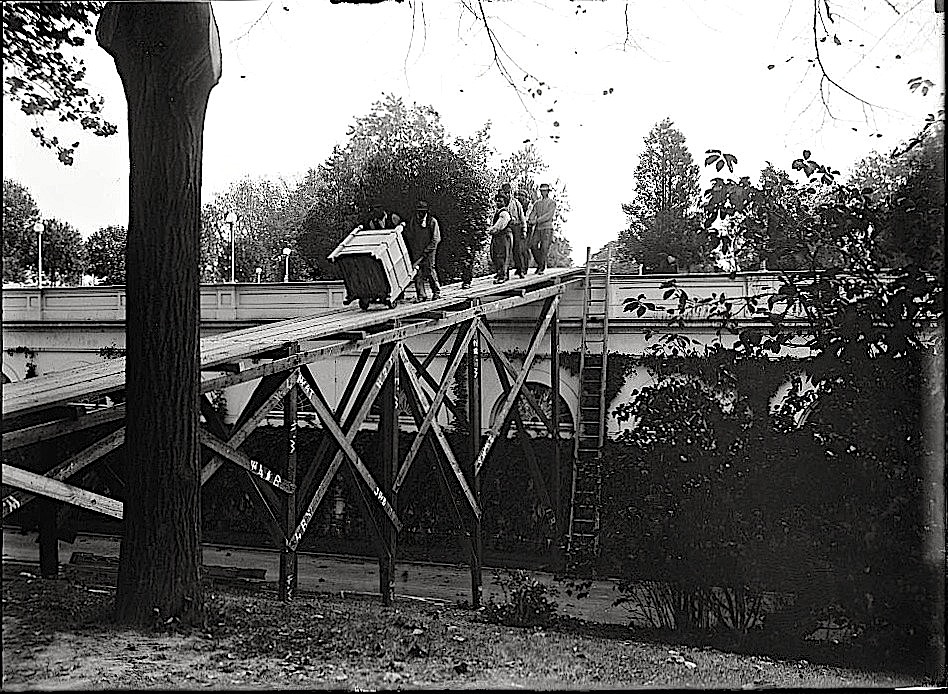
Placing bay trees at White House, Library of CongressPlacing potted bay trees on the east wing terrace, White House, Washington, D.C., between 1910 and 1917, by Harris & Ewing, via Library of Congress Prints and Photographs Division (both photos).

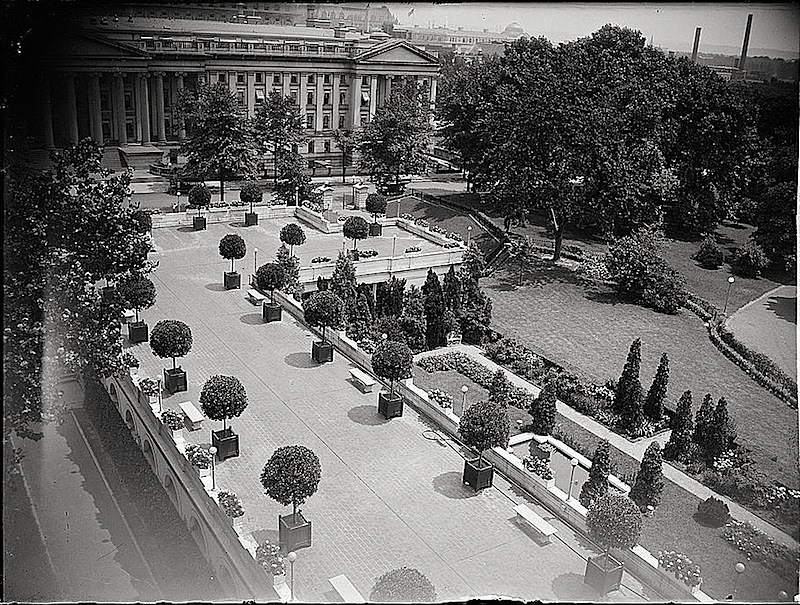
East Terrace, White House, c. 1923, Library of CongressEast terrace, White House, 1923, by National Photo Company.