Steel and fog, Geneva

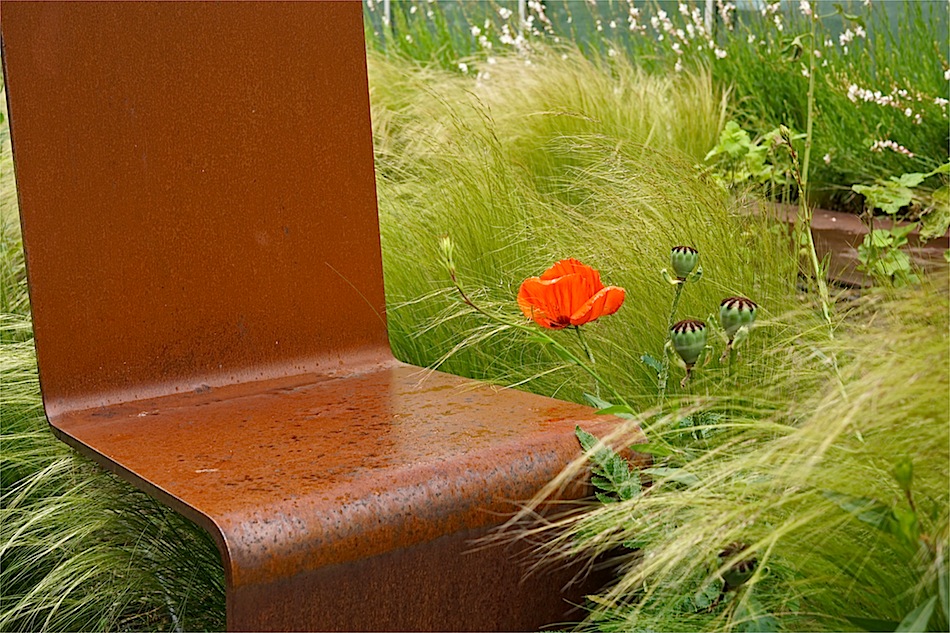
chair 2, Route de Chene wall, June 2016, by enclos*ure
While we were in Geneva last week, I was able to go see “Floor Works,” a garden designed by Agence TER* for the developers Sociéte Privée de Gérance (SPG). Built in 2005, it surrounds an office building† but is open to the public.

The garden was one of two finalists for the European Garden Award in 2013 — in the category of “Innovative Contemporary Concept or Design of a Park or Garden.” (The winner that year was Queen Elizabeth Olympic Park in London.)

This slideshow requires JavaScript.

The name “Floor Works” refers to the garden’s parallel lines of red COR-TEN steel and grey slate paving, alternating with long narrow planting beds. Some of the steel lines appear to rise up and fold into chairs and benches. On the building’s west side, the paving pattern also goes up and over the top of the parking garage entrance. About 40 tall bent steel posts are interspersed throughout the area as well. 

“The word ‘work’ simultaneously expresses the work (le travail) and [art]work (l’oeuvre); ‘floor,’ the ground,” explains Agence TER. “Floor Works is thus the work produced by working the ground, that is to say, by the action of handling or gardening mineral or living materials.”

In contrast to the earthy qualities of the garden’s “floor,” the office building is mostly glass, often reflecting as an aqua-blue color — beautiful in combination with the rust-red steel.

Nearby buildings are mostly late 19th and early 20th century, of six to eight stories high.

This slideshow requires JavaScript.

The planting style is naturalistic. It reminded me more than anything else of the often beautiful “Third Landscape” waste areas that one sees along train tracks in Europe. I liked the way the narrow beds allow all the plants to be backlit.  But I wished for a few taller (shoulder-high) grasses in the open center. However, the tree-like upright steel posts do provide some sense of depth and shelter without casting shade on the sun-loving plants.  (There are actual trees along the west and south sides.)

This slideshow requires JavaScript.

For me, the real magic came to the garden every few minutes when fog would rise from a mechanism in the top of the garage entrance and envelop the main walkway and building entrance — so densely that for a few seconds I couldn’t see anything else.  Then it would start to sink and spread across the rest of the garden.

This slideshow requires JavaScript.

Finally, along the front of the property, on Route de Chêne, there is an approximately 4′ high wall separating the building from the sidewalk. It is thickly planted with a large variety of healthy perennials.  I thought it was superb.

You can see more photos, by Agence TER, here, including overhead views.

Click on ‘Continue reading’ below and then any thumbnail in the gallery to scroll through larger versions of all my photos above (plus several more).


*They were recently chosen to redesign Los Angeles’s Pershing Square.

†It is located about a half mile east of the old city center, at Route de Chêne 30. Take the #12 tram from the city center, Amandolier stop.
Continue reading “Steel and fog, Geneva”

Life in gardens: travelers

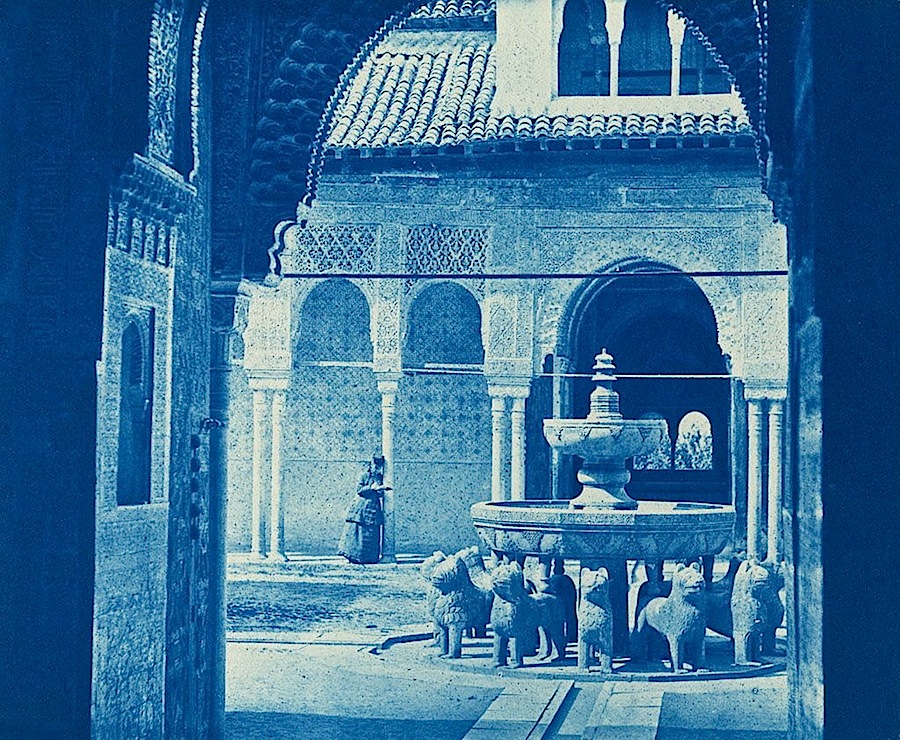
Alahambra, Spain, 1878, Swedish Natl Heritage BoardThe Alhambra, Granada, Spain, 1878, by Carl Curman, via Swedish National Heritage Board Commons on flickr.

The cyanotype shows the photographer’s wife, Calla, either sketching or reading during a visit to the Court of the Lions.  She was 28 at the time and just married to Curman. This may have been their honeymoon trip.

The Alhambra fortress/palace was built primarily in the 13th and 14th centuries by the Muslim Nasrid dynasty of southern Spain. After the Christian Conquest in 1492, it became the royal residence of Ferdinand and Isabella and, later, their grandson, Charles V. However, by the 18th century the site was derelict and largely abandoned.

In 1829, the American writer Washington Irving stayed in the Alhambra for three months and then turned his impressions into the romantic Tales of the Alhambra.

“The peculiar charm of this old dreamy palace,” he wrote, “is its power of calling up vague reveries and picturings of the past, and thus clothing naked realities with the illusions of the memory and the imagination.”

The book was popular, “the exotic was in vogue,” and cultured travelers — Calla was the daughter of a wealthy industrialist — began to visit the ruins in increasing numbers. Restoration work — often controversial — soon followed.  Today, the old complex is a UNESCO World Heritage site.

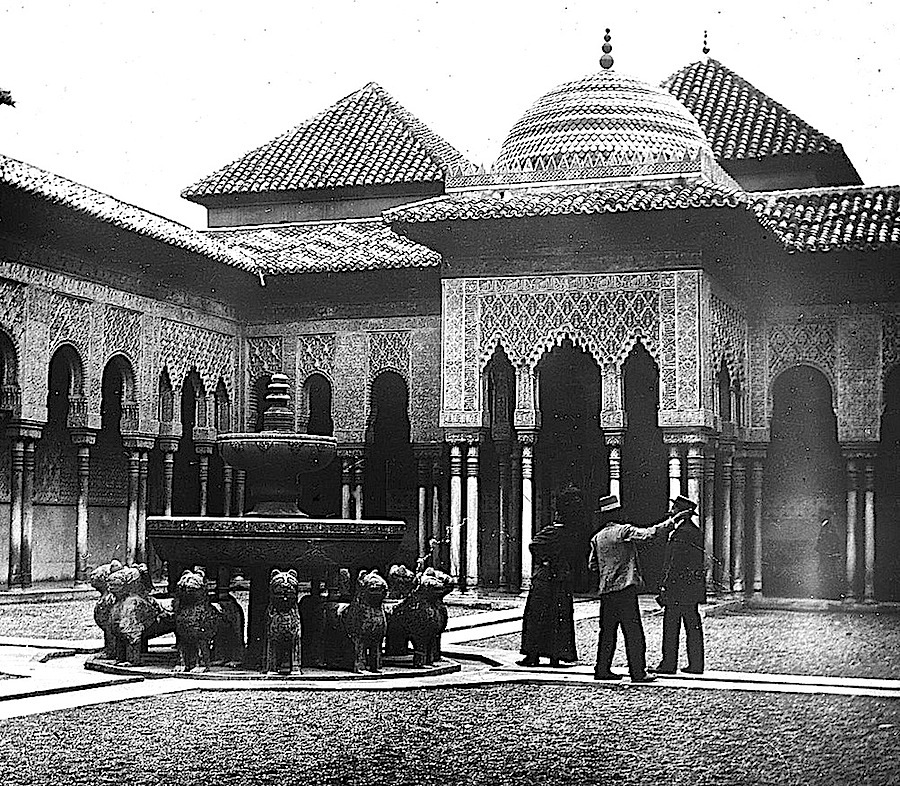
About 30 years after Carl and Calla’s trip, their son also visited the Court of the Lions and took the picture below.Alhambra, 1910, Tekniska museetGroup of tourists in the Court of the Lions,  ca. 1910, by Sigurd Curman, via Tekniska museet (Stockholm) Commons on flickr.

In the 14th century, the area around the fountain was a little lower than the walkways and planted in flowers, giving a tapestry or carpet effect.  Today, as in the photo above, the space is entirely covered in dry pebbles to preserve the building’s foundation.

I am the garden appearing every morning with adorned beauty; contemplate my beauty and you will be penetrated with understanding.

— Ibn Zamrak, from a poem on the wall of the Hall of the Two Sisters in the Alhambra.

The Sunday porch: Puerto Rico

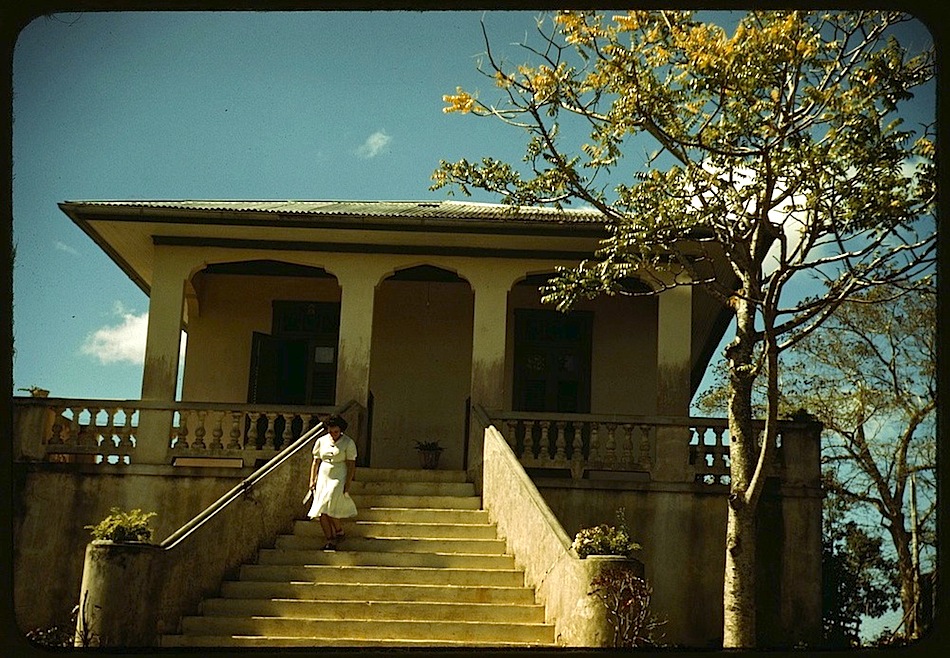
Puerto Rico, Library of CongressPuerto Rico or the Virgin Islands, winter 1941/42, by Jack Delano, via Library of Congress Prints and Photographs Division.

Vintage landscape: Istanbul

Taksim, Istanbul, 1930s, via SALTOnlineThe Republic Monument at Taksim Square, Istanbul, ca. 1930s, via Ali Saim Ülgen Archive, SALTOnline Commons on flickr.

Vintage landscape: front walk

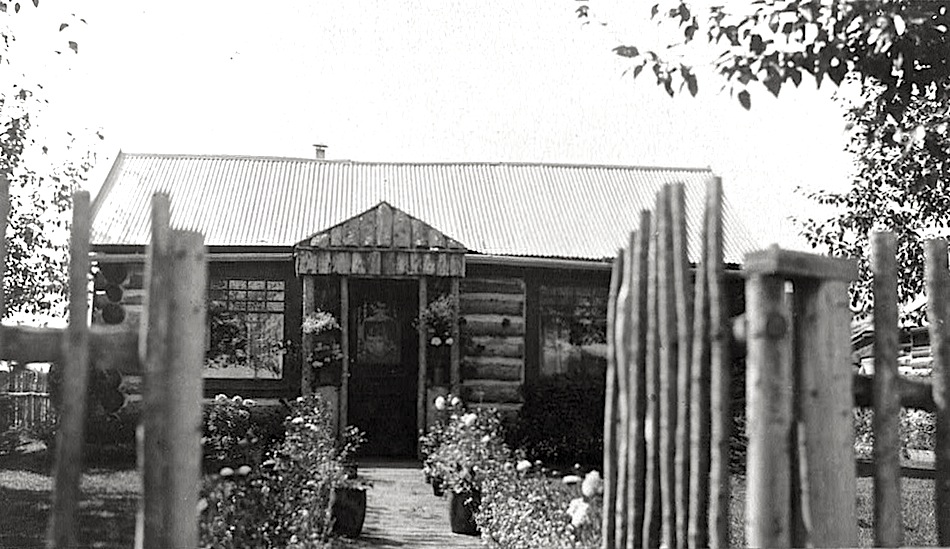
Alaska cabin, Library of CongressLog cabin in Alaska, probably Fairbanks, between 1900 and 1916, via Library of Congress Prints and Photographs Division.

The photograph is one of over sixteen thousand created or collected by Frank G. Carpenter and his daughter Frances to illustrate his geography textbooks and popular travel books.

There are three more charming Alaska log cabins from the same collection here, here, and here.