Gate and fence in coal miner’s front yard, Mohegan, West Virginia, September 1938, by Marion Post Wolcott, via Library of Congress Prints and Photographs Division.
Mohegan was a coal mining community or “camp” of McDowell County. It was abandoned in the 1940s.
“Residents of an older home,* built in the 1850’s, take advantage of the summer weather to sit on their front porch off Route #800.” Barnesville, Ohio, July 1974. Below, the back porch.
Both photos above were taken by Erik Calonius for DOCUMERICA, an early photography program of the U.S. Environmental Protection Agency (EPA). They are shown, with the original caption, via The U.S. National Archives Commons on flickr.
From 1972 to 1977, the EPA hired over 100 photographers to “document subjects of environmental concern.” They created an archive of about 20,000 images.
In addition to recording damage to the nation’s landscapes, the project captured “the era’s trends, fashions, problems, and achievements,” according to the Archives, which held an exhibit of the photos, “Searching for the Seventies,” in 2013.
By 1974, the proliferation of porchless ranch-style houses, air-conditioning, and television had made sitting on a shady front porch in hot weather something of an anomaly for many Americans.
*A visitor to the first photo’s flickr page wrote, “This house stood on the north side of State Route 800, near Barnesville, at about 40.014772, -81.168533. The section pictured here may have been of log construction.”
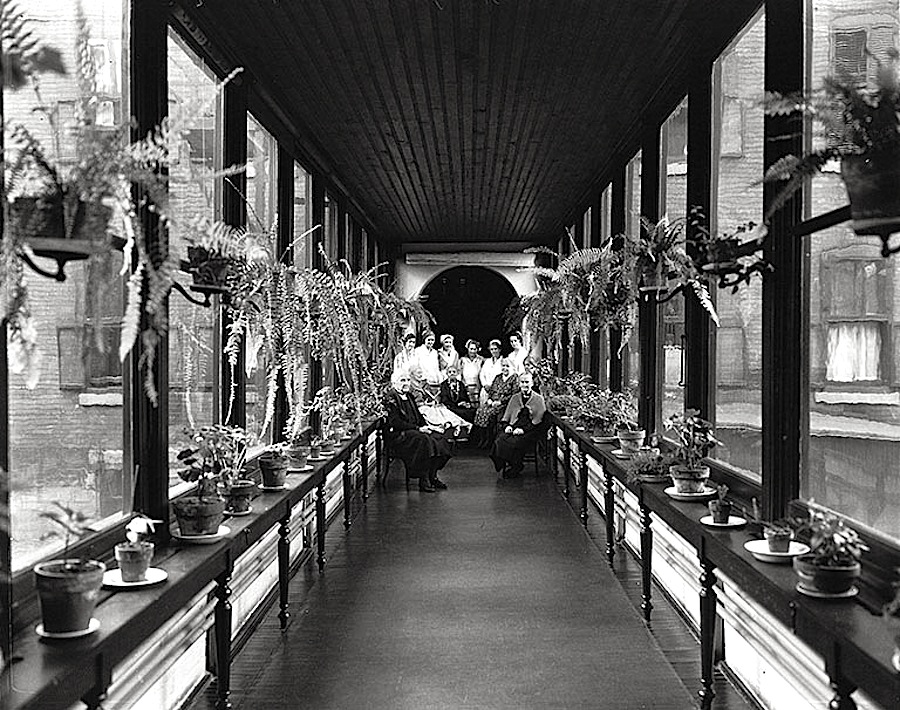
St. Margaret’s Home, Montreal, 1933, via Notman Photographic Archives, McCord Museum Commons on flickr.
At the time of the photo, the house — built in 1845 — was a small hospital run by the Anglican Sisters of St. Margaret. It still exists today and is called Notman Housefor photographer William Notman who lived there in the late 19th century.
I really covet those plant supports between the windows.
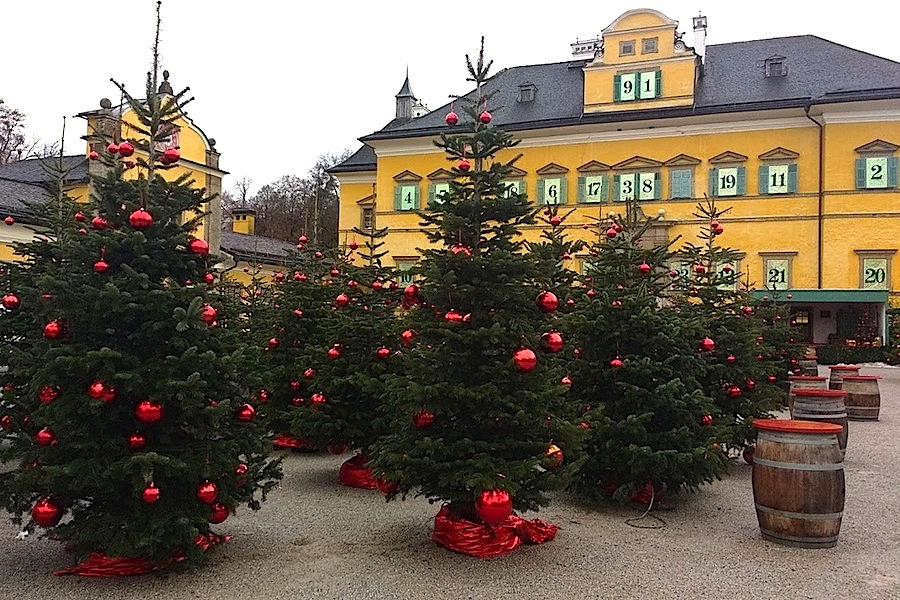
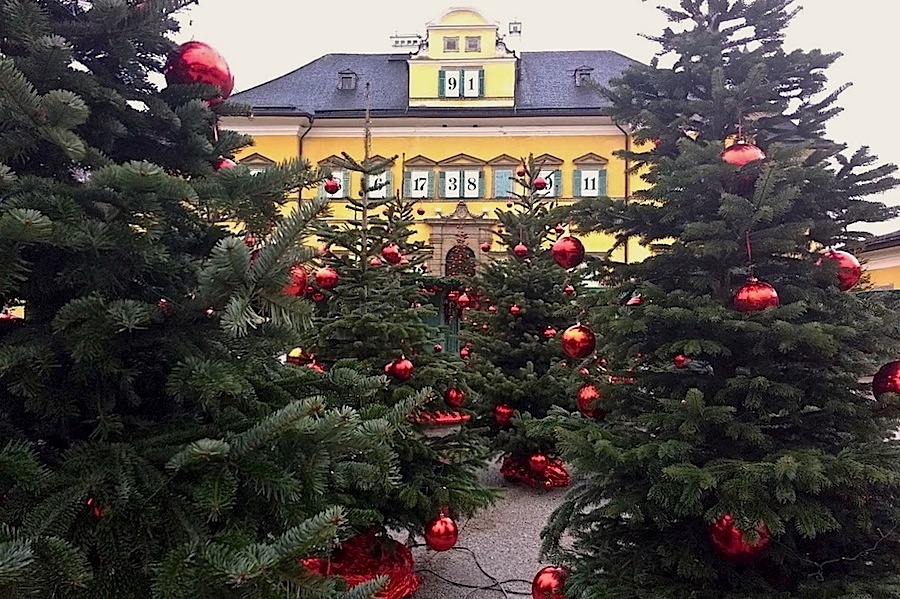
The Advent market of Hellbrunn Palace — just outside of Salzburg, Austria — is open from late November until Christmas Eve. Unfortunately, our guided city tour, which included a 15-minute stop at the palace grounds (otherwise closed during the winter) was on Christmas Day.
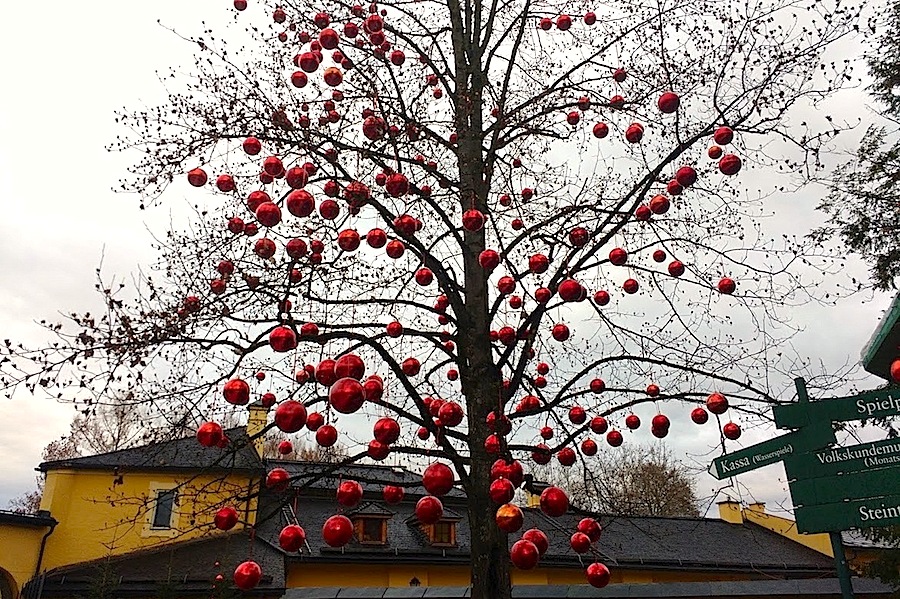
However, the absence of any other people among the remaining structures and decorations made it easy to appreciate the lesson of a simple good idea plus repetition.
The market areas in the two entry courtyards of the Baroque palace were set within “forests” of 400 cut trees and 13,000 red balls, according to one website.
The palace was (caused to be) built by the Prince-Archbishop of Salzburg, Markus Sittikus, between 1612 and 1615. Its 148-acre park includes a section of trick fountains and a pavilion built for the filming of The Sound of Music.
The Prince-Archbishop used the estate as a pleasure retreat during the long summer days, always returning to Salzburg for the night.
I hope, wherever you are today, that you are enjoying a wonderful holiday season!
Travel tips
Lovely, compact Salzburg makes a good Christmas travel destination, as long as you realize that almost everything will shut down at about 1:00 or 2:00 p.m. on Christmas Eve and not reopen again until December 27. Do your shopping, as well as visit the fortress and other museums, on the 23rd. The two Mozart homes are open on Christmas Day and the 26th, and the guided tour companies are running on those days as well.
Be sure to make dinner reservations for the 24th, 25th, and 26th well in advance (a few weeks out). Our hotel had two good restaurants, and they were so fully booked for Christmas Eve that the hotel was not providing room service that night.
However — this year, at least — the big Advent/Christmas market in the old city center was open through December 26 (although it closed early on the 24th), so it was easy to get a lunch or an early dinner of sausage and gluhwein.
Salzburg’s old city center from a pedestrian bridge. Note The Sound of Music “do-re-me” reenactment on the left side.
Also, Austria is one of the very few European countries that still allow smoking in restaurants and bars. Ask about it when booking or look around for ashtrays on the tables before sitting down if you want to avoid that sort of nostalgic experience. (Two of our three dinners were in restaurants without smoking.)
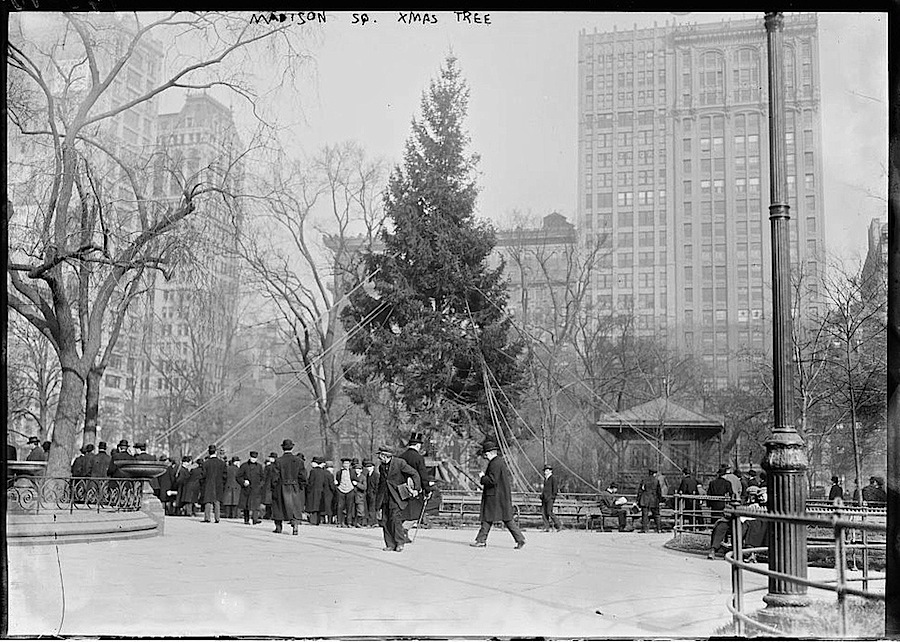
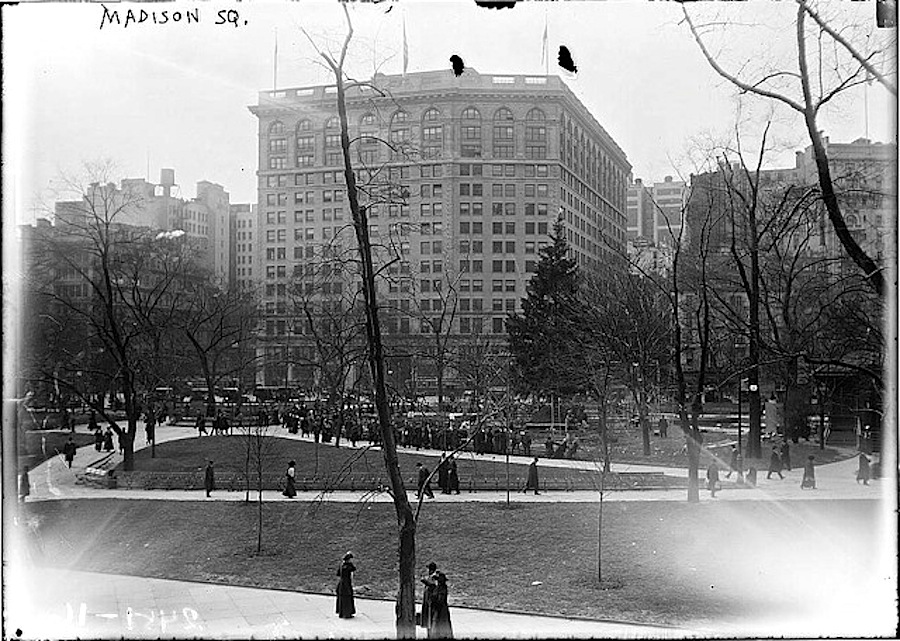
Raising the Madison Square Christmas tree, ca. 1912 or 1913, New York City, by Bain News Service, via Library of Congress Prints and Photographs Division (all photos here).
The park is located at Fifth Avenue and Broadway at 23rd Street.
Light is a dancer here and cannot rest.
No tanagers or jays are half so bright
As swarms of fire that deep in fragrance nest
In jungles of the gilt exotic night. . .
 Gate and fence in coal miner’s front yard, Mohegan, West Virginia, September 1938, by Marion Post Wolcott, via Library of Congress Prints and Photographs Division.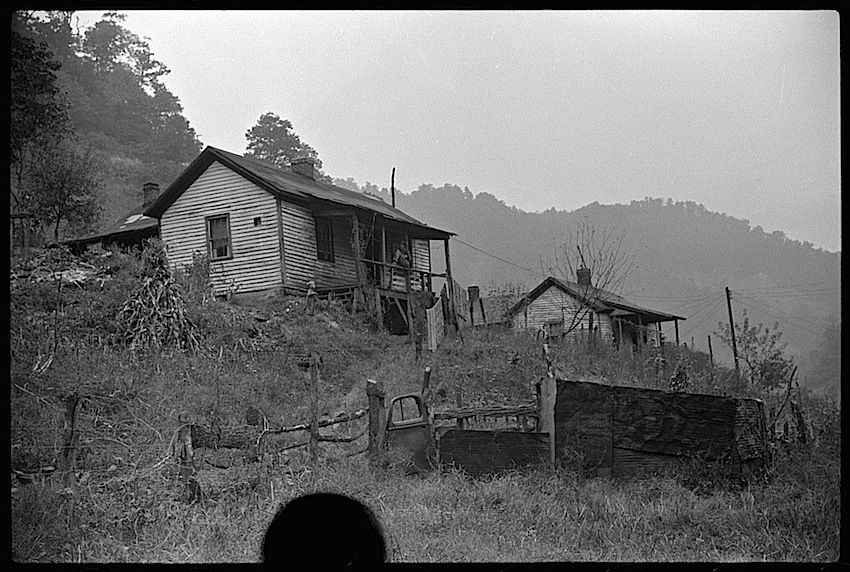







 enclos*ure