
Near the same corner with the pelican tree, there is a pharmacy with several nice topiary of Ficus benjamina (weeping fig).


Near the same corner with the pelican tree, there is a pharmacy with several nice topiary of Ficus benjamina (weeping fig).
I had a hard time finding the name of this plant, and, after I did, I realized that I should have known. With all weird and wonderful plants, a good search word to start with is ‘Madagascar.’
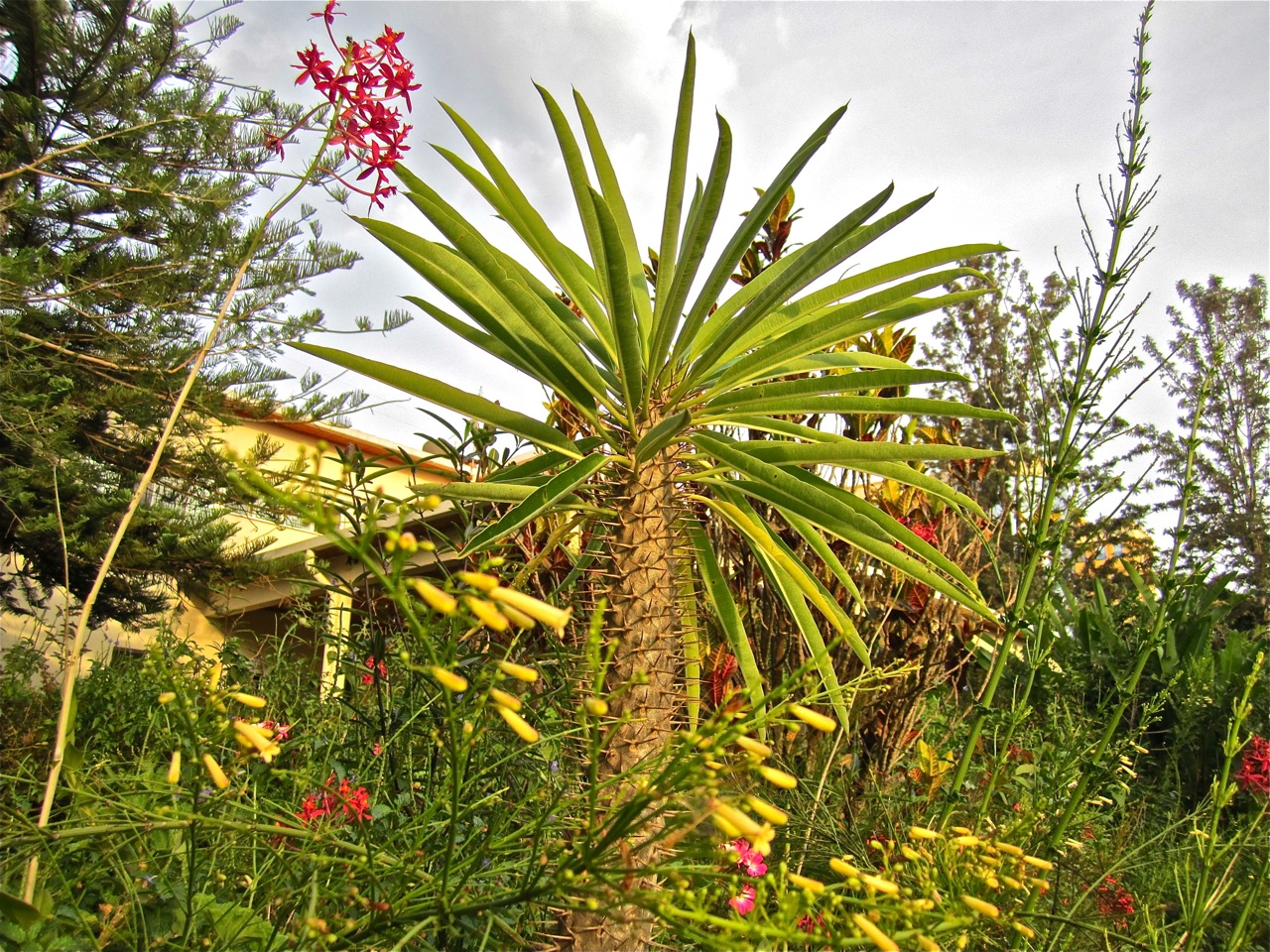
It’s a Pachypodium lamerei, often called a Madagascar palm, although it is not a palm but a stem succulent. Mine is about 3′ tall (about 92 cm.) and is growing here with a red orchid, Epidendrum ibaguense, and a cream-yellow Russelia equisetiformis lutea. (Click the photo to get a better look.)
P. lamerei is easy to grow in well-drained soil in a frost-free climate. It also makes a good potted plant, if you can give it enough sun. It will do well in a fast-draining soil mix, like one for cactuses. A mature plant can have fragrant flowers, but I haven’t seen any on ours.
The island nation of Madagascar is one of the most diverse places on earth for plant species; it has about 12,000. Tropical Africa has about 3 times that many, but 35 times the size.
Plant by plant, I am putting names to the flowering shrubs in our Rwanda garden. Here are two more, supplied by the readers of Fine Gardening’s Garden Photos of the Day, from my pictures on Monday and Wednesday.
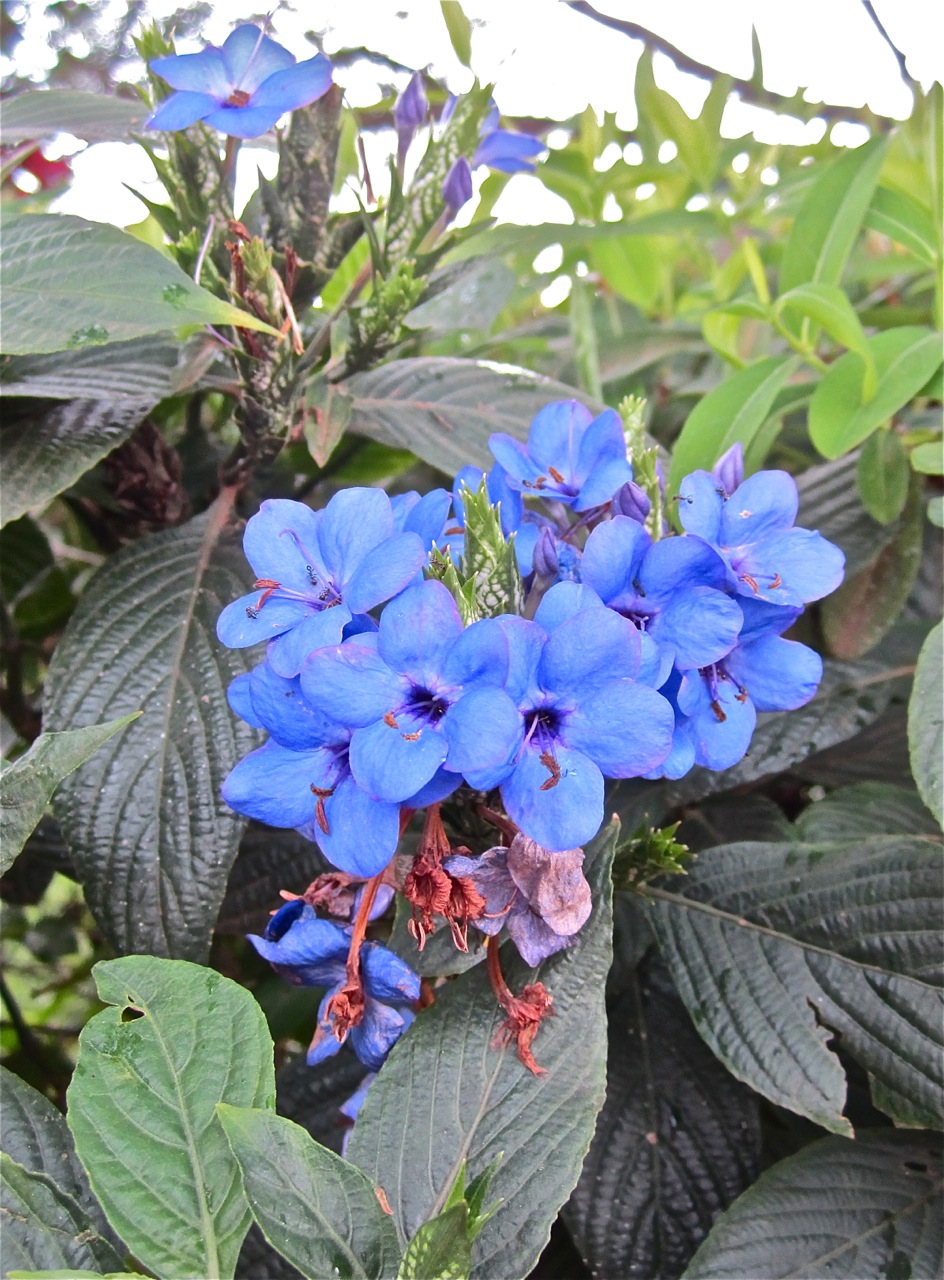
Eranthemum nervosum (aka E.pulchellum) or blue sage or blue eranthemum has gentian blue flowers, as you can see. In the family Acanthaceae, it is native to India. It will grow 4′-6′ and likes light shade. It will grow in the garden in (U.S.) zones 10b and 11. (I think all the shrubs in this post would be suitable for pots in colder climates.)
Brunfelsia latifolia (aka B. australis) or yesterday, today, and tomorrow plant is native to South America. It is very fragrant at night. Our largest specimen, which needs pruning, is about 5′ tall, 4′ wide. It is in the same family as potatoes, tomatoes, eggplants, and petunias — Solanaceae or nightshade.
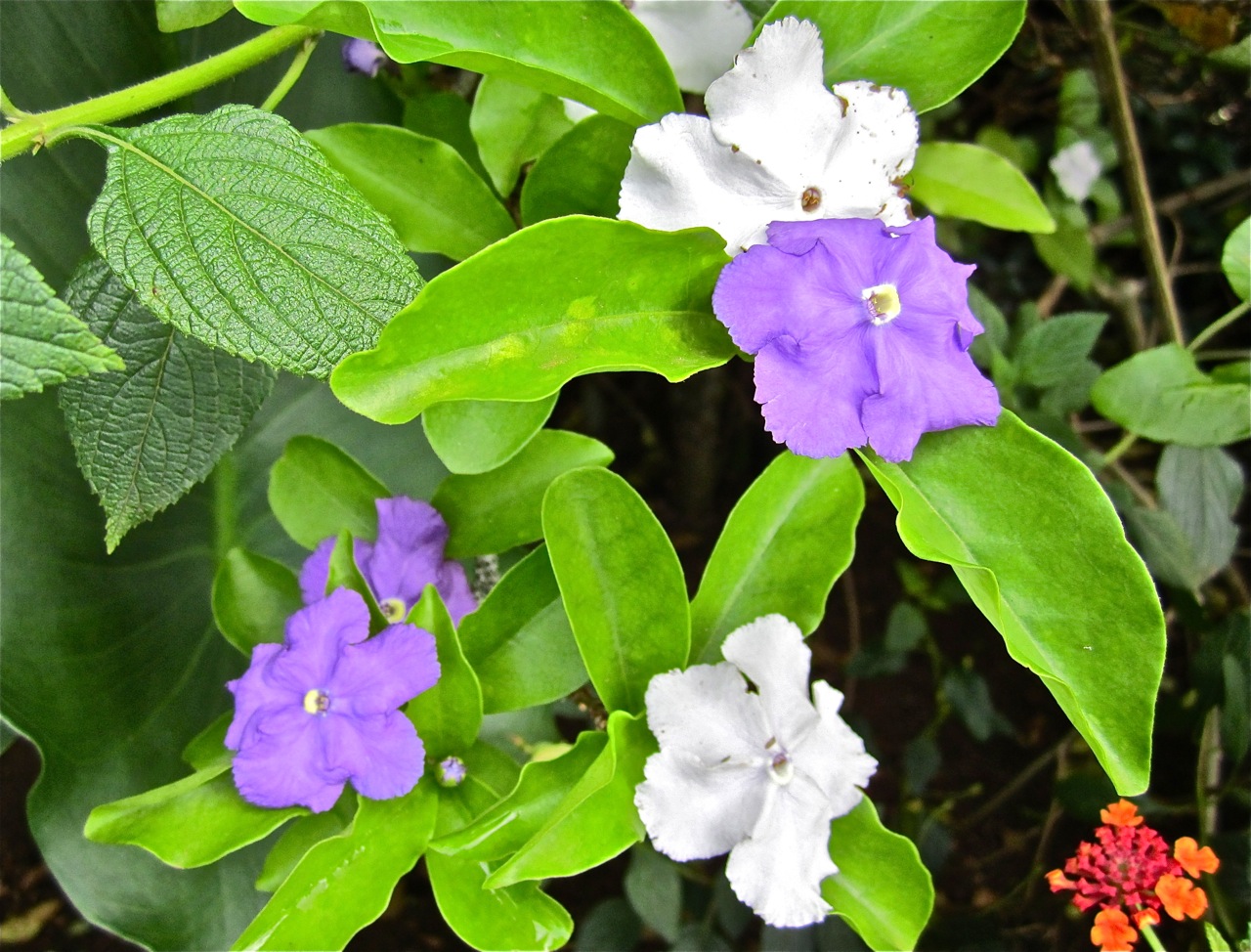
Y.T.T. likes well drained, moist soil and full sun to part shade — its habitats are light woodlands and thickets — and grows in the garden in (U.S.) zones 9-11. The flowers open purple, then go to lavender, and then white. The genus was named for early German herbalist Otto Brunfels (1464-1534).
I’m just showing this off. I already knew its name.
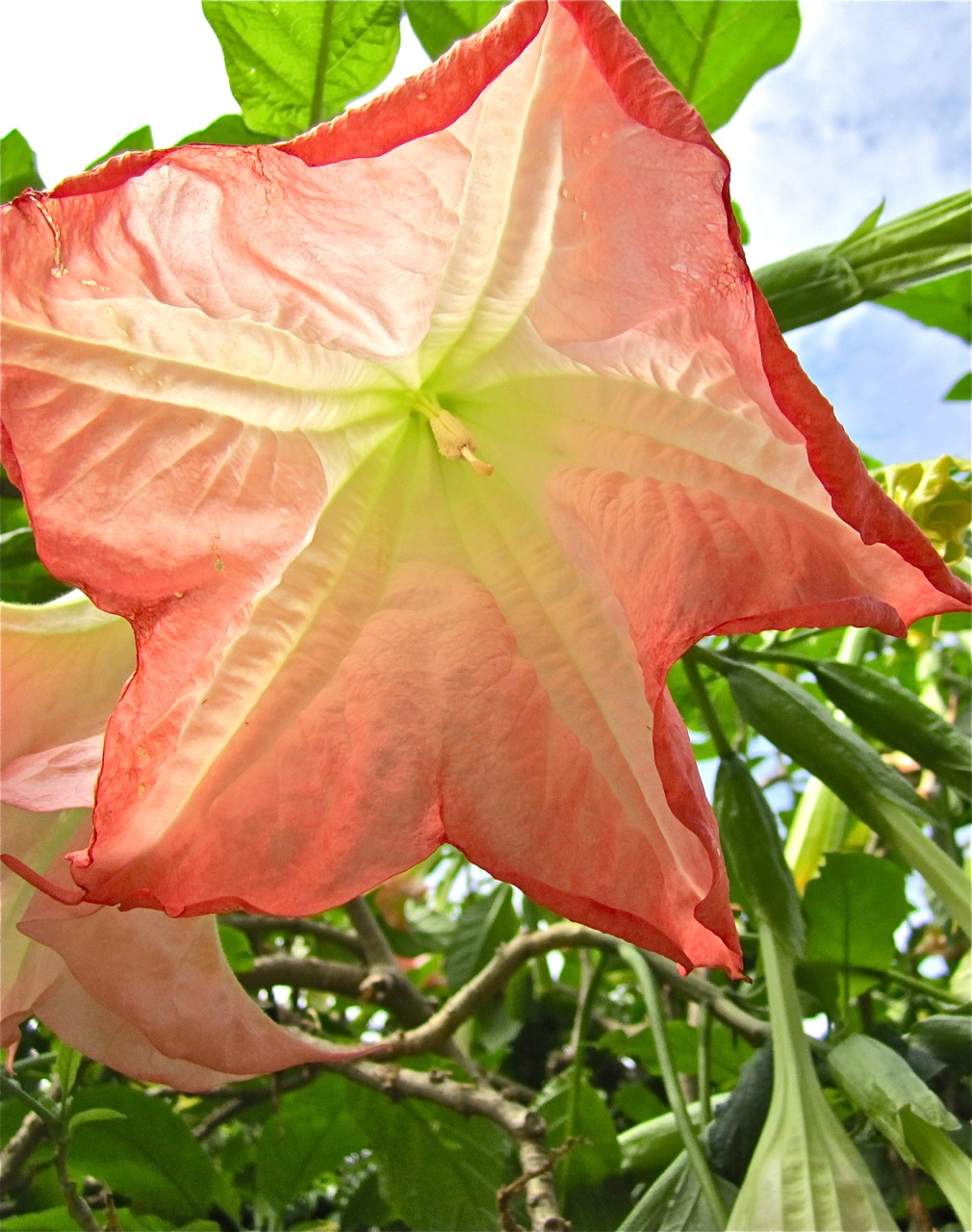
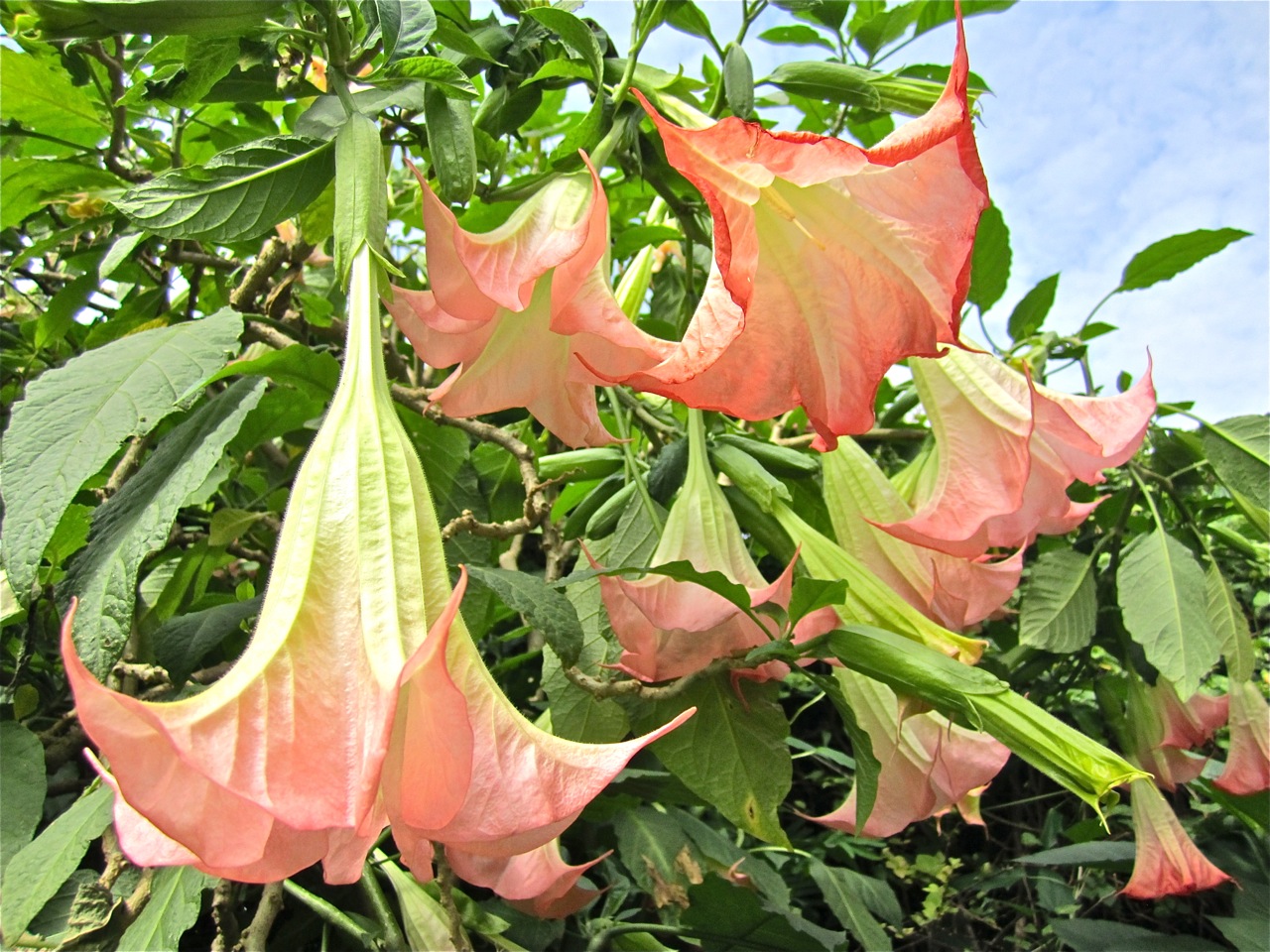
Brugmansia is native to tropical South America and, like the Brunfelsia, is also in the family Solanaceae. It is also called angel’s trumpet or datura (the name of a closely related genus). The semi-woody shrub can branch off like a small tree and grow to 6′-20′. It has a fragrance in the evening. It likes moist, well-drained, fertile soil, full sun to part shade, and grows in the garden in (U.S.) zones 9-11.
I fell in love with this Mussaenda shrub soon after we arrived in Kigali, but I didn’t know its name until tonight after some internet research.

I think my Mussaenda (with orange flowers and white bracts) is M. frondosa, a native to Indo-China and Malaysia, although there is a species native to West Africa, M. erythrophylla or Ashanti blood or red flag. This may actually be the shrub in our garden that I’ve been thinking is a poinsettia. I’m going to have to do a little more research on that tomorrow. [Yes, it is M. erythrophylla.]
Mussaendas are hardy to (U.S.) zones 9-11. They can reach heights from 3′ to 10′, and different species and cultivars can have bracts and flowers in orange, white, red, yellow, or pink. They need a moderate amount of water and sun.
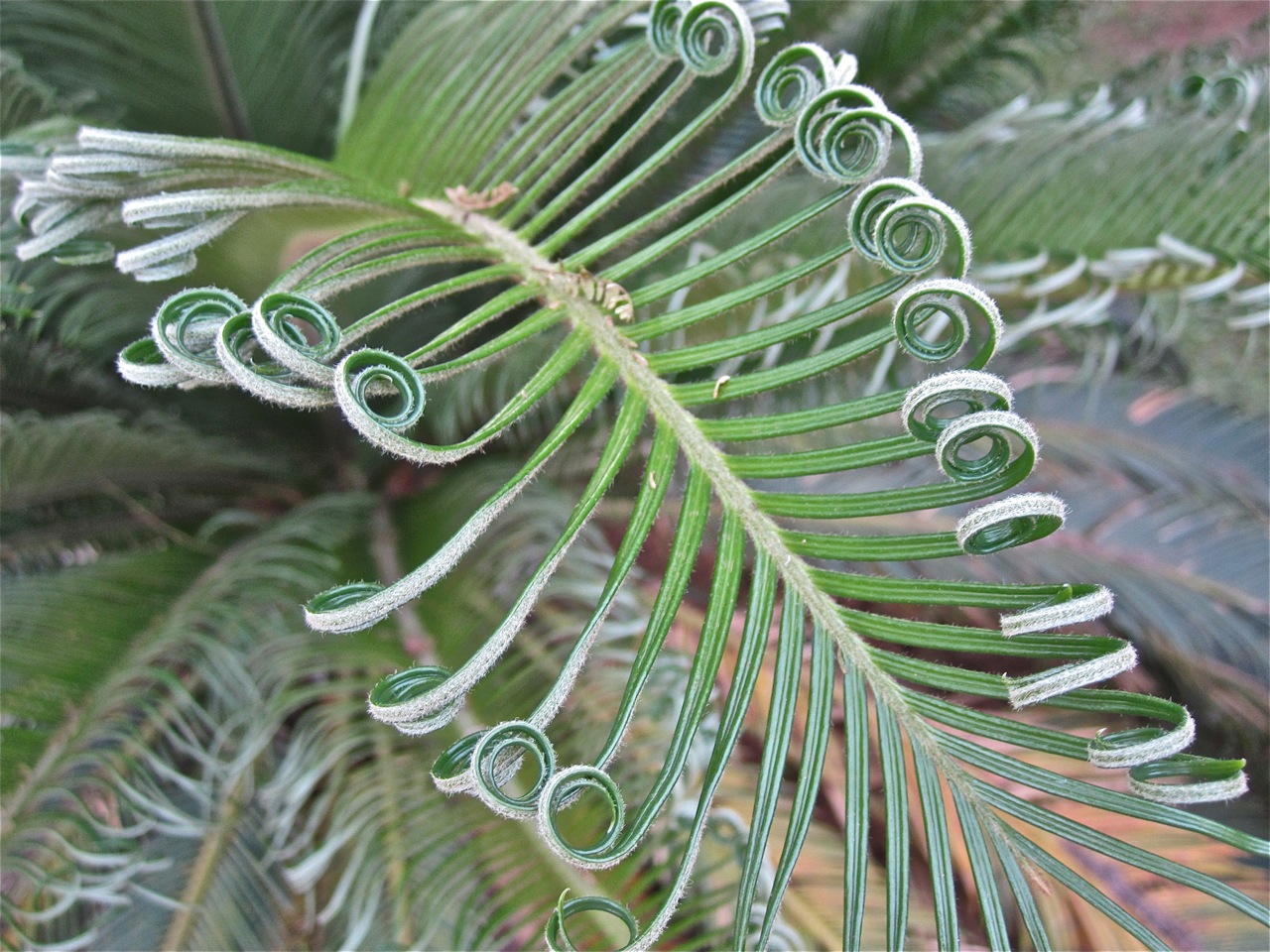
Thanks to Fine Gardening magazine’s Garden Photo of the Day for featuring some of my cycad photos yesterday. Here are a few more:


Rosamond Carr’s cottage in the Virunga hills is covered in creeping fig or Ficus pumila. The plant (along with the nice windows and the stone steps) turned a little square box into something really charming.
The Orangery of Dumbarton Oaks is also draped with a wonderful specimen, which was planted in its northwest corner in the 1860s.
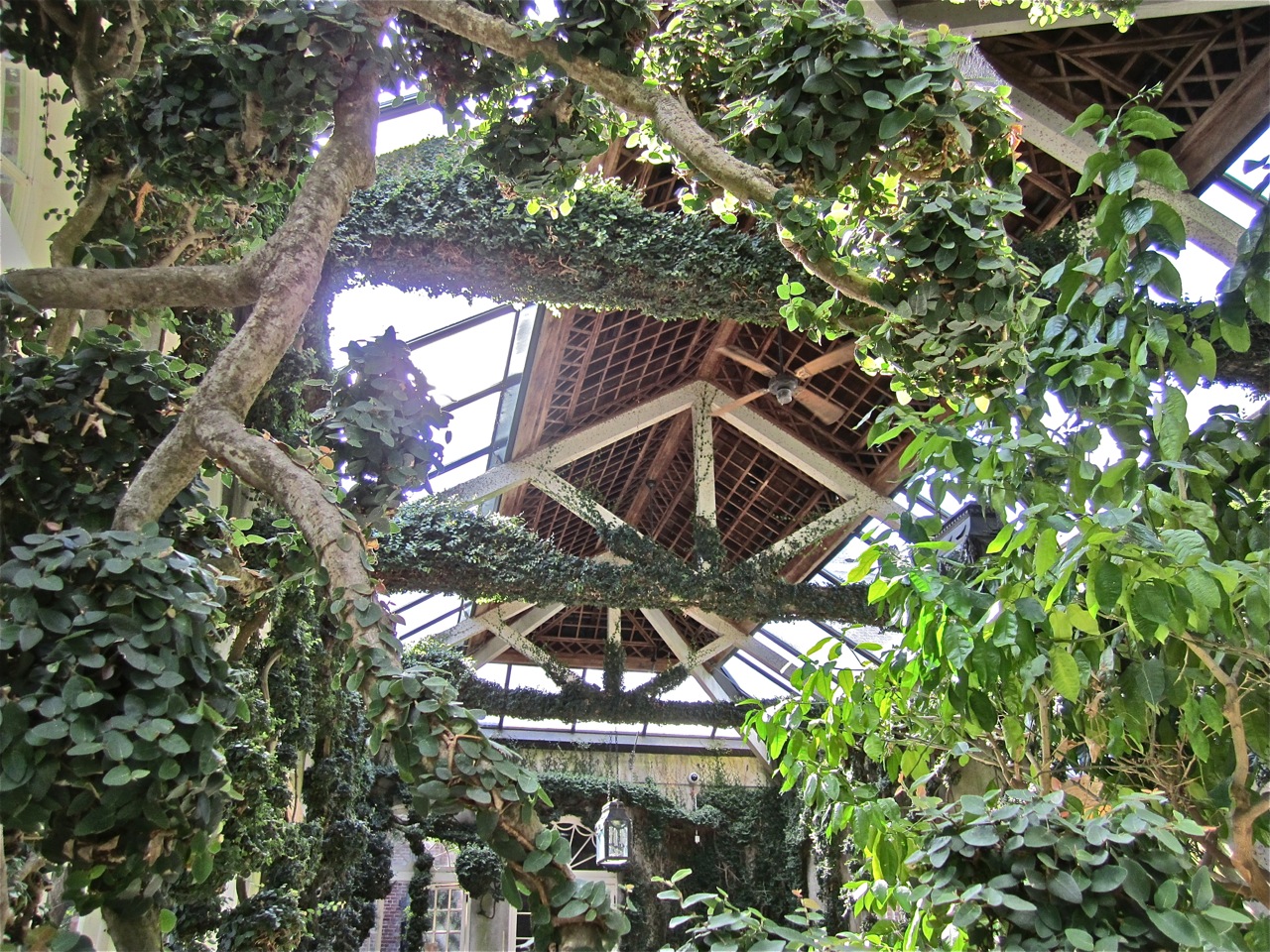
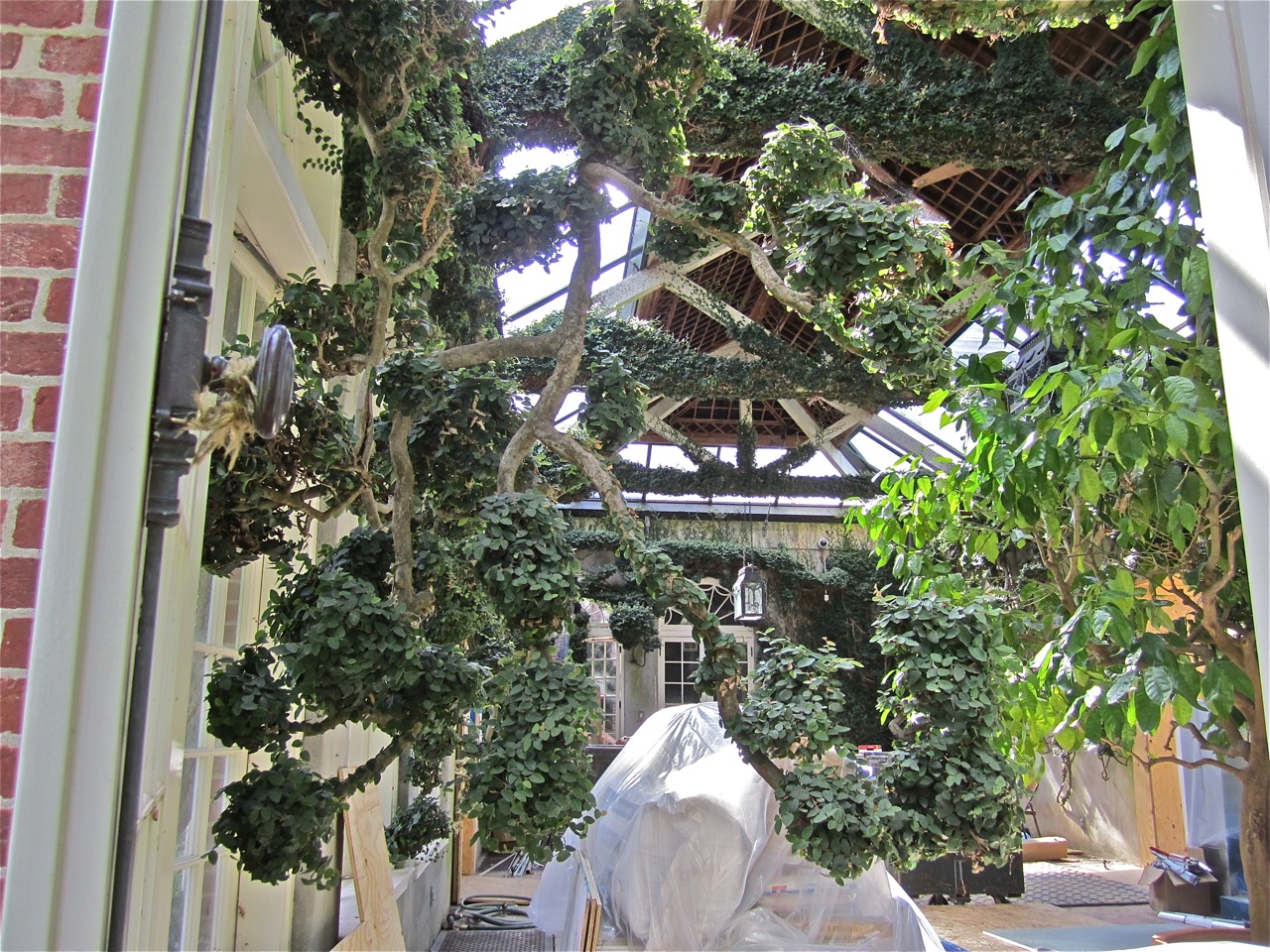
Creeping fig will survive outdoors in (U.S.) zones 8 – 11. It is native to east Asia.
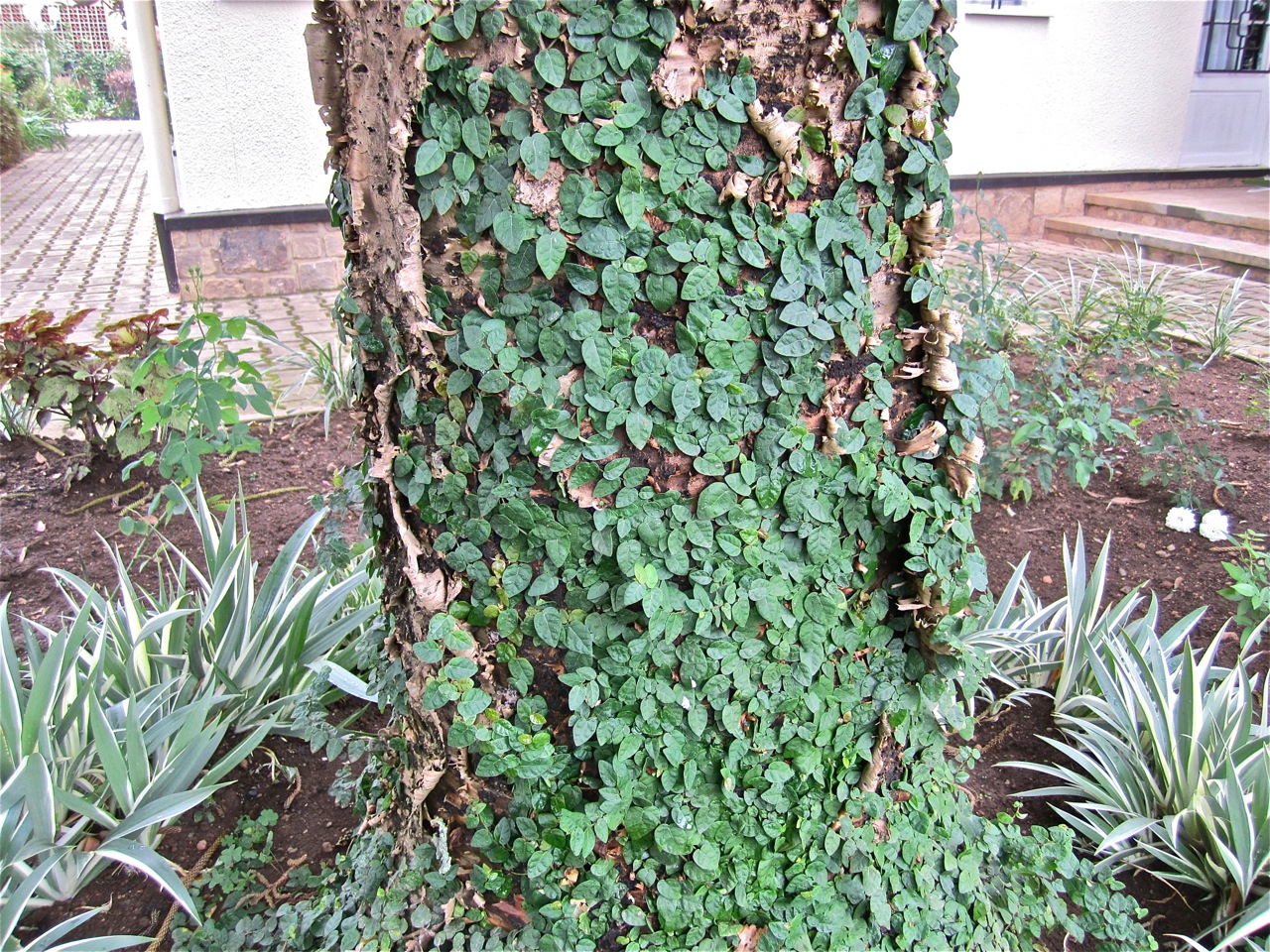
The plant is not fussy about its conditions, but does need consistently moist soil. Very fast growing, its aerial roots will adhere to anything, even metal and glass. All the sources I consulted warned against letting it attach to a wooden structure. With brick or concrete, it should be grown on something designed to support the plant forever, as the little rootlets will be very hard to remove if you later want a bare surface.
The fruit of the ‘Awkeotsong’ variety is used to make aiyu jelly in Taiwan (and ice jelly in Singapore). But several websites warned that all parts of the plant are poisonous. It may be that the processing technique makes the jelly safe to eat.
Since you inquire about creepers and ficus pumila,
They sum up the mood of a dweller in the wilds;
Respectfully visiting you in calf’s muzzle breeks* with a dove-headed walking stick.— Ruan Dacheng, Chinese poet (1587-1646)
Thanks to Pam at Digging for hosting Foliage Follow Up today (always the 16th of the month).
* “. . . a kind of shorts, or possibly a kilt, associated with a casual way of life in ancient times.”
 enclos*ure