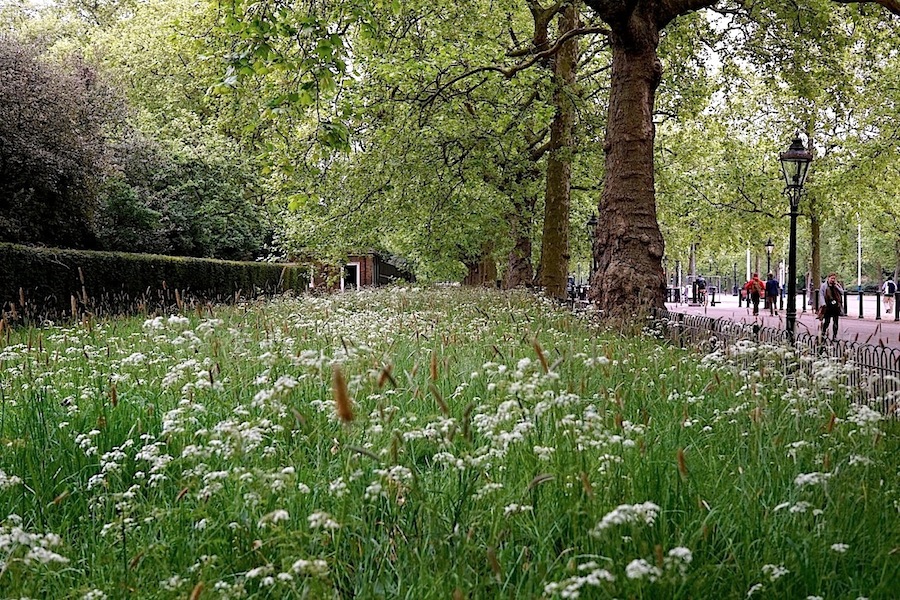
Another garden scene from my day of walking around London last week. . .
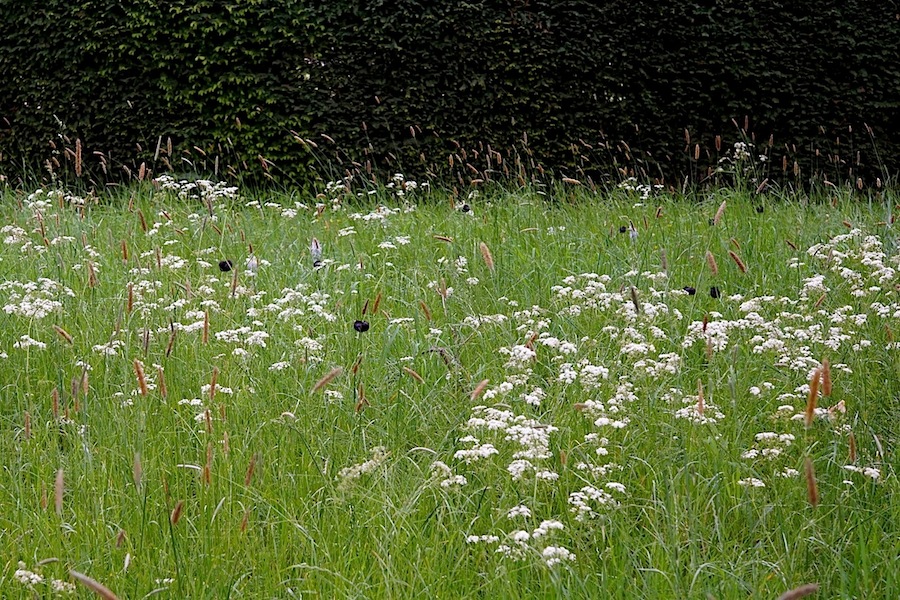
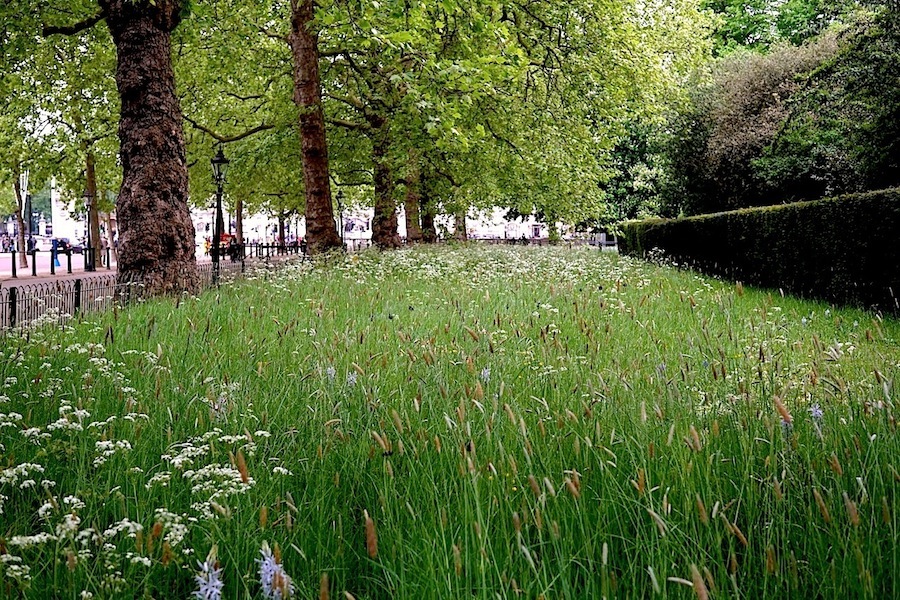
This meadow-style planting is outside the walls of St. James’s Palace, along The Mall. The strip of ground outside the walls around Buckingham Palace (at least on the north side) is planted in the same way.
In addition to Queen Anne’s lace (Daucus carota), there were some very dark red-purple tulips and pale blue Camassia.
Arrangement of tulips in the Tuileries Garden, Paris, May 8, 1925, by Auguste Léon, via Archives of the Planet Collection – Albert Kahn Museum /Département des Hauts-de-Seine.
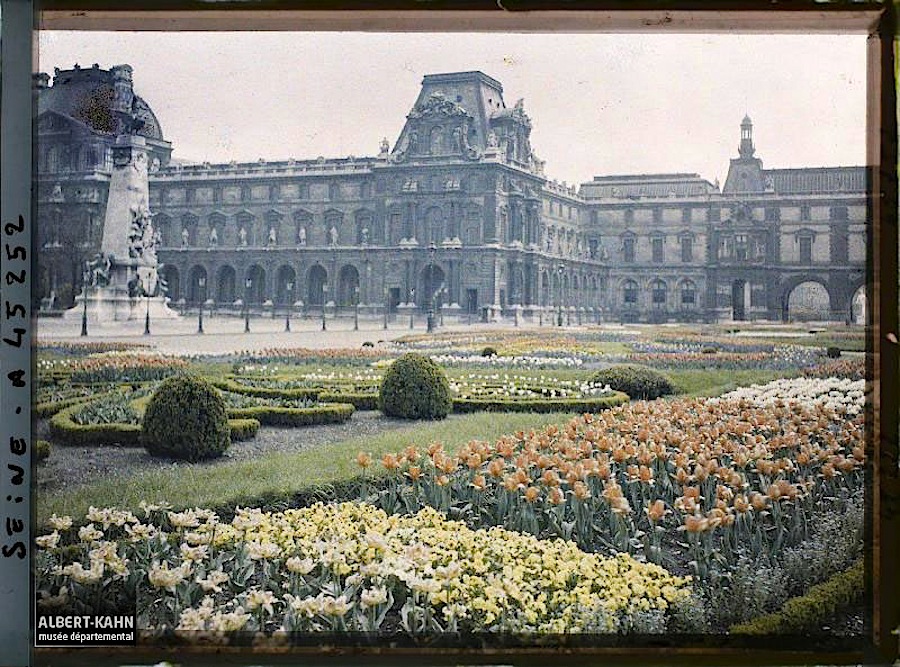
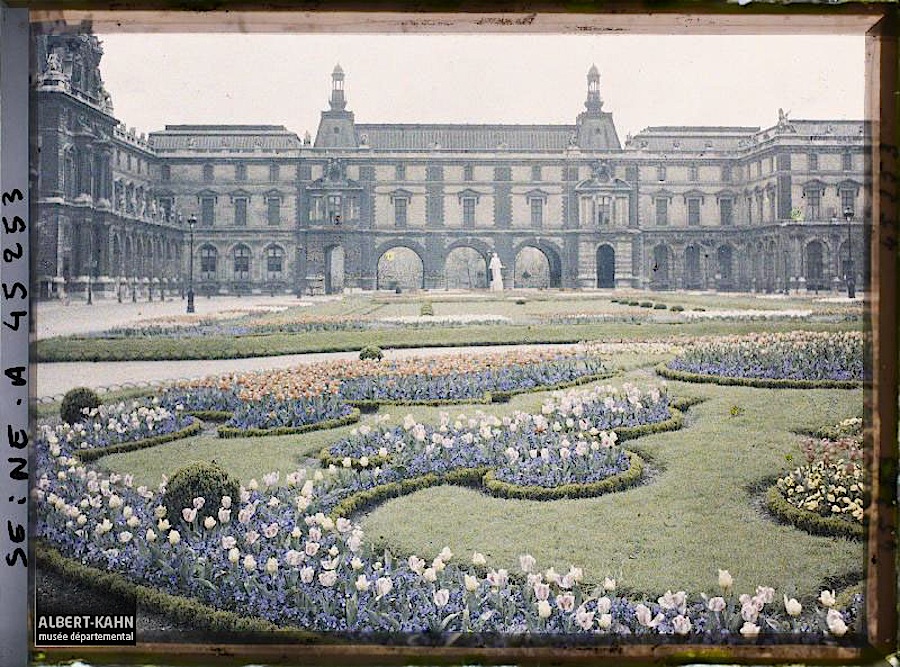
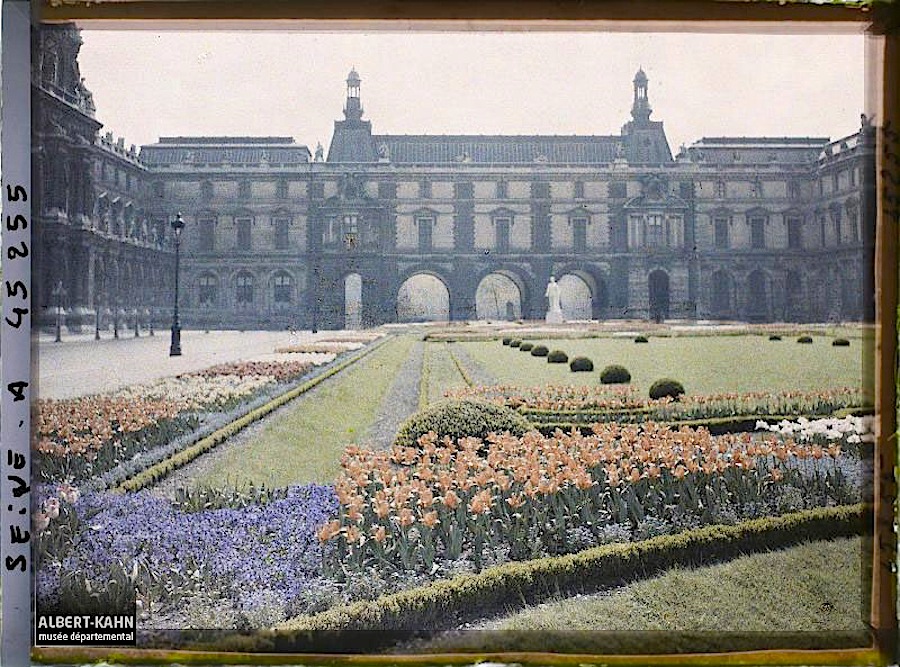
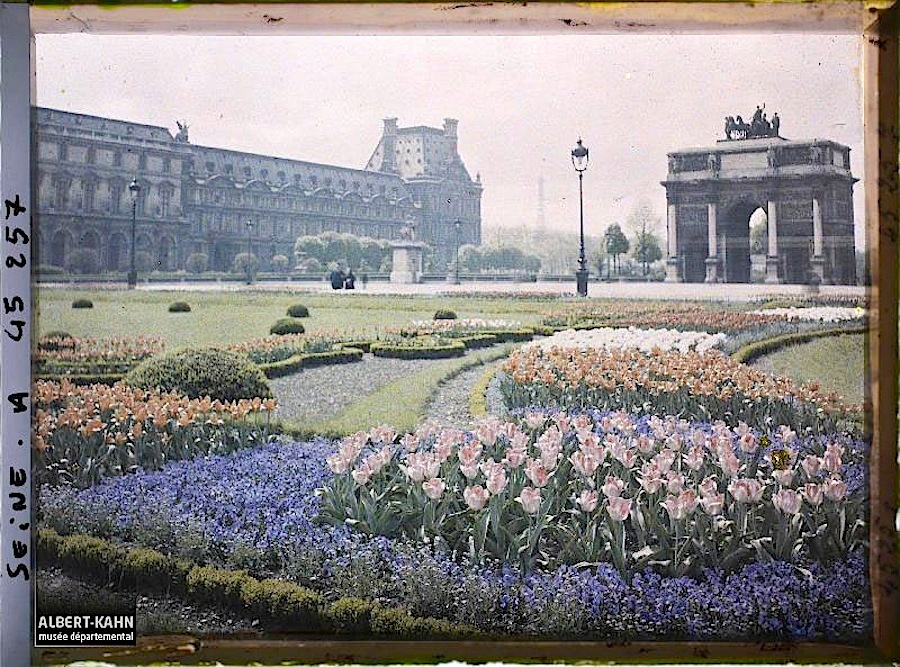
These autochromes were taken at the Place du Carrousel, looking south to the Seine River. Today, there is a road and a roundabout (with a skylight for the underground shopping mall below) on this spot, which is just west of where I.M.Pei’s Pyramide du Louvre now stands.
It is also where Emmanuel Macron and his supporters celebrated his victory in the French presidential election runoff last night.
Looking southwest.
Today is La Fête de la Victoire in France. The public holiday commemorates the date of Germany’s unconditional surrender to the Allies in 1945, ending World War II in Europe.
The images above are four of about seventy-two thousand that were commissioned and then archived by Albert Kahn, a wealthy French banker and pacifist, between 1909 and 1931. Kahn sent thirteen photographers and filmmakers to fifty countries “to fix, once and for all, aspects, practices, and modes of human activity whose fatal disappearance is no longer ‘a matter of time.'”* The resulting collection is called Archives de la Planète and now resides in its own museum at Kahn’s old suburban estate at Boulogne-Billancourt, just west of Paris. Since June 2016, the archive has also been available for viewing online here.
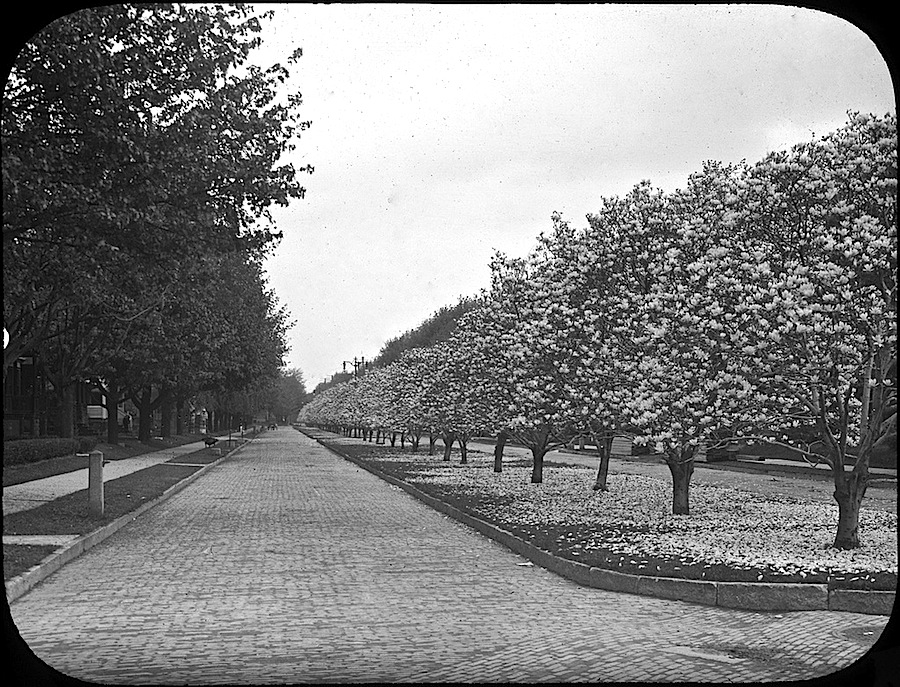
Magnolias in Rochester, New York, undated, via Arthur Peck Collection, OSU Special Collections & Archives Commons on flickr.
Since the late 19th century, Oxford Street in the city’s Park Avenue neighborhood has attracted visitors in May for its display of blooming magnolia trees. There is another vintage picture of the trees here.
Arthur Peck was a Professor of Landscape Architecture at the Oregon Agricultural College* from 1908 to 1948. This picture was part of his teaching library of 24 boxes of glass lantern slides — now in OSU’s archives.
*The college later became Oregon State University (OSU).
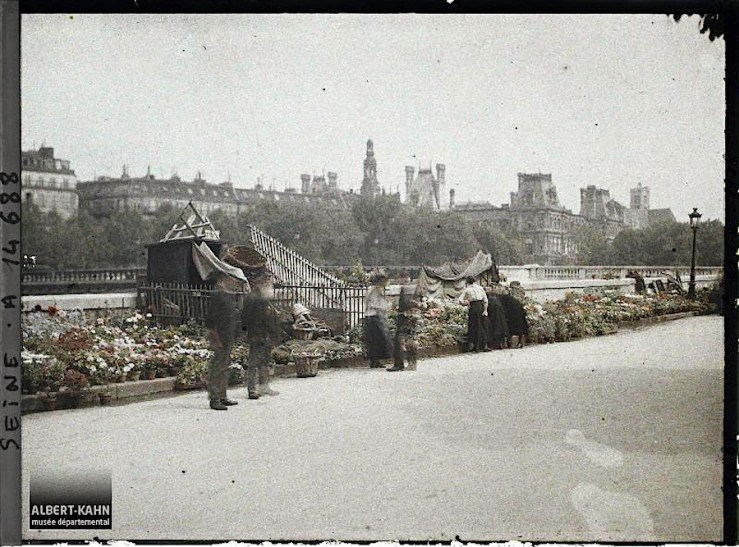
Flower sellers at Place Louis-Lépine on the l’île de la Cité, at Quai de la Corse, Paris, France, May 2, 1918, by Auguste Léon, via Archives of the Planet Collection – Albert Kahn Museum /Département des Hauts-de-Seine (both photos).
There has been a flower market on or near this spot since 1808. Since June 2014, it has been called Queen Elizabeth II Flower Market, to commemorate the visit of the British queen just prior to the 70th anniversary of D-Day.
Looking the other directions, with the Hotel de Ville in the background across the river.
These autochromes are two of about seventy-two thousand that were commissioned and then archived by Albert Kahn, a wealthy French banker and pacifist, between 1909 and 1931. Kahn sent thirteen photographers and filmmakers to fifty countries “to fix, once and for all, aspects, practices, and modes of human activity whose fatal disappearance is no longer ‘a matter of time.'”* The resulting collection is called Archives de la Planète and now resides in its own museum at Kahn’s old suburban estate at Boulogne-Billancourt, just west of Paris. Since June 2016, the archive has also been available for viewing online here.
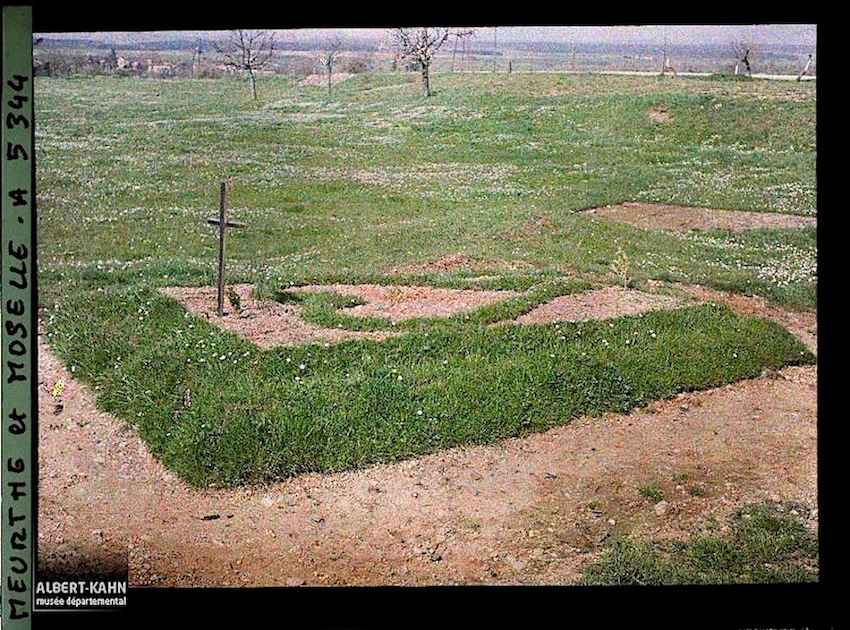
“La Tombe des Coloniaux, a heart of grass, nearGerbéviller,” April 28, 1915, by Georges Chevalier, via Archives of the Planet Collection – Albert Kahn Museum /Département des Hauts-de-Seine.
This seems to be the grave of a soldier (or perhaps soldiers) from one of the French Colonial Infantry Regiments. He probably fell in the Battle of Lorraine about seven or eight months before the photo was taken. Such men, called “Marines,” were recruited from both France and the white settler and indigenous populations of the French colonial empire.
The town of Gerbéviller itself had been caught in the same battle’s crossfire. German troops had systematically burned over 400 houses and killed over 60 inhabitants. It became “Gerbéviller-la-Martyre” in the press and a kind of pilgrimage site.
Today, there are both French and German WWI cemeteries in Gerbéviller.
This autochrome is one of about seventy-two thousand that were commissioned and then archived by Albert Kahn, a wealthy French banker and pacifist, between 1909 and 1931. Kahn sent thirteen photographers and filmmakers to fifty countries “to fix, once and for all, aspects, practices, and modes of human activity whose fatal disappearance is no longer ‘a matter of time.'”* The resulting collection is called Archives de la Planète and now resides in its own museum at Kahn’s old suburban estate at Boulogne-Billancourt, just west of Paris. Since June 2016, the archive has also been available for viewing online here.

 Another garden scene from my day of walking around London last week. . .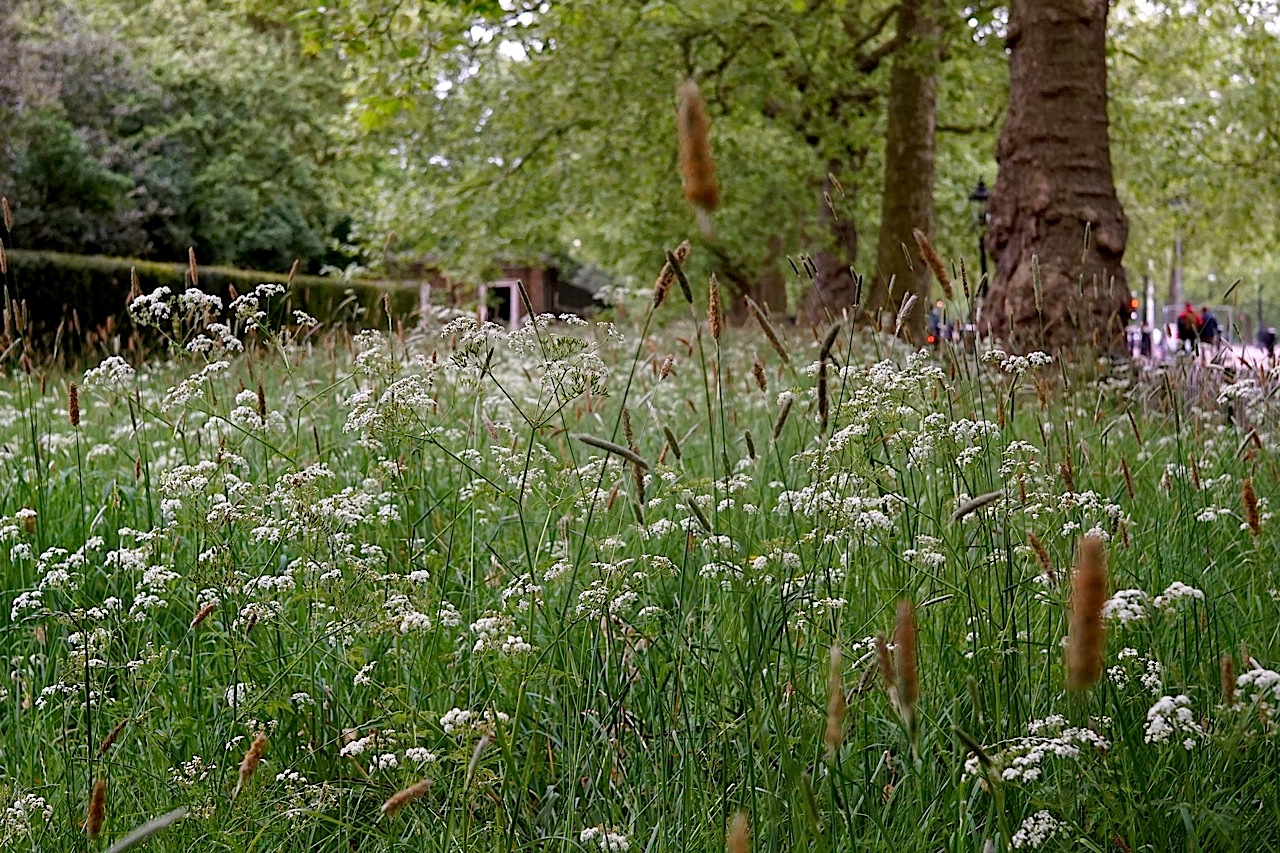

 enclos*ure