The Sunday porch: Barri Gòtic

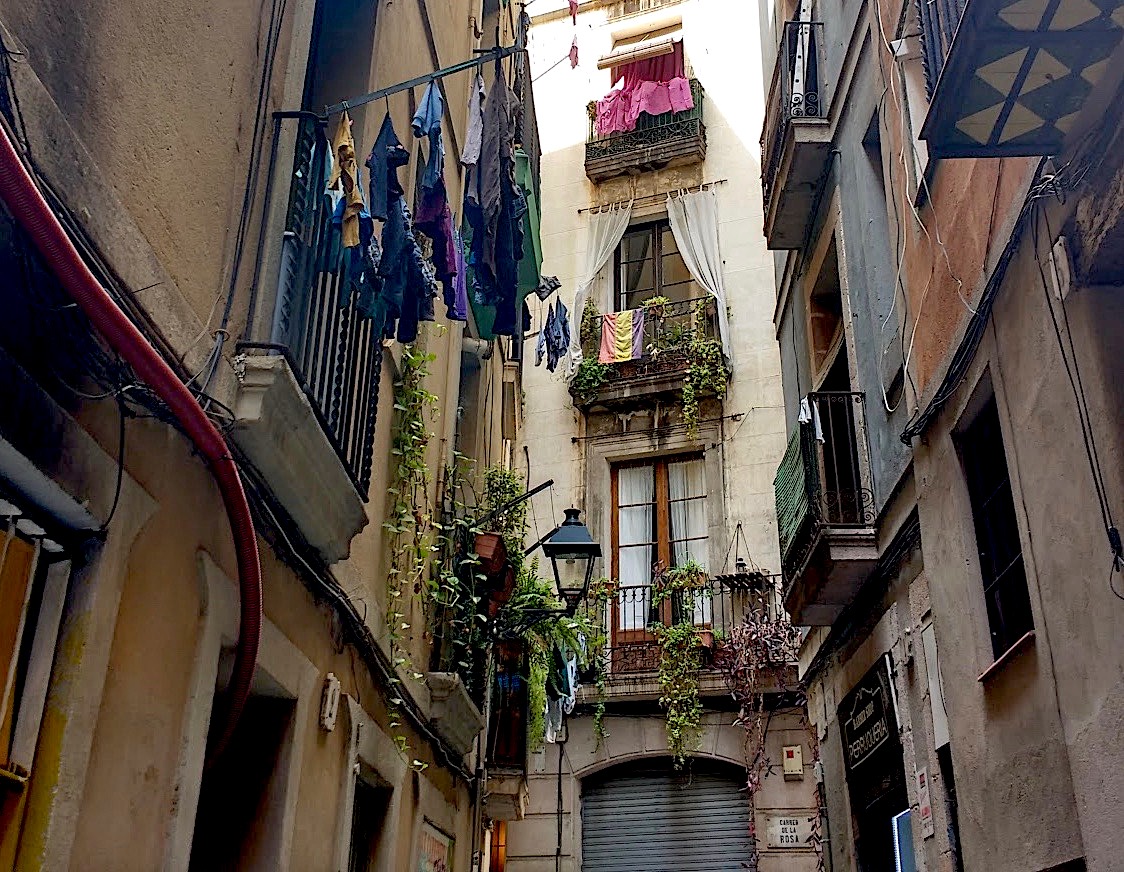
Balconies in the Gothic Quarter of Barcelona, Spain, earlier this week.

The Quarter is the oldest part of Barcelona, with foundations in the Roman and medieval periods.  However, many of its current structures were built or significantly reconstructed in late 19th and early 20th centuries. Its streets, however, remain narrow and winding, sometimes opening up to small squares.

We spent five days in the city, after almost two weeks in Toulouse, France. Toulouse is all about the 13th to 15th centuries, while Barcelona glories in the late 19th and the 20th, so it was an interesting shift after a three hour train ride. As tourists, our energy levels were winding down, however. We rode the hop-on hop-off bus (without hopping off) and toured Gaudi’s Basilica Sagrada Familia (reserve tickets in advance; it’s remarkable) and Casa Amatller (they give you good hot chocolate and bread at the end), and watched the red rose and book selling of Sant Jordi’s Day on April 23. But mainly we just walked around and soaked up the perfect spring weather.

We stayed at Hotel AC Irla (a Marriott affiliate) in an upscale section of the Eixample district with easy public bus connection to and from (the V11 and V13, respectively) the waterfront and the Gothic Quarter (buy a T10 ticket from a magazine/newspaper stand; it will give you 10 rides* for about one euro each).

My only food tip: if you tour Sagrada Familia on a Wednesday to Sunday, book the 11:30 a.m. time slot and then have lunch at Arepamundi, a small Venezuelan arepa place a couple blocks south of the basilica. Order the small size arepas so you can enjoy more than one filling (get the Venezulana and the one with shredded meat, beans, fresh cheese, and fried bananas). Barcelona brought back some memories of living in Caracas in the 80s.


*Validate it each time you enter a bus, subway, or tram. If two people are using the same card, punch it twice each time. If transferring within an hour and a half from subway to bus (or bus to bus), punch it, but it won’t count as a new trip.
Oakland, California

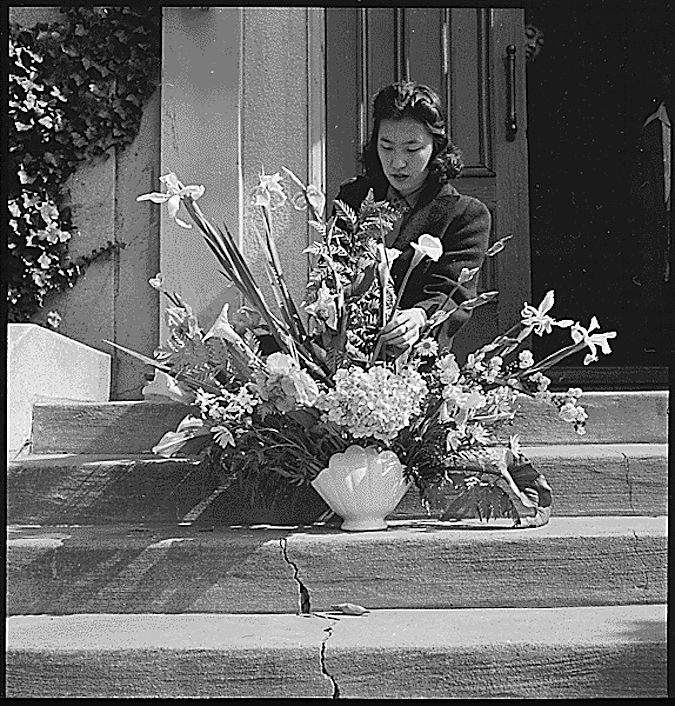
Oakland, Calif., 26 April 1942, Natl Archives Commons on flickr
“Arranging flowers for alter on last day of service at Japanese Independent Congregational Church, prior to evacuation [internment],” Oakland, California, April 26, 1942, by Dorothea Lange for the U.S. War Relocation Authority, via National Archives Commons on flickr.

All along the Pacific coast — from 1942 to January 1945 — over 110,000 people of Japanese heritage were forced into internment camps.  Sixty-two percent were American citizens.

In 1988, in the Civil Liberties Act, the U.S. Government admitted that its actions had been based on “race prejudice, war hysteria, and a failure of political leadership.”

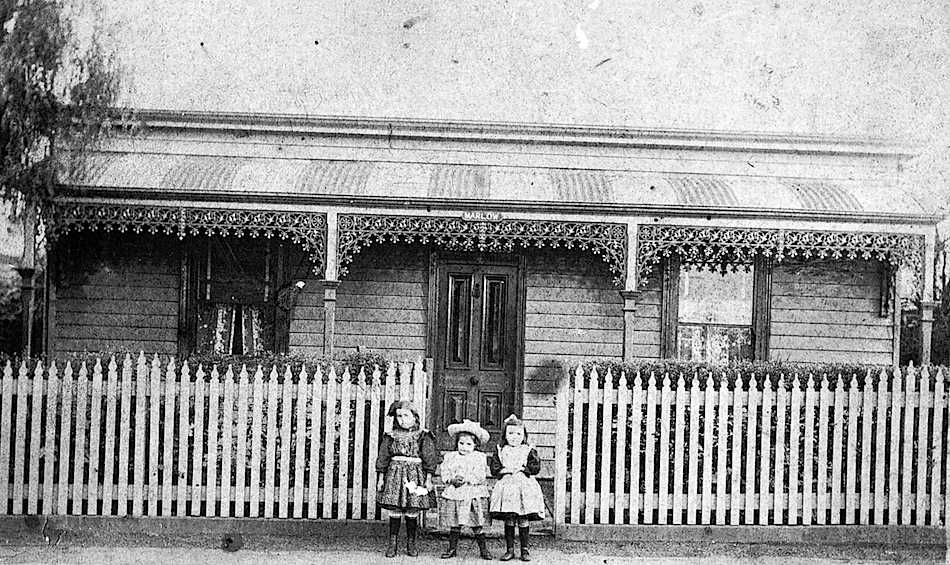
The Sunday porch: Bendigo, Victoria

Marjorie, Marion, and Phyllis Kershaw in front of their family home, “Marlow House,” Bendigo, Victoria, ca. 1901, via The Biggest Family Album in Australia, Museums Victoria Collections (under CC license).

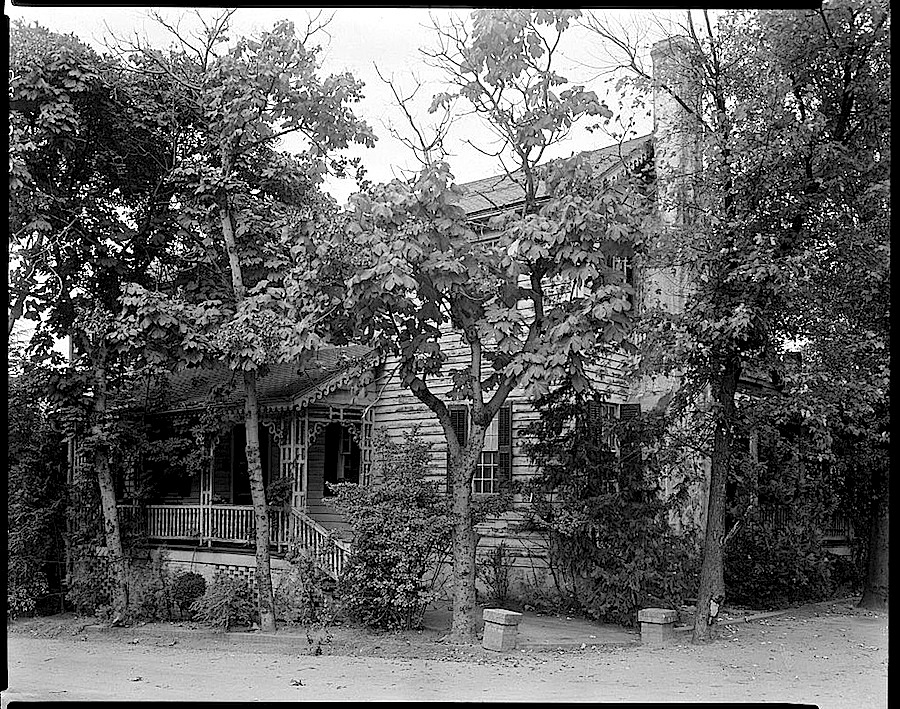
The Sunday porch: Washington, Georgia

Ellington House, Court and Spring Streets, Washington, Georgia, 1939 or 1944, by Frances Benjamin Johnston, via Library of Congress Prints and Photographs Division.

The house does not appear to have survived.

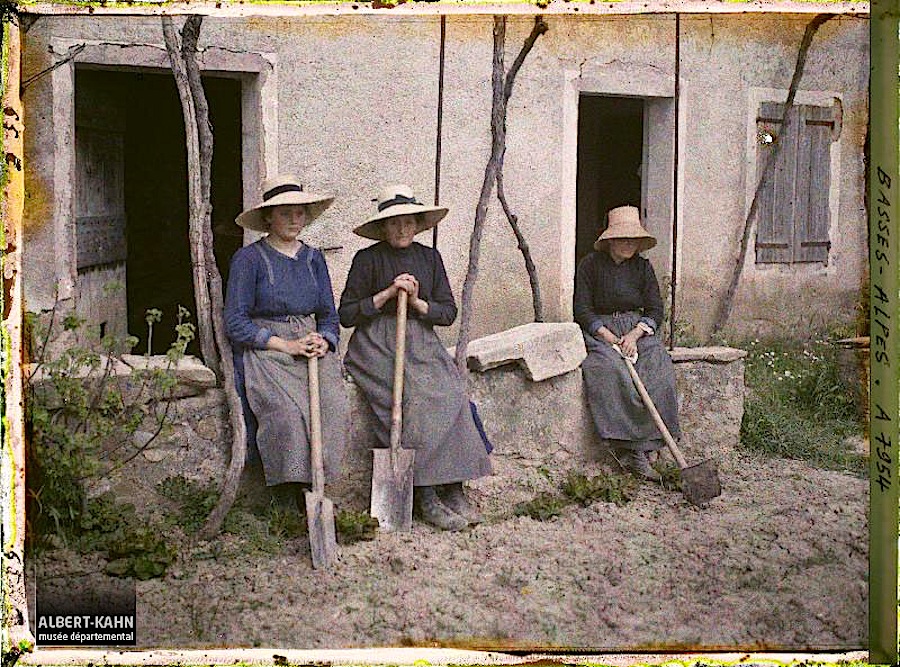
Les Mées, France


Women resting after working in a garden or vineyard, Les Mées, Basses-Alpes, France, April 13, 1916, by Georges Chevalier, via Archives of the Planet Collection – Albert Kahn Museum /Départment of Hauts-de-Seine.

I love their hats. Les Mées is in Haute or upper Provence.  The area — very dry and hot — is one of the least densely populated in France.

This autochrome is one of about seventy-two thousand that were commissioned and then archived by Albert Kahn, a wealthy French banker and pacifist, between 1909 and 1931. Kahn sent thirteen photographers and filmmakers to fifty countries “to fix, once and for all, aspects, practices, and modes of human activity whose fatal disappearance is no longer ‘a matter of time.'”* The resulting collection is called Archives de la Planète and now resides in its own museum at Kahn’s old suburban estate at Boulogne-Billancourt, just west of Paris. Since June 2016, the archive has also been available for viewing online here.


*words of Albert Kahn, 1912. Also, the above photo (A 7 954) is © Collection Archives de la Planète – Musée Albert-Kahn and used under its terms, here.