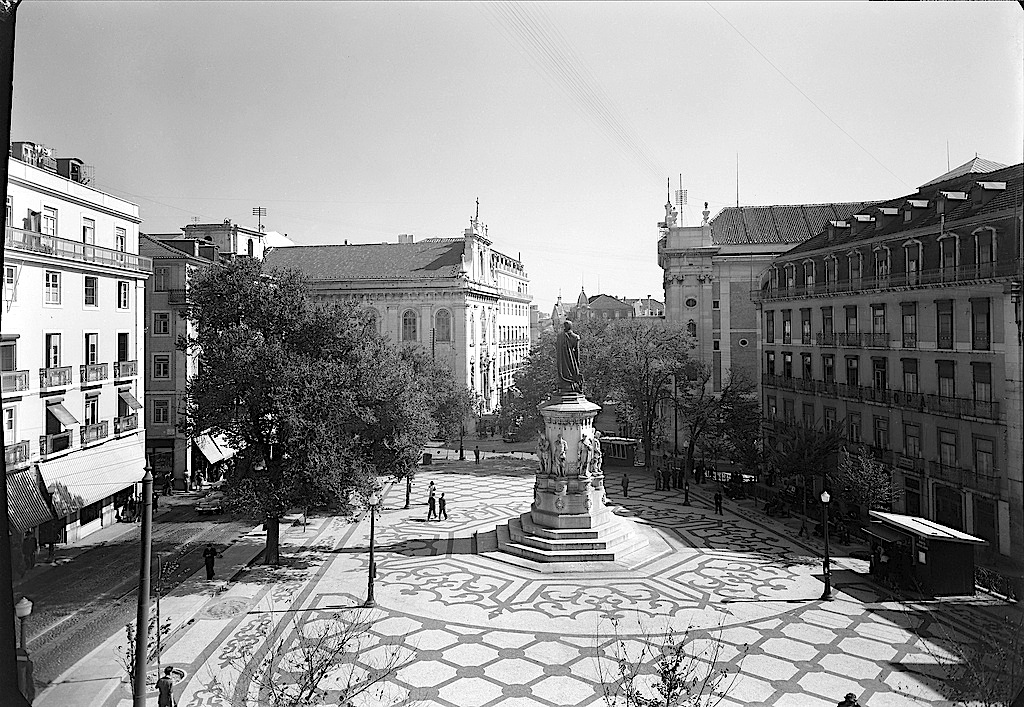
The 1867 sculpture is of Camões, a 16th century epic poet. The square looks much the same today, but the design of the paving tile (Portuguese pavement or calcada Portuguesa) is different.
While we’re all waiting for the Chelsea Flower Show to open next week and for pictures to emerge, here are a few things that I particularly liked when I visited the original Chelsea — the Chelsea Physic Garden — about a week and a half ago.
The four-acre London garden was founded in 1673 by the Worshipful Society of Apothecaries in order to grow medicinal plants and train their apprentices. It is the second oldest botanic garden in Britain, after the one at Oxford.
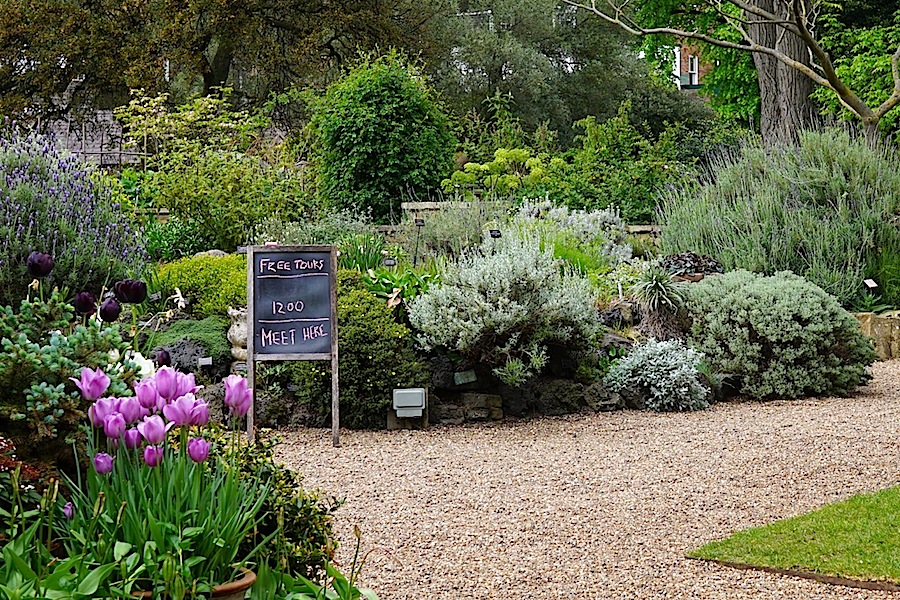
1. The Pond Rockery area (also shown at the top). The sides are planted in Mediterranean and alpine plants.
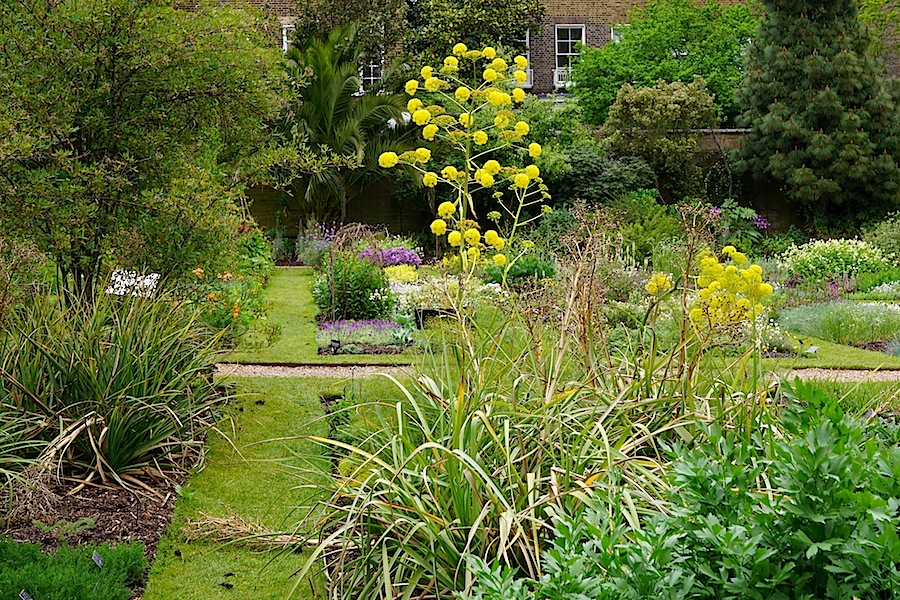
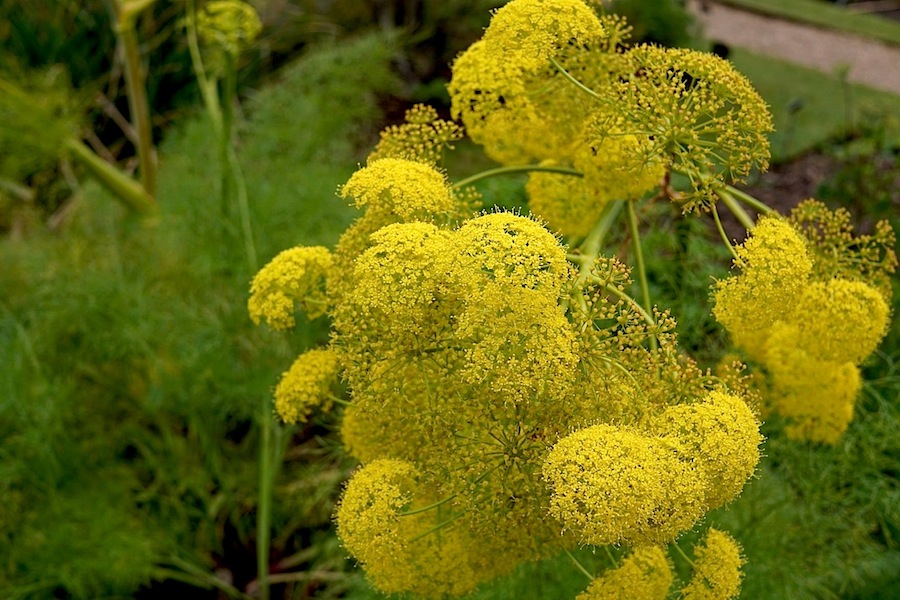
2. This giant fennel. It was a beacon in the Botanical Order Beds at about 8′ tall.
It did not have a label, but I have since looked it up — Ferula communes.
The species is part of the carrot family, Apiaceae. (Common fennel belongs to another genus, Foeniculum.)
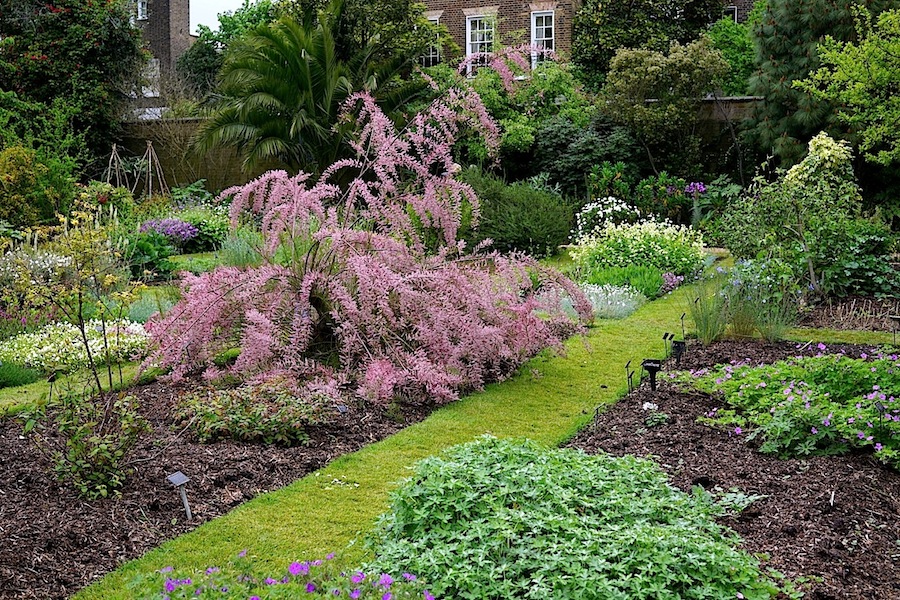
This tamarix in the center of the beds was a star too.
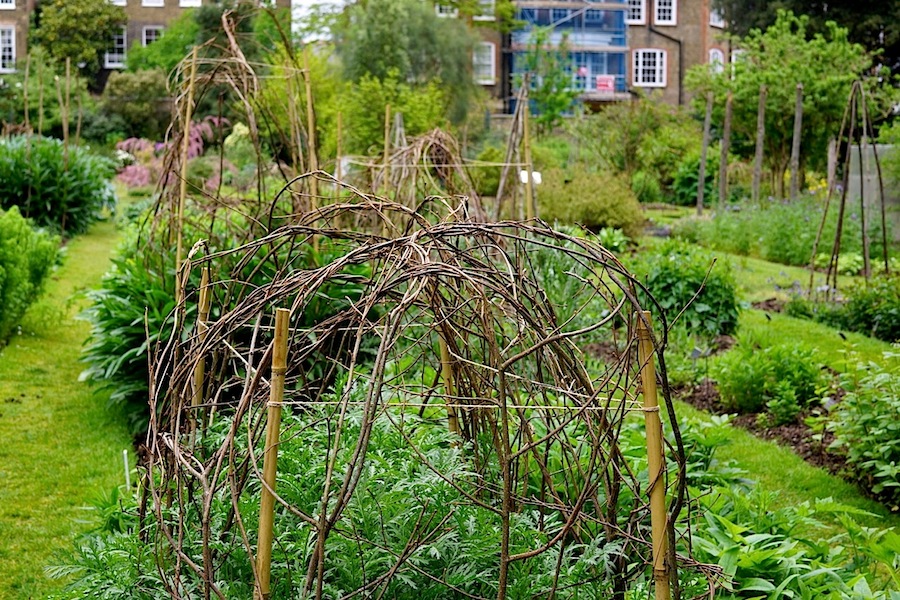
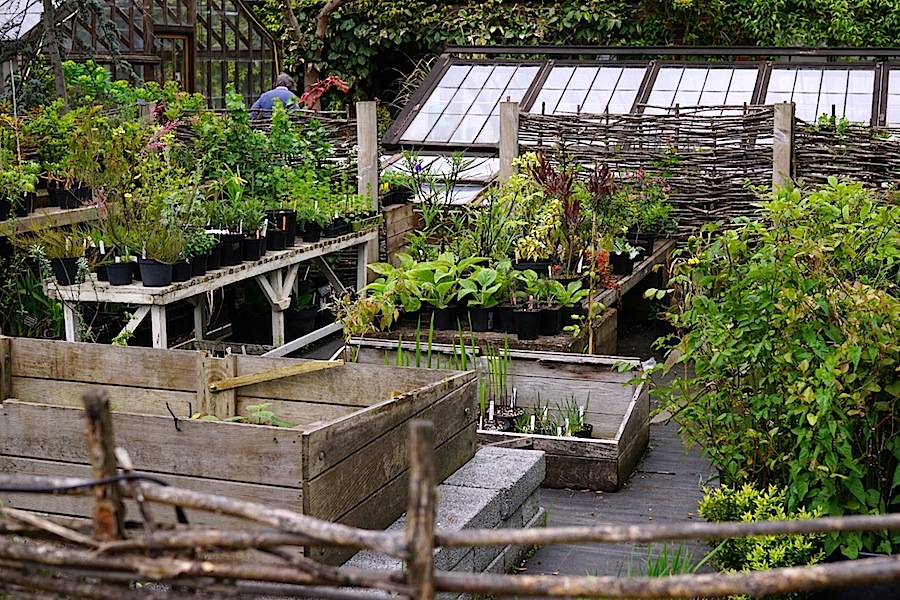
3. The plant supports of bamboo, string, and shrub and vine cuttings.
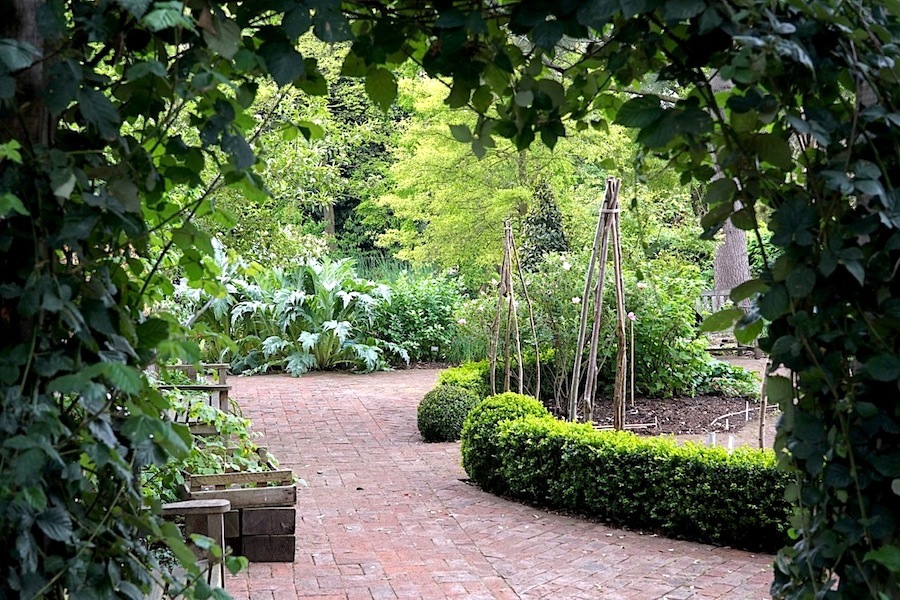
4. This neat little kitchen garden arrangement and its beautiful cardoons.
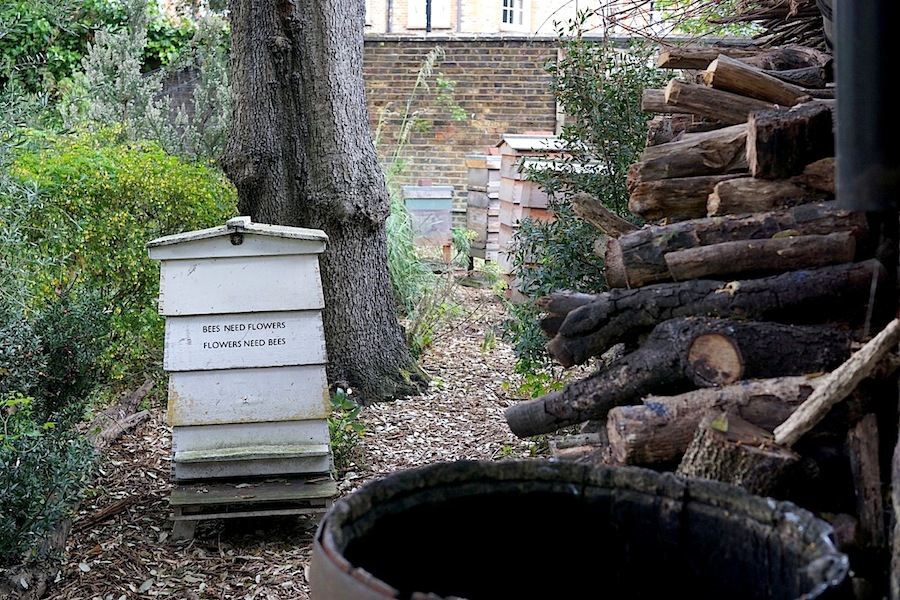
And the nearby beehives.
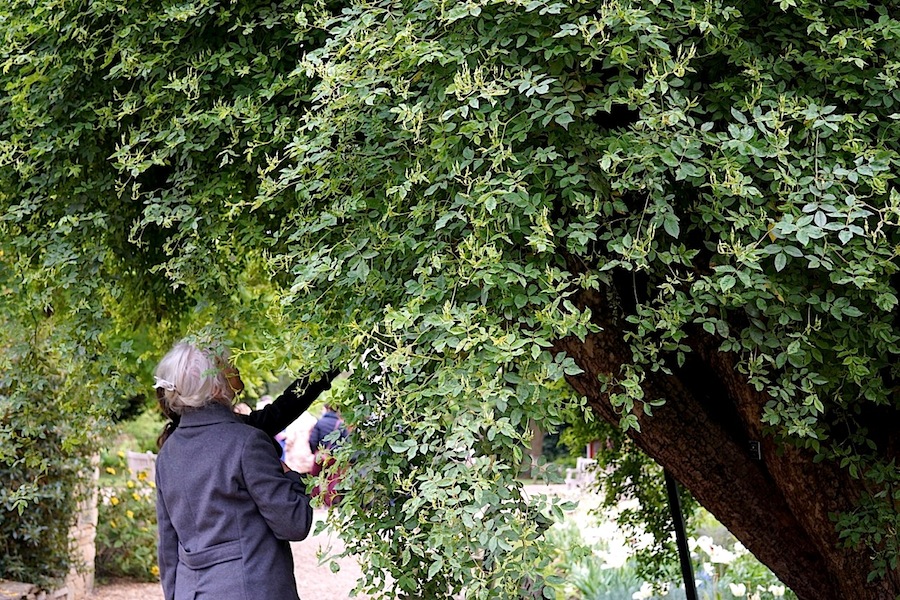
5. This trunk of a Catalpa bignonioide, which is supporting a huge Rosa Brunoni or Himalayan musk rose.
The rest of the tree was cut off. It may have died, but it may also have been too large for the space.
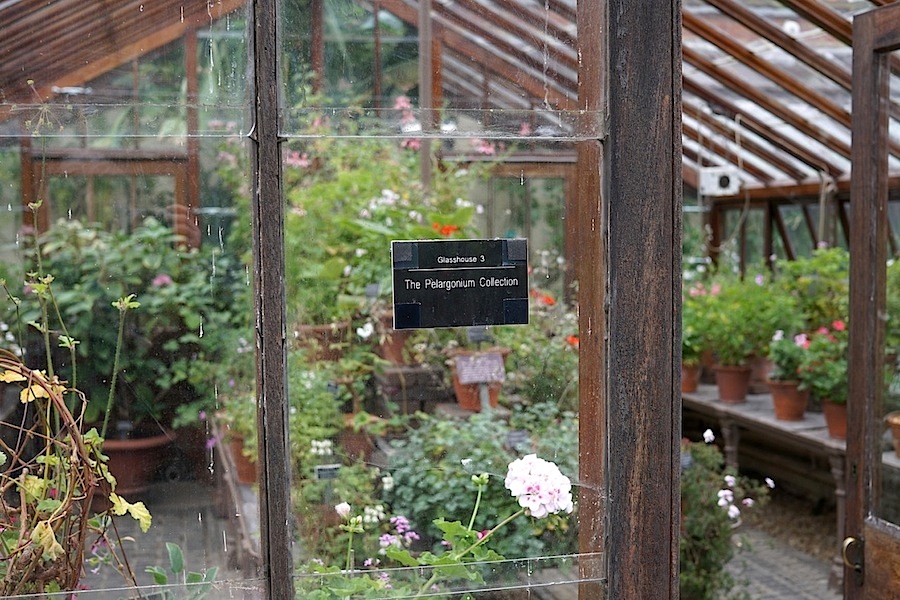
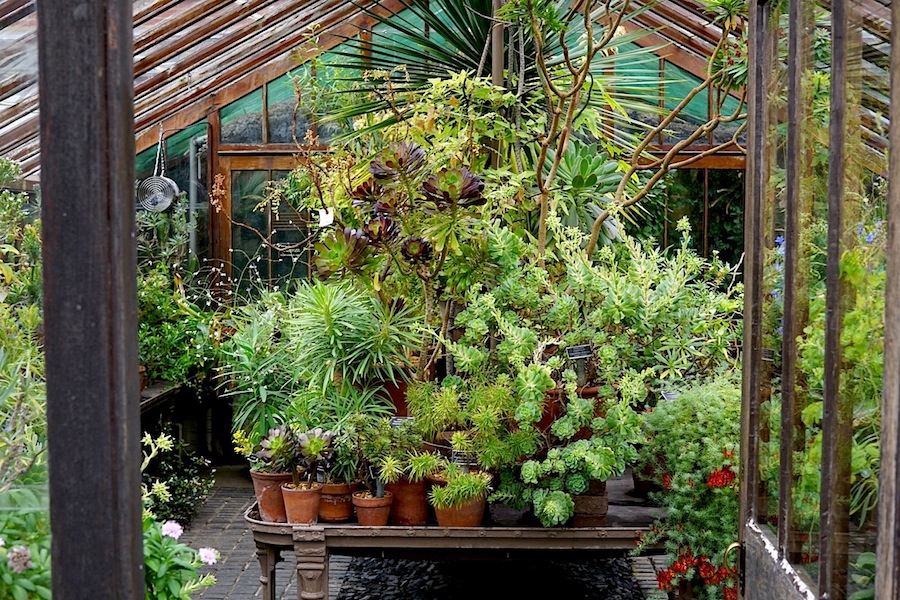
6. The greenhouse area.
Plants from the Canary Islands, Madeira, The Azores, and St. Helena.
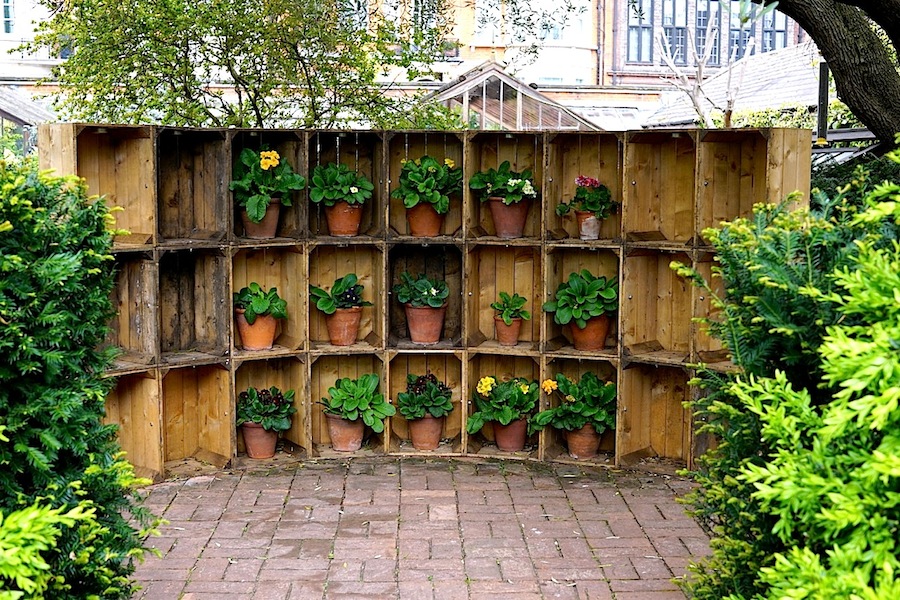
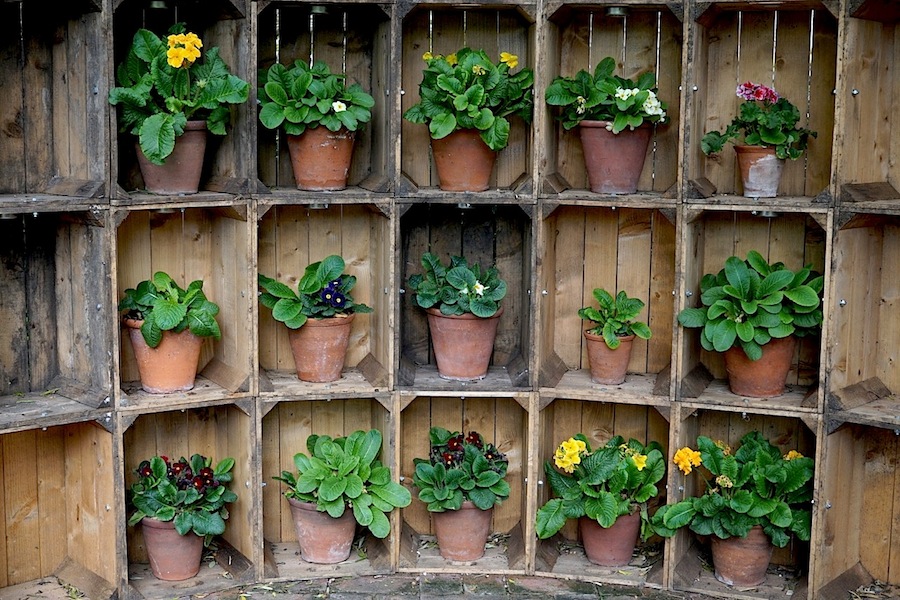
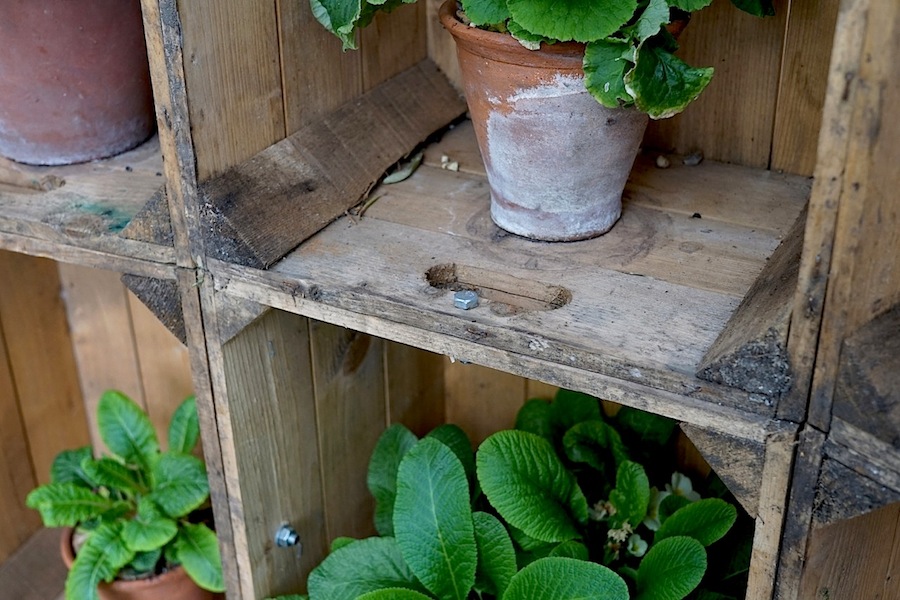
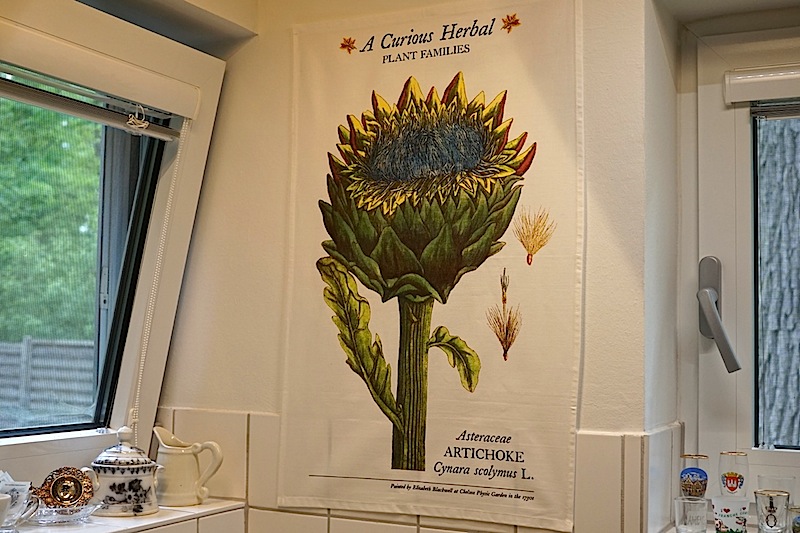
7. This primrose display, which — with the giant fennel — made my “most desired” list that day (along with this).
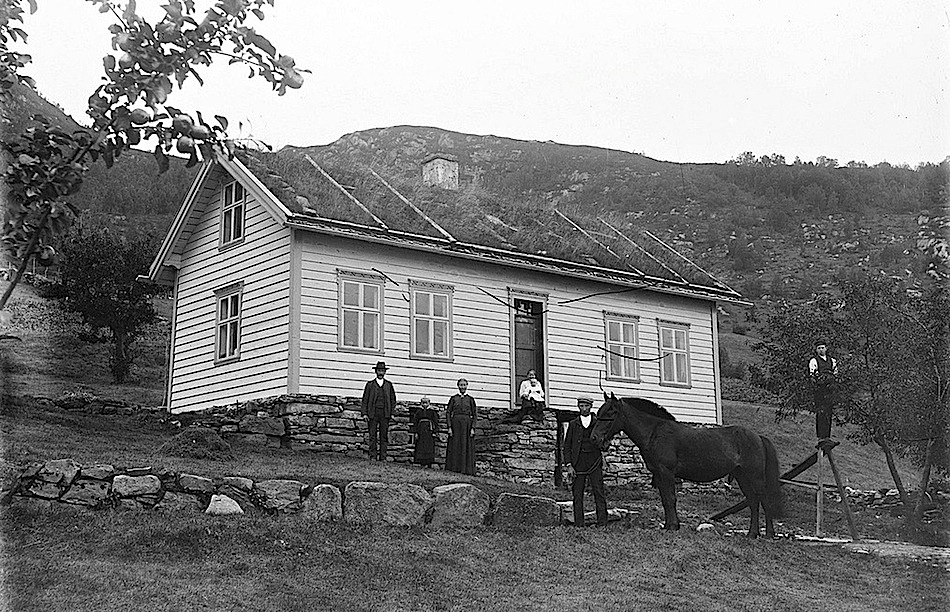
Farmhouse with sod roof, western Norway, ca. 1890-1910, via Fylkesarkivet i Sogn go Fjordane Commons on flickr.
The stone foundation, steps, and terracing are beautiful. Also note the ladder-type device that the man on the right is using to pick fruit. Click on the image for a larger view.
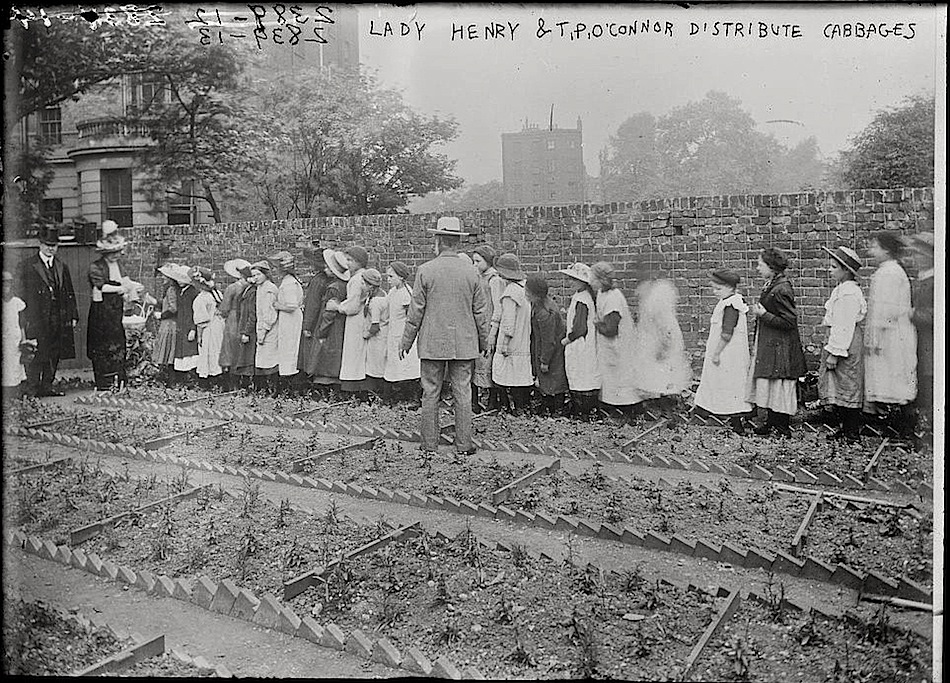
Lady Henry Somerset and T.P. O’Connor in a garden distributing cabbages to children, between ca. 1910 and ca. 1915, Bain News Service, via Library of Congress, Prints and Photographs Division.
Lady Henry (born Lady Isabel Cocks) was an heiress who married the second son of the Duke of Beaufort. After the couple separated, she turned to charity work on her various properties. She later became president of the British Women’s Temperance Association and a campaigner for birth control and women’s suffrage. In 1913, the readers of the London Evening News voted her their choice for first female prime minister of the United Kingdom.
Thomas Power O’Connor was an Irish journalist who founded and edited several newspapers in London. He was also a member of Parliament for the Irish Nationalist Party and later as an independent (representing Galway and then Liverpool).
I cannot tell what plants are growing in the flower (?) beds, but they are sectioned off — perhaps by bloom color?











 enclos*ure