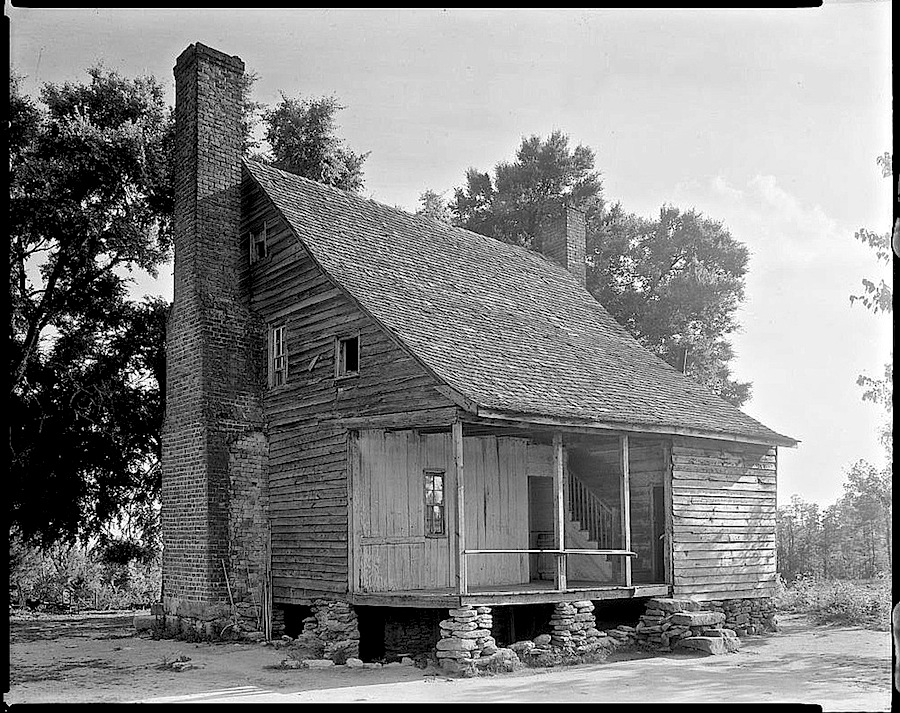
The Sunday porch: Louisburg, North Carolina


“A Peggy Wright Farm,” Louisburg, North Carolina, 1938, by Frances Benjamin Johnston, via Library of Congress Prints and Photographs Division.

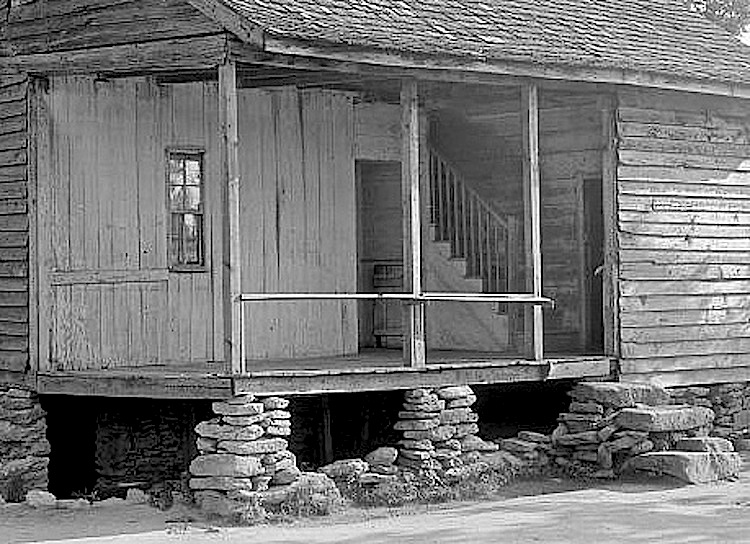
Detail of above photo.

All three Johnston photos of this house are captioned “A Peggy Wright Farm,” so Peggy may have been a woman who owned several properties. (The other two pictures are here and here.)

The Library’s online catalogue notes say that the building dates from 1780 and that this is the place “where Peggy was killed by lightning.”

Point Pleasant, W.Va.

“A [river] pilot’s wheel stuck in the backyard of a retired pilot’s home,” Point Pleasant, West Virginia, May 1943, by Arthur S. Siegelvia Library of Congress Prints and Photographs Division.

Point Pleasant lies at the confluence of the Ohio and Kanawha Rivers. Siegel was working along the rivers on assignment for the U.S. Office of War Information. He photographed the U.S. Coast Guard patrol, steam and tow boats, and industrial plants, particularly the Marietta Manufacturing Company, which was constructing LT boats for the army.

Comparing bouquets

Alfalfa crops, probably in Oregon, ca. 1955, via OSU Special Collections & Archives Commons on flickr.

Plants on the left show growth without Borax added to the soil and the plants on the right show what growth has occurred with borax. When soils have a borax deficiency, a “yellow top” condition develops, especially during the dry season. The plants are part of the Experiment Station soils program experiments.

— OSU photo caption

The Hague, Netherlands


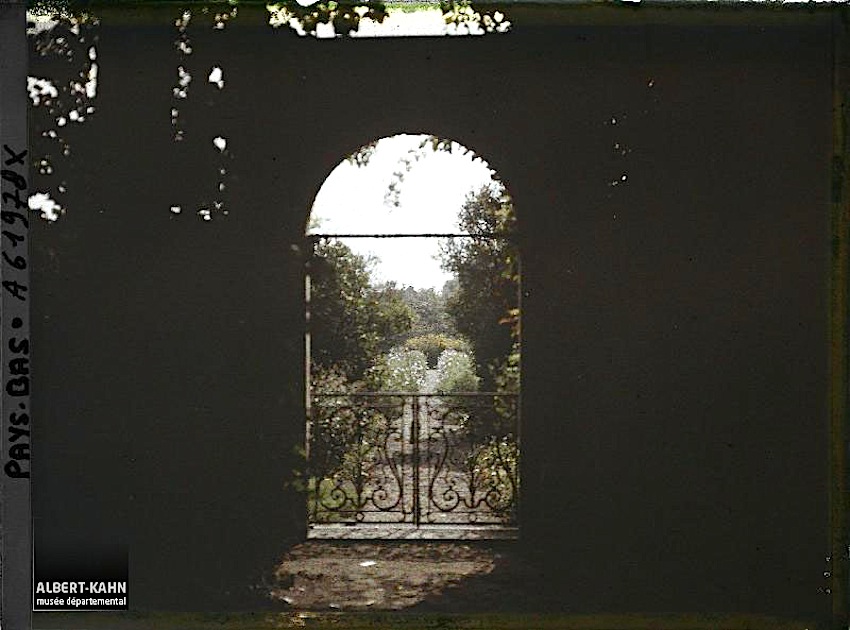
Palace Garden, The Hague, Netherlands, August 1929, by Stéphane Passet, via Archives of the Planet Collection – Albert Kahn Museum /Département des Hauts-de-Seine.

The autochrome above is one of about seventy-two thousand that were commissioned and then archived by Albert Kahn, a wealthy French banker, between 1909 and 1931. Kahn sent thirteen photographers and filmmakers to fifty countries “to fix, once and for all, aspects, practices, and modes of human activity whose fatal disappearance is no longer ‘a matter of time.'”* The resulting collection is called Archives de la Planète and now resides in its own museum at Kahn’s old suburban estate at Boulogne-Billancourt, just west of Paris. Since June 2016, the archive has also been available for viewing online here.


*words of Albert Kahn, 1912. Also, the above photo (A 61 978 X) is © Collection Archives de la Planète – Musée Albert-Kahn and used under its terms, here.

Clement’s Inn, London

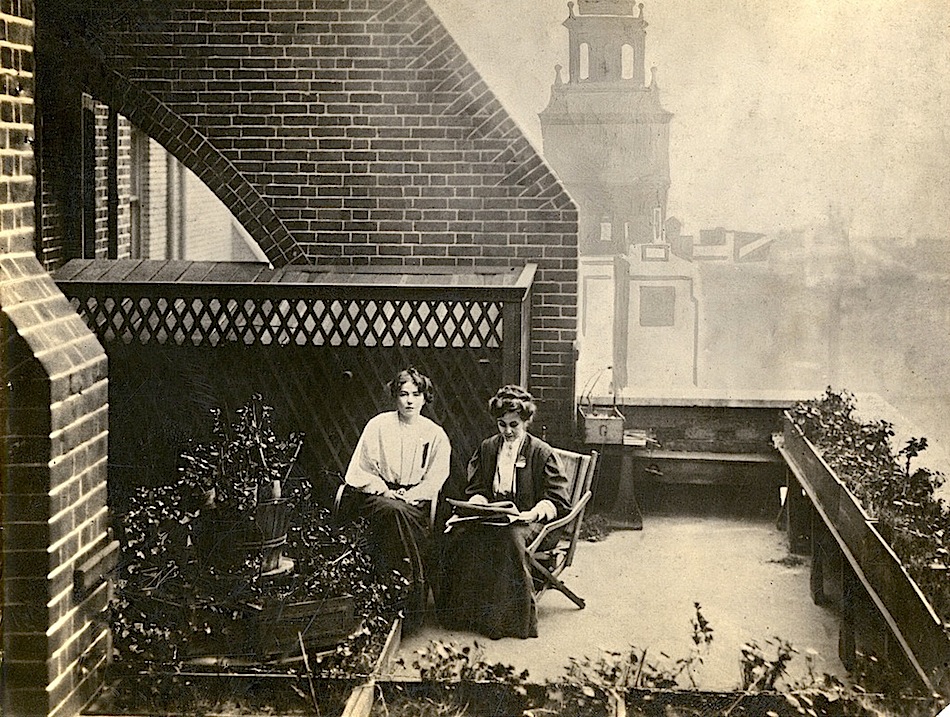
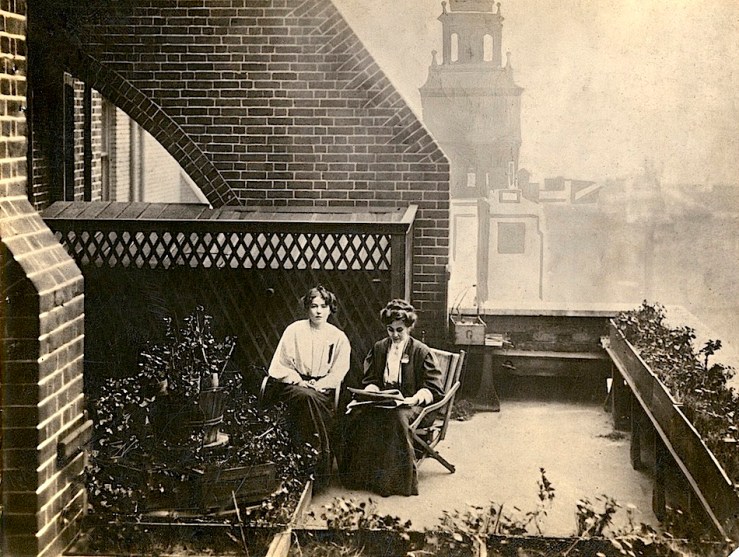
pankhursts-on-roof-garden1908-lse-libraryChristabel and Emmeline Pankhurst on the roof at Clement’s Inn, London, October 1908, via LSE (London School of Economics) Library Commons on flickr. A note on the back of the photo says that they were hiding* from the police.

At the time of the photo, numbers 3 and 4 Clement’s Inn† housed the offices of the Women’s Social and Political Union (WSPU), which Emmeline had founded in 1903. The organization was an all-female group campaigning for women’s suffrage and was known for its physical confrontations with police, hunger strikes, and arson. Christabel was Emmeline’s oldest daughter and eventually took over leadership of the group.  At the outbreak of WWI, both women called for a halt to WSPU militant activities in support of the war effort and became involved in the “white feather” movement, handing out the traditional symbol of cowardice to men in civilian clothes.

There’s an interesting history of the Pankhurst women (there were two more daughters, Sylvia and Adela) here.


* A warrant had been issued for their arrest.  After the photo was taken, they went down to the street and were arrested.

†Located about here. The Clement’s Inn buildings, built in the 1880s, were five to seven stories high and housed both offices and apartments.  They were all demolished by 1977. The photo above was taken from the roof garden of the apartment of another WSPU member.