Last month, we finally made a trip to southwest Rwanda, after having rescheduled twice since the spring. For me, the chief attraction of the three-day visit — which involved many hours on some very rough and curvy roads — was the drive through the 378 square mile Nyungwe National Park, one of the most species-rich mountainous rain forests in Africa.

We also spent two nights at the wonderful Nyungwe Forest Lodge, possibly the best hotel in Rwanda. (Above: early morning breakfast at the Lodge.)
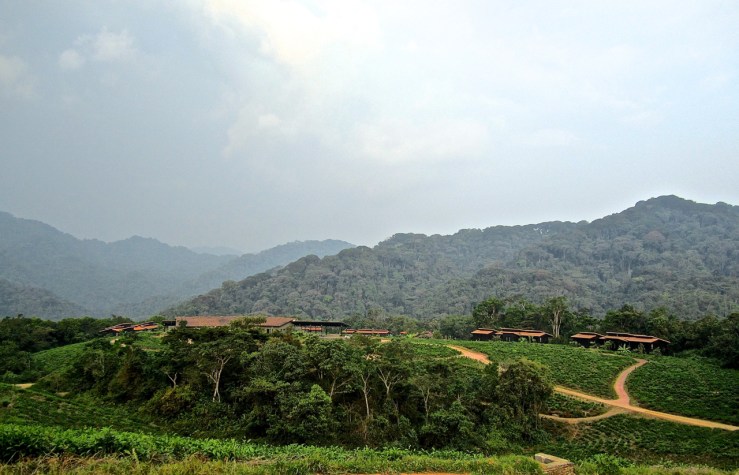
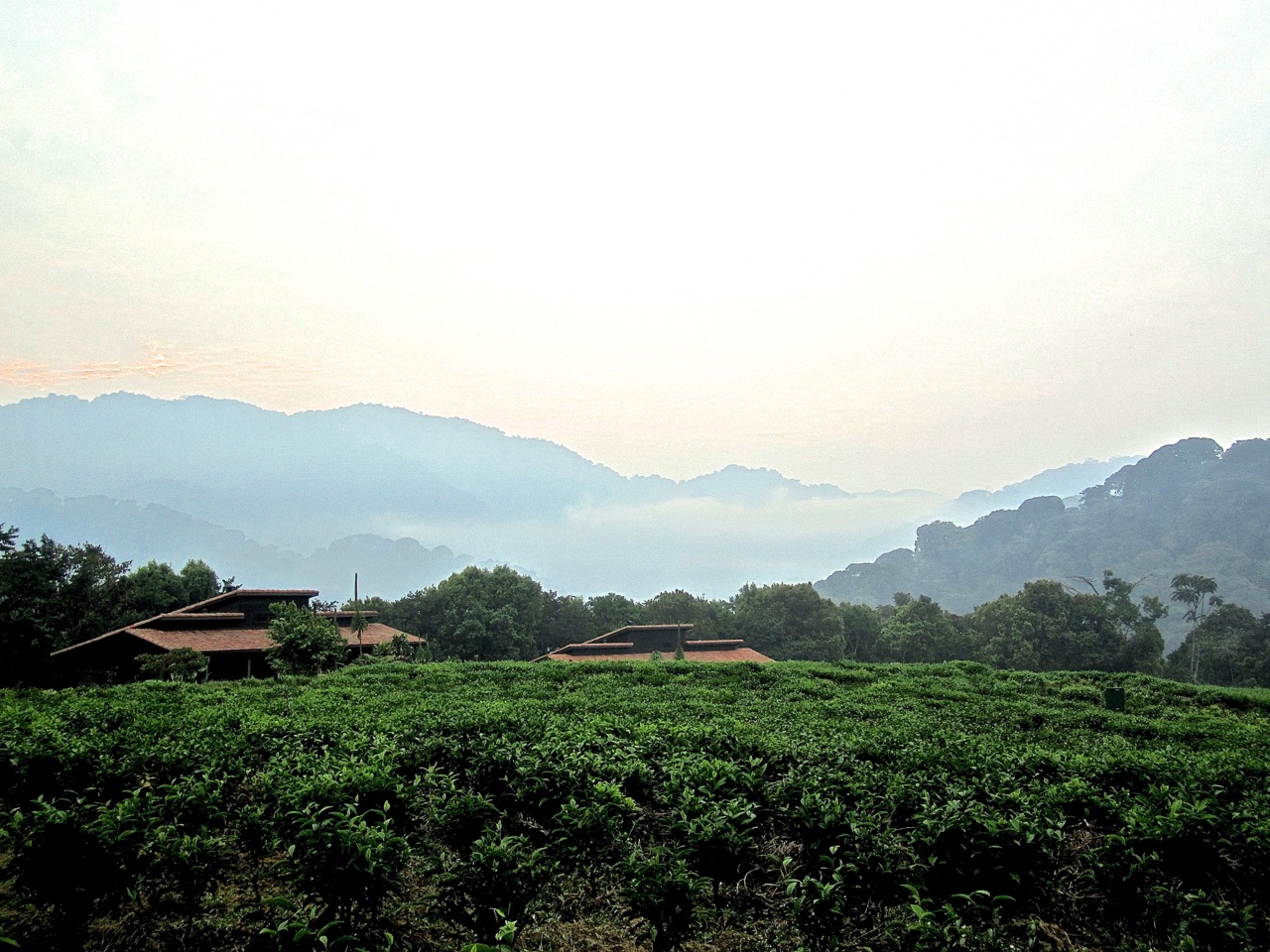
Located on the western edge of the park, the lodge offers beautiful views of two environments: the natural forest of the park and the agricultural fields of a tea plantation.

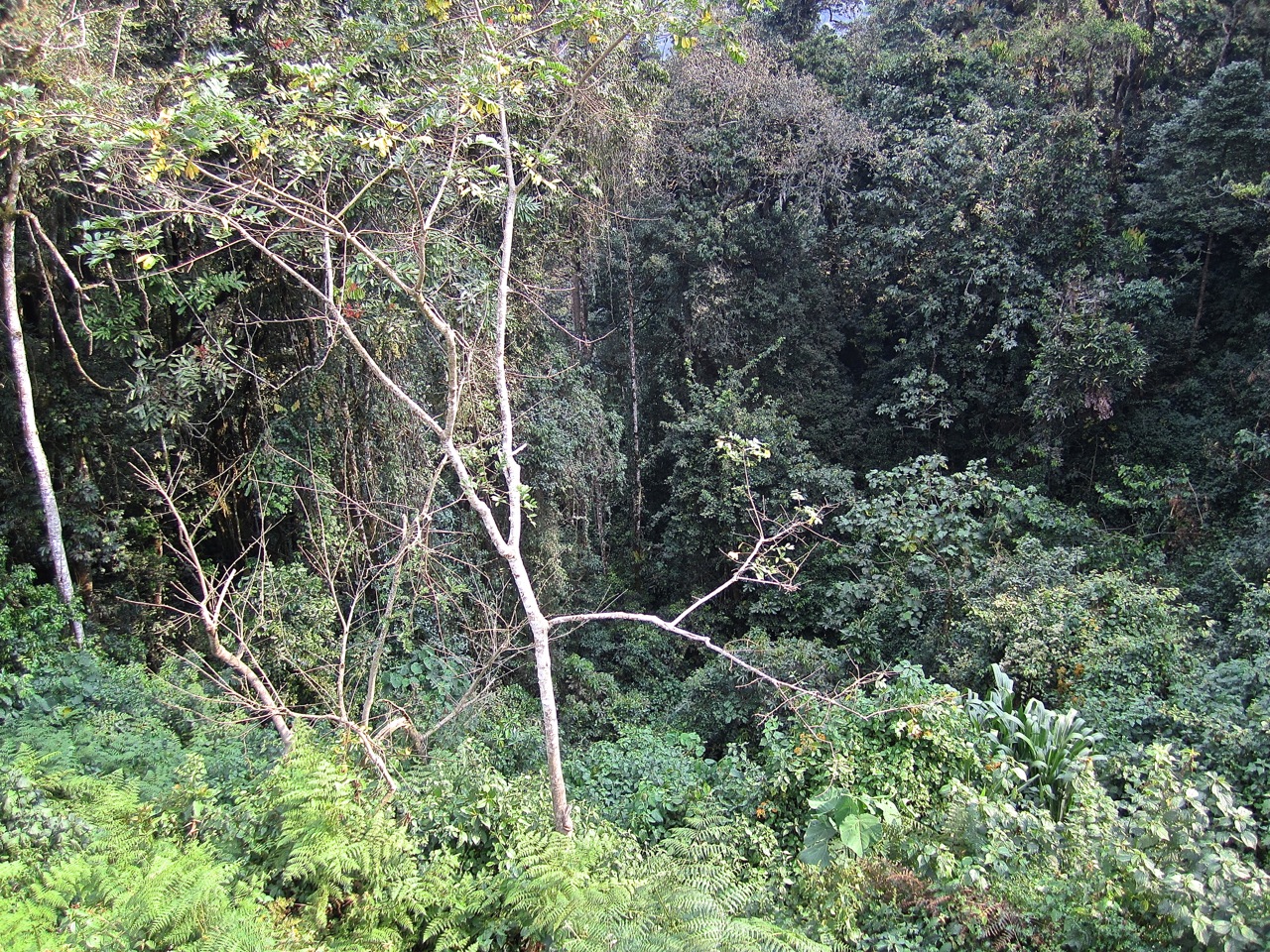
The cabins rest on the very edge of a field of tea. And their back-facing picture windows look into the forest trees (monkey sightings are common and guests are warned to close windows and doors at night).
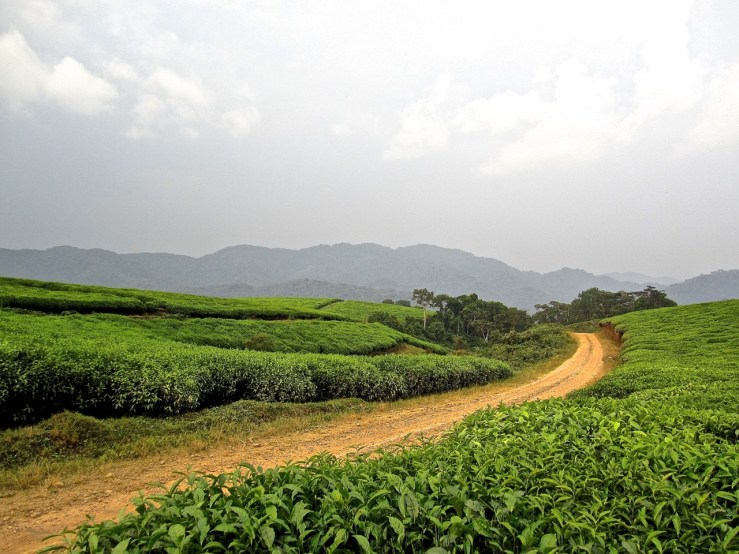
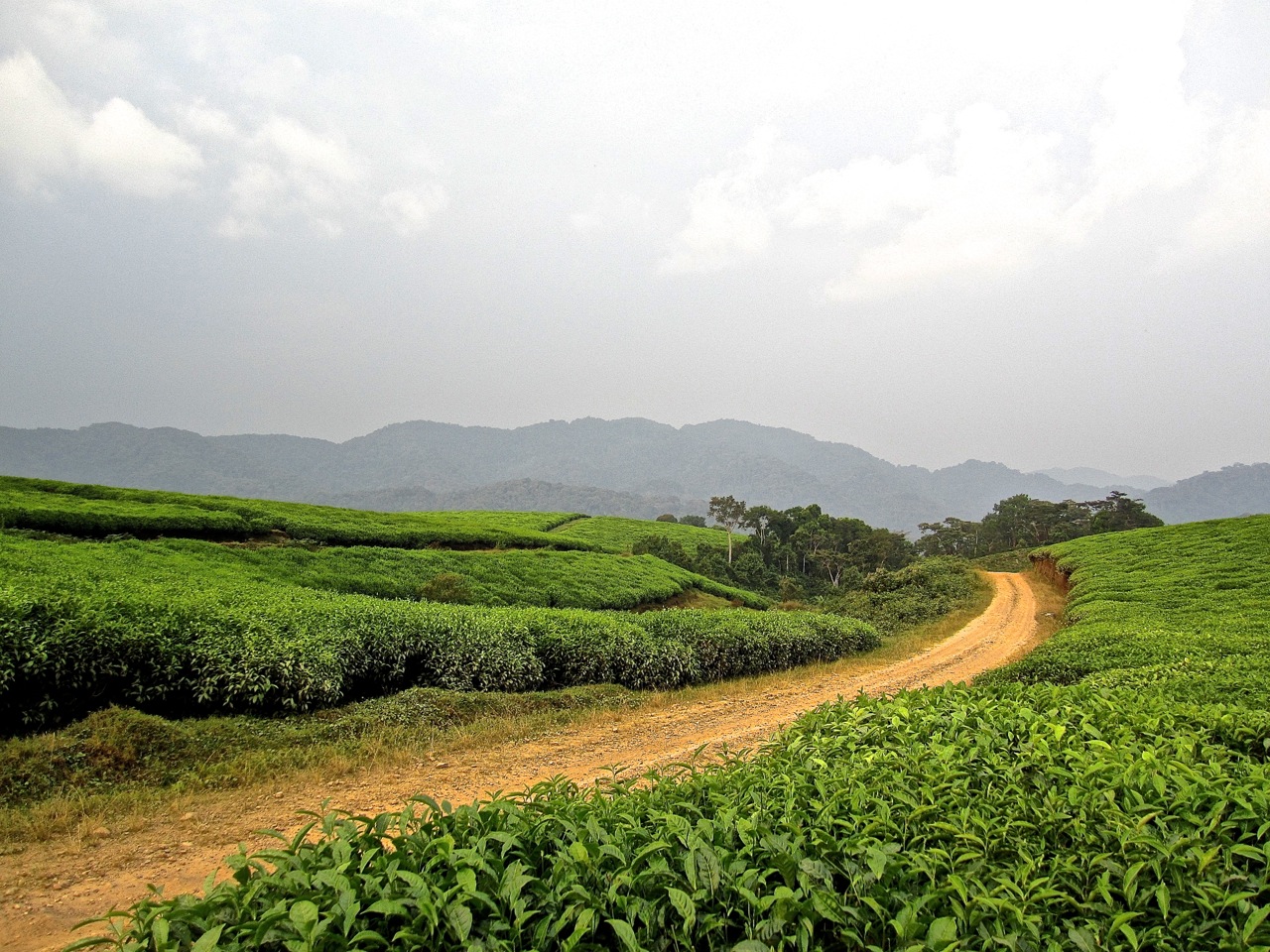
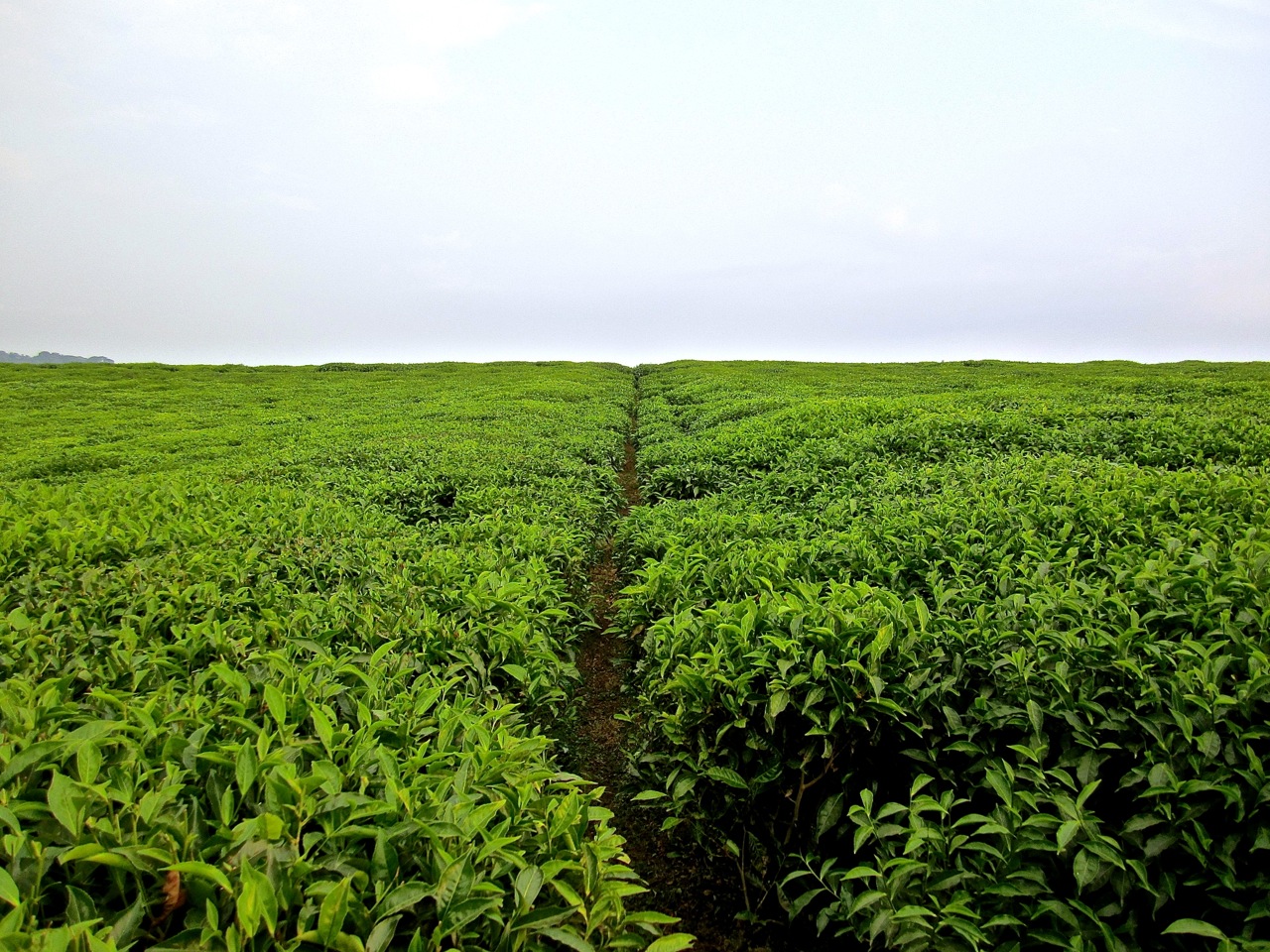
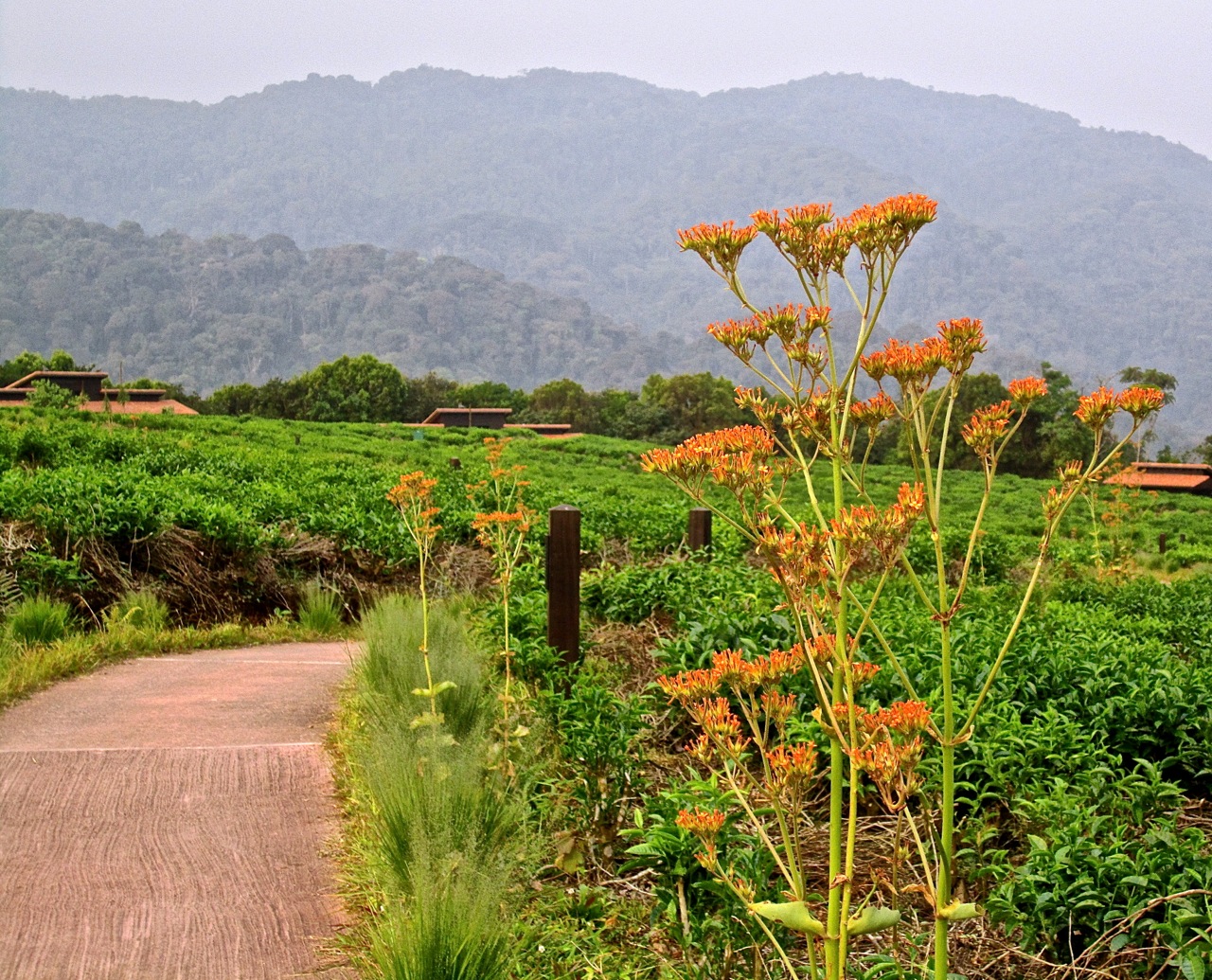
The road leading to the Lodge passes through bright green acres of tea bushes.
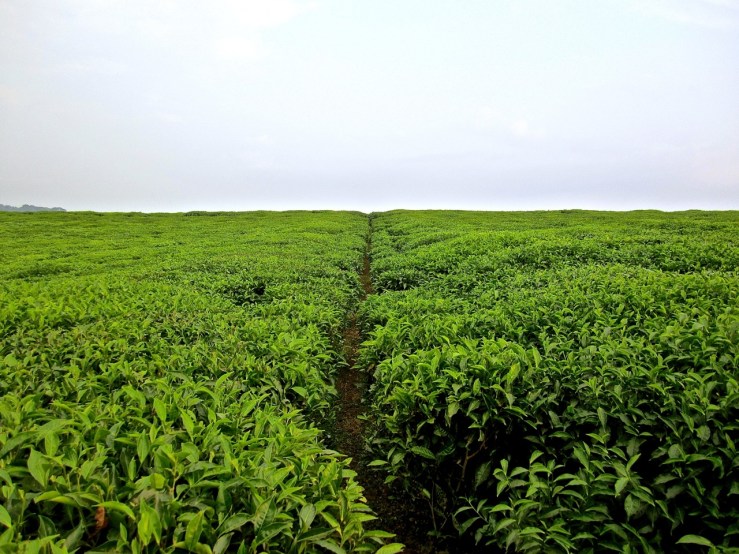
A local cooperative picks the tea (right up to the lodge and cabin doors) and keeps the income from its sales.
 (Above: the road to the lodge and a tea collection shed.)
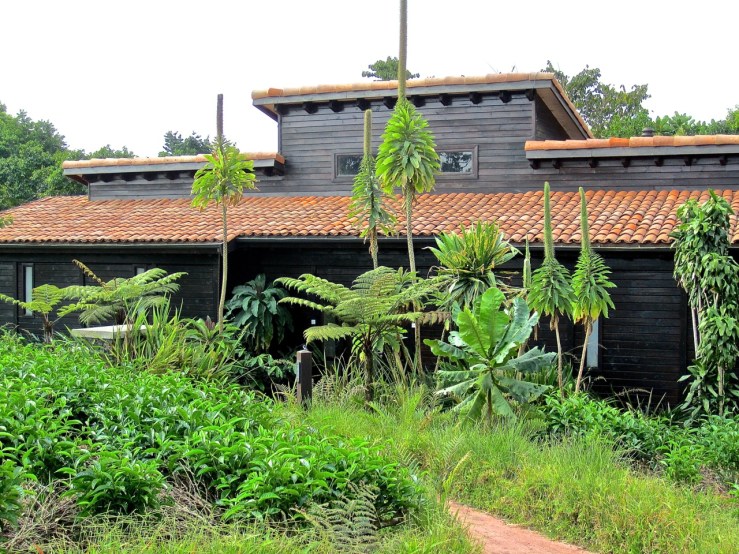
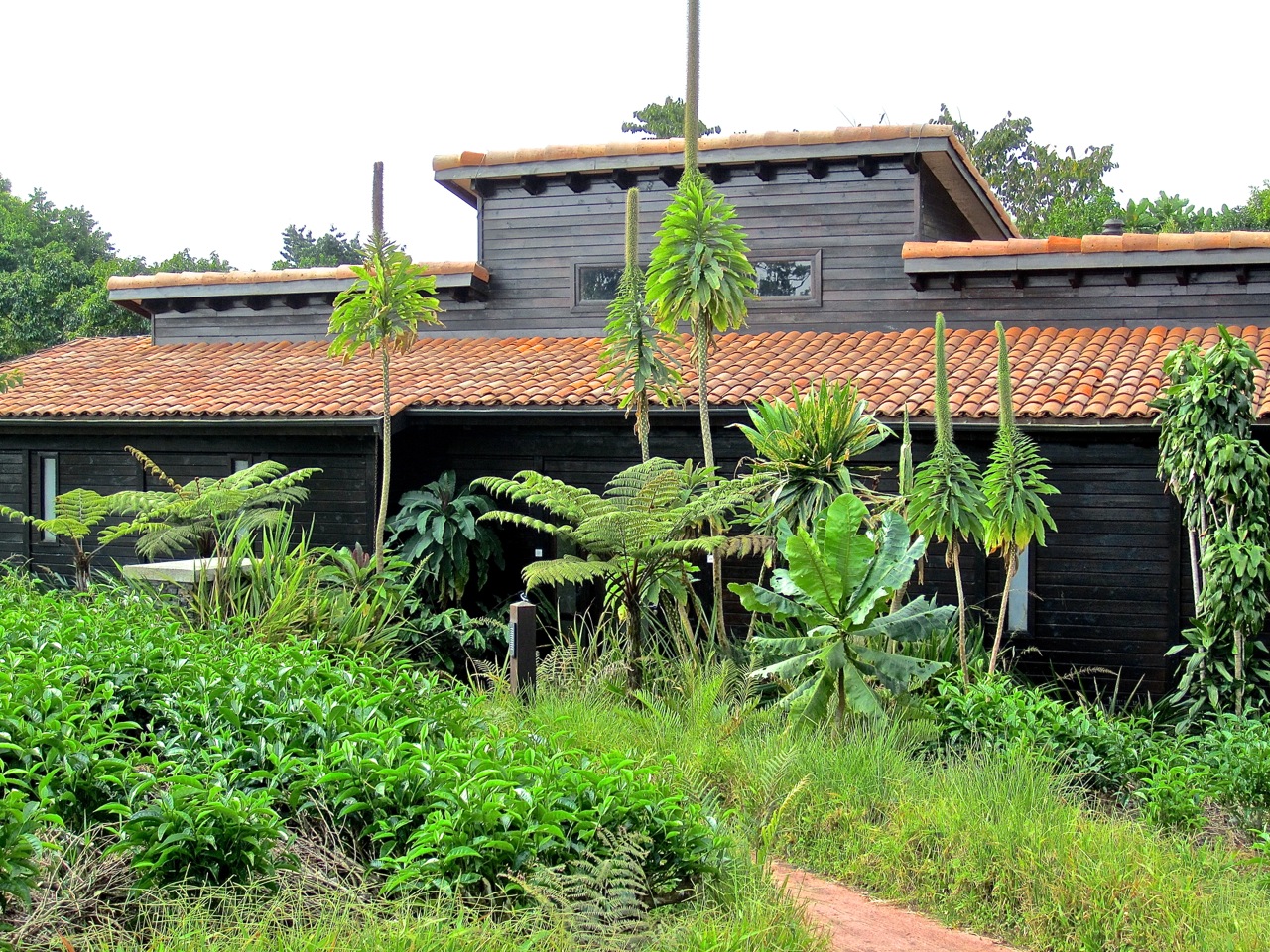
The (tea-side) entrances to the cabins are landscaped with plants from the forest. The Lodge was not allowed to bring any other plants onto its grounds.

The cabins are built on posts, lifting them off the ground.
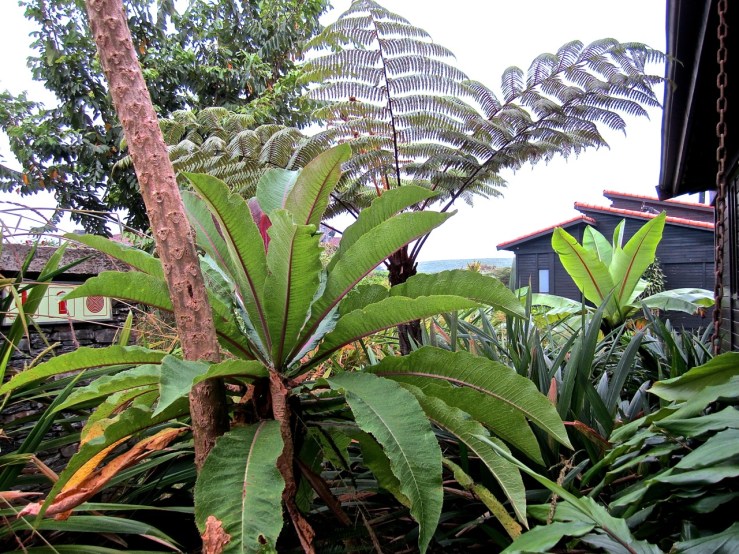
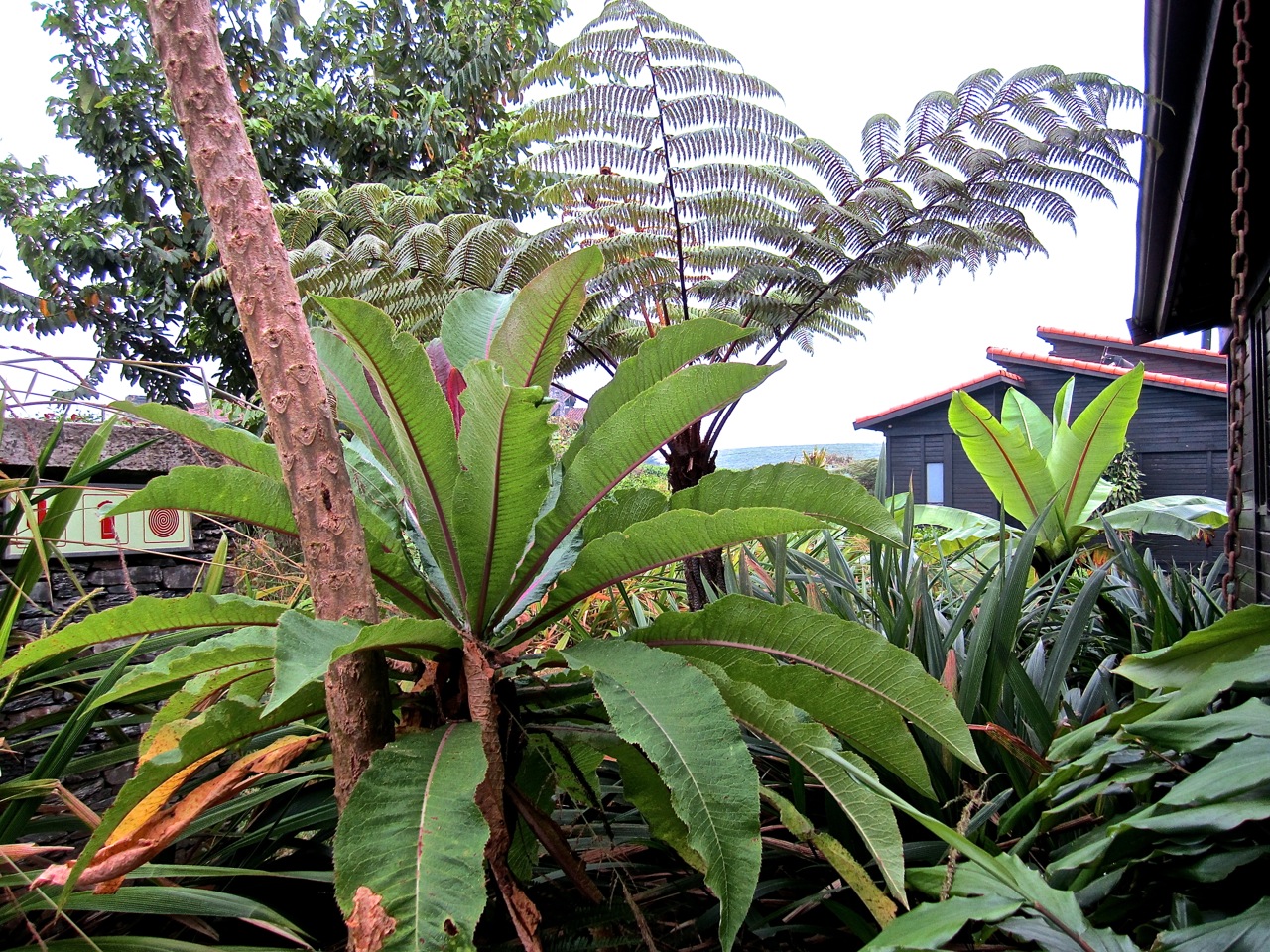
Above are some of the plants at the entrance to our cabin. I think the tree fern in the center background is a Cyathea manniana (a.k.a., Alsophila manniana). I haven’t been able to identify the plant in the foreground. Way in the back on the right is a wild banana (Musa ensete).

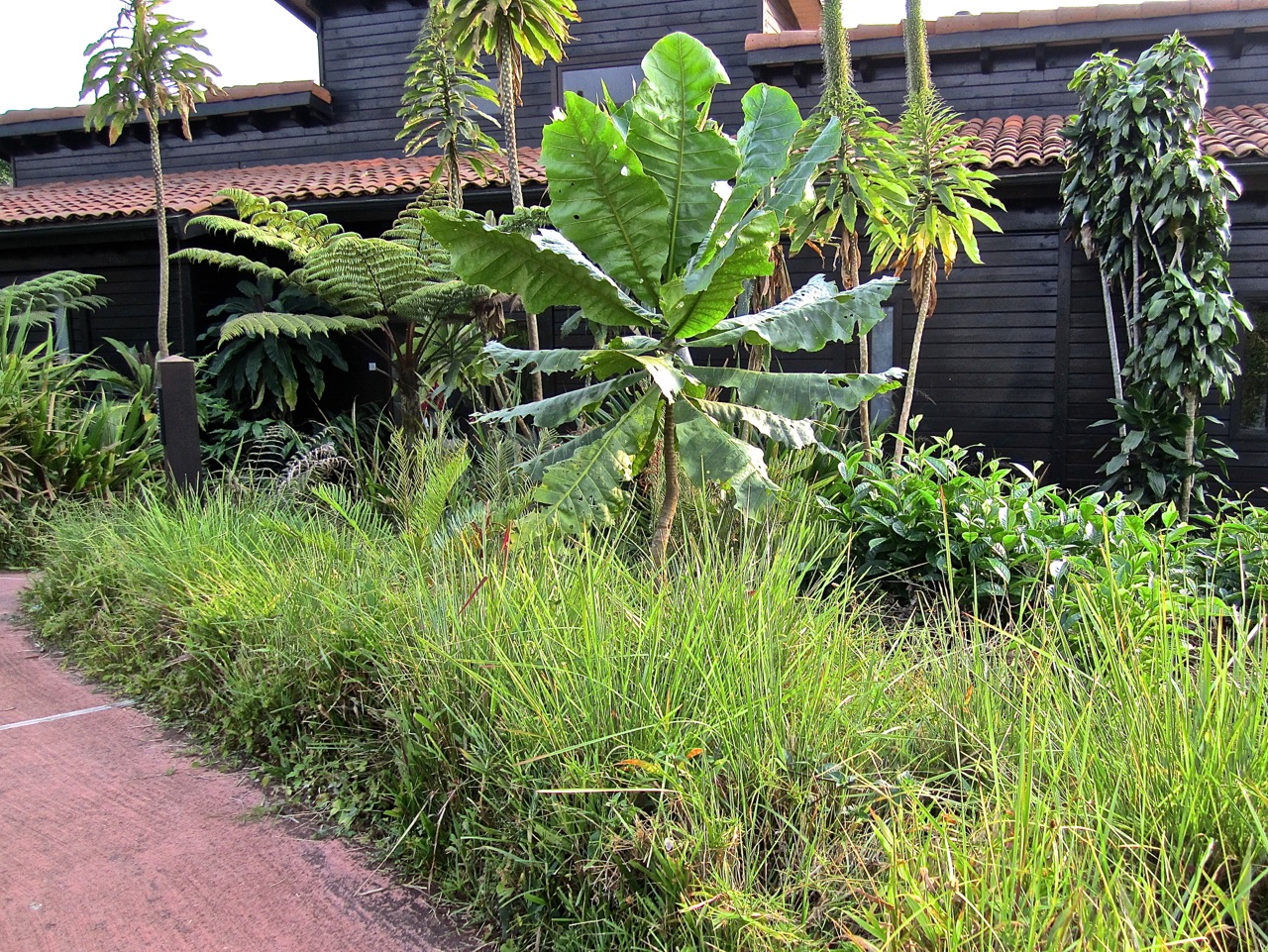
Unmown wild grass grows along the paths and among the larger plants. I believe the small tree in the center, above, is an Anthocleista grandiflora. I think the plants just to the right of it are Lobelia gibberoa.

A park trail entrance is located near the Lodge grounds. Guests are not allowed to hike, however, without paying the park fee and taking an official guide. Both can be arranged at the Lodge.
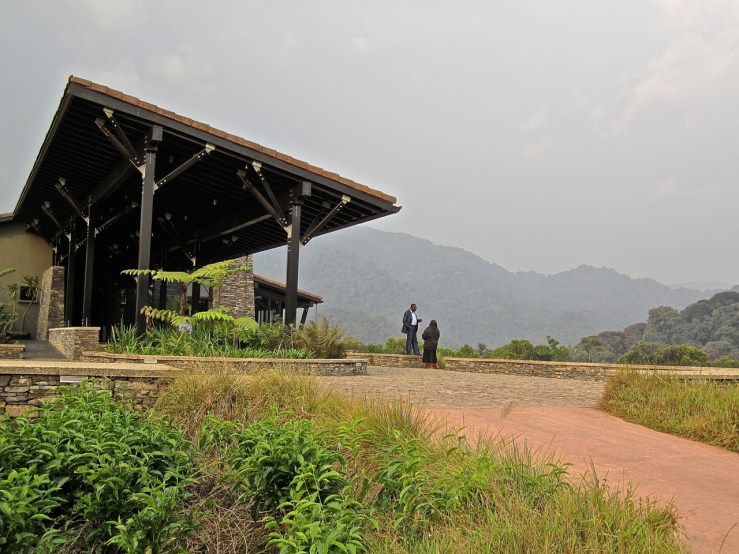
The main Lodge building (with the lounge, bar, and restaurant) rests in the center of the tea field.

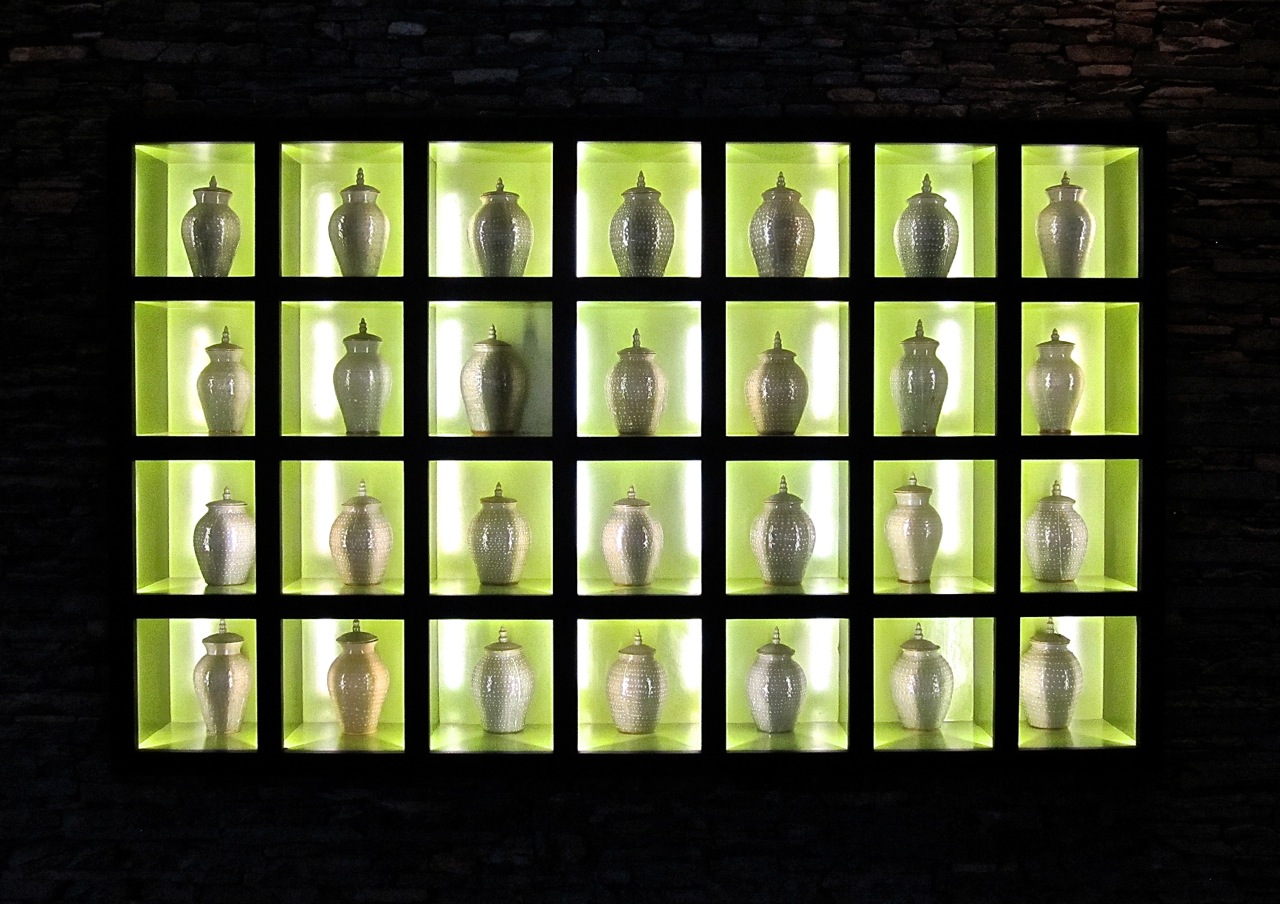
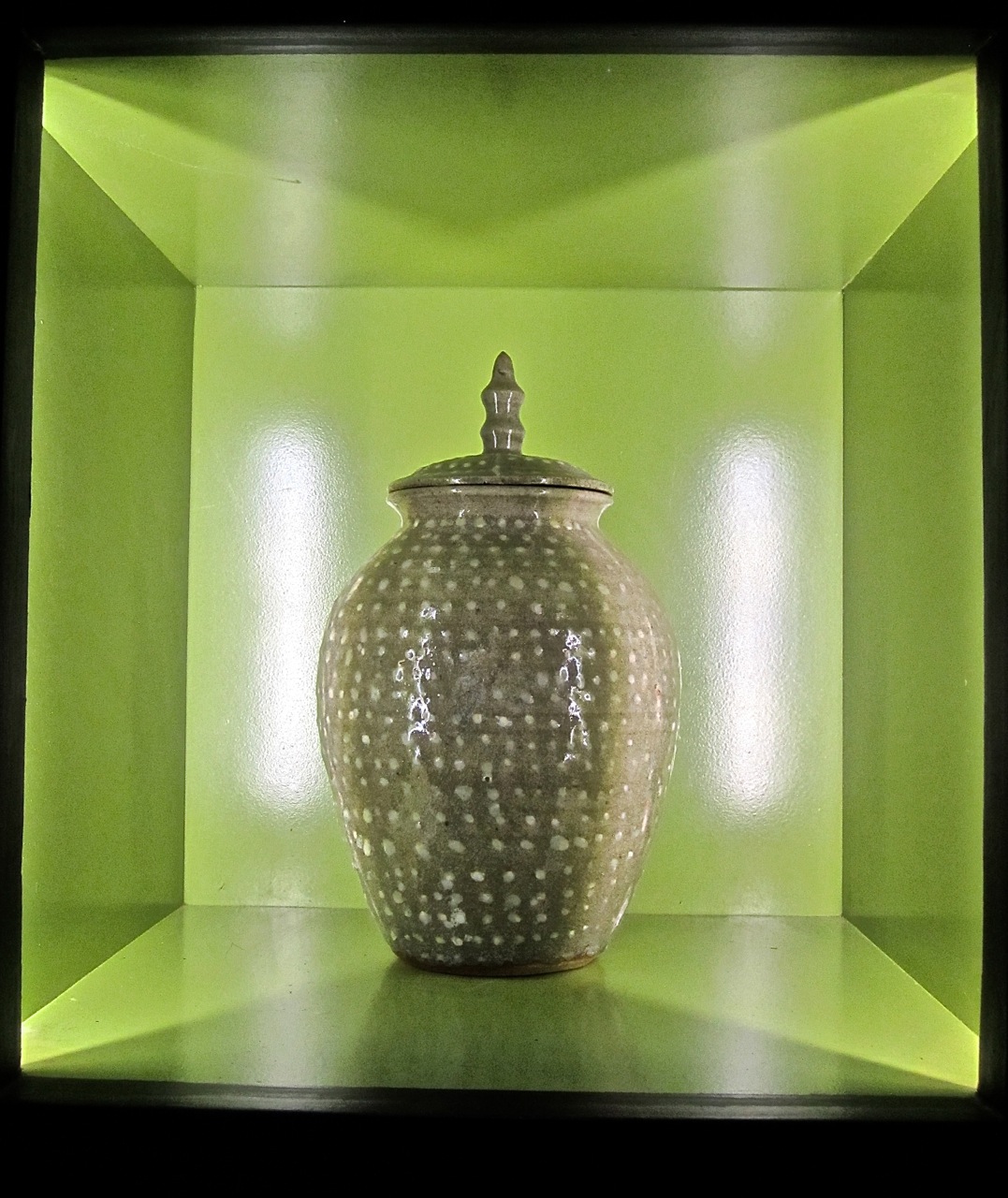
The interior is beautiful, as well. (Above: a wall of Rwandan pottery.)


The tea grows right up to the foundations of all the buildings. (Above: the main building terrace with rain chains.)
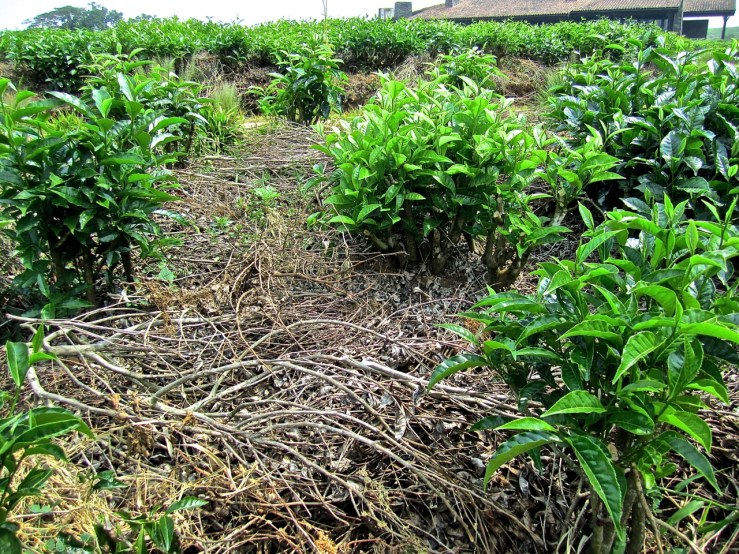
The tea bushes are mulched with the branches cut in the last pruning.
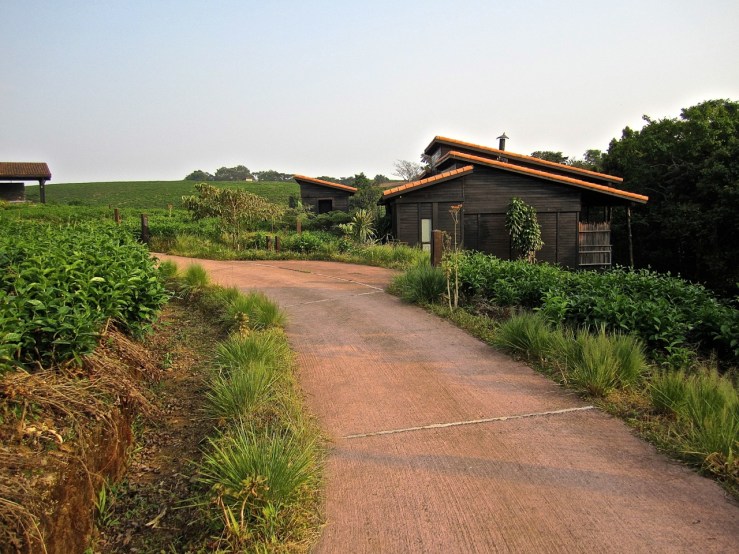
The Lodge’s main paths are earth-colored concrete and are set slightly below the level of the tea field.
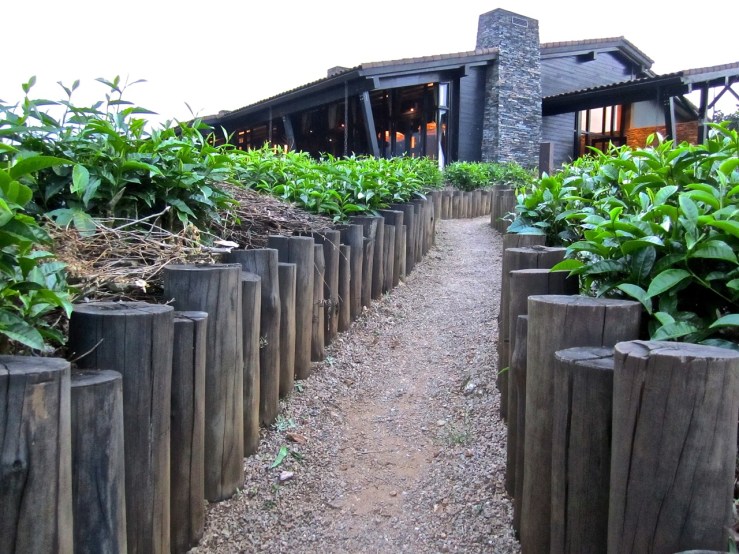
The smaller paths are also partially hidden below the tea.

Orange Kalanchoe crenata plants line the paths.
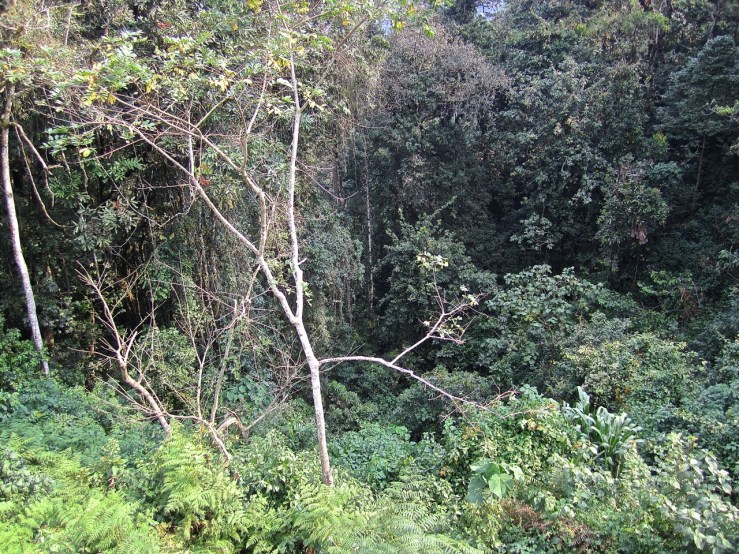
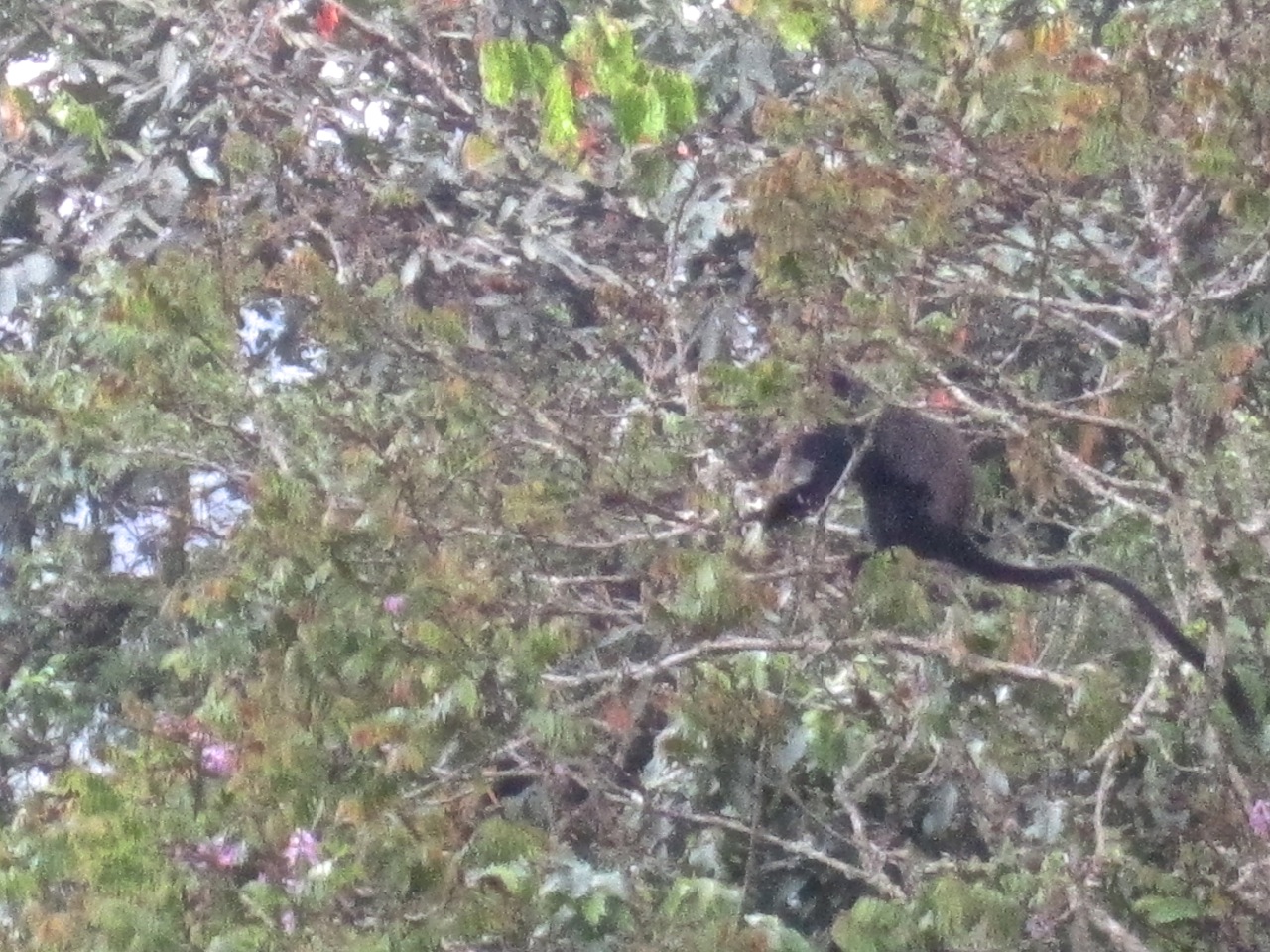
Above is the view of the forest from the pool. The trees are full of monkeys (we learned to look for shaking branches; then we saw them everywhere).
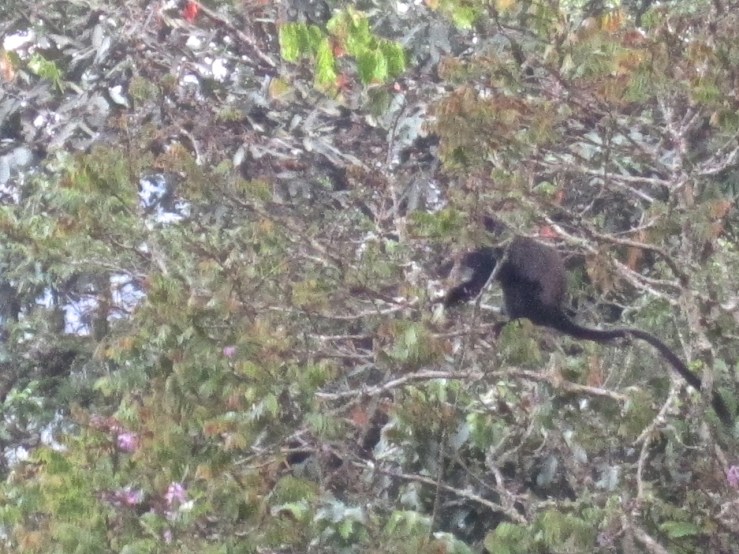 There’s one (above.)
 He jumps.
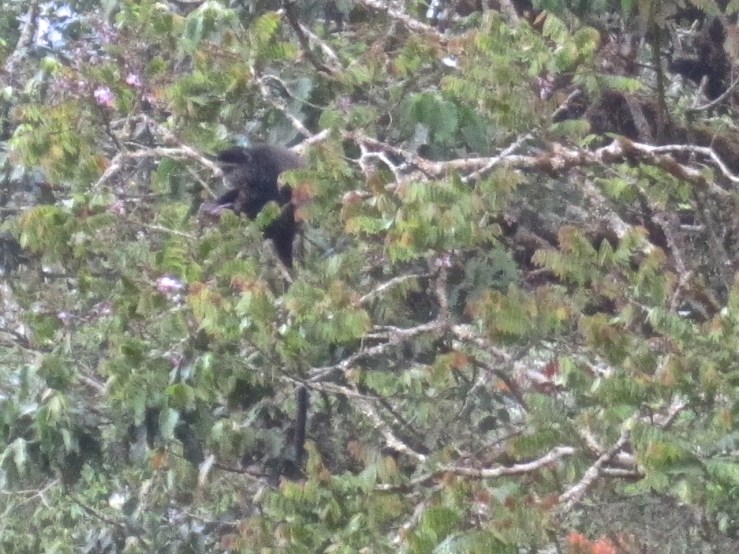 And lands. (OK, my nature photography is not so good.)
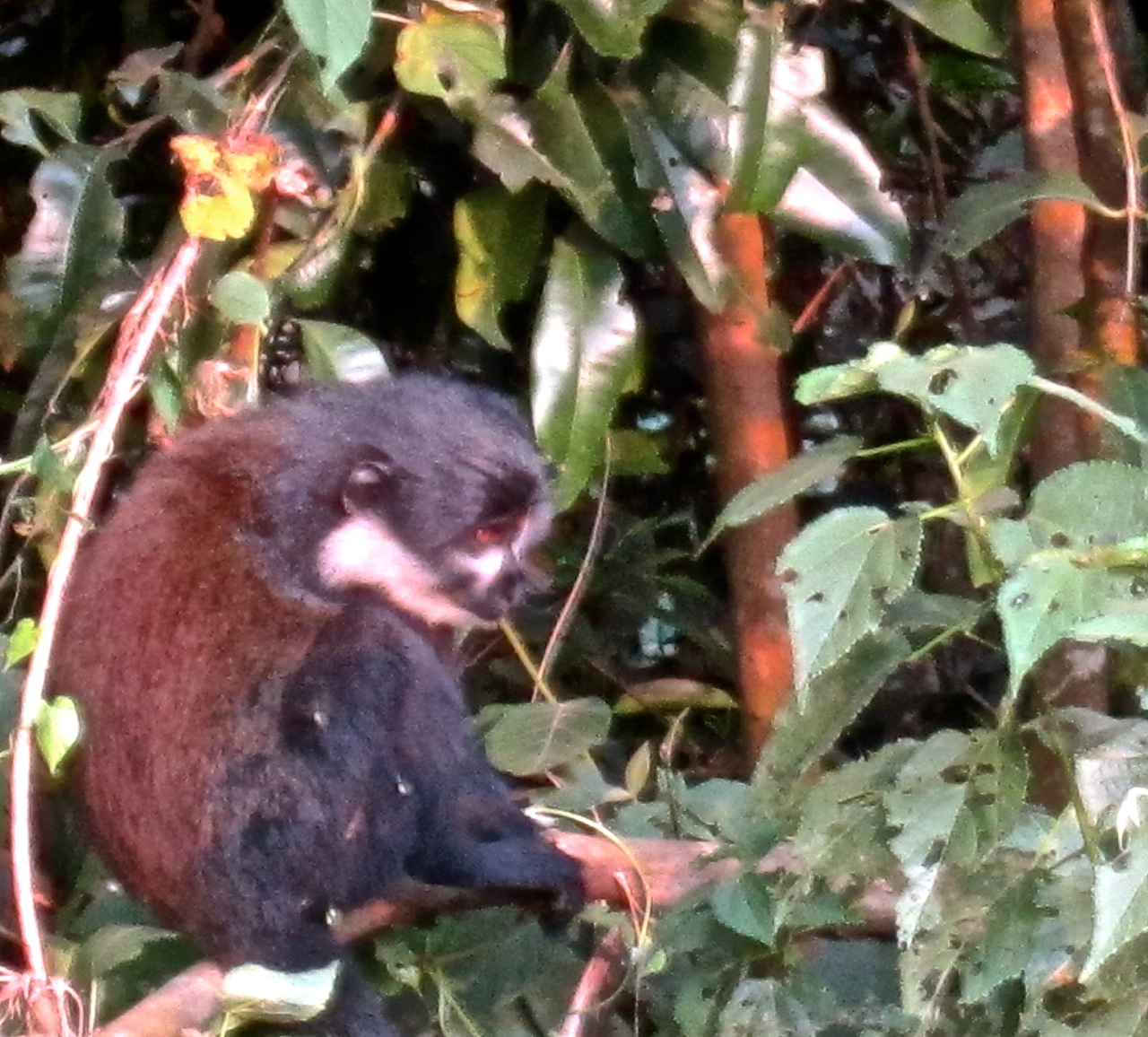
 Here’s a slightly better picture. It’s a L’Hoest’s monkey (Cercopithecus lhoesti).
Unfortunately, our travel schedule didn’t allow time to hike the park. But my plan is to return as soon as possible. Many people come to Rwanda to see the mountain gorillas in the north, but the Nyungwe Forest is equally remarkable, and tourists should soon begin to see it as good reason to spend more time (and money) in the country. (Tourism is Rwanda’s number one revenue producer, followed by tea and coffee exports.)
 “View from apartment 9D, 146 Central Park West, in the rain, New York City, 1946 July 9.” By Carl Van Vechten, via Library of Congress Prints and Photographs Division.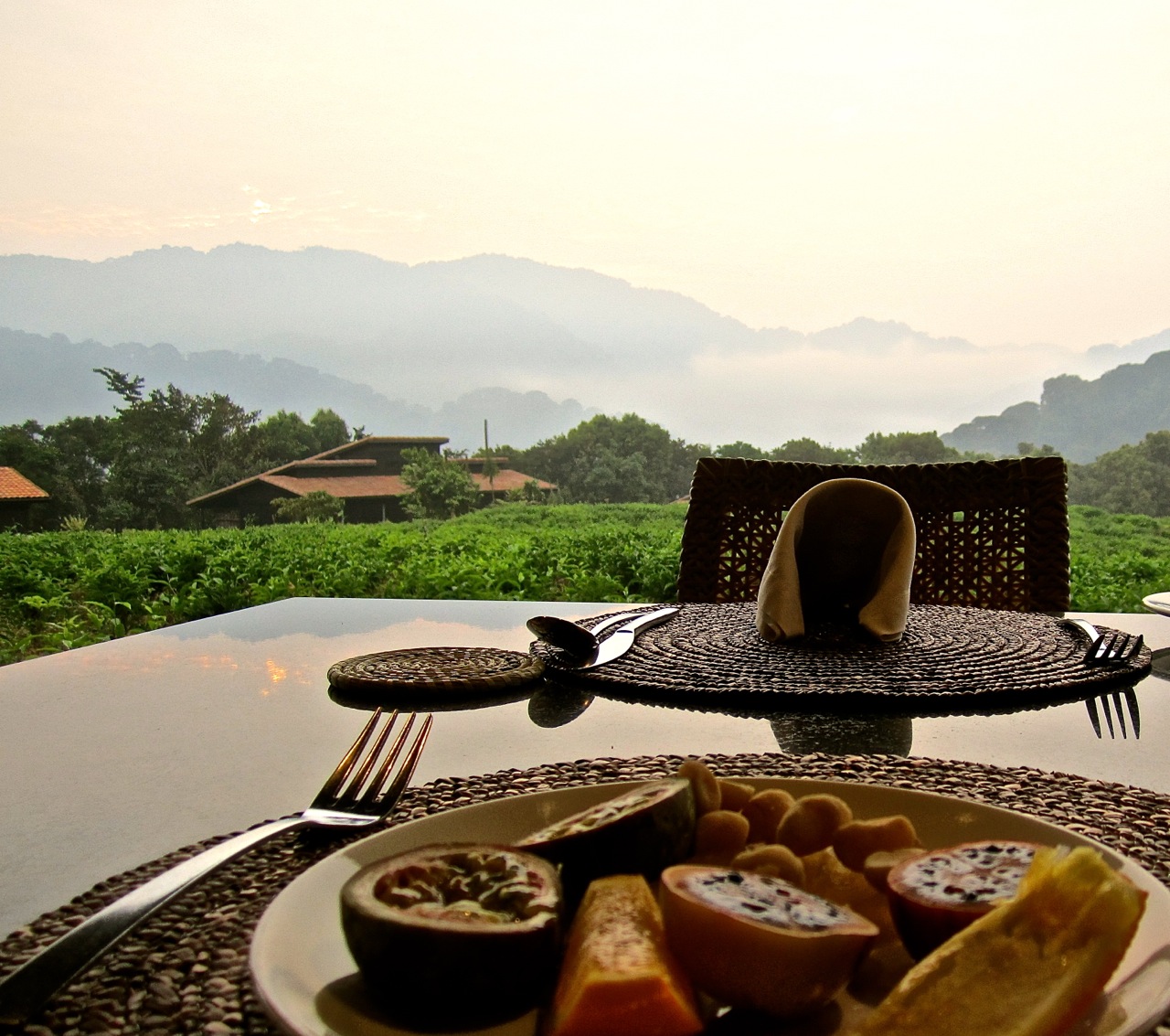










 enclos*ure