The pelican tree

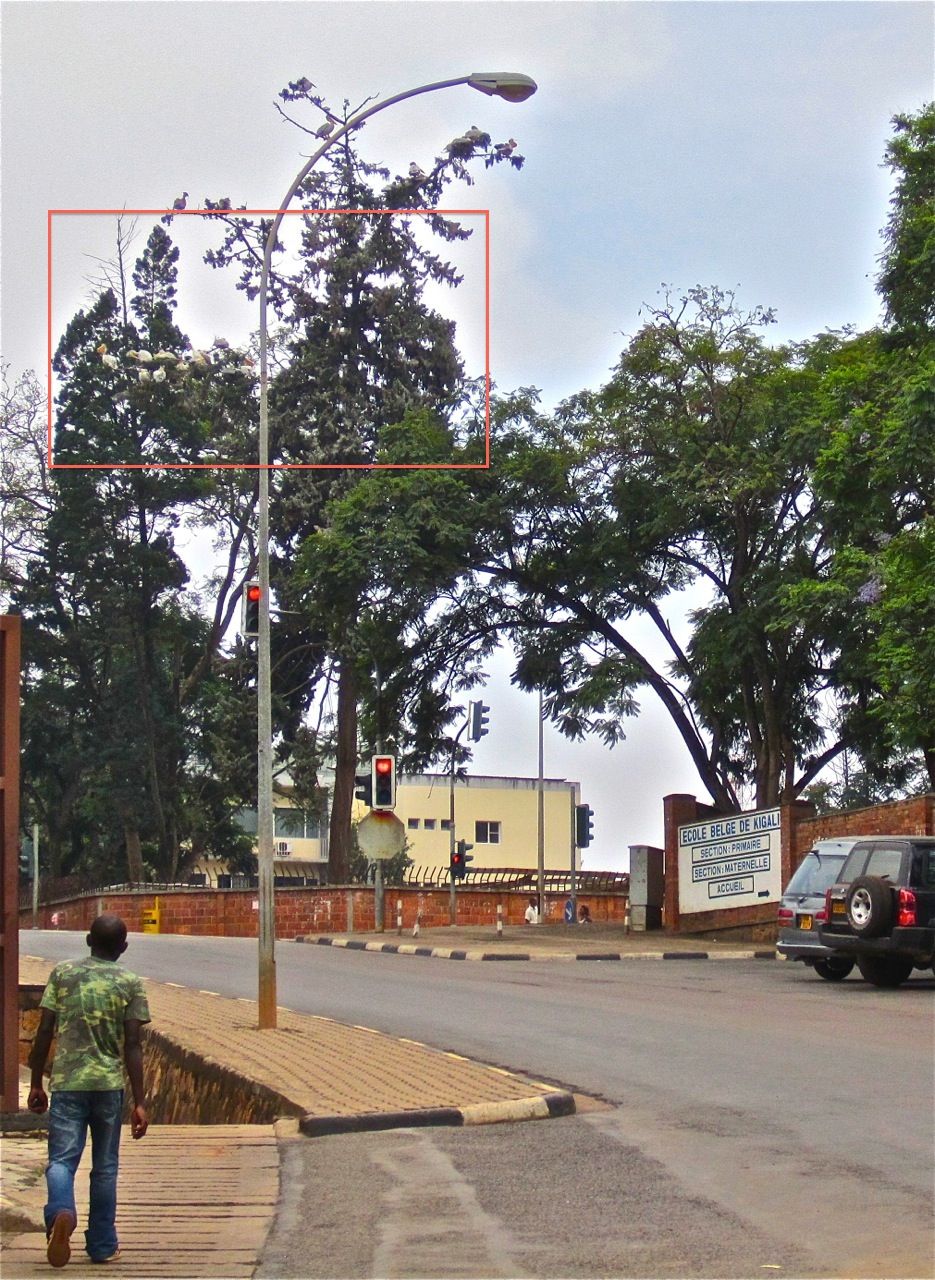
Can you see them? Neither could I until we got to the corner.

In the neighborhood of Kiyovu — the central business district of Kigali — a group of great white pelicans (Pelecanus onocrotalus) live in this tall tree opposite the Belgian School.

There is no nearby body of water, other than a medium-sized manmade lake on the other side of town. I have read that they are living on the tilapia in area fish farms, although I also read that great whites can be “opportunistic foragers” — meaning, I suppose, that they eat some trash. Although Kigali has almost no trash. (The species is also known to take the chicks of other birds, as well as ducklings.)
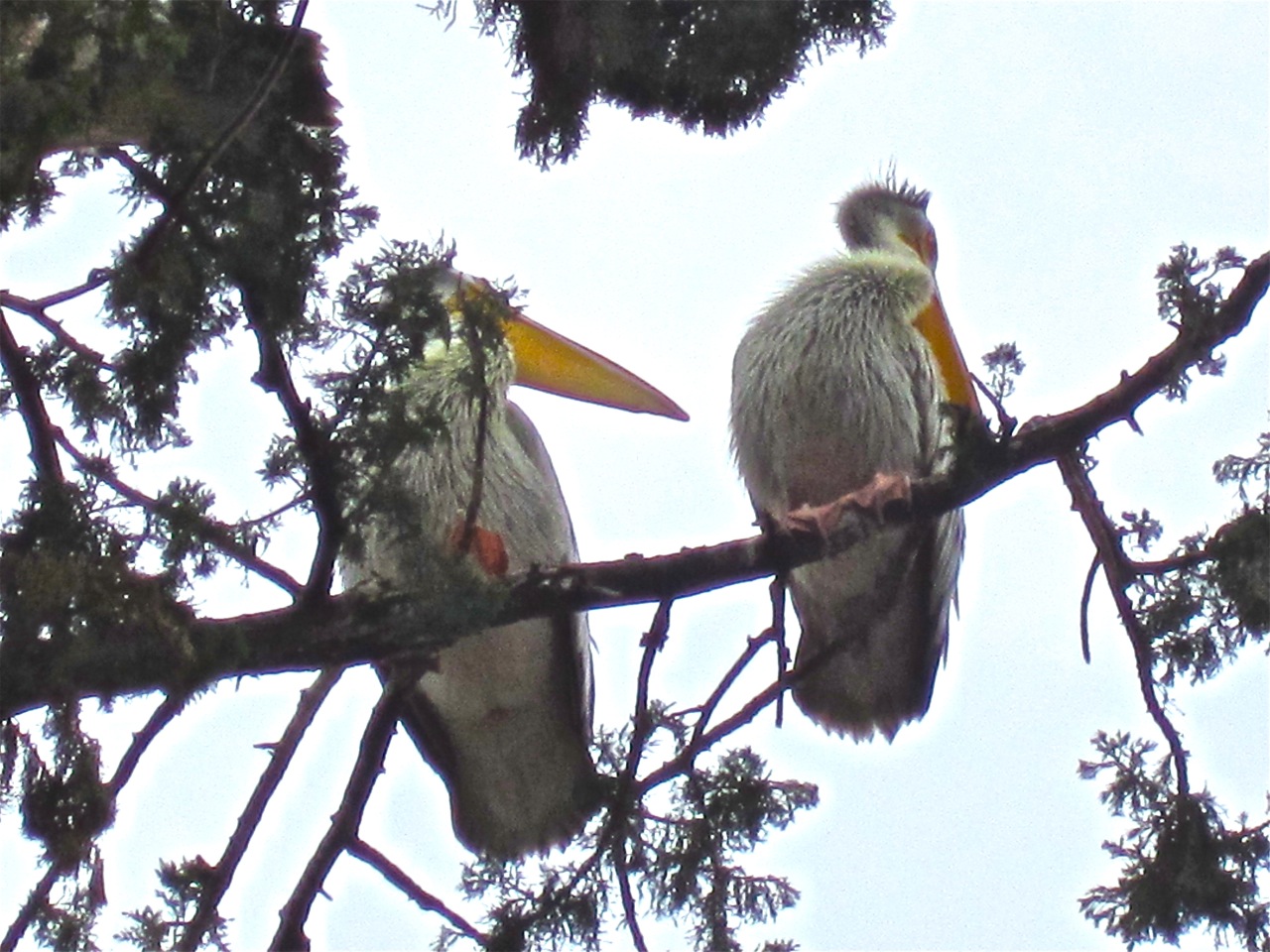
The birds are huge — which my pictures don’t really convey clearly.  A website said their length is about 63″ (160 cm.) and their wingspan is 110″ (280 cm.)

The other pelican native to Rwanda is the pink-backed pelican (Pelecanus rufescens).

My photos are not great — the tree is really tall — but this link has a very nice picture of pelicans in another Kigali tree.

Still a strange pageant . . .

While researching Dr. Seuss the other day, I realized why this acacia tree on our street had so grabbed my attention back in November.

Go, Dog. Go! by P.D. Eastman was one of my favorite books as a child; I was always surprised by the dog party at the end. [Click here for the image.]

During one of my landscape design classes, another student recalled a lecture by a famous landscape artist (I think it was Martha Schartz) who said that the garden we really want is the one that reflects the places we knew before the age of five. I don’t know how accurate her paraphrase was, but the idea is something to think about. And the landscapes of our early years will have to include those we saw night after night in storybooks.

I imagine the earth when I am no more:
Nothing happens, no loss, it’s still a strange pageant. . . .
Yet  the books will be there on the shelves, well born,
Derived from people, but also from radiance, heights.
‎‎– Czeslaw Milosz, from “And Yet the Books

From there to here, from here to there

Today is Dr. Seuss’s birthday.

Seuss, aka Theodor Seuss Geisel (1904-1991), took the art of Surrealism and the architecture of Antonio Gaudi, combined them with childhood memories of early cars and machinery in New England and then the flora of his adult home in southern California, and created the famous illustrations for his over sixty books.  (His Green Eggs and Ham is the fourth best-selling English-language children’s book of all time.)

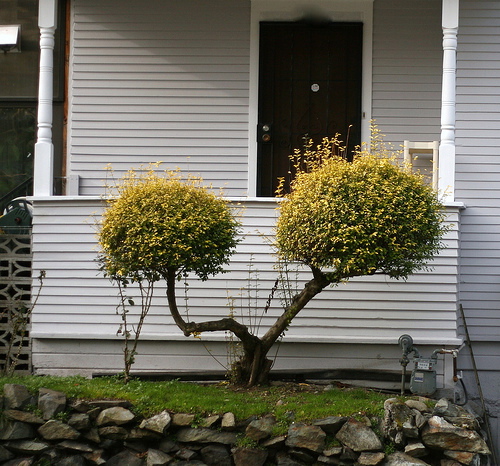
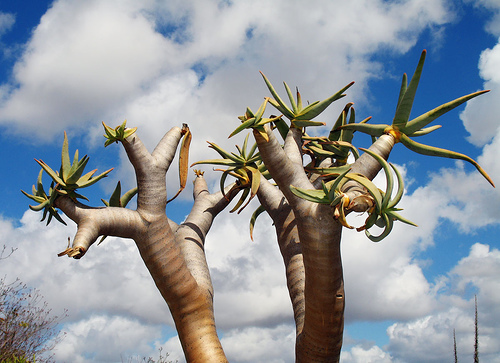
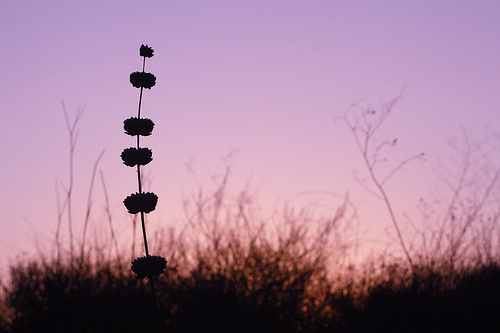
His strange plants and landscapes — tops of mops, spikes, and feathers; elongated, twisty trunks; improbable angles, odd hills and rocks — form a visual vocabulary that we all understand and use routinely.  These are just a few of the many, many snapshots I found by typing in “Dr. Seuss” and searching Flickr.com.

Photo by Randy Robertson, labeled “Dr. Seuss Plant Silhouette.”  All three photos via Flickr.com, under CC license.
“Dr. Seuss Bush” by Shawn Henning.
“Dr. Seuss Trees” by Allan Ferguson.

A 2010 article from the News Tribune in Tacoma, Washington, has a list of plants that also look Seuss-y, here.  Among others, they recommend weeping sequoia, Nootka cypress, and contorted hazelnut.

If you want to visit a Dr. Seuss-style landscape, the blog SPOTCOOLSTUFF has 10 “Places That Look Dr Seuss-ish” around the world, here.

ADDENDUM: Today is also the NEA’s Read Across America Day, here. And The Washington Post is calling for Seuss-inspired verse about current events, here.


Madagascar palm

I had a hard time finding the name of this plant, and, after I did, I realized that I should have known. With all weird and wonderful plants, a good search word to start with is ‘Madagascar.’

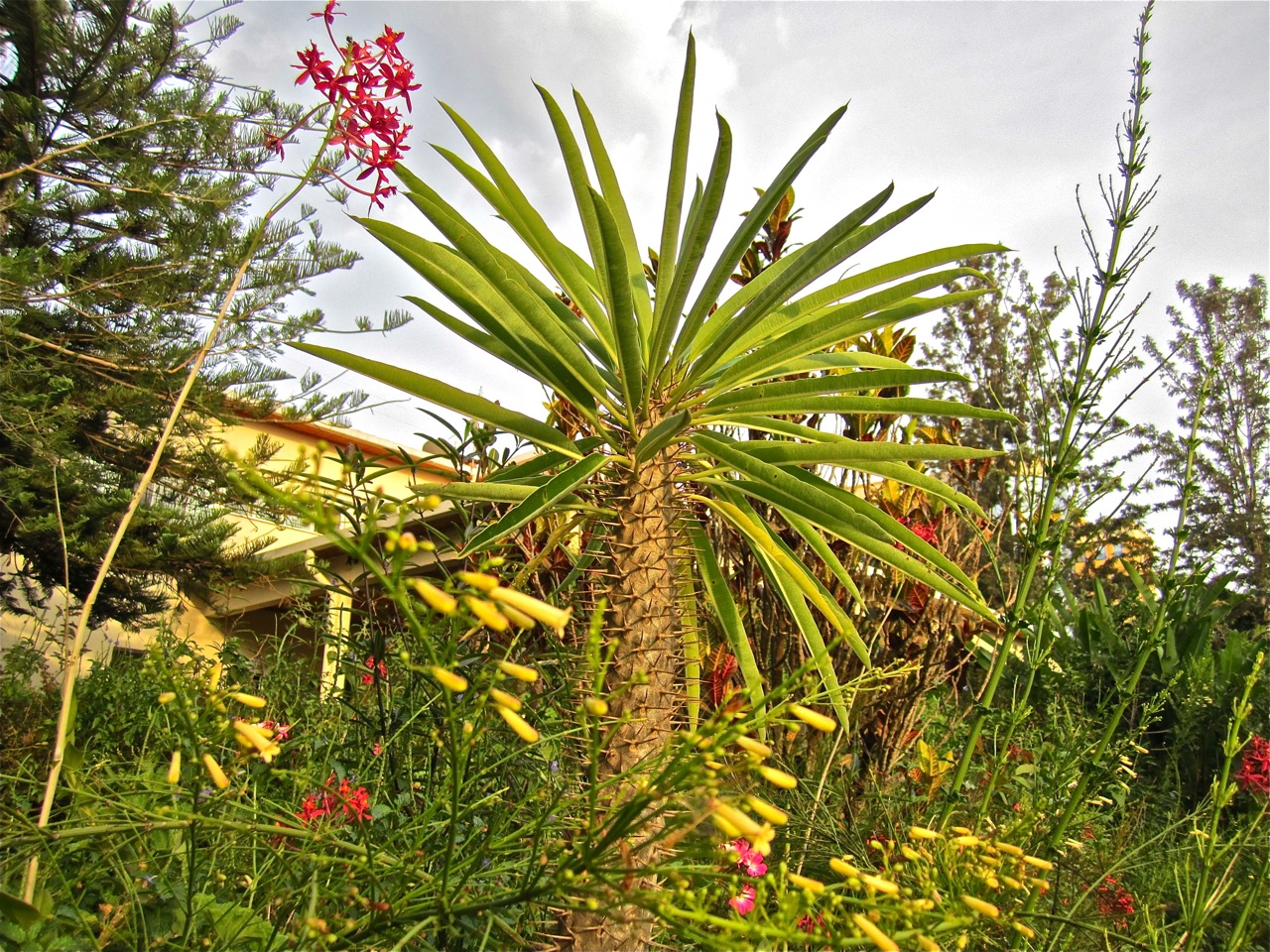
It’s a Pachypodium lamerei, often called a Madagascar palm, although it is not a palm but a stem succulent. Mine is about 3′ tall (about 92 cm.) and is growing here with a red orchid, Epidendrum ibaguense, and a cream-yellow Russelia equisetiformis lutea. (Click the photo to get a better look.)

P. lamerei is easy to grow in well-drained soil in a frost-free climate. It also makes a good potted plant, if you can give it enough sun. It will do well in a fast-draining soil mix, like one for cactuses. A mature plant can have fragrant flowers, but I haven’t seen any on ours.

The island nation of Madagascar is one of the most diverse places on earth for plant species; it has about 12,000. Tropical Africa has about 3 times that many, but 35 times the size.