
As a follow up to Monday’s post on the Rwandan palaces, here are two photos of ordinary villagers’ homes from about 1950. I believe they are of the same village north of Lake Kivu near the Congo-Rwanda border.


Photos via flickr here.
As a follow up to Monday’s post on the Rwandan palaces, here are two photos of ordinary villagers’ homes from about 1950. I believe they are of the same village north of Lake Kivu near the Congo-Rwanda border.
Photos via flickr here.
Last Saturday, we hiked into the Volcanoes National Park to see the mountain gorillas.
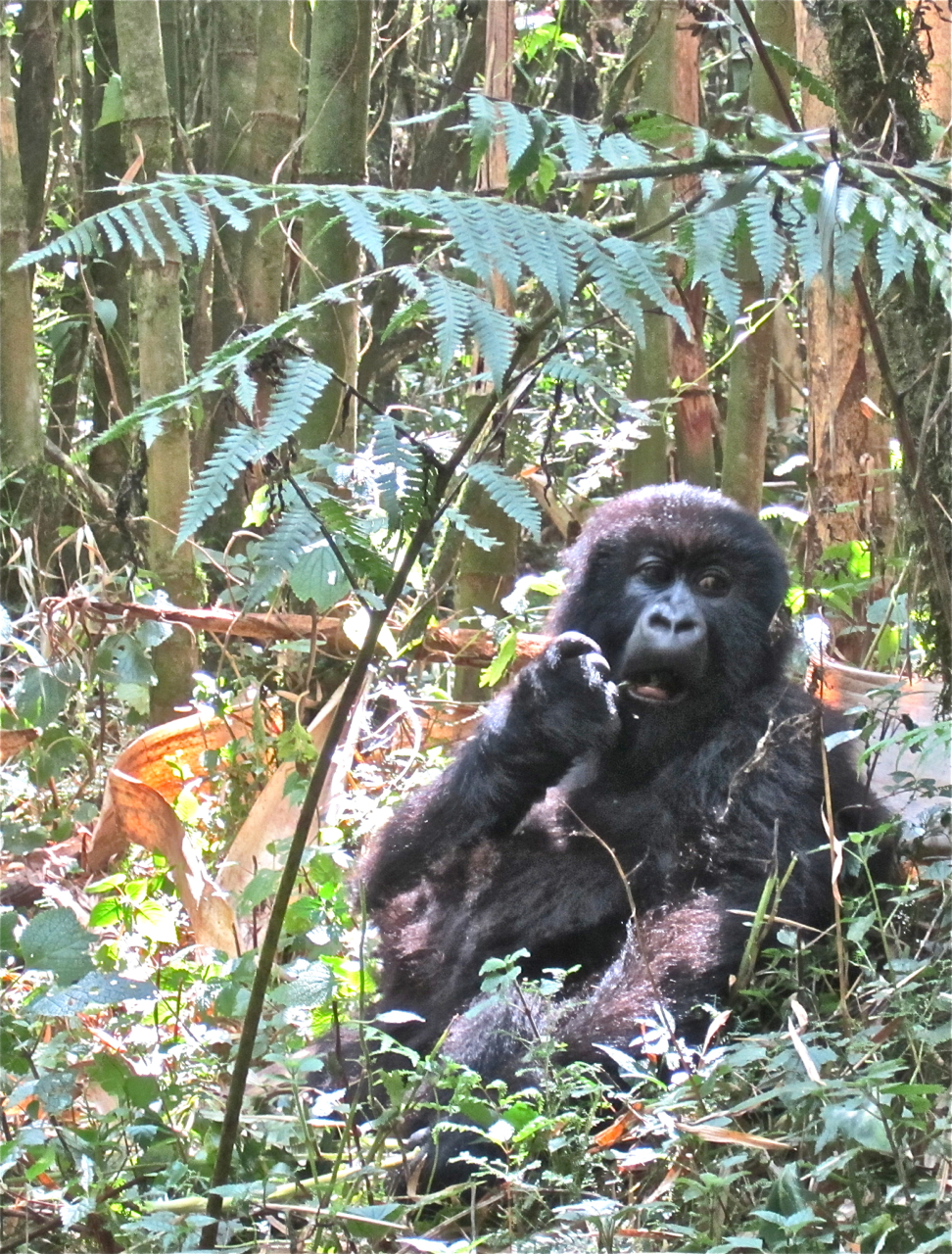
It was an amazing experience.
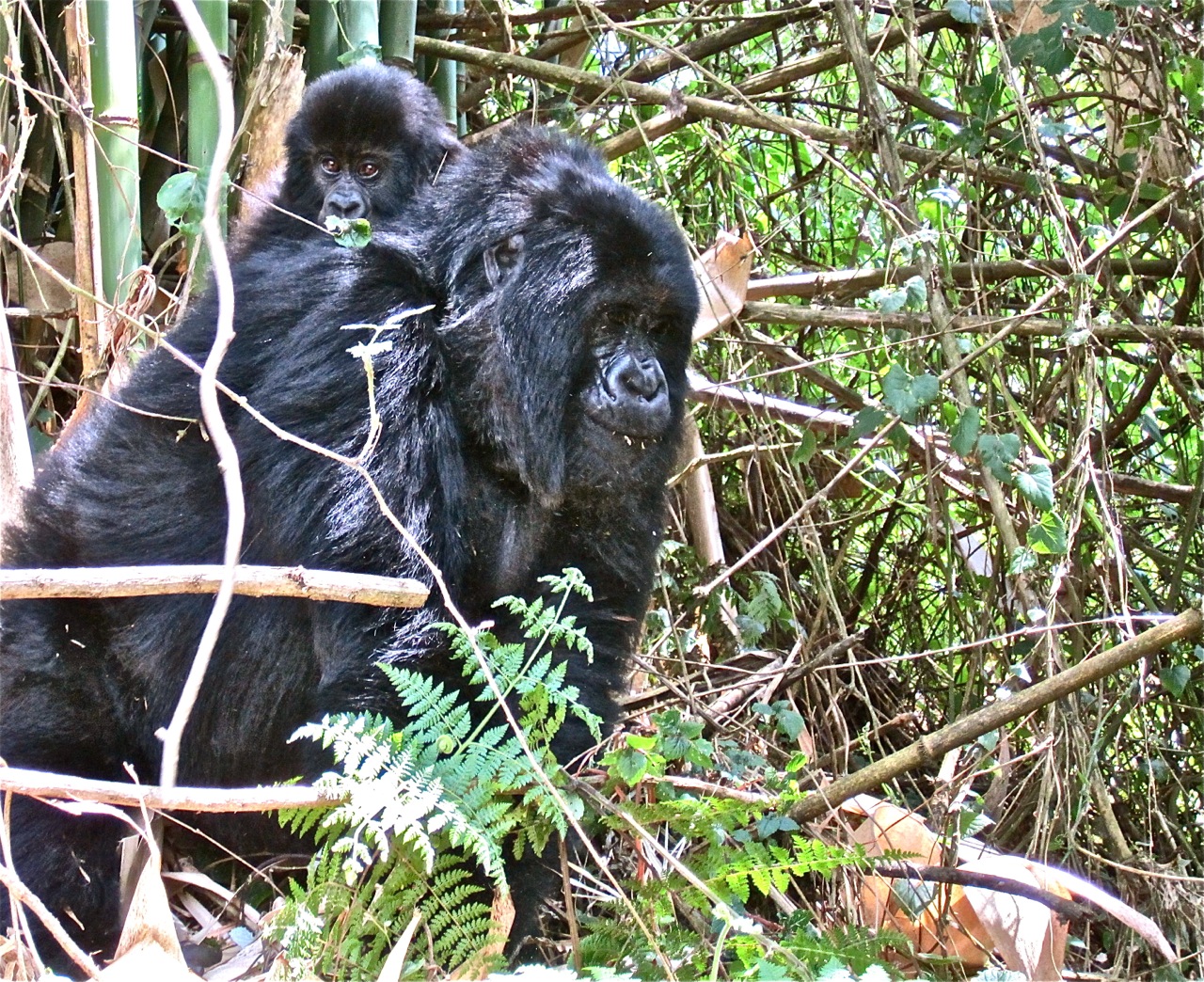
When we arrived at the park headquarters, we asked to see one of the gorilla groups who normally live closer to the edge of the park. We didn’t feel up to one of the really strenuous hikes. However, nothing is certain with wild animals, and we walked (and climbed) for 2 hours before we found our group (the day before, they had been right inside the wall of the park).
I would have liked to have taken some photos of us tackling the steeper parts of the trail (and skirting the edge of an old volcanic crater), but I was too busy trying not to die at the time.
Earlier — after the first (easy) 40 minutes or so — our guide had stopped and given us a Rwandan saying: if you kill a cow, you cannot stop eating until whole thing is gone, tip to tail (this obviously originated before the freezer). Then, he said that the trackers ahead of us had just radioed back that our hike would be 10 cows long, and that we had already eaten 4 cows. However, only the 6th cow would be a big one.
Holy cow! (An American saying.) I climbed up much of number 6 on my knees and came down it on my bottom. Thank goodness for our porter’s hand and my walking stick.
When we found the gorillas, though, it was well worth it. They were lovely — smaller and fluffier than I had expected. Their fur had a healthy sheen, and they seemed quite content to spend an hour with us. Throughout the visit, our guide made low “hrrmm hrrmm” sounds, asking the silverback’s permission to stay; sometimes he would rumble back similar sounds in return. Several times, the little ones showed off by beating their chests.

For more pictures and story, click on ‘Continue reading’ below and then on the first thumbnail to scroll through large photos and captions (and there are some travel tips afterwards). To see a short video that I made, go to this link. Continue reading “Among the mountain gorillas”


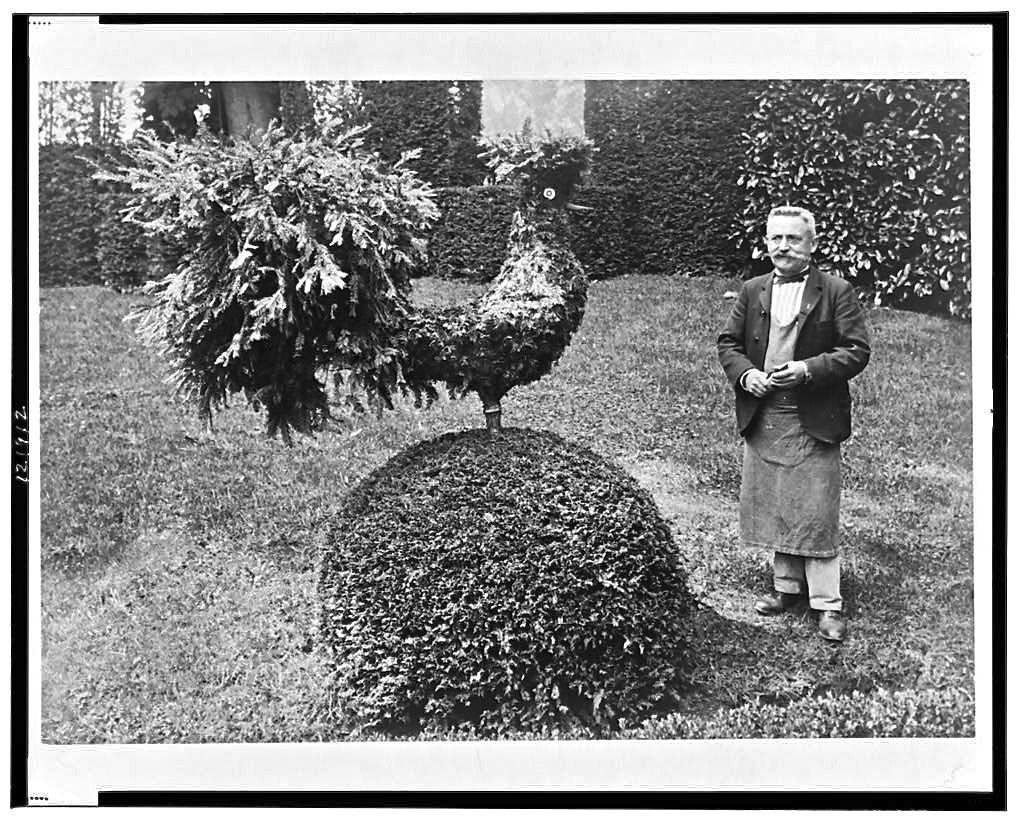
I have looked at a lot of photographs of topiary lately, but this one is particularly spiffy (beau, somptueux, resplendissant).
It’s from the Frances Benjamin Johnston Collection of the Library of Congress Prints and Photographs Division.
Frances Benjamin Johnston (1864-1952) was one of the first American women to achieve prominence as a professional photographer. After studying art in Paris, she returned home to Washington, D.C., in the 1880s and opened a photography studio about 1890. Her family’s social standing gave her access to the capital’s elite, including the First Family, politicians, and diplomats, and her business soon took off. In the 1910s, she turned to garden and estate photography.
Thanks so much to WordPress.com for including this post on its “Freshly Pressed” page this week!
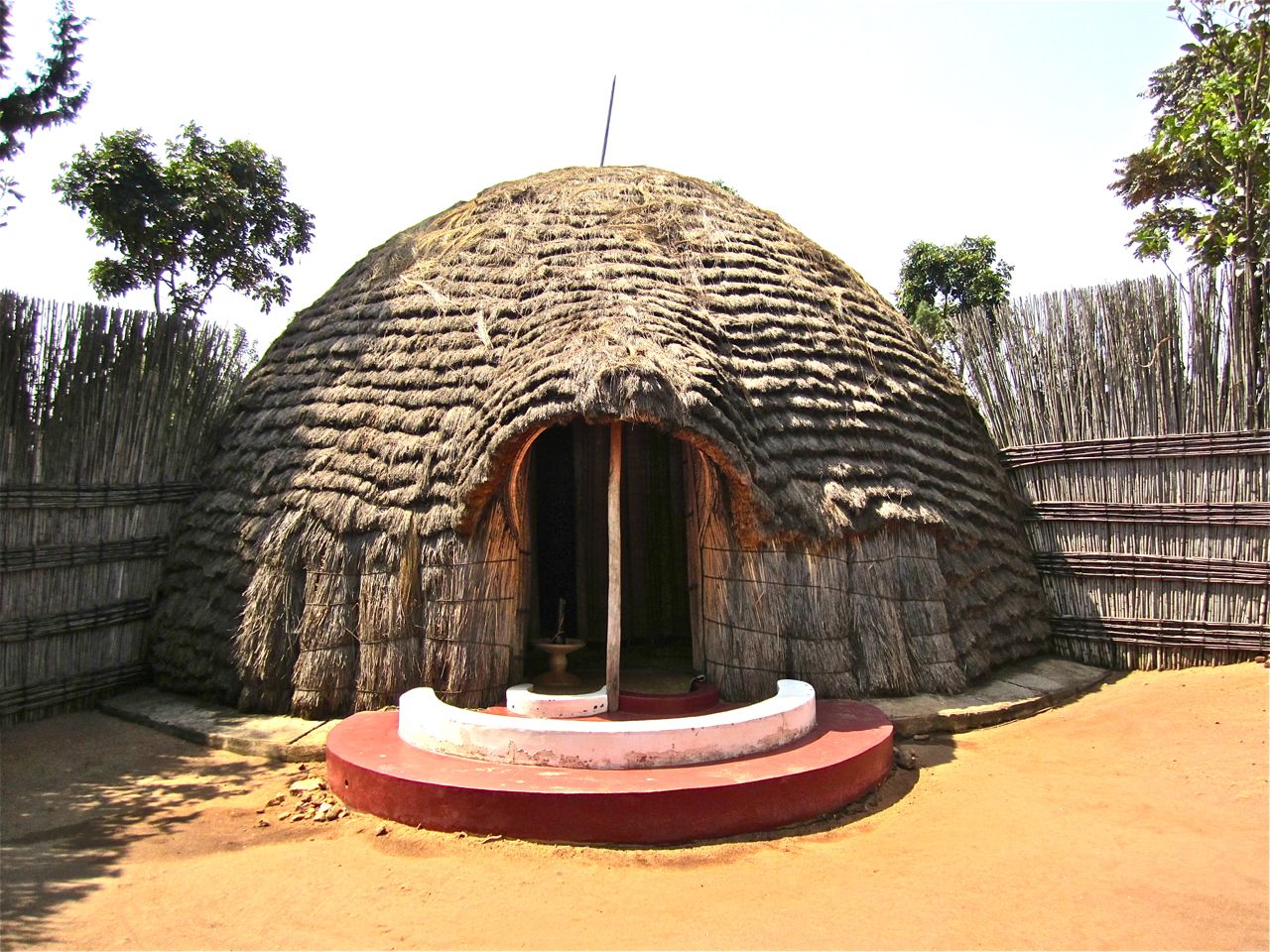
Yesterday, we visited the Rukali Palace Museum in the town of Nyanza, a couple of hours south of Kigali.

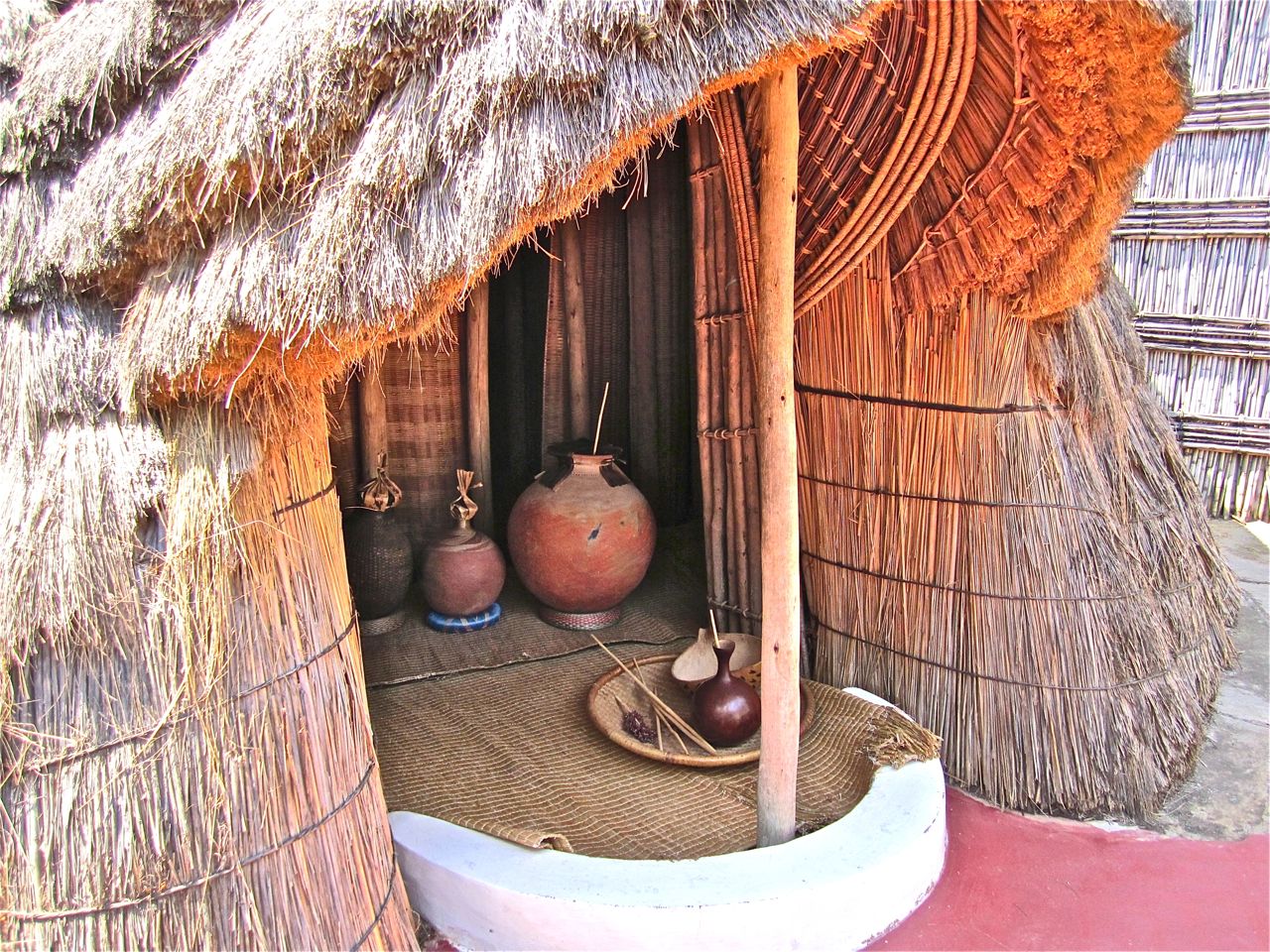
The museum grounds hold a reconstruction of the palace of Mwami (King) Musinga Yuhi V (a few miles from its original location), as well as the actual Western-style palace built for his successor, Mwami Rudahigwa Mutara III, in 1932.
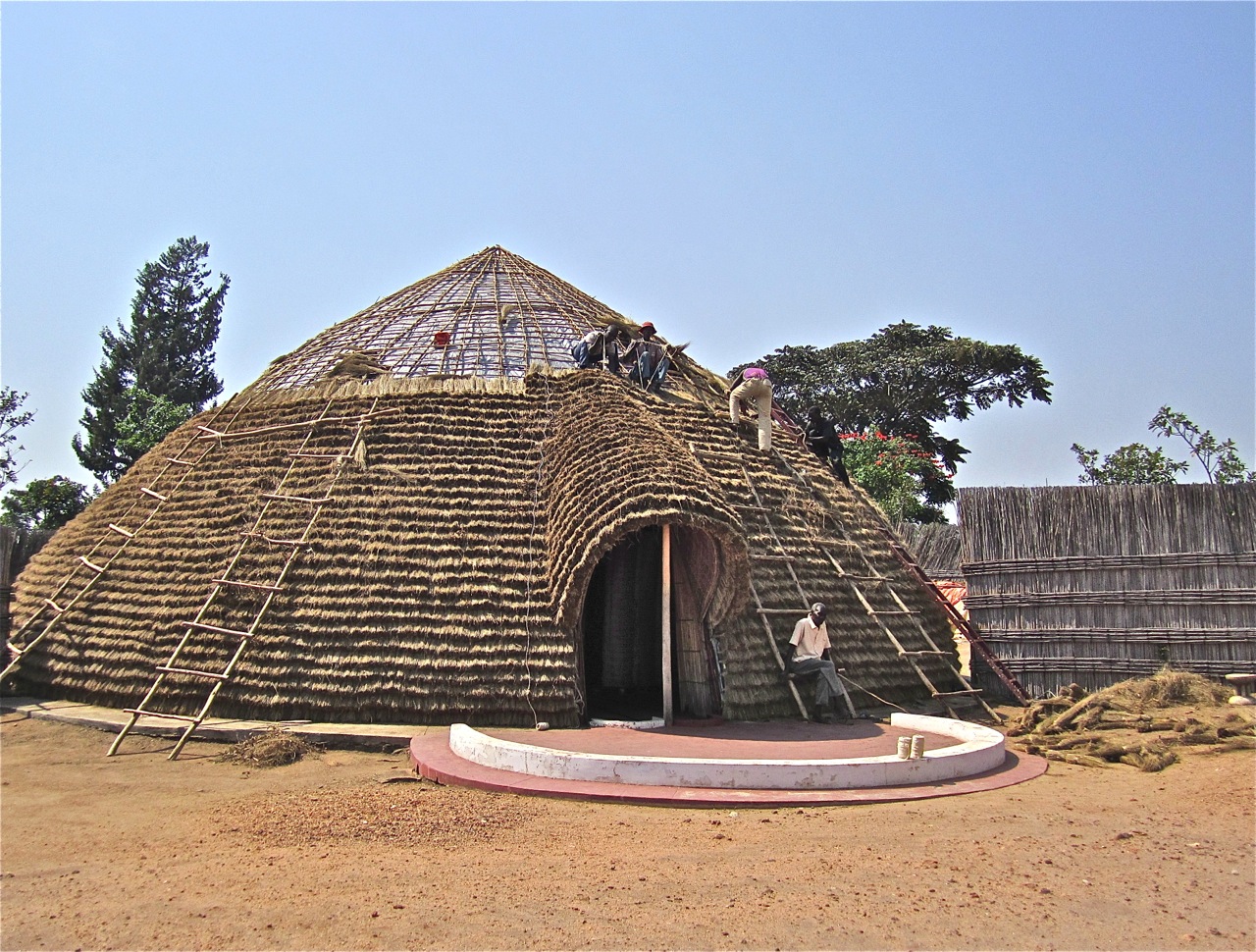
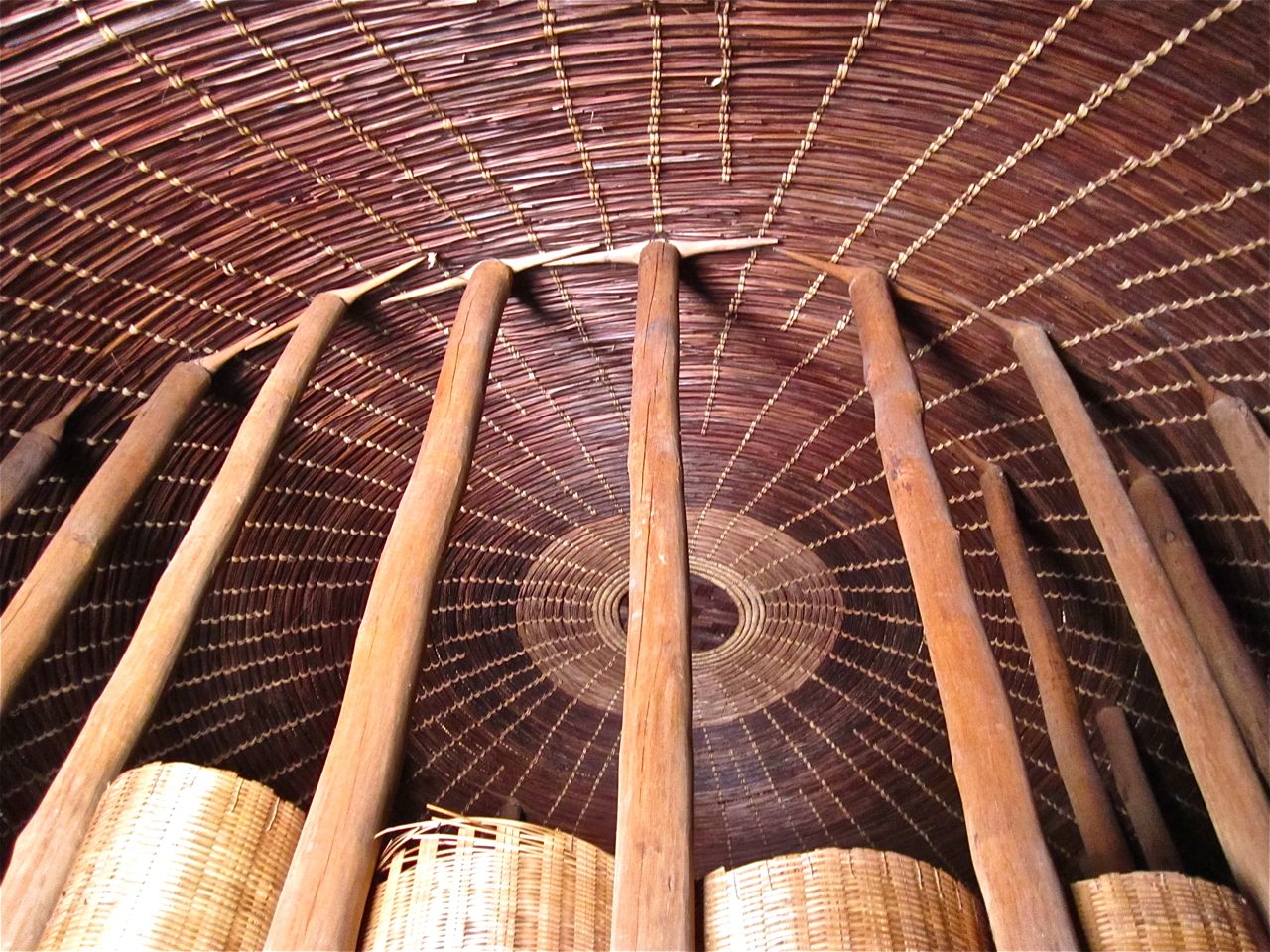
Musinga lived in a palace like this from 1899 until his death in 1931.

Traditional building and weaving techniques were used to make the structures of grass, reed, and bamboo. The work is very fine.

A cow pen is part of the reconstruction. Cows were very important in Rwandan royal culture, and each of the king’s cows had a personal poem that was chanted or sung to call it out. They might also be decorated like this one.


The modern palace (used from 1932 to 1959) is decorated inside and out in geometric motifs. Unfortunately, visitors are not allowed to take pictures inside.
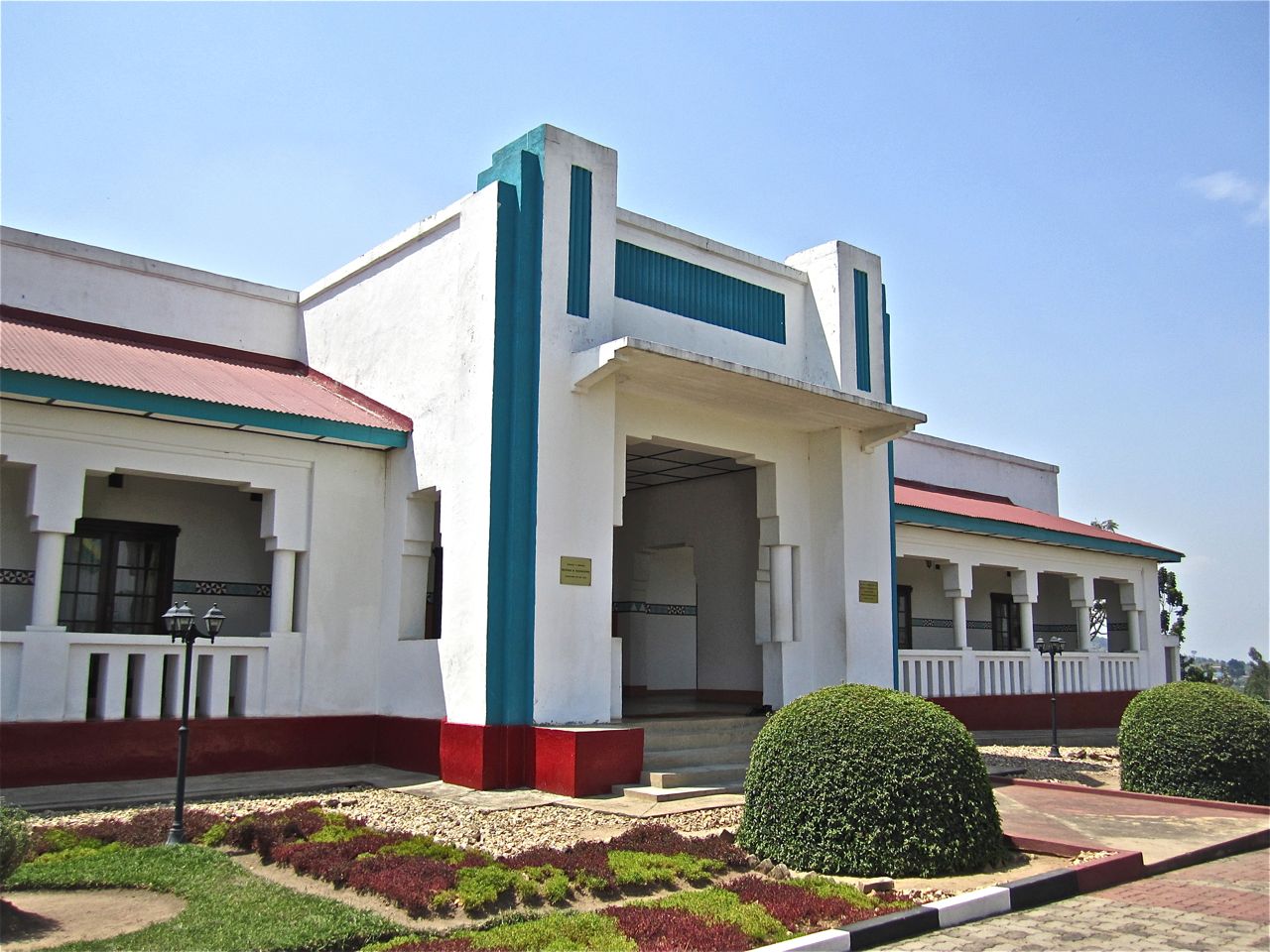
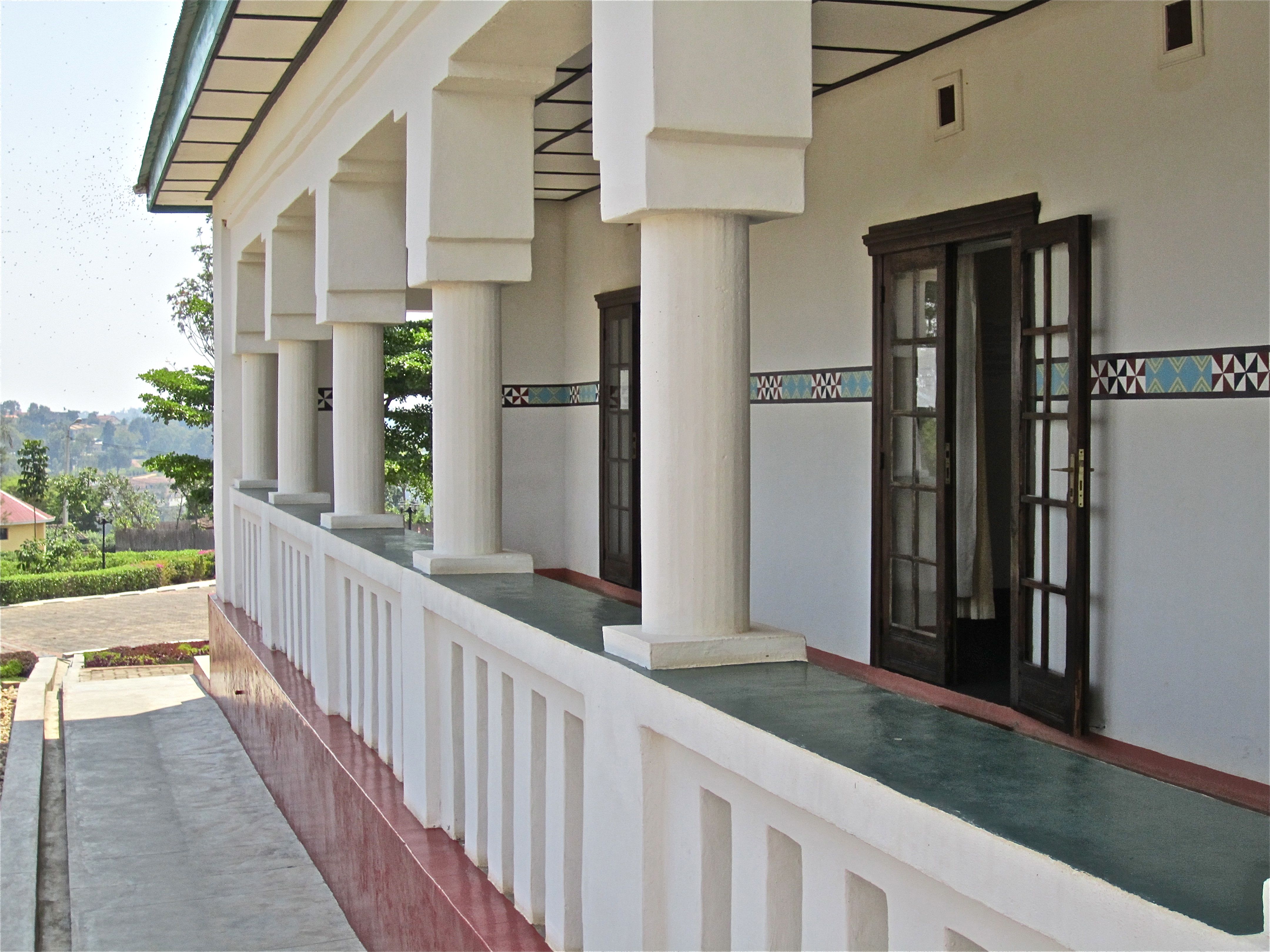
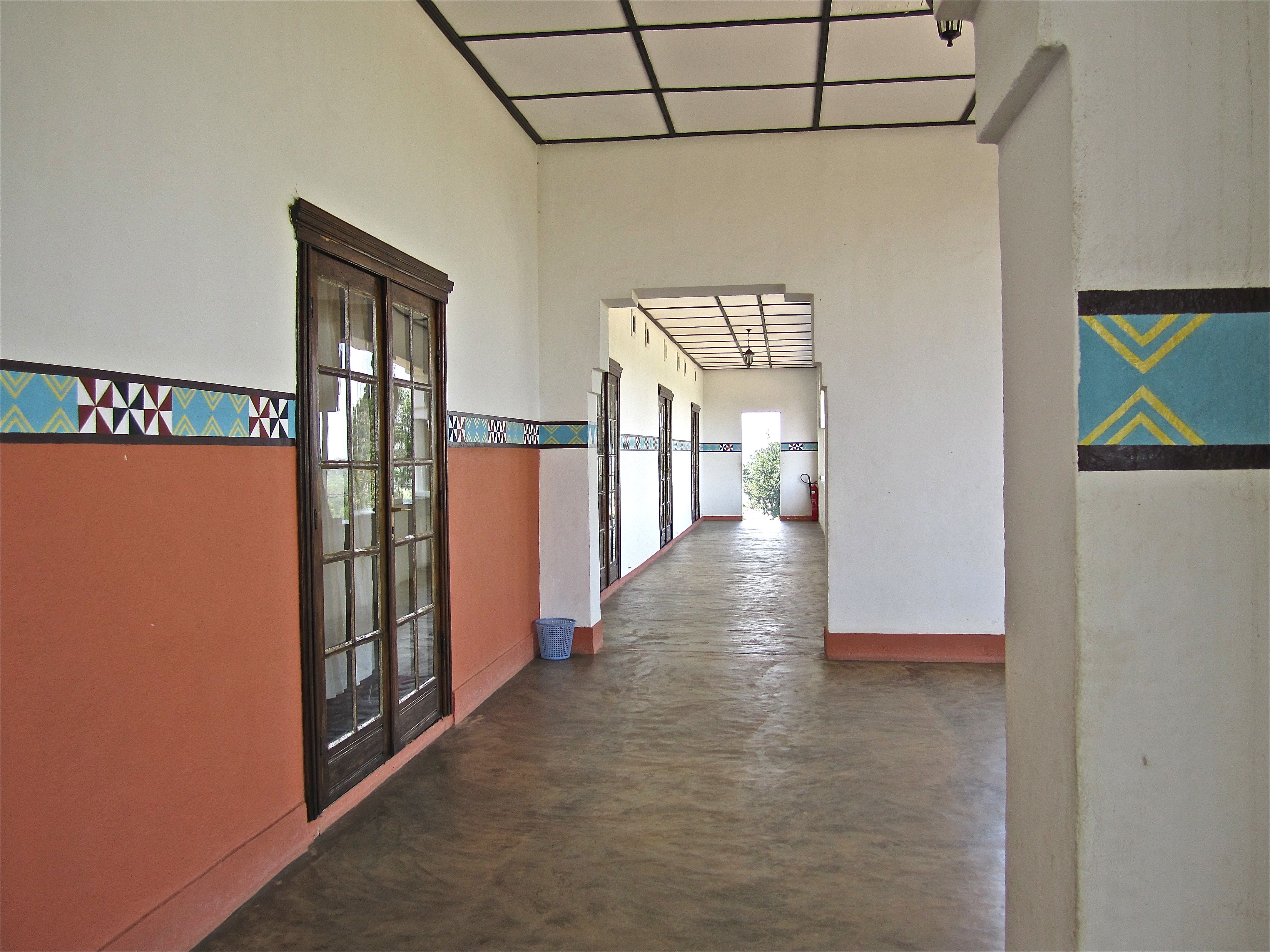

The courtyard garden is planted in hedges laid out in patterns like those traditionally used in baskets, mats, and room partitions.


More about traditional Rwandan homes here.
 enclos*ure