
If you would like to see and read more about living in Rwanda, check out the charming blog A Year+ in Kigali, Rwanda by Helaina. I particularly liked her posts here (about the language) and here (culture) and here (food).
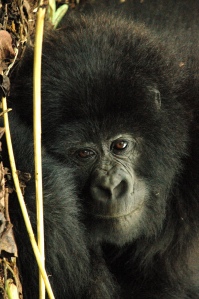
Her photo of this female mountain gorilla is one of the best that I have seen. (And, living here, I’ve seen quite a few.)
Also, here’s something I just found out: the smallest waterlily in the world, Nymphaea thermarum, was native to the hot springs of Mushyuza in southwest Rwanda. Unfortunately, it has not existed in the wild since 2008, when its habitat was disrupted by farming. However, in 2010, a scientist at Kew Royal Botanic Gardens was finally able to germinate its seeds (there were only 20 left). Its flowers, which are only about 1/4″ (less than 1 cm.) in diameter, are white/lavender with yellow stamens.
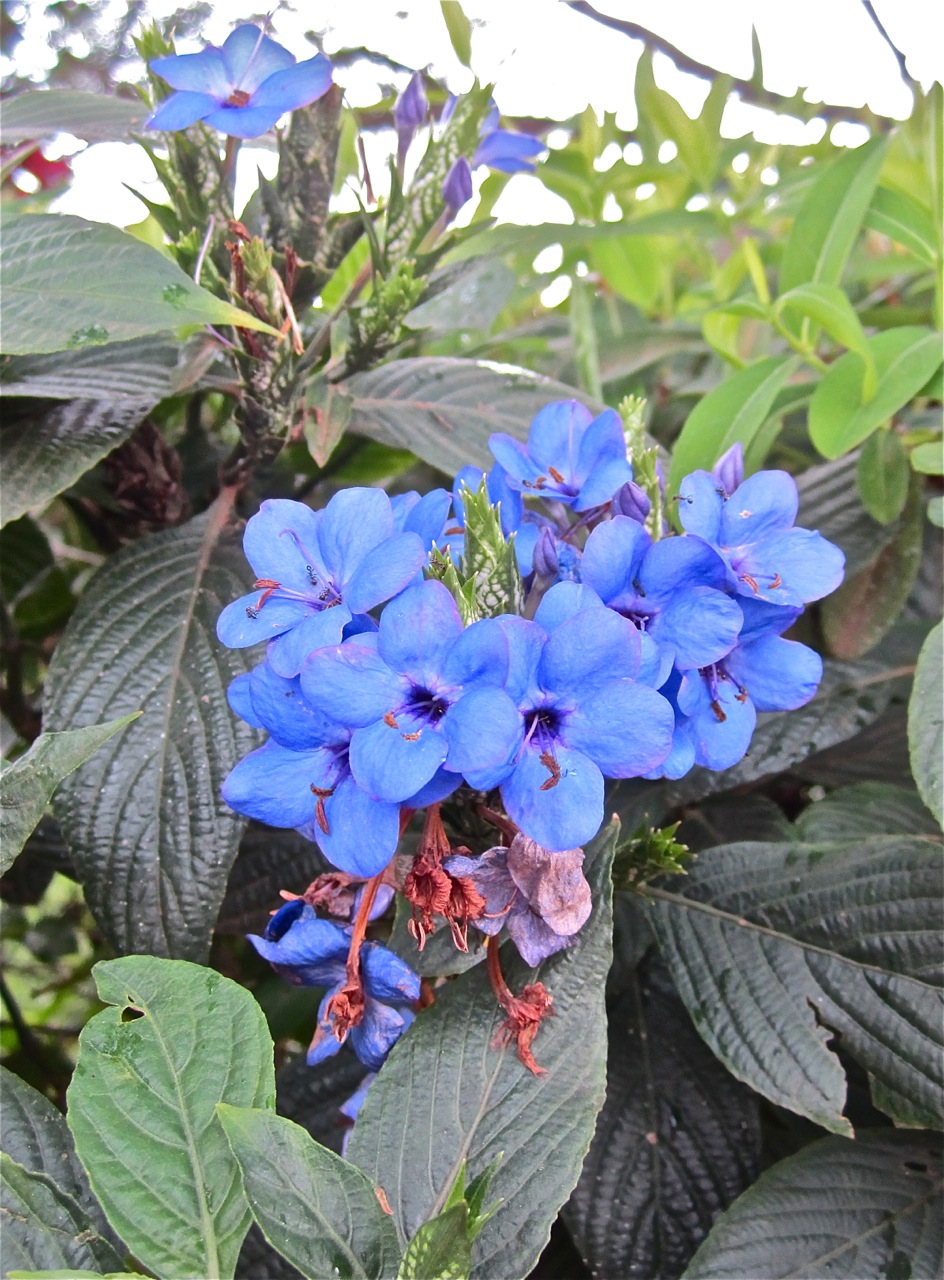
Plant by plant, I am putting names to the flowering shrubs in our Rwanda garden. Here are two more, supplied by the readers of Fine Gardening’s Garden Photos of the Day, from my pictures on Monday and Wednesday.
Eranthemum nervosum (aka E.pulchellum) or blue sage or blue eranthemum has gentian blue flowers, as you can see. In the family Acanthaceae, it is native to India. It will grow 4′-6′ and likes light shade. It will grow in the garden in (U.S.) zones 10b and 11. (I think all the shrubs in this post would be suitable for pots in colder climates.)
Brunfelsia latifolia (aka B. australis) or yesterday, today, and tomorrow plant is native to South America. It is very fragrant at night. Our largest specimen, which needs pruning, is about 5′ tall, 4′ wide. It is in the same family as potatoes, tomatoes, eggplants, and petunias — Solanaceae or nightshade.
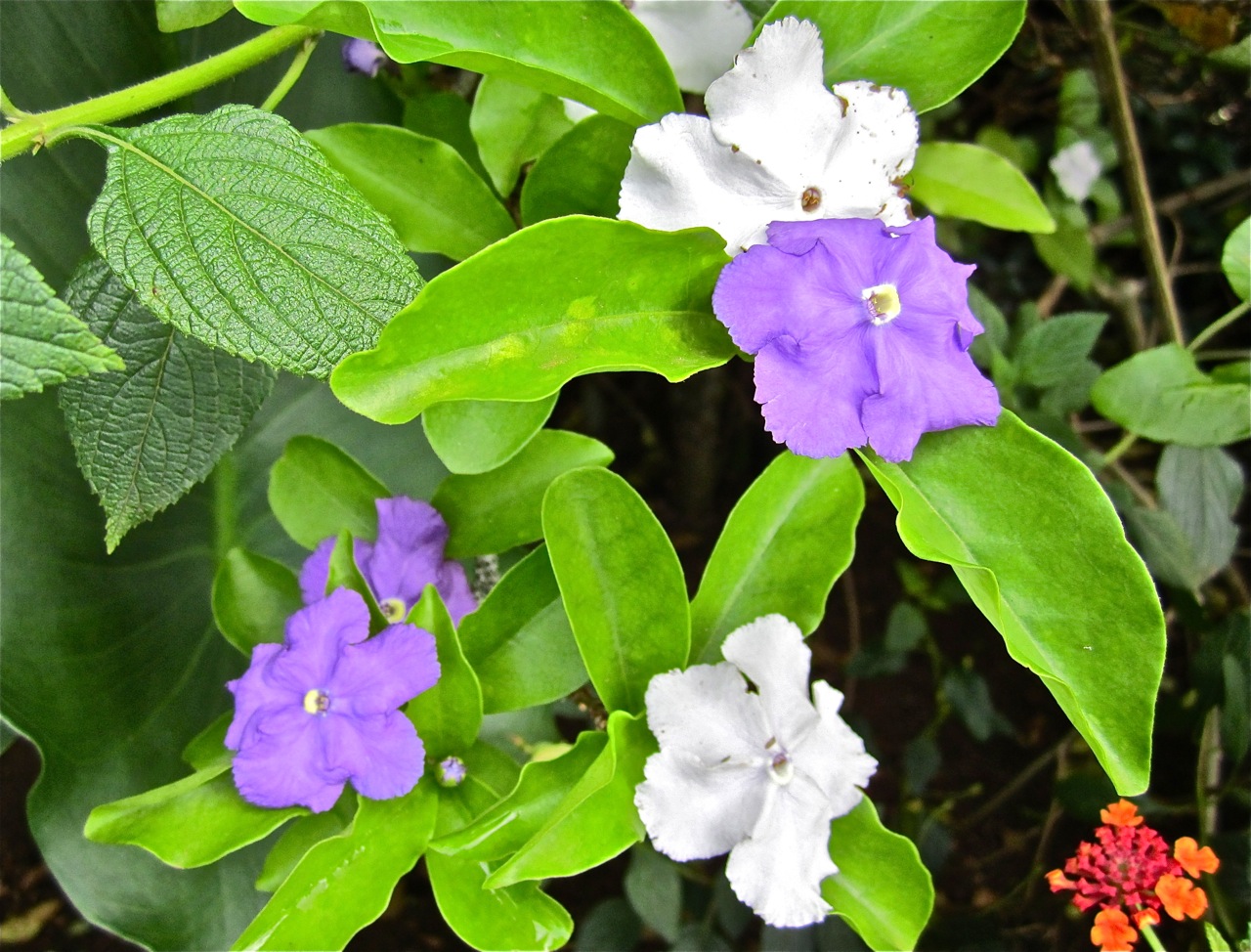
Y.T.T. likes well drained, moist soil and full sun to part shade — its habitats are light woodlands and thickets — and grows in the garden in (U.S.) zones 9-11. The flowers open purple, then go to lavender, and then white. The genus was named for early German herbalist Otto Brunfels (1464-1534).
I’m just showing this off. I already knew its name.
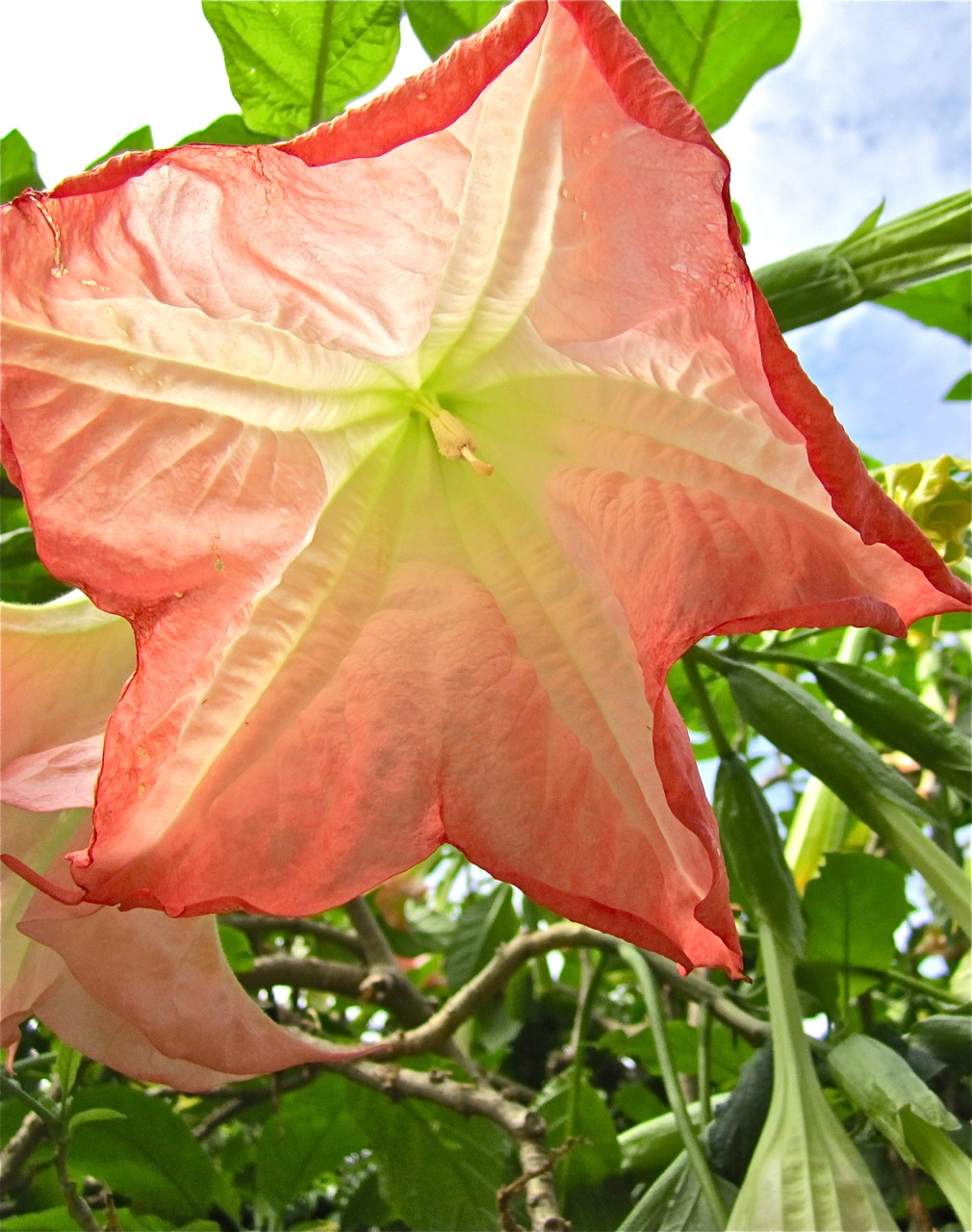
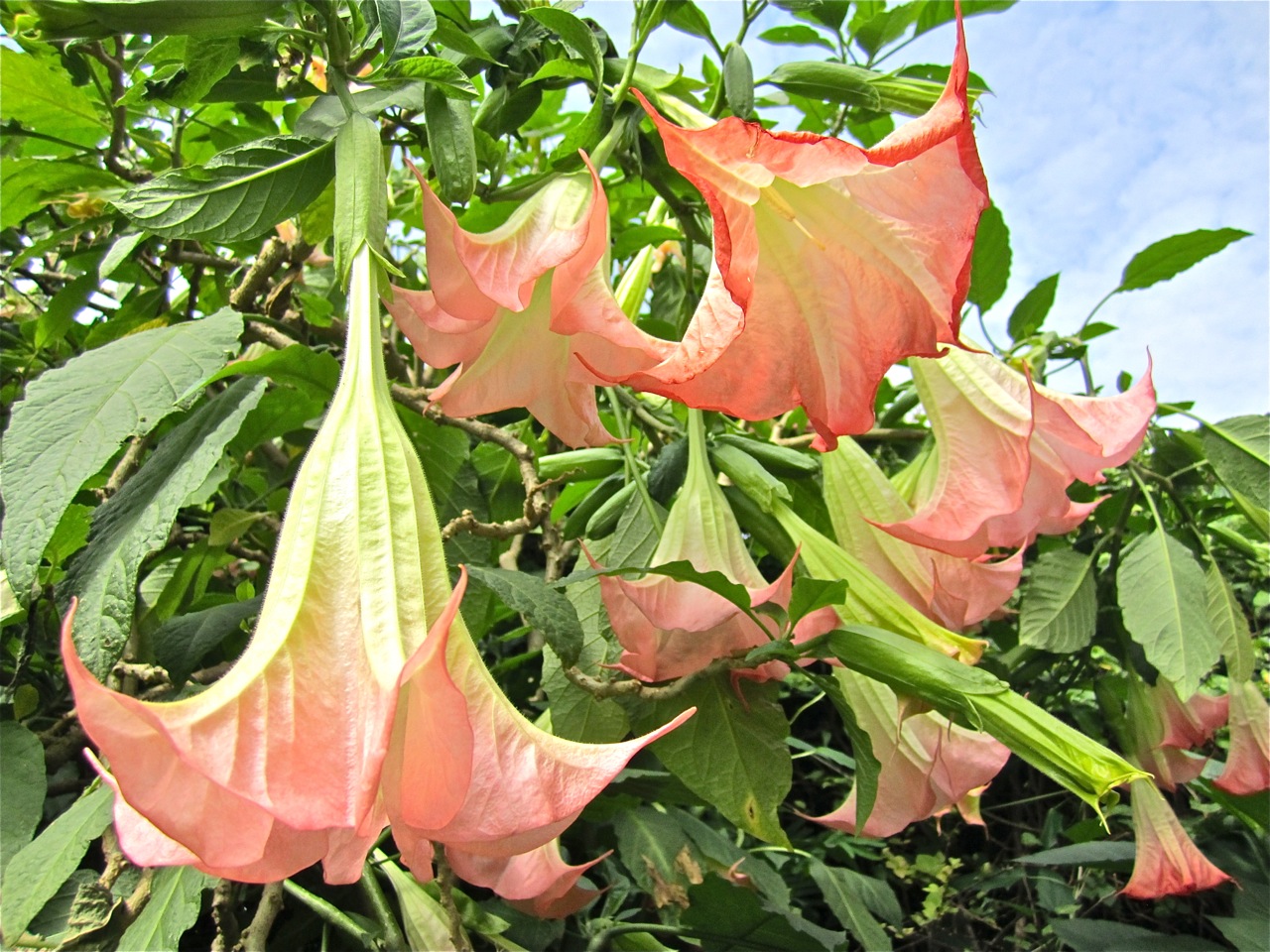
Brugmansia is native to tropical South America and, like the Brunfelsia, is also in the family Solanaceae. It is also called angel’s trumpet or datura (the name of a closely related genus). The semi-woody shrub can branch off like a small tree and grow to 6′-20′. It has a fragrance in the evening. It likes moist, well-drained, fertile soil, full sun to part shade, and grows in the garden in (U.S.) zones 9-11.
Curtilage –a piece of ground (as a yard or courtyard) within the fence surrounding a house. Origin: Middle English, from Anglo-French curtillage, from curtil garden, curtilage, from curt court. First known use: 14th century. — Merriam-Webster Dictionary
A bit more: a cortil was ‘little yard’ in Old French: cort + il (diminutive suffix). A ‘cortile’ (in English, in architecture) is an internal courtyard of a palazzo.
As a legal term, curtilage means the land immediately surrounding a residence that “harbors the intimate activity associated with the sanctity of a man’s home and the privacies of life.” In U.S. law, it is important for dealing with cases involving burglary, self defense, and unreasonable searches and seizures under the Fourth Amendment.
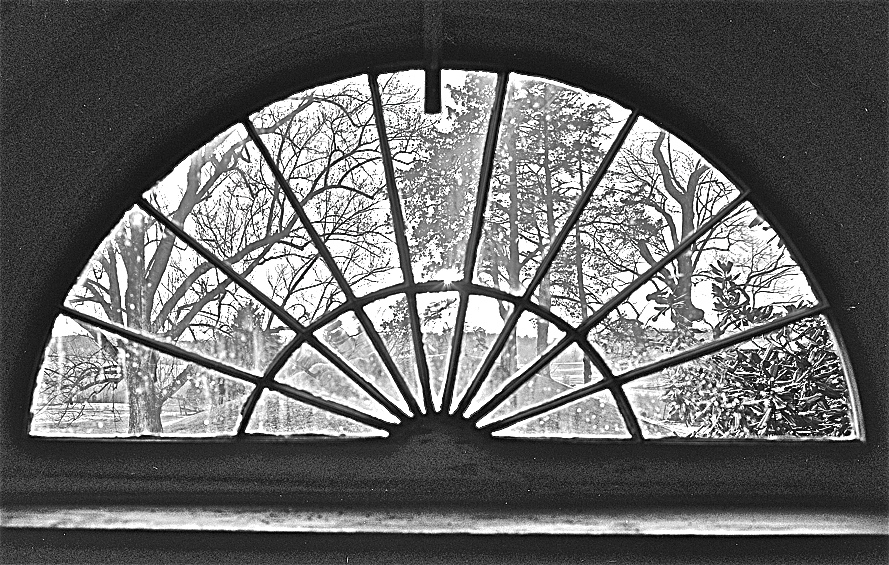
I came across the word while reading the website of Poplar Forest, Thomas Jefferson’s second home and getaway (I remembered something about it after Apartment Therapy posted a slideshow of presidential retreats). Its curtilage originally included an octagonal house (possibly the first in America), orchards, ornamental and vegetable gardens, and slave quarters. It was surrounded by a ‘snake’ or ‘worm’ stacked-rail fence, as well as fields of tobacco and wheat.
Because little visual evidence of Jefferson’s plantings remain, the 61-acre area is being reconstructed through archeology and research of his papers. Letters do indicate that a sunken garden behind the house contained “lilacs, Althaeas, g[u]elder roses, Roses, and clianthus.”
At Poplar Forest, Jefferson was working from a concept of “an ornamental villa retreat within an isolated agricultural setting.” He was thinking of ancient Roman villas, as they were reinterpreted in the 16th century by Andrea Palladio.
The estate is located in Forest, Virginia, near Lynchburg.
The top photo was taken as part of a 1985 Historic American Buildings Survey.
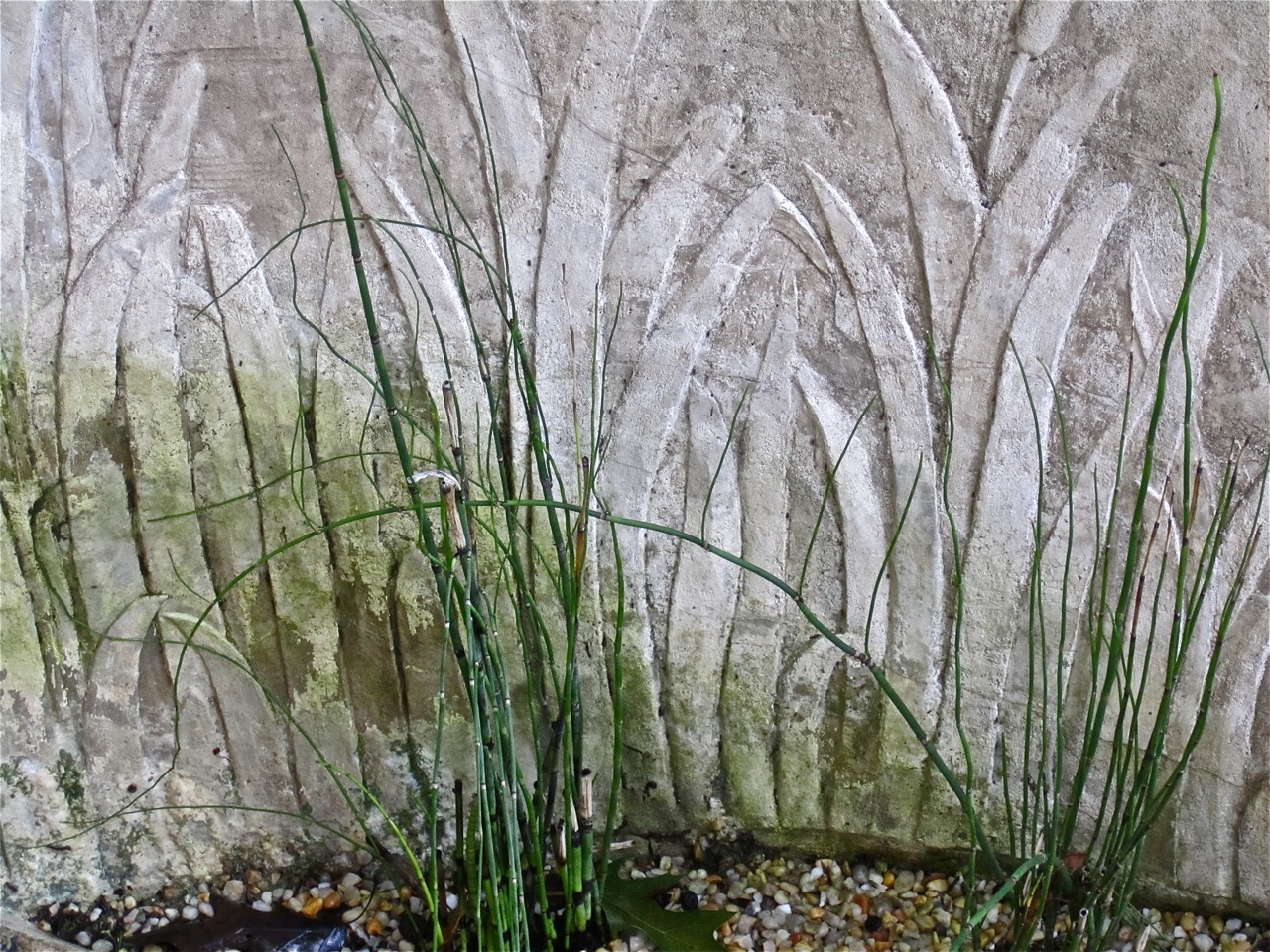
 enclos*ure